INTRODUCTION TO
AZURE SERVICE
BUS
Kent WeareTitle>
<company / contact info>
Microsoft Azure
About Me
• Microsoft Integration MVP
• Author
• Blogger
• Speaker
• Senior Solutions Architect
Agenda
• Introduction to the Microsoft Azure Service Bus
• Service Bus Relay
• Service Bus Queues and Topics
• Demos
• Event Hubs
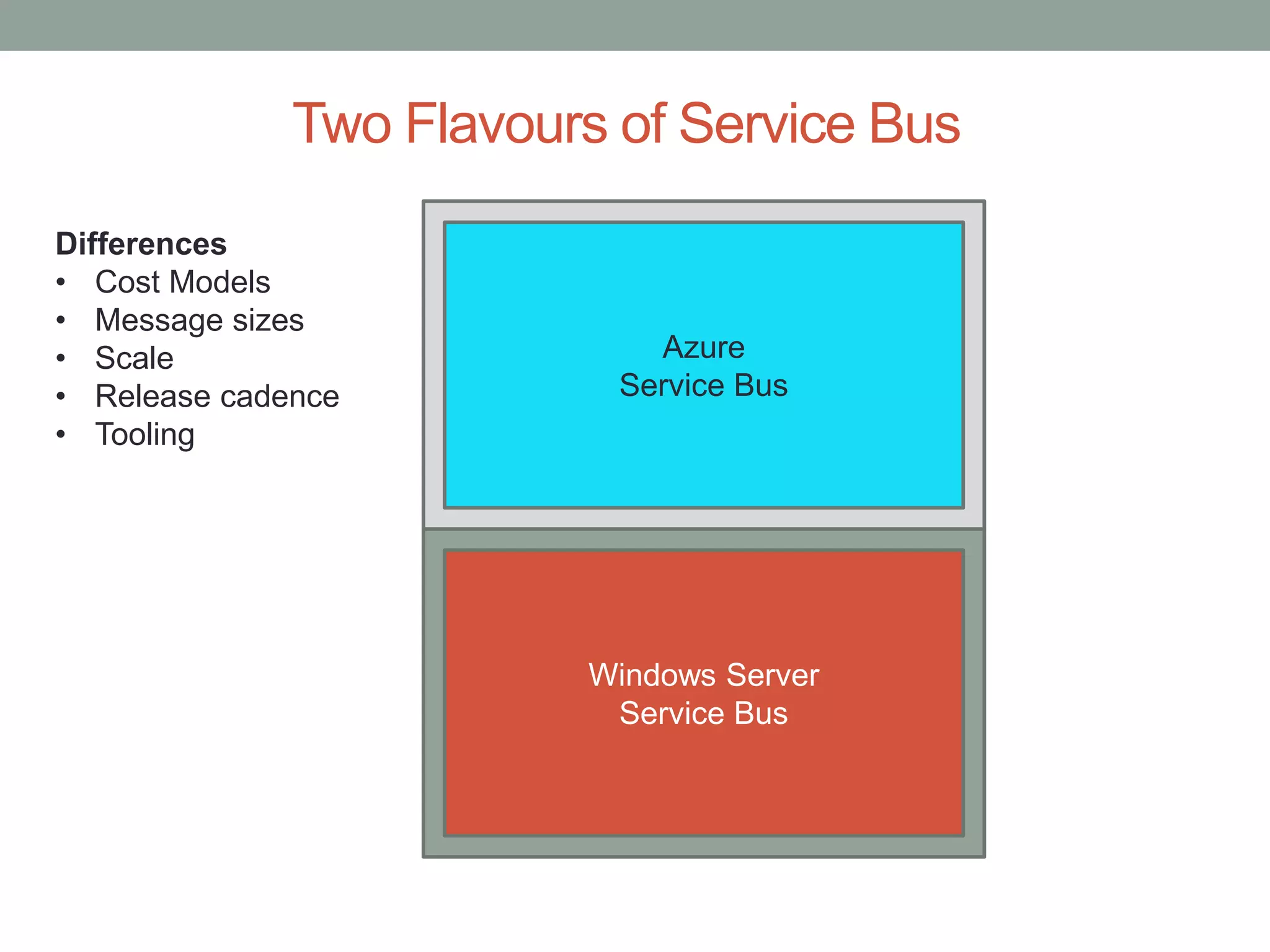
Two Flavours of Service Bus
Windows Server
Service Bus
Azure
Service Bus
Differences
• Cost Models
• Message sizes
• Scale
• Release cadence
• Tooling
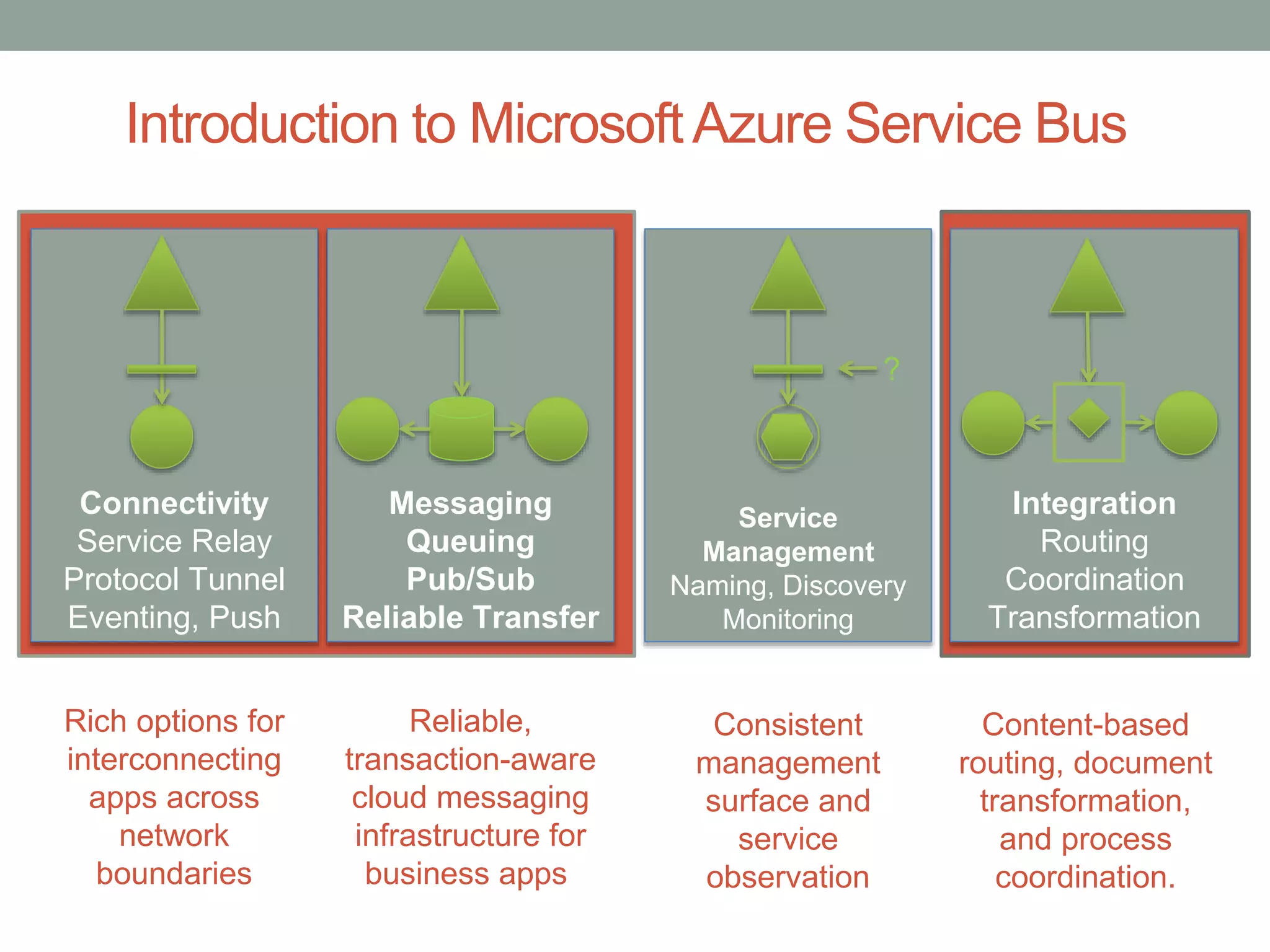
Introduction to MicrosoftAzure Service Bus
Integration
Routing
Coordination
Transformation
Content-based
routing, document
transformation,
and process
coordination.
Service
Management
Naming, Discovery
Monitoring
?
Consistent
management
surface and
service
observation
capabilities
Messaging
Queuing
Pub/Sub
Reliable Transfer
Reliable,
transaction-aware
cloud messaging
infrastructure for
business apps.
Connectivity
Service Relay
Protocol Tunnel
Eventing, Push
Rich options for
interconnecting
apps across
network
boundaries
Service Bus Relay
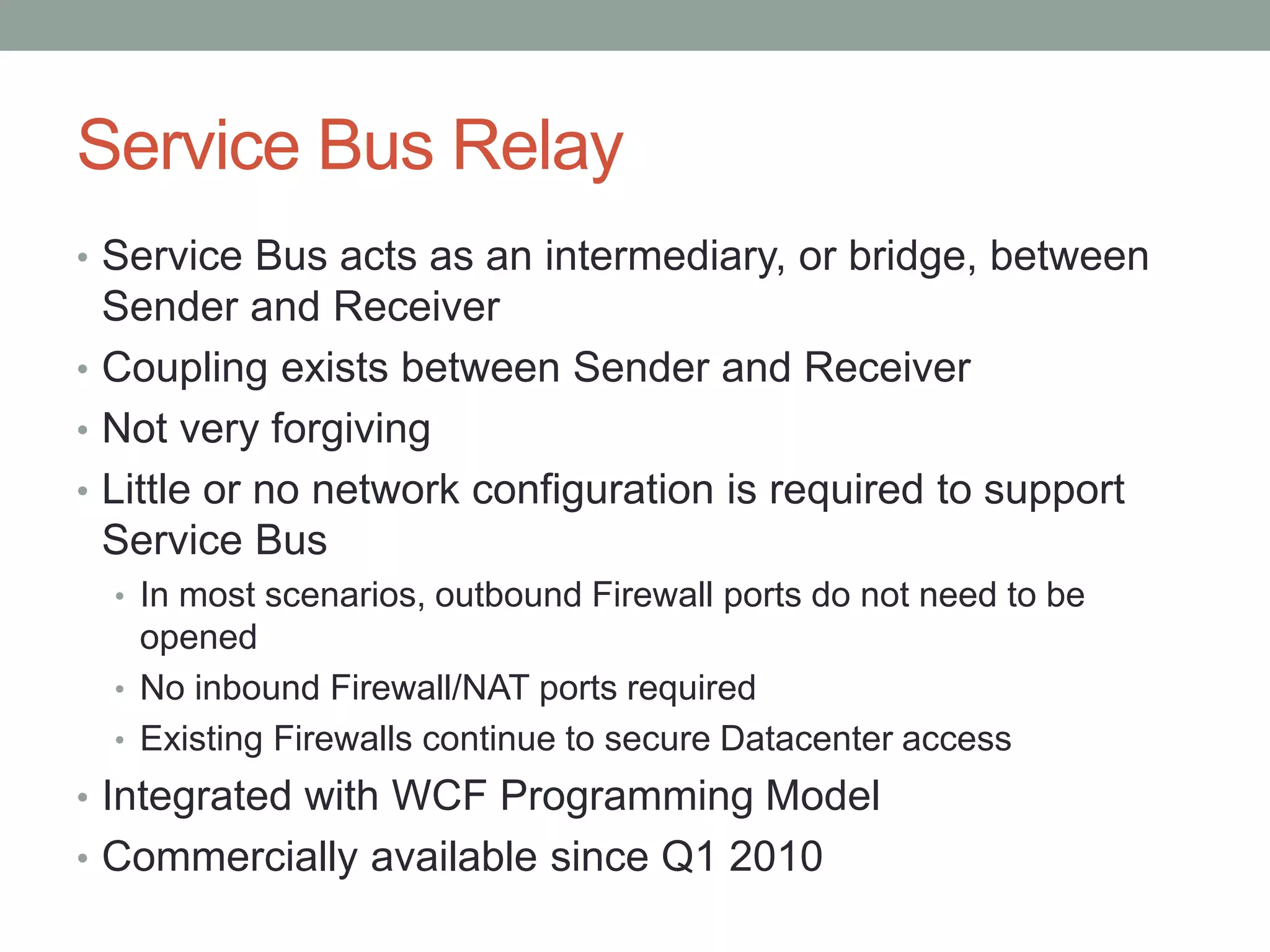
• Service Bus acts as an intermediary, or bridge, between
Sender and Receiver
• Coupling exists between Sender and Receiver
• Not very forgiving
• Little or no network configuration is required to support
Service Bus
• In most scenarios, outbound Firewall ports do not need to be
opened
• No inbound Firewall/NAT ports required
• Existing Firewalls continue to secure Datacenter access
• Integrated with WCF Programming Model
• Commercially available since Q1 2010
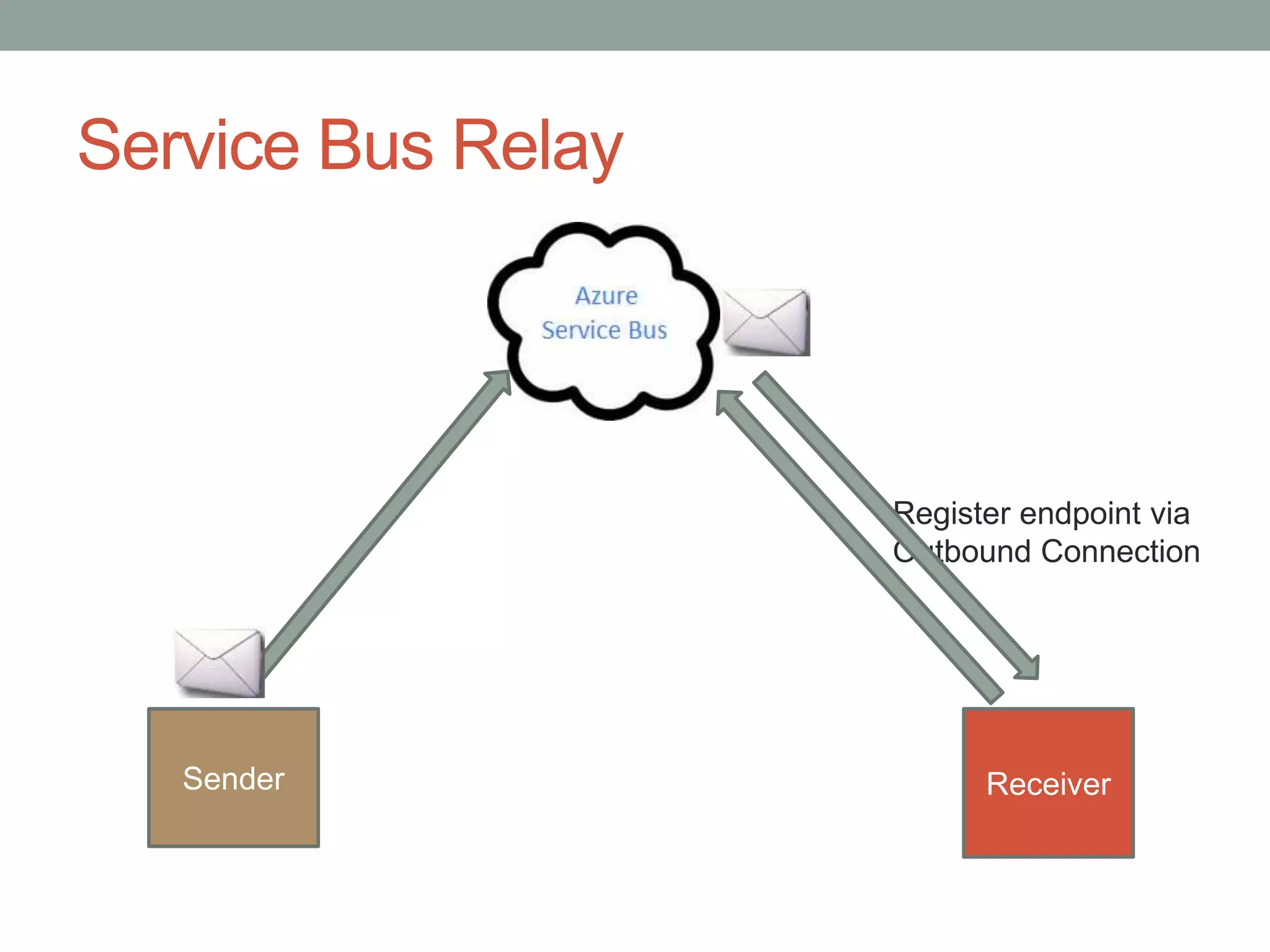
Service Bus Relay
Sender Receiver
Register endpoint via
Outbound Connection
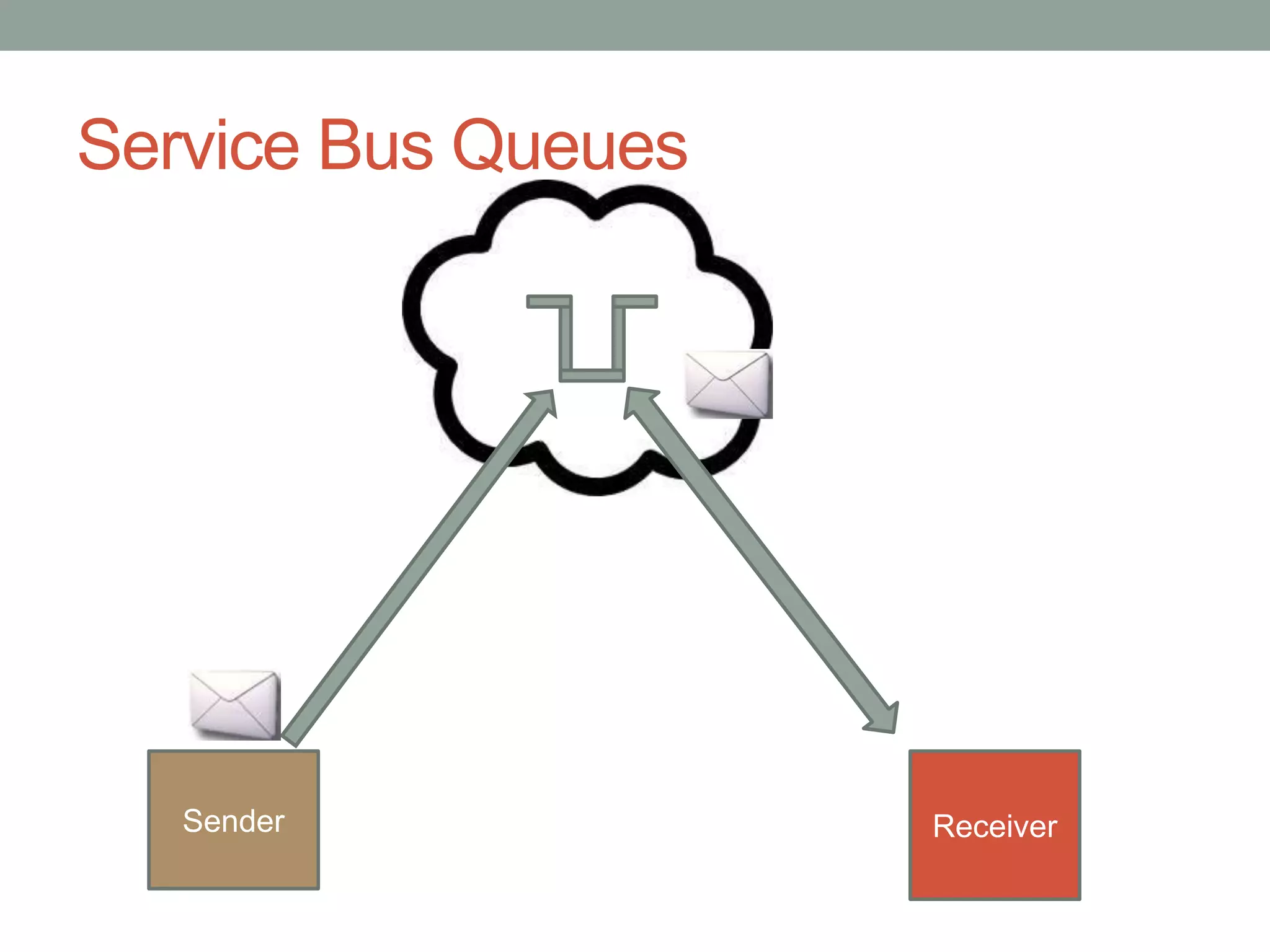
Service Bus Queues
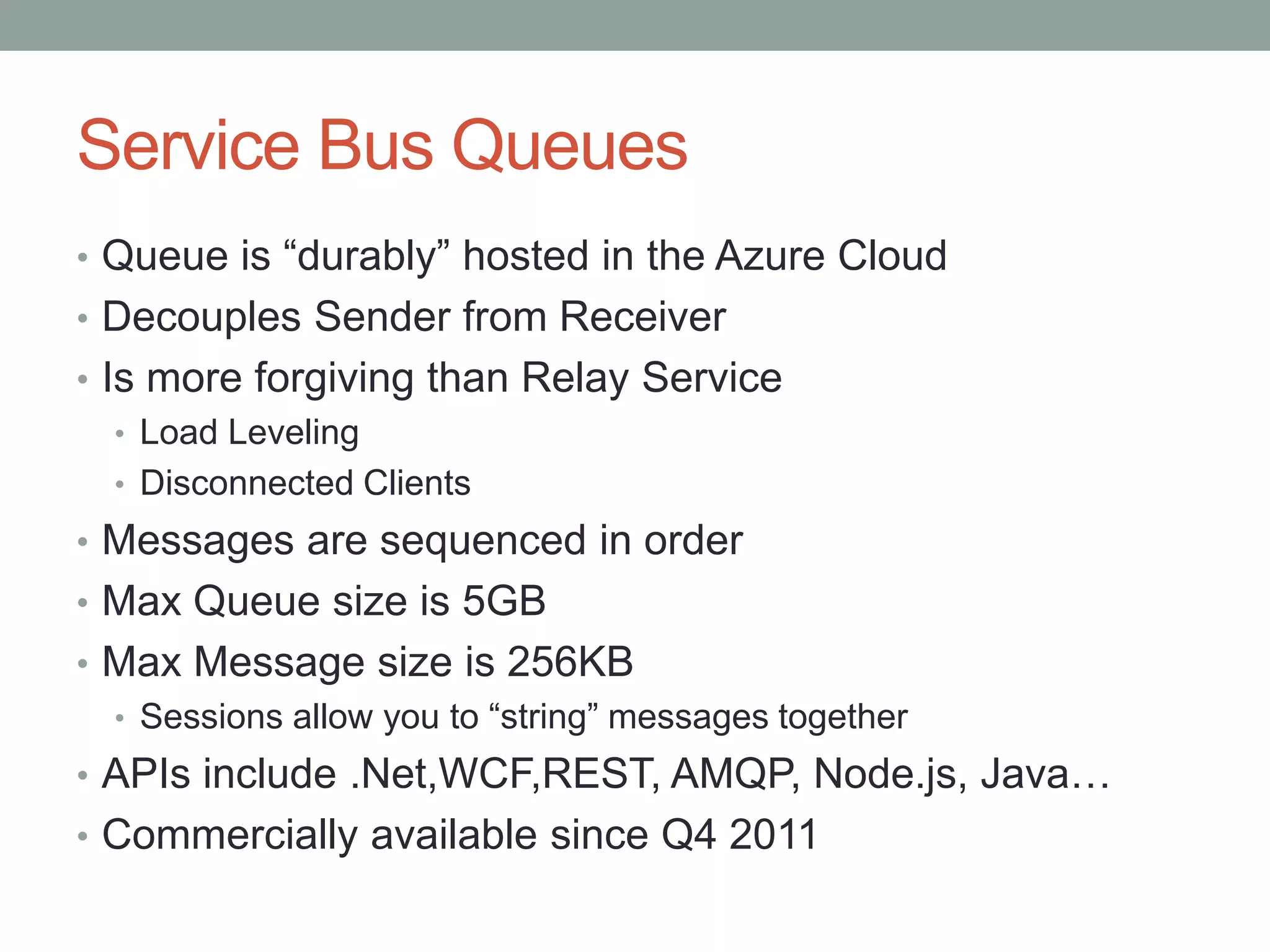
• Queue is “durably” hosted in the Azure Cloud
• Decouples Sender from Receiver
• Is more forgiving than Relay Service
• Load Leveling
• Disconnected Clients
• Messages are sequenced in order
• Max Queue size is 5GB
• Max Message size is 256KB
• Sessions allow you to “string” messages together
• APIs include .Net,WCF,REST, AMQP, Node.js, Java…
• Commercially available since Q4 2011
Service Bus Queues
Sender Receiver
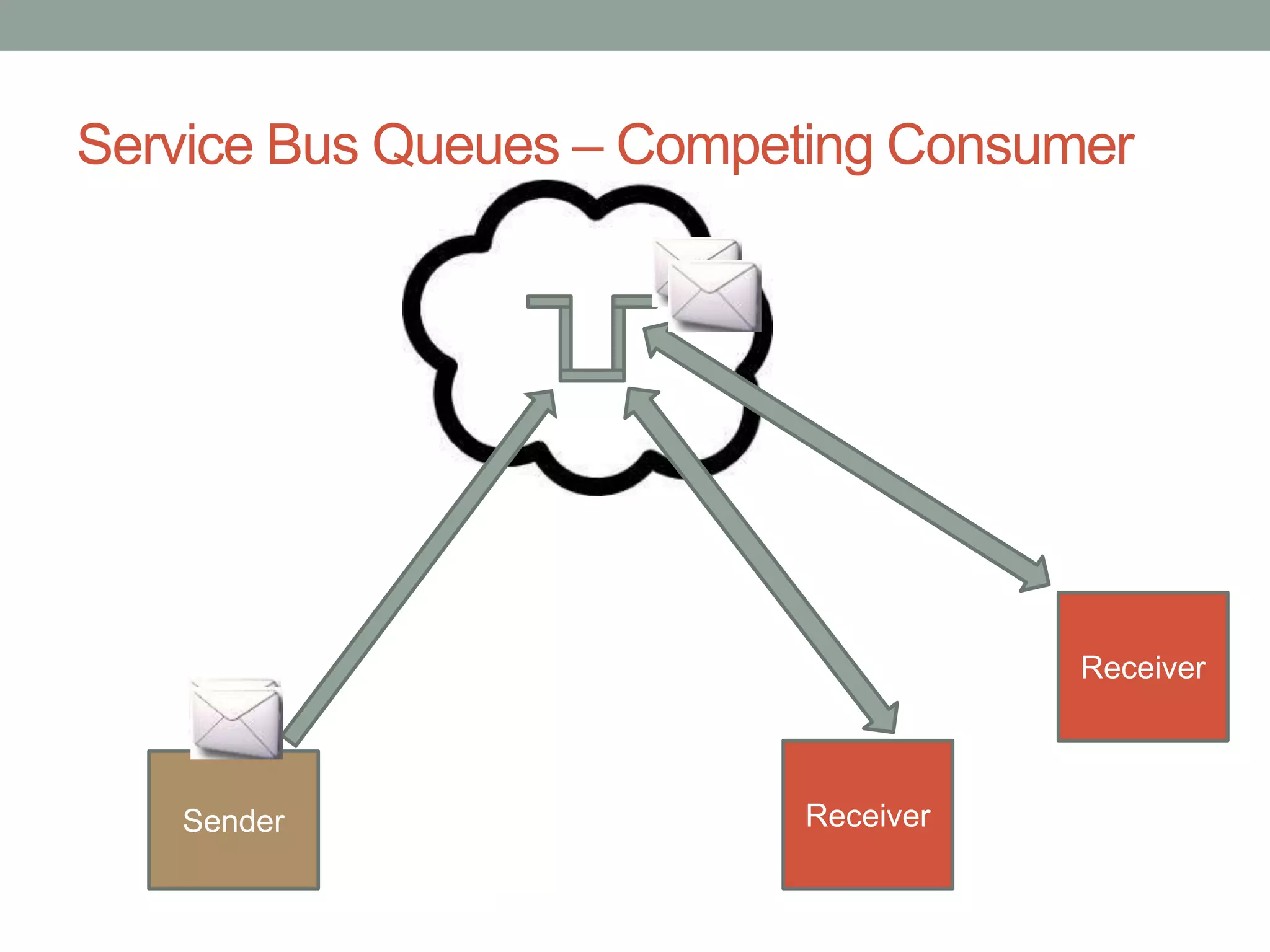
Service Bus Queues – Competing Consumer
Sender Receiver
Receiver
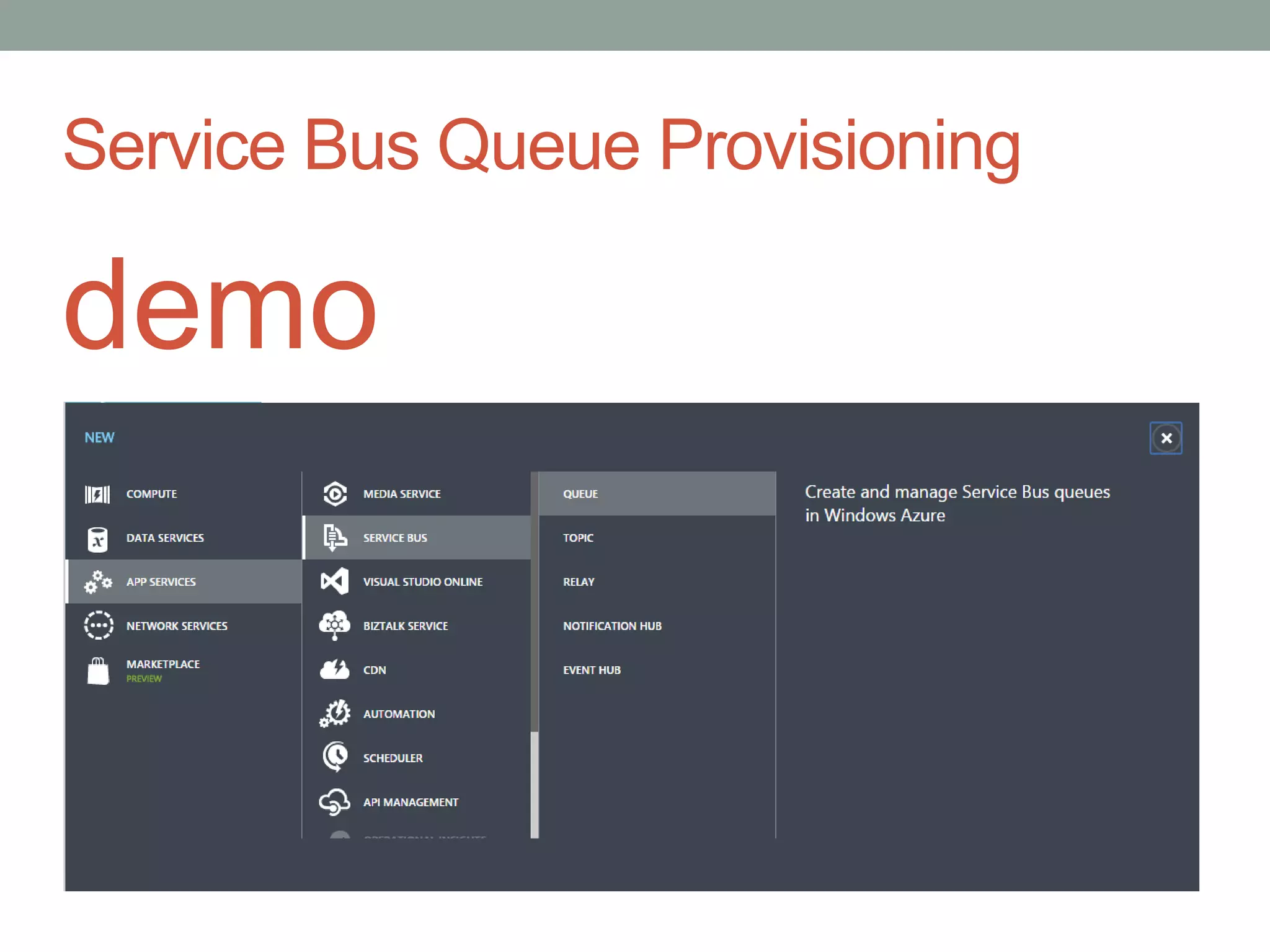
Service Bus Queue Provisioning
demo
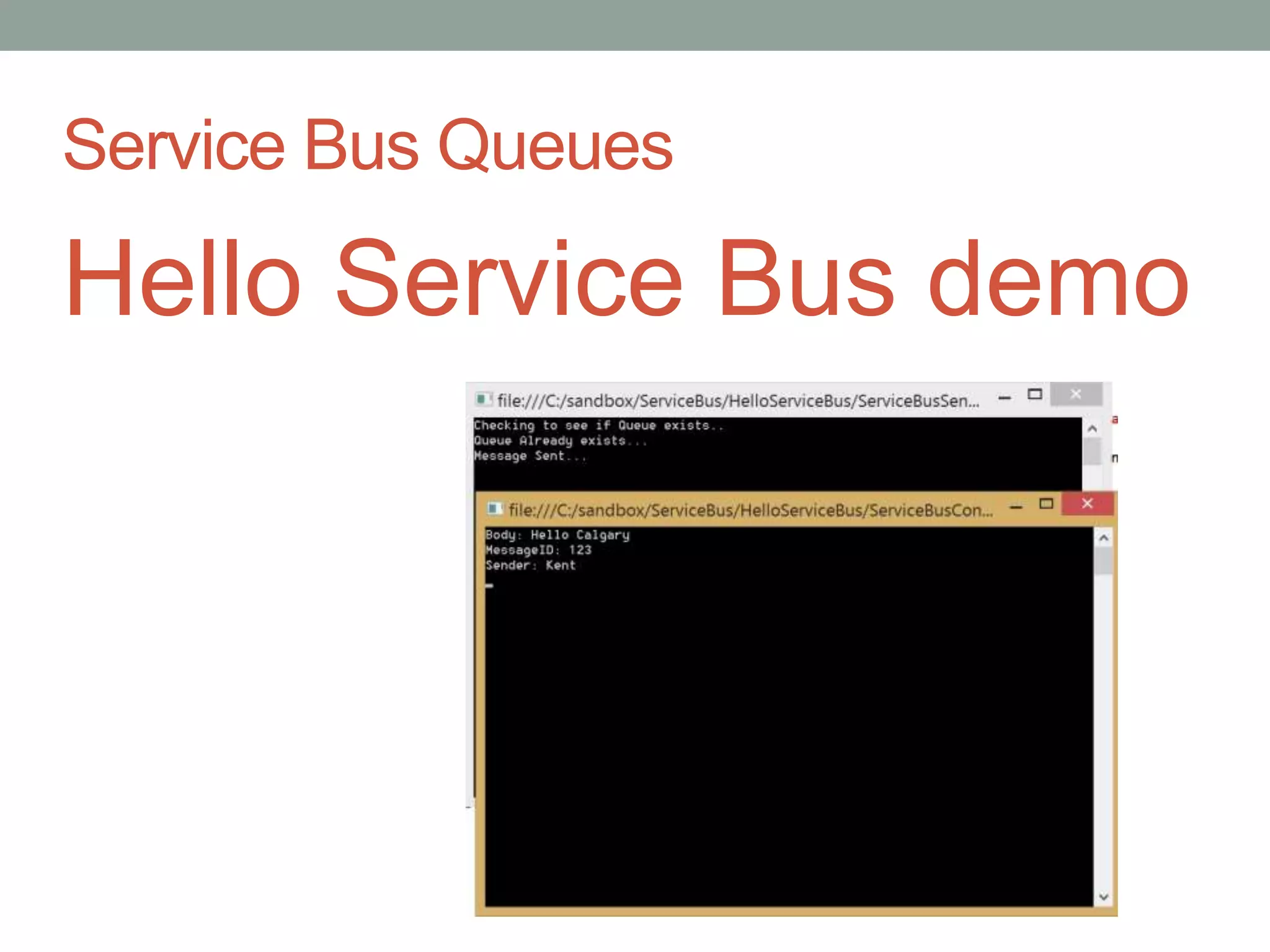
Service Bus Queues
Hello Service Bus demo
Service Bus Topics
• Similar to Service Bus Queues
• Pub/Sub Capabilities
• SQL92 statements
• Currently there is support for up to 2000 subscriptions per topic
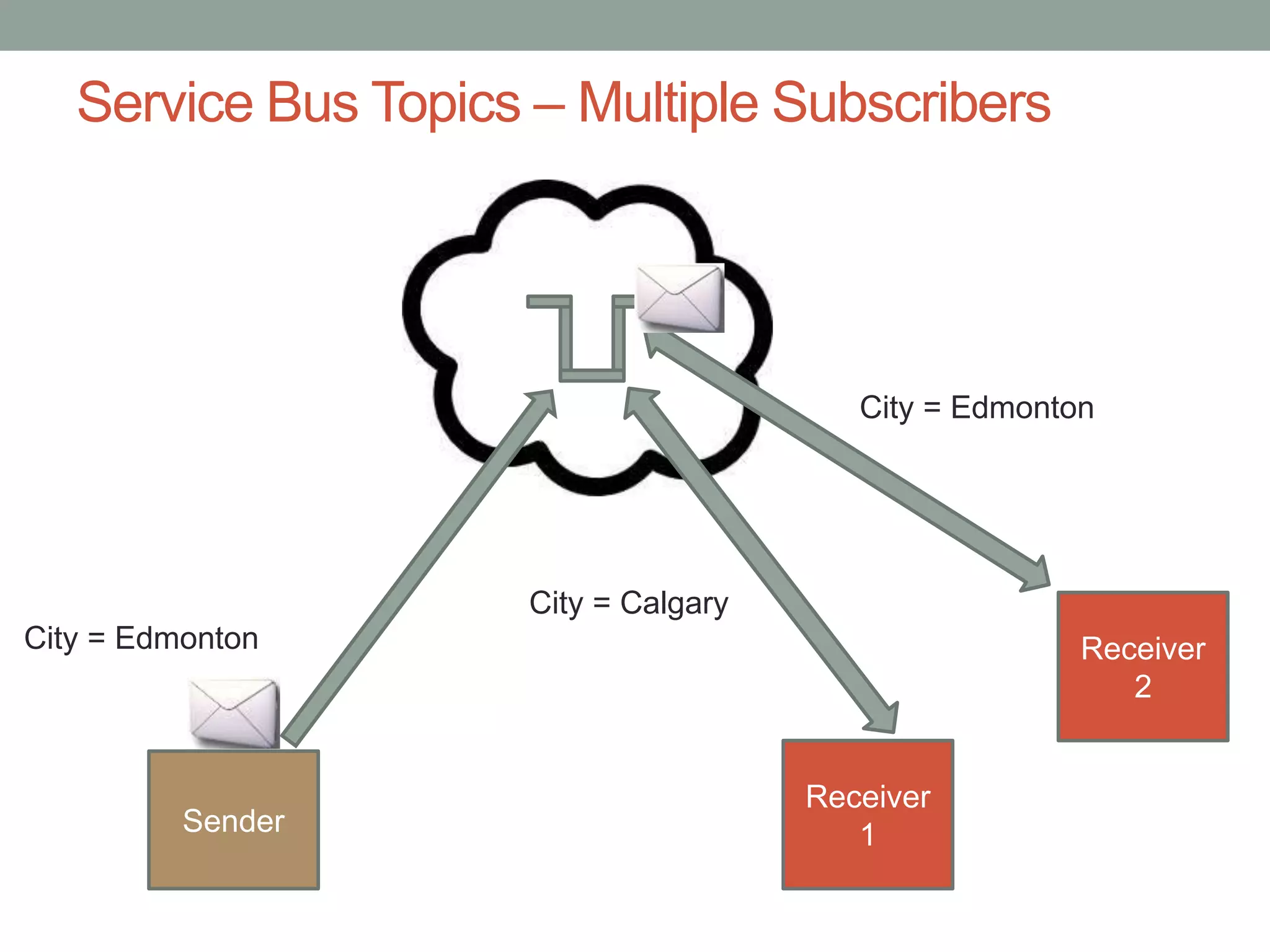
• Send same message to multiple subscriptions provided
rule criteria is met
• Can have competing consumers on each subscription
• Topic – Queue Forwarding is supported
Service Bus Topics – Multiple Subscribers
Sender
Receiver
1
Receiver
2
City = Edmonton
City = Calgary
City = Edmonton
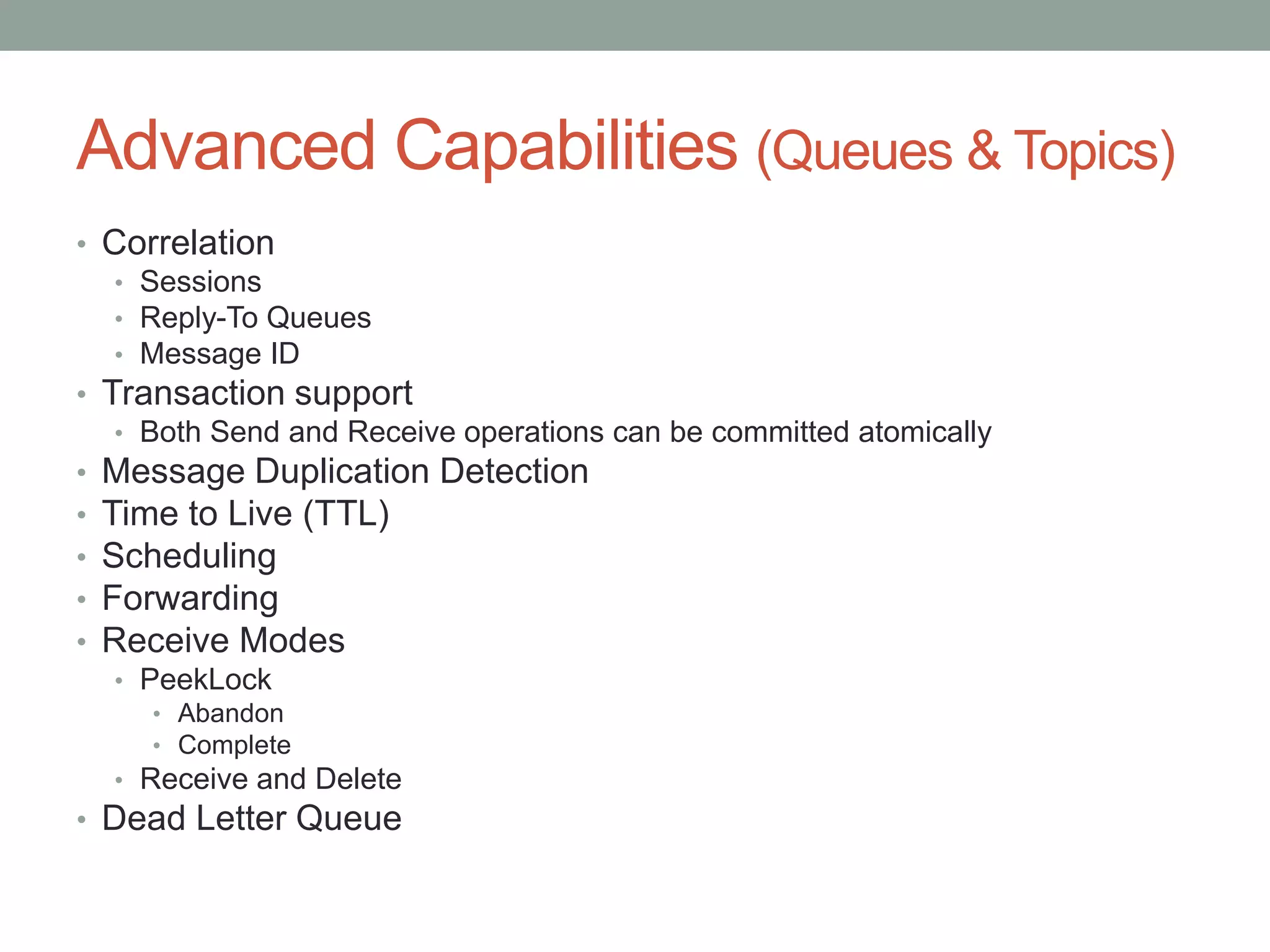
Advanced Capabilities (Queues & Topics)
• Correlation
• Sessions
• Reply-To Queues
• Message ID
• Transaction support
• Both Send and Receive operations can be committed atomically
• Message Duplication Detection
• Time to Live (TTL)
• Scheduling
• Forwarding
• Receive Modes
• PeekLock
• Abandon
• Complete
• Receive and Delete
• Dead Letter Queue
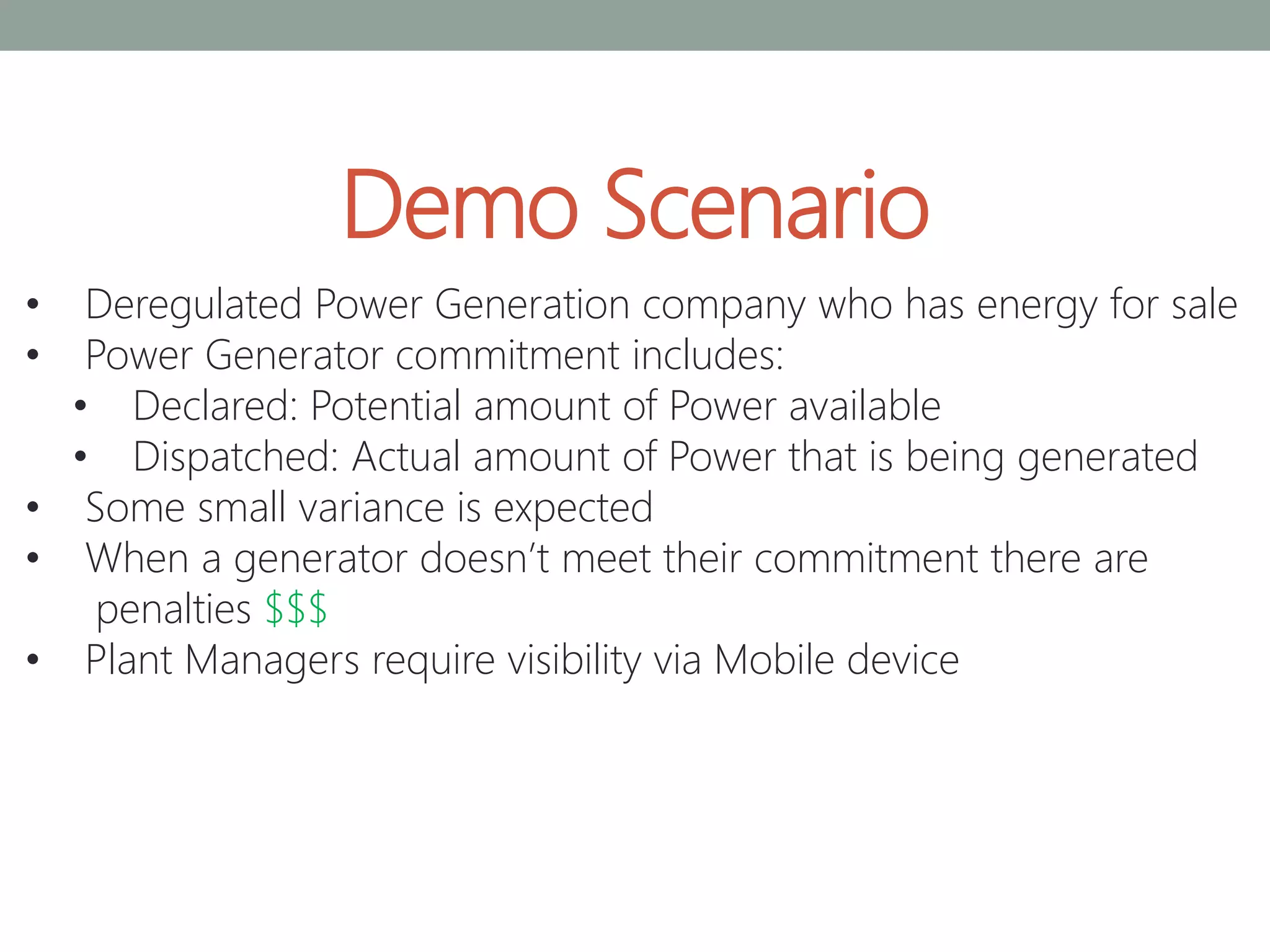
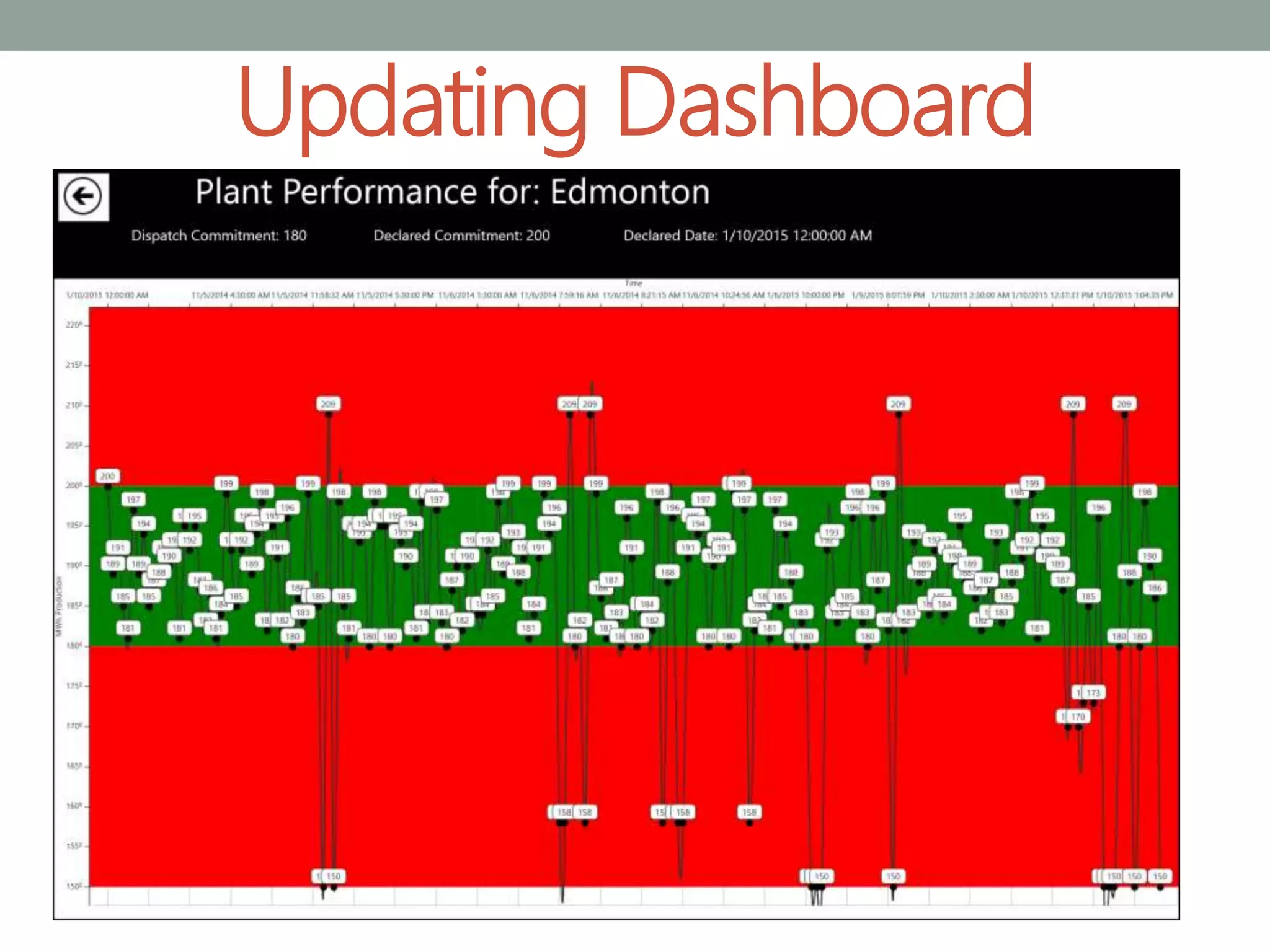
Demo Scenario
• Deregulated Power Generation company who has energy for sale
• Power Generator commitment includes:
• Declared: Potential amount of Power available
• Dispatched: Actual amount of Power that is being generated
• Some small variance is expected
• When a generator doesn’t meet their commitment there are
penalties $$$
• Plant Managers require visibility via Mobile device
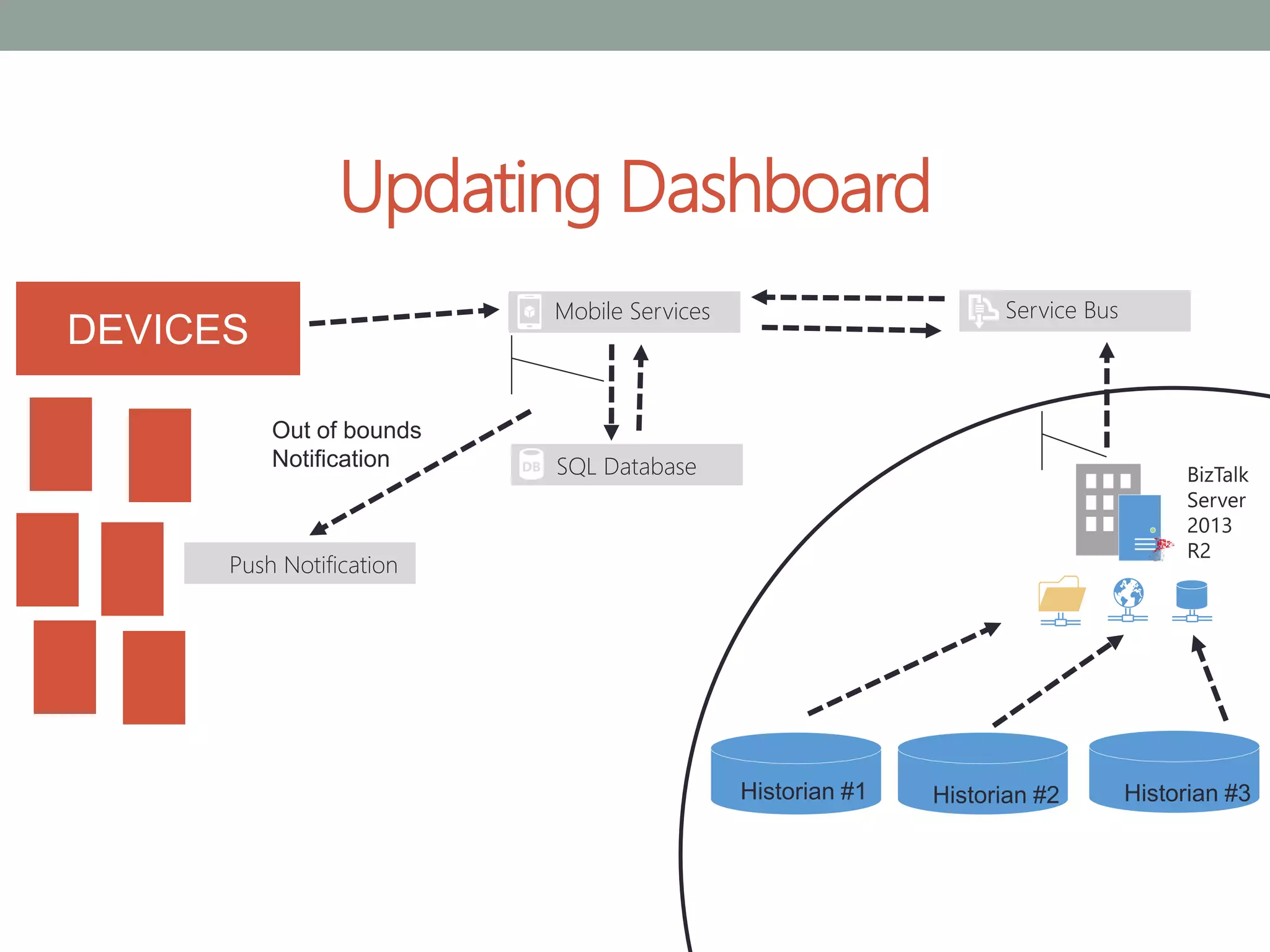
Updating Dashboard
Mobile Services
SQL Database
Service Bus
Historian #1 Historian #2 Historian #3
DEVICES
Push Notification
Out of bounds
Notification
Updating Dashboard
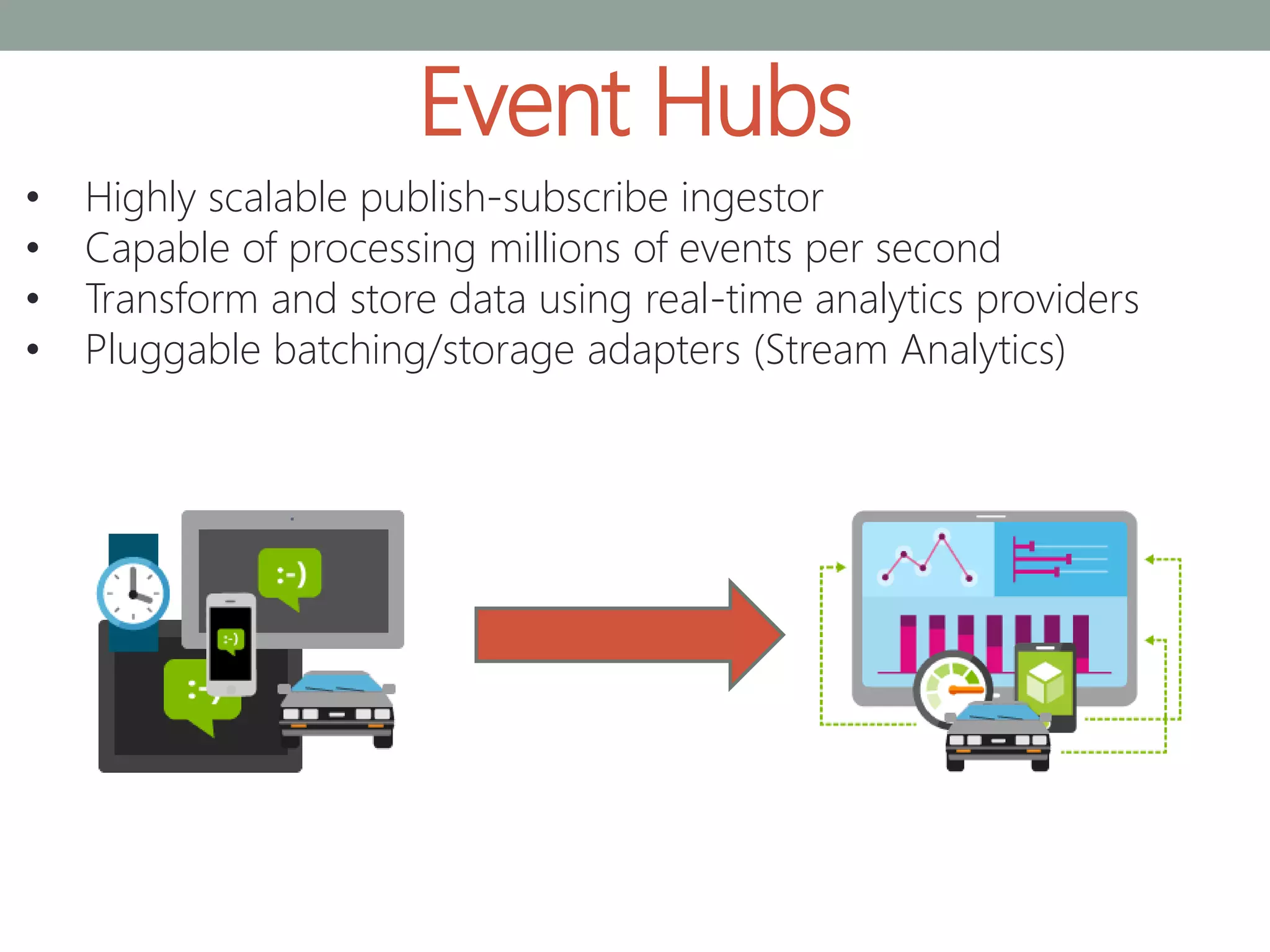
Event Hubs
• Highly scalable publish-subscribe ingestor
• Capable of processing millions of events per second
• Transform and store data using real-time analytics providers
• Pluggable batching/storage adapters (Stream Analytics)
Summary
• Service Bus is an enabler technology
• Hybrid Connectivity
• Cloud based messaging
• IoT ingestion
• Pub/Sub
• Inexpensive
• $0.0528 per million operations (Basic Tier)
• Interoperable
• AMQP
• REST
• Vast client library support
Resources
Blog http://kentweare.blogspot.com
Email kentweare@hotmail.com
Twitter @wearsy
LinkedIn http://tinyurl.com/ny979ct
Other Resources
Service Bus Videos
• Clemens Vasters
http://tinyurl.com/lhfssts
• Dan Rosanova
http://tinyurl.com/or7bg6b
• Paolo Salvatori - Service Bus Explorer
http://tinyurl.com/khlaxr7

Calgary azure dev camp - Service Bus

  • 1.
    INTRODUCTION TO AZURE SERVICE BUS KentWeareTitle> <company / contact info> Microsoft Azure
  • 2.
    About Me • MicrosoftIntegration MVP • Author • Blogger • Speaker • Senior Solutions Architect
  • 3.
    Agenda • Introduction tothe Microsoft Azure Service Bus • Service Bus Relay • Service Bus Queues and Topics • Demos • Event Hubs
  • 4.
    Two Flavours ofService Bus Windows Server Service Bus Azure Service Bus Differences • Cost Models • Message sizes • Scale • Release cadence • Tooling
  • 5.
    Introduction to MicrosoftAzureService Bus Integration Routing Coordination Transformation Content-based routing, document transformation, and process coordination. Service Management Naming, Discovery Monitoring ? Consistent management surface and service observation capabilities Messaging Queuing Pub/Sub Reliable Transfer Reliable, transaction-aware cloud messaging infrastructure for business apps. Connectivity Service Relay Protocol Tunnel Eventing, Push Rich options for interconnecting apps across network boundaries
  • 6.
    Service Bus Relay •Service Bus acts as an intermediary, or bridge, between Sender and Receiver • Coupling exists between Sender and Receiver • Not very forgiving • Little or no network configuration is required to support Service Bus • In most scenarios, outbound Firewall ports do not need to be opened • No inbound Firewall/NAT ports required • Existing Firewalls continue to secure Datacenter access • Integrated with WCF Programming Model • Commercially available since Q1 2010
  • 7.
    Service Bus Relay SenderReceiver Register endpoint via Outbound Connection
  • 8.
    Service Bus Queues •Queue is “durably” hosted in the Azure Cloud • Decouples Sender from Receiver • Is more forgiving than Relay Service • Load Leveling • Disconnected Clients • Messages are sequenced in order • Max Queue size is 5GB • Max Message size is 256KB • Sessions allow you to “string” messages together • APIs include .Net,WCF,REST, AMQP, Node.js, Java… • Commercially available since Q4 2011
  • 9.
  • 10.
    Service Bus Queues– Competing Consumer Sender Receiver Receiver
  • 11.
    Service Bus QueueProvisioning demo
  • 12.
    Service Bus Queues HelloService Bus demo
  • 13.
    Service Bus Topics •Similar to Service Bus Queues • Pub/Sub Capabilities • SQL92 statements • Currently there is support for up to 2000 subscriptions per topic • Send same message to multiple subscriptions provided rule criteria is met • Can have competing consumers on each subscription • Topic – Queue Forwarding is supported
  • 14.
    Service Bus Topics– Multiple Subscribers Sender Receiver 1 Receiver 2 City = Edmonton City = Calgary City = Edmonton
  • 15.
    Advanced Capabilities (Queues& Topics) • Correlation • Sessions • Reply-To Queues • Message ID • Transaction support • Both Send and Receive operations can be committed atomically • Message Duplication Detection • Time to Live (TTL) • Scheduling • Forwarding • Receive Modes • PeekLock • Abandon • Complete • Receive and Delete • Dead Letter Queue
  • 16.
    Demo Scenario • DeregulatedPower Generation company who has energy for sale • Power Generator commitment includes: • Declared: Potential amount of Power available • Dispatched: Actual amount of Power that is being generated • Some small variance is expected • When a generator doesn’t meet their commitment there are penalties $$$ • Plant Managers require visibility via Mobile device
  • 17.
    Updating Dashboard Mobile Services SQLDatabase Service Bus Historian #1 Historian #2 Historian #3 DEVICES Push Notification Out of bounds Notification
  • 18.
  • 19.
    Event Hubs • Highlyscalable publish-subscribe ingestor • Capable of processing millions of events per second • Transform and store data using real-time analytics providers • Pluggable batching/storage adapters (Stream Analytics)
  • 20.
    Summary • Service Busis an enabler technology • Hybrid Connectivity • Cloud based messaging • IoT ingestion • Pub/Sub • Inexpensive • $0.0528 per million operations (Basic Tier) • Interoperable • AMQP • REST • Vast client library support
  • 21.
    Resources Blog http://kentweare.blogspot.com Email kentweare@hotmail.com Twitter@wearsy LinkedIn http://tinyurl.com/ny979ct Other Resources Service Bus Videos • Clemens Vasters http://tinyurl.com/lhfssts • Dan Rosanova http://tinyurl.com/or7bg6b • Paolo Salvatori - Service Bus Explorer http://tinyurl.com/khlaxr7