Calcium Channel
Blocking Drugs
Outline
 Introduction
 CCB binding sites
 Heterogeneity of action
 Cardiac & hemodynamic
differentiation
 Pharmacokinetics
 Adverse effects
 Contraindications
 Summary
Chemical Type Chemical Names Brand Names
Phenylalkylamines verapamil Calan,
Calna SR,
Isoptin SR,
Verelan
Benzothiazepines diltiazem Cardizem CD,
Dilacor XR
1,4-Dihydropyridines Nifedipine
nicardipine
isradipine
felodipine
amlodipine
Adalat CC,
Procardia XL
Cardene
DynaCirc
Plendil
Norvasc
Three Classes of CCBs
N CH2 CH2 N
0
CH3
0 C CH3
0
CH3
CH3
Diltiazem
C 0 CH3
NO2
CH3H3C
C0H3C
0 0
Nifedipine
C CH2 CH2 CH2CH2 CH2N
CH3
CH3
C N
CH
H3C
0H3C
0H3C
0 CH3
0 CH3
Verapamil
N
H
S
 Angina pectoris
 Hypertension
 Treatment of supraventricular
arrhythmias
- Atrial Flutter
- Atrial Fibrillation
- Paroxysmal SVT
Widespread use of CCBs
Outline
 Introduction
 CCB binding sites
 Heterogeneity of action
 Cardiac & hemodynamic
differentiation
 Pharmacokinetics
 Adverse effects
 Contraindications
 Summary
III IV
II I
IVIII
5
6
5
6
Out
In
I II III IV
The 1C subunit of the L-type Ca2+ channel
is the pore-forming subunit
NH3
+
NH3
+
COO-
COO-
b
1C
NH3
+
COO-
2
I II III IV
COO-
NH3
+
d
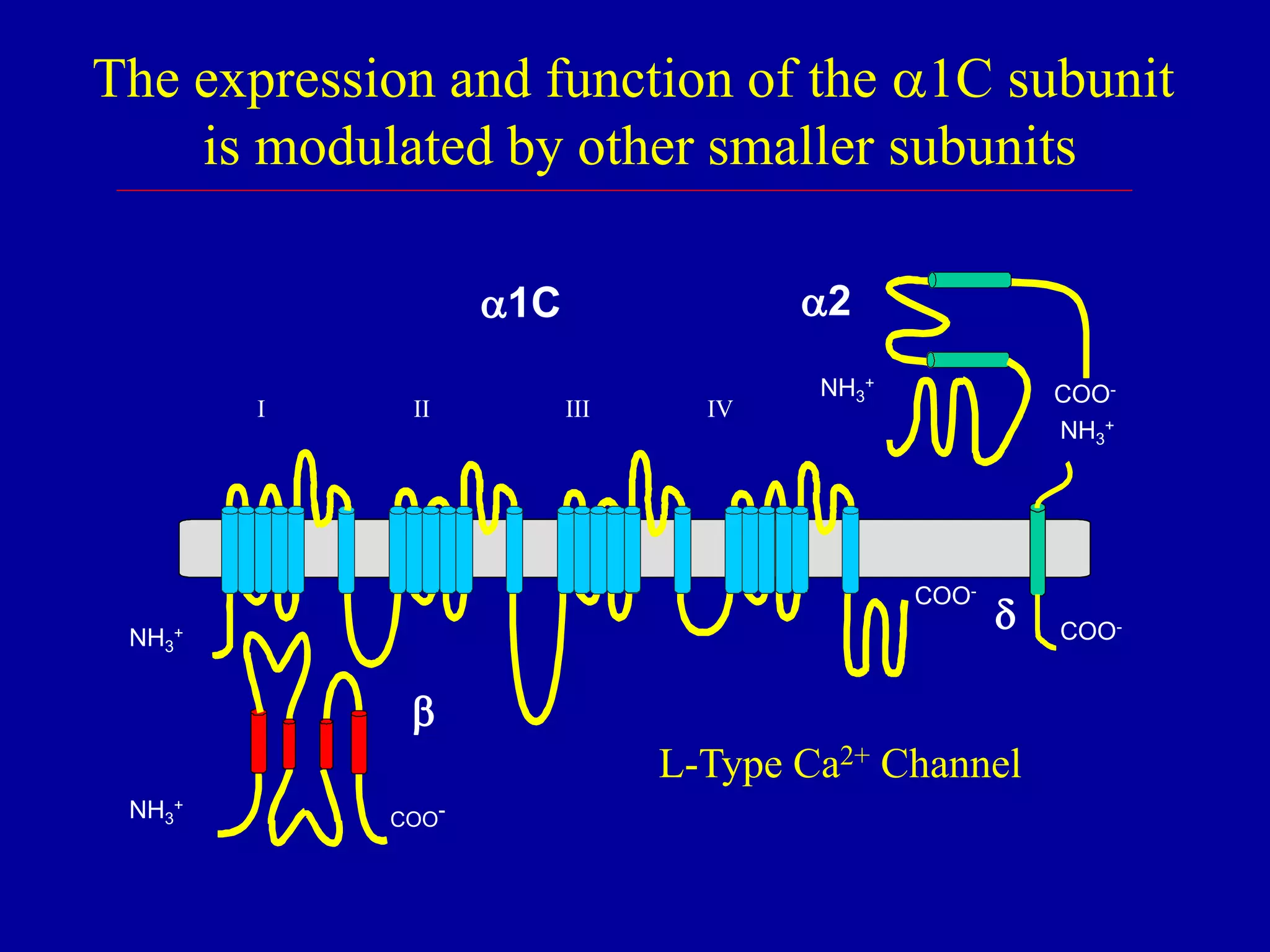
The expression and function of the 1C subunit
is modulated by other smaller subunits
L-Type Ca2+ Channel
The Three Classes of CCBs Bind to Different Sites
1,4-
Dihydropyridines
(nifedipine)
Phenylalkylamines
(verapamil)
Benzothiazepines
(diltiazem)
Ca2+
pore
-
- -
-+
+-
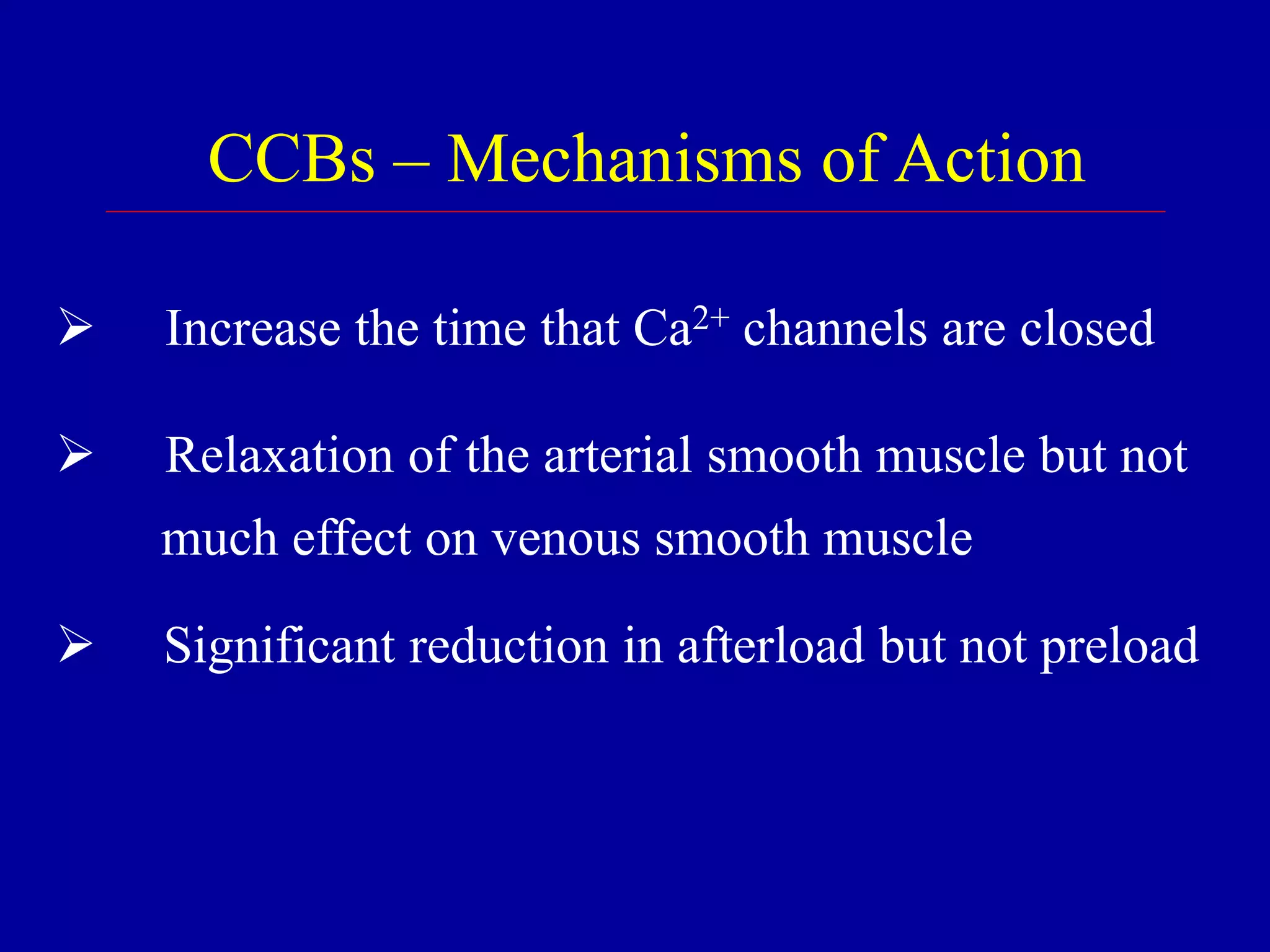
 Increase the time that Ca2+ channels are closed
 Relaxation of the arterial smooth muscle but not
much effect on venous smooth muscle
 Significant reduction in afterload but not preload
CCBs – Mechanisms of Action
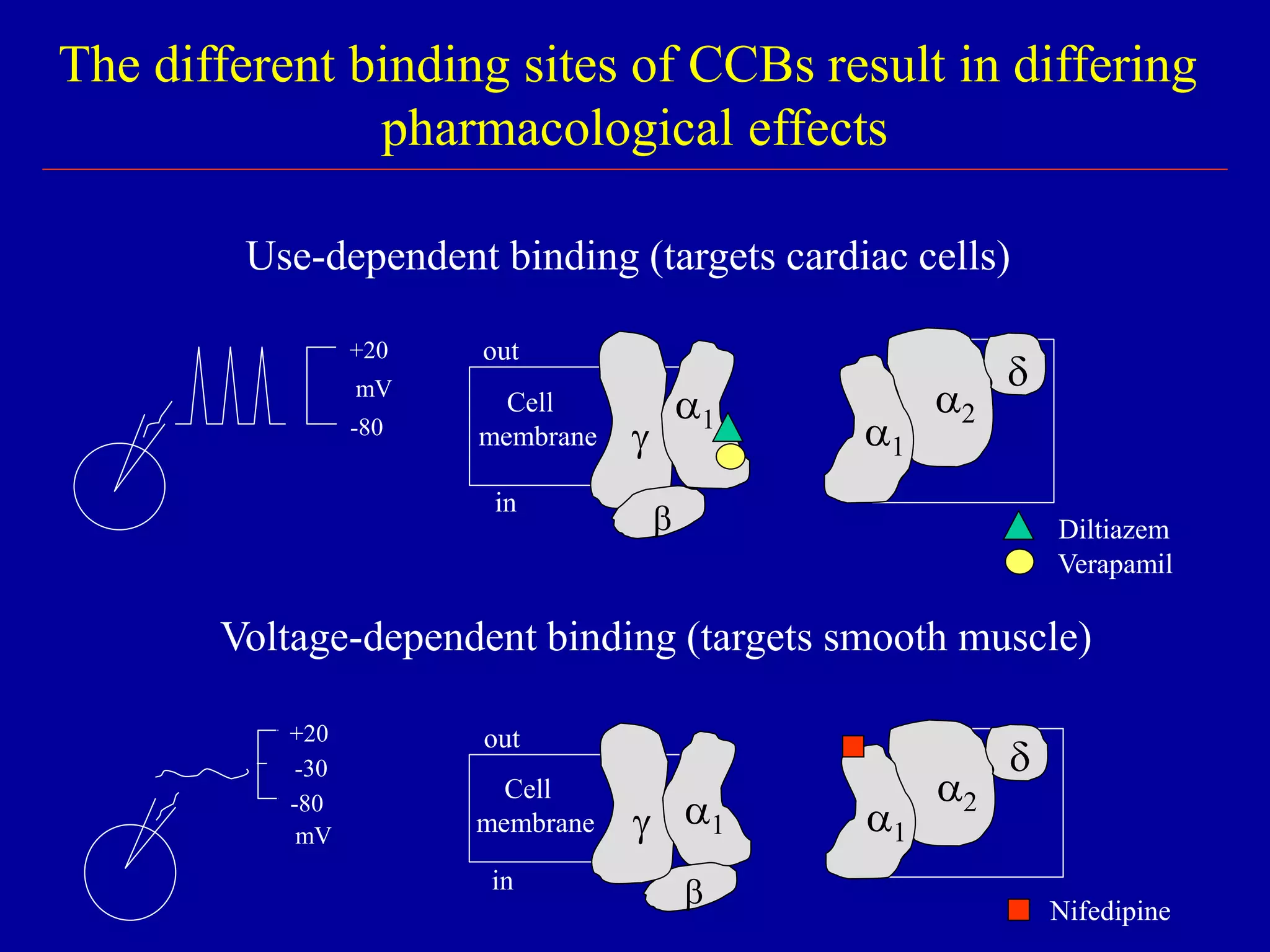
The different binding sites of CCBs result in differing
pharmacological effects
Voltage-dependent binding (targets smooth muscle)
Use-dependent binding (targets cardiac cells)
Cell
membrane
1

out
in
b
+20
-80
mV
2
d
Diltiazem
Verapamil
1
b
1
out

in
+20
-80
-30
2
d
1
Nifedipine
Cell
membranemV
Outline
 Introduction
 CCB binding sites
 Heterogeneity of action
 Cardiac & hemodynamic
differentiation
 Pharmacokinetics
 Adverse effects
 Contraindications
 Summary
Why Do CCBs Act Selectively
on Cardiac and Vascular Muscle?
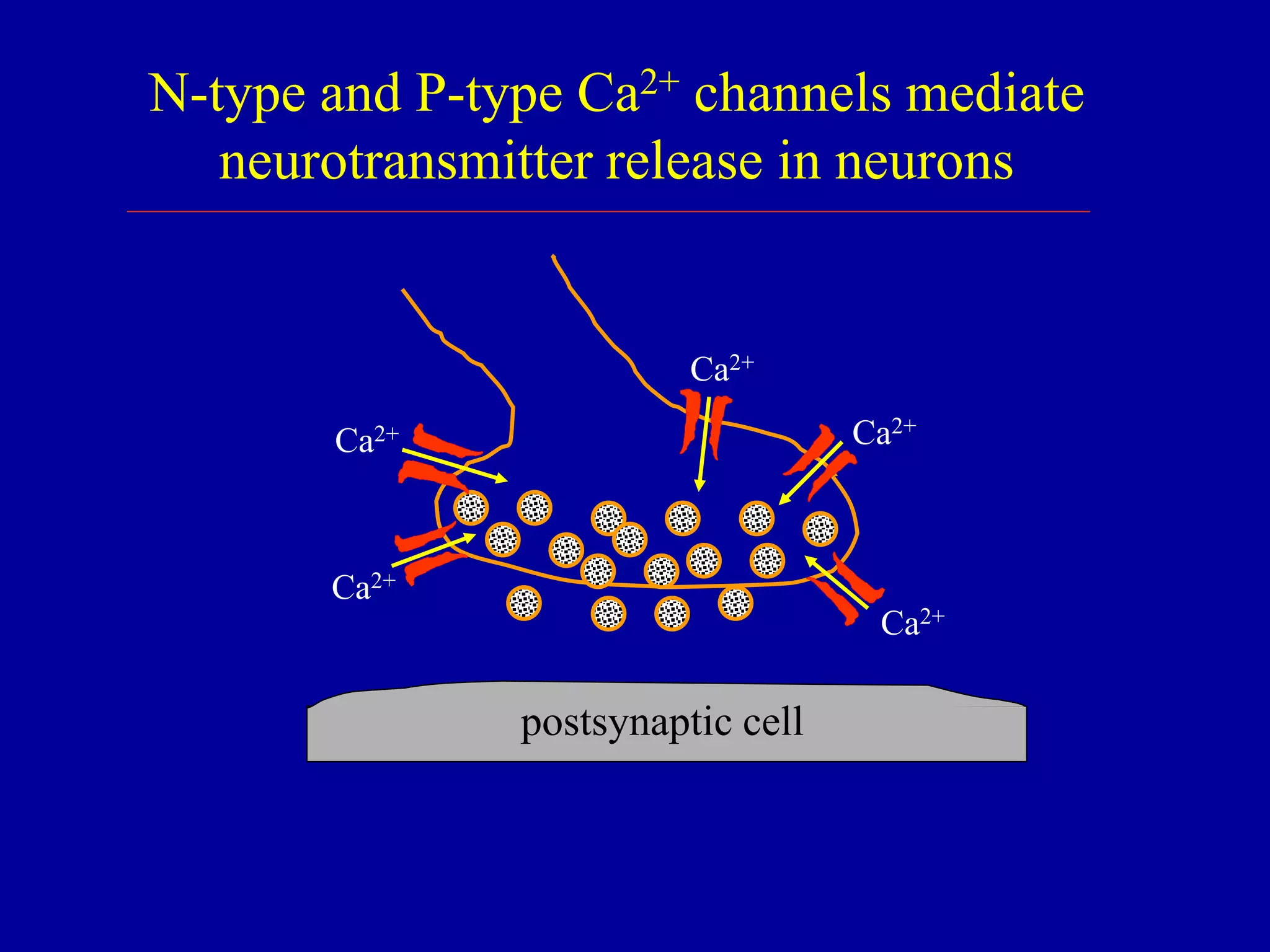
N-type and P-type Ca2+ channels mediate
neurotransmitter release in neurons
postsynaptic cell
Ca2+
Ca2+
Ca2+
Ca2+
Ca2+
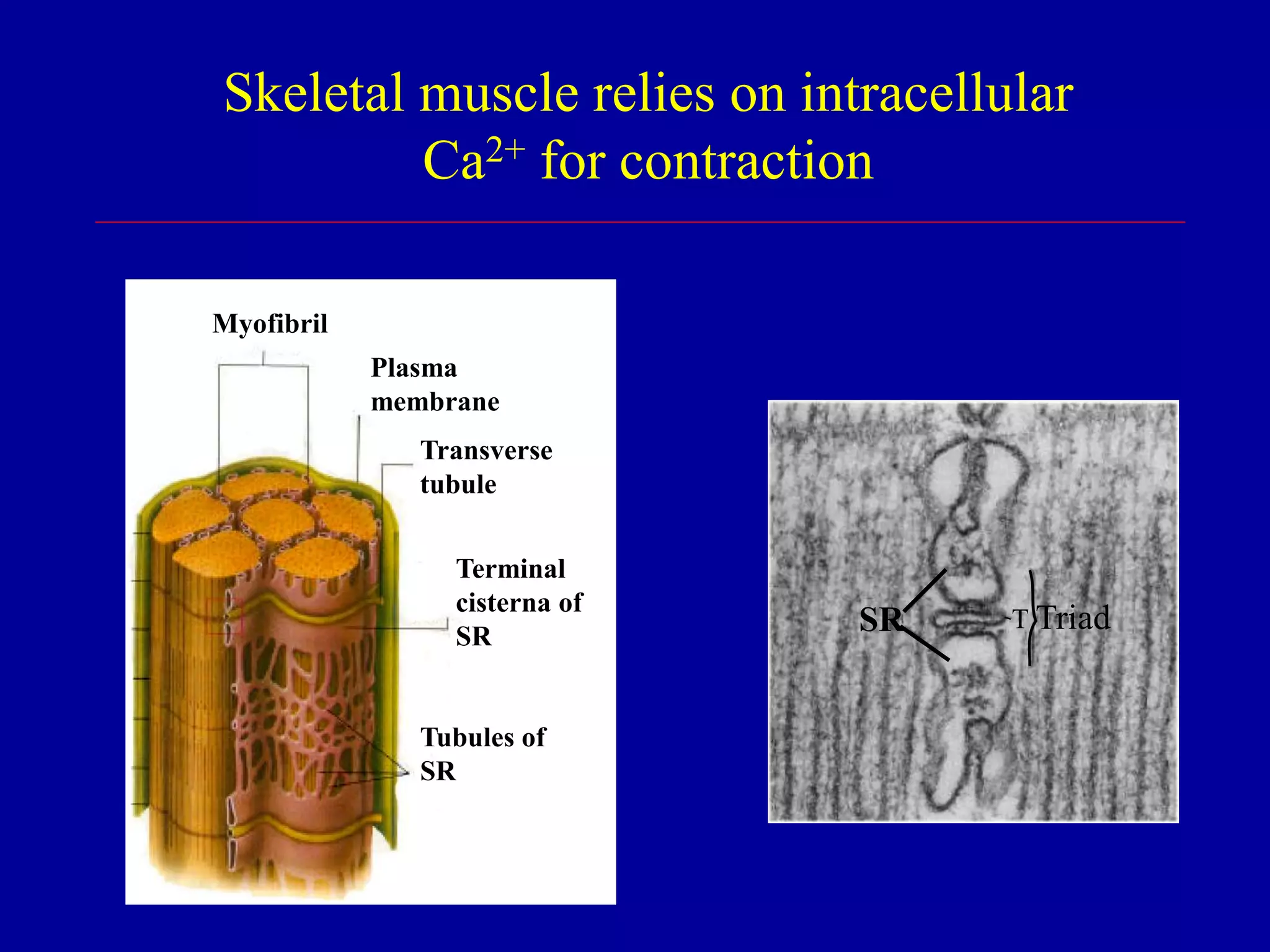
Myofibril
Plasma
membrane
Transverse
tubule
Terminal
cisterna of
SR
Tubules of
SR
TriadTSR
Skeletal muscle relies on intracellular
Ca2+ for contraction
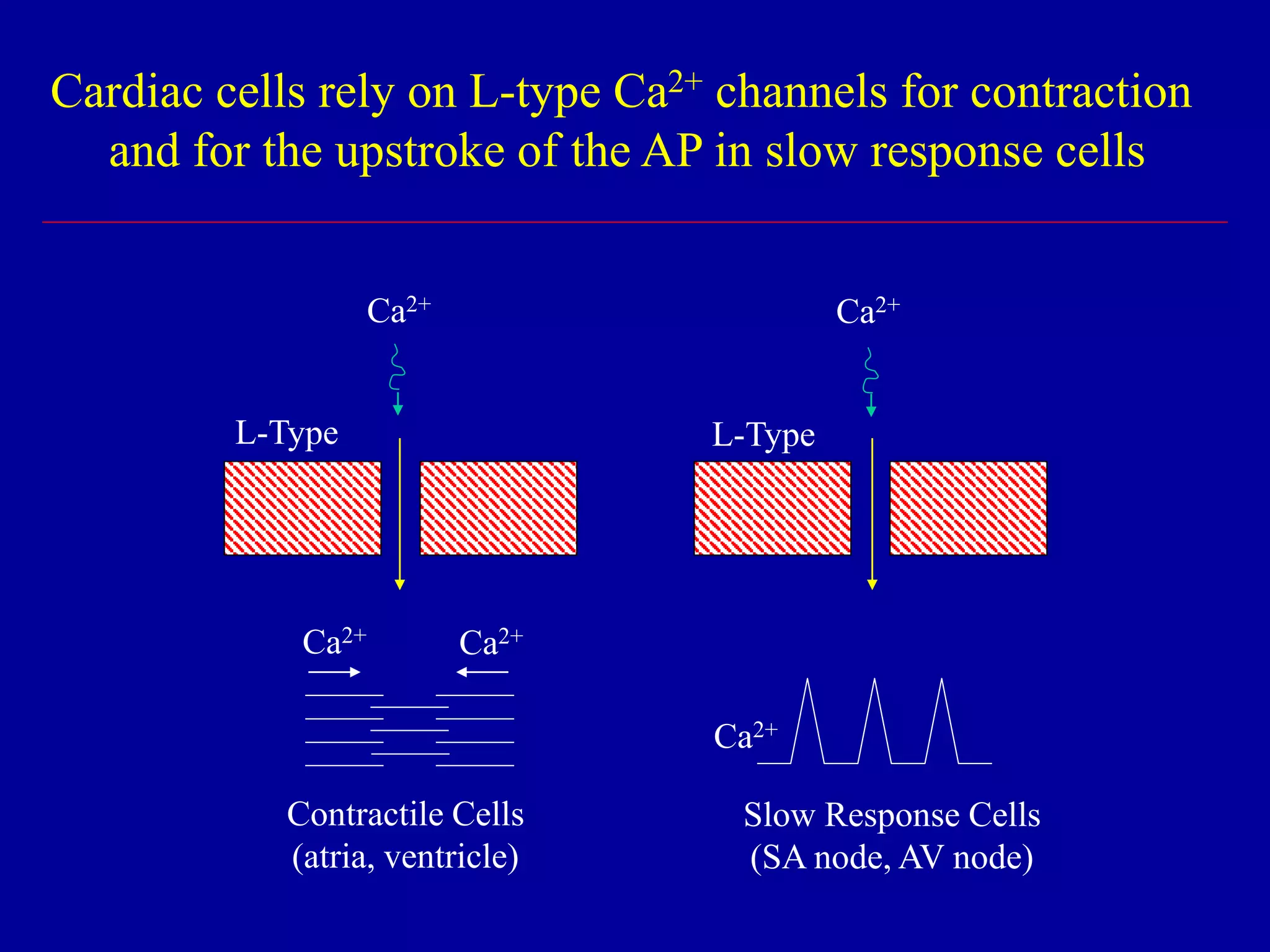
Cardiac cells rely on L-type Ca2+ channels for contraction
and for the upstroke of the AP in slow response cells
Contractile Cells
(atria, ventricle)
L-Type
Ca2+
Ca2+ Ca2+
Slow Response Cells
(SA node, AV node)
L-Type
Ca2+
Ca2+
Vascular smooth muscle relies on Ca2+ influx
through L-type Ca2+ channels for contraction
(graded, Ca2+ dependent
contraction)
L-Type
Ca2+
CCBs Act Selectively on Cardiovascular Tissues
 Neurons rely on N-and P-type Ca2+ channels
 Skeletal muscle relies primarily on [Ca]i
 Cardiac muscle requires Ca2+ influx through
L-type Ca2+ channels
- contraction (fast response cells)
- upstroke of AP (slow response cells)
 Vascular smooth muscle requires Ca2+ influx
through L-type Ca2+ channels for contraction
Outline
 Introduction
 CCB binding sites
 Heterogeneity of action
 Cardiac & hemodynamic
differentiation
 Pharmacokinetics
 Adverse effects
 Contraindications
 Summary
The different binding sites of CCBs result in differing
pharmacological effects
Voltage-dependent binding (targets smooth muscle)
Use-dependent binding (targets cardiac cells)
Cell
membrane
1

out
in
b
+20
-80
mV
2
d
Diltiazem
Verapamil
1
b
1
out

in
+20
-80
-30
2
d
1
Nifedipine
Cell
membranemV
Differential effects of different CCBs on CV cells
AV
SN
AV
SN
Potential reflex
increase in
HR, myocardial
contractility
and O2 demand
Coronary
VD
Dihydropyridines: Selective vasodilators Non -dihydropyridines: equipotent for
cardiac tissue and vasculature
Heart rate
moderating
Peripheral
and coronary
vasodilation
Reduced
inotropism
Peripheral
vasodilation
Effect Verapamil Diltiazem Nifedipine
Peripheral
vasodilatation
  
Coronary
vasodilatation
  
Preload 0 0 0/
Afterload   
Contractility  0/ / *
Heart rate 0/  /0
AV conduction   0
Hemodynamic Effects of CCBs
Outline
 Introduction
 CCB binding sites
 Heterogeneity of action
 Cardiac & hemodynamic
differentiation
 Pharmacokinetics
 Adverse effects
 Contraindications
 Summary
Agent
Oral
Absorption
(%)
Bioavail-
Ability
(%)
Protein
Bound
(%)
Elimination
Half-Life
(h)
Verapamil >90 10-35 83-92 2.8-6.3*
Diltiazem >90 41-67 77-80 3.5-7
Nifedipine >90 45-86 92-98 1.9-5.8
Nicardipine
-100
35 >95 2-4
Isradipine
>90
15-24 >95 8-9
Felodipine
-100
20 >99 11-16
Amlodipine
>90
64-90 97-99 30-50
CCBs: Pharmacokinetics
Outline
 Introduction
 CCB binding sites
 Heterogeneity of action
 Cardiac & hemodynamic
differentiation
 Pharmacokinetics
 Adverse effects
 Contraindications
 Summary
Diltiazem Verapamil Dihydropyridines
Overall 0-3% 10-14% 9-39%
Hypotension ++ ++ +++
Headaches 0 + +++
Peripheral
Edema
++ ++ +++
Constipation 0 ++ 0
CHF (Worsen) 0 + 0
AV block + ++ 0
Caution w/beta
blockers
+ ++ 0
Comparative Adverse Effects
 heart rate
 blood pressure
 anginal symptoms
 signs of CHF
 adverse effects
CCBs - Monitoring
Outline
 Introduction
 CCB binding sites
 Heterogeneity of action
 Cardiac & hemodynamic
differentiation
 Pharmacokinetics
 Adverse effects
 Contraindications
 Summary
Contraindication Verapamil Nifedipine Diltiazem
Hypotension + ++ +
Sinus
bradycardia
+ 0 +
AV conduction
defects
++ 0 ++
Severe cardiac
failure
++ + +
Contradications for CCBs
Outline
 Introduction
 CCB binding sites
 Heterogeneity of action
 Cardiac & hemodynamic
differentiation
 Pharmacokinetics
 Adverse effects
 Contraindications
 Summary
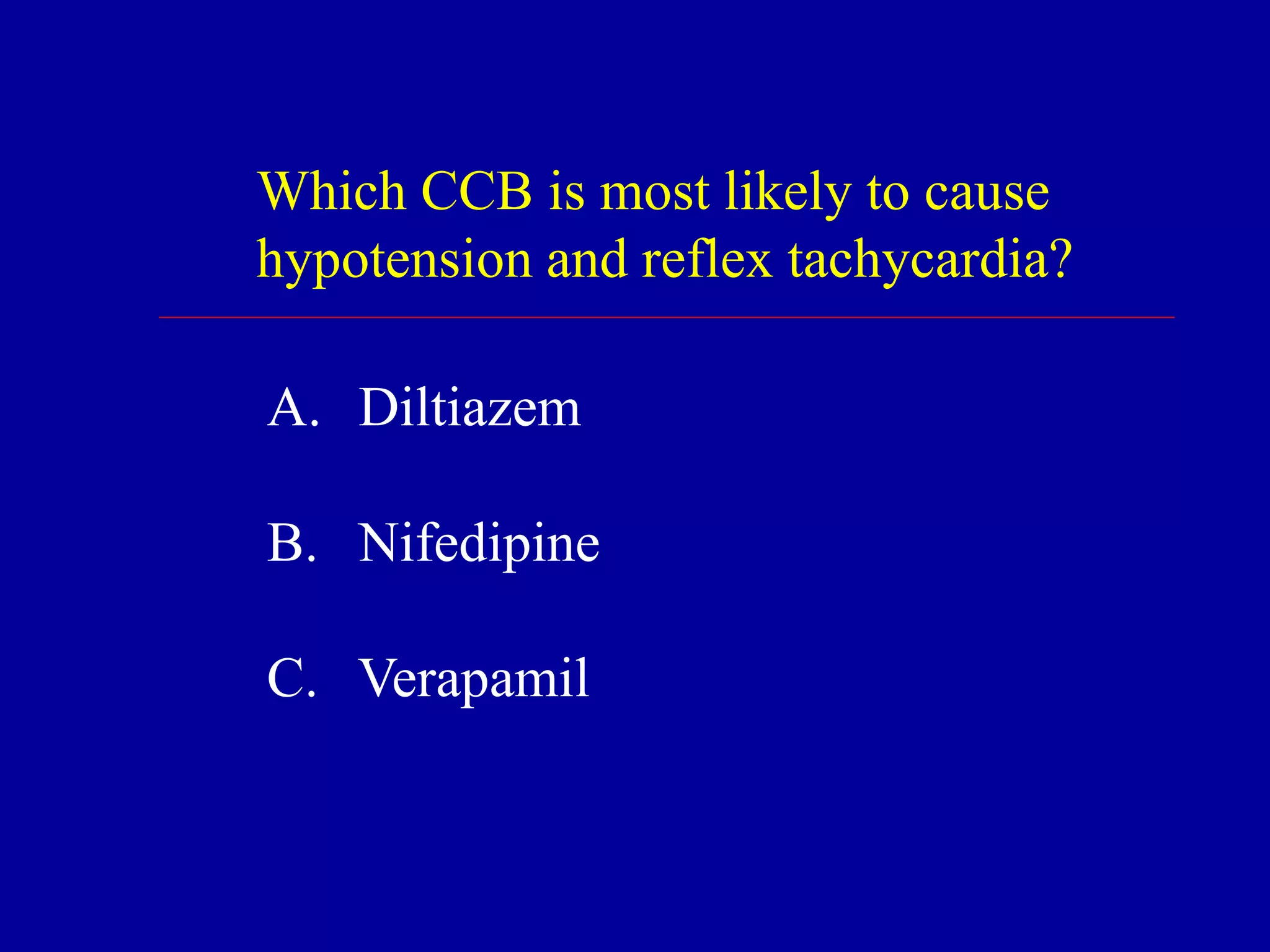
Which CCB is most likely to cause
hypotension and reflex tachycardia?
A. Diltiazem
B. Nifedipine
C. Verapamil
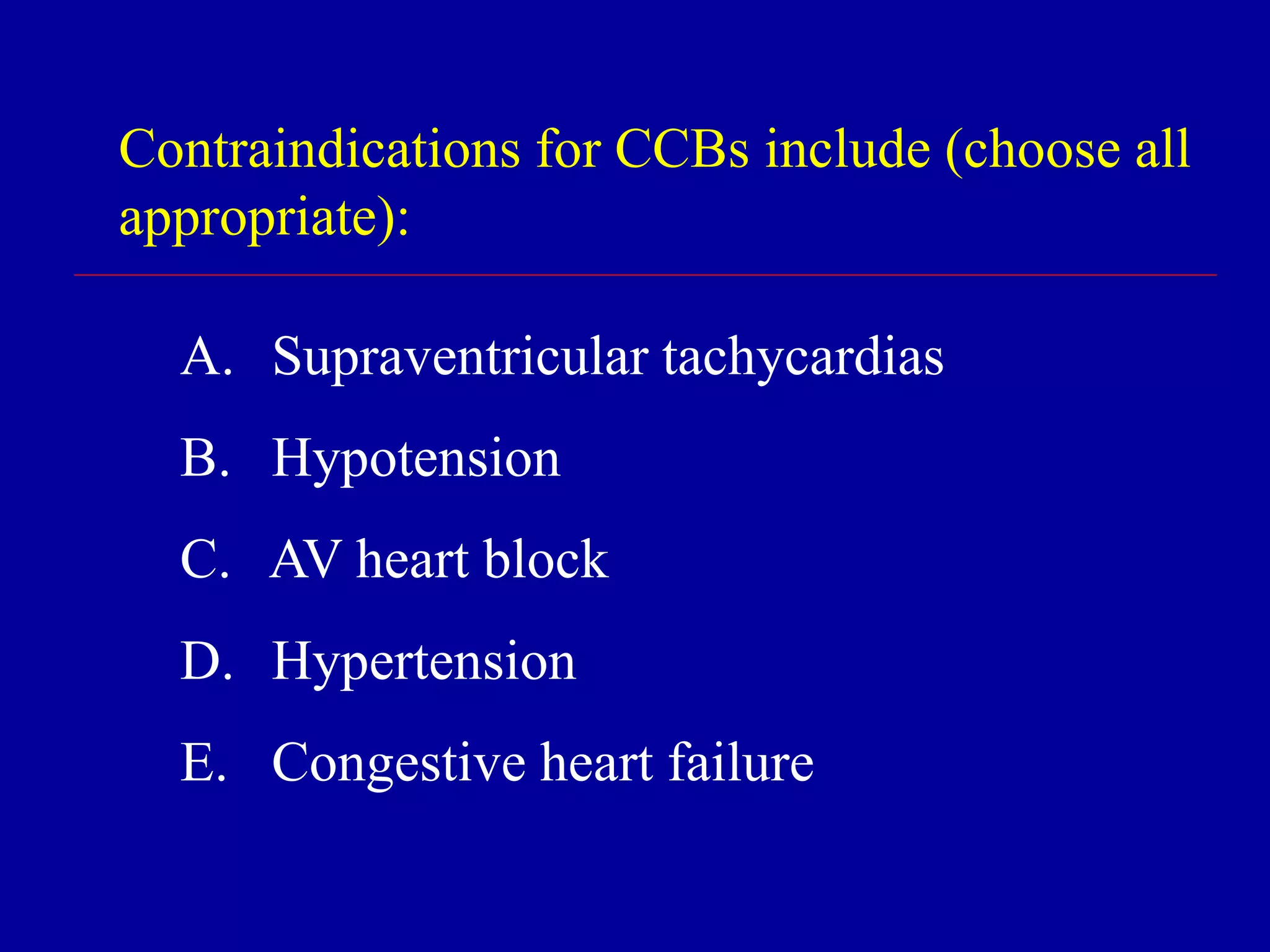
Contraindications for CCBs include (choose all
appropriate):
A. Supraventricular tachycardias
B. Hypotension
C. AV heart block
D. Hypertension
E. Congestive heart failure
CCBs may improve cardiac function by:
A. Reducing cardiac afterload
B. Increasing O2 supply
C. Decreasing cardiac preload
D. Normalizing heart rate in patients with
supraventricular tachycardias
Thank you!

Calcium channel blockers (1)

  • 1.
  • 2.
    Outline  Introduction  CCBbinding sites  Heterogeneity of action  Cardiac & hemodynamic differentiation  Pharmacokinetics  Adverse effects  Contraindications  Summary
  • 3.
    Chemical Type ChemicalNames Brand Names Phenylalkylamines verapamil Calan, Calna SR, Isoptin SR, Verelan Benzothiazepines diltiazem Cardizem CD, Dilacor XR 1,4-Dihydropyridines Nifedipine nicardipine isradipine felodipine amlodipine Adalat CC, Procardia XL Cardene DynaCirc Plendil Norvasc Three Classes of CCBs
  • 4.
    Three Classes ofCCBs N CH2 CH2 N 0 CH3 0 C CH3 0 CH3 CH3 Diltiazem C 0 CH3 NO2 CH3H3C C0H3C 0 0 Nifedipine C CH2 CH2 CH2CH2 CH2N CH3 CH3 C N CH H3C 0H3C 0H3C 0 CH3 0 CH3 Verapamil N H S
  • 5.
     Angina pectoris Hypertension  Treatment of supraventricular arrhythmias - Atrial Flutter - Atrial Fibrillation - Paroxysmal SVT Widespread use of CCBs
  • 6.
    Outline  Introduction  CCBbinding sites  Heterogeneity of action  Cardiac & hemodynamic differentiation  Pharmacokinetics  Adverse effects  Contraindications  Summary
  • 7.
    III IV II I IVIII 5 6 5 6 Out In III III IV The 1C subunit of the L-type Ca2+ channel is the pore-forming subunit
  • 8.
    NH3 + NH3 + COO- COO- b 1C NH3 + COO- 2 I II IIIIV COO- NH3 + d The expression and function of the 1C subunit is modulated by other smaller subunits L-Type Ca2+ Channel
  • 9.
    The Three Classesof CCBs Bind to Different Sites 1,4- Dihydropyridines (nifedipine) Phenylalkylamines (verapamil) Benzothiazepines (diltiazem) Ca2+ pore - - - -+ +-
  • 10.
     Increase thetime that Ca2+ channels are closed  Relaxation of the arterial smooth muscle but not much effect on venous smooth muscle  Significant reduction in afterload but not preload CCBs – Mechanisms of Action
  • 11.
    The different bindingsites of CCBs result in differing pharmacological effects Voltage-dependent binding (targets smooth muscle) Use-dependent binding (targets cardiac cells) Cell membrane 1  out in b +20 -80 mV 2 d Diltiazem Verapamil 1 b 1 out  in +20 -80 -30 2 d 1 Nifedipine Cell membranemV
  • 12.
    Outline  Introduction  CCBbinding sites  Heterogeneity of action  Cardiac & hemodynamic differentiation  Pharmacokinetics  Adverse effects  Contraindications  Summary
  • 13.
    Why Do CCBsAct Selectively on Cardiac and Vascular Muscle?
  • 14.
    N-type and P-typeCa2+ channels mediate neurotransmitter release in neurons postsynaptic cell Ca2+ Ca2+ Ca2+ Ca2+ Ca2+
  • 15.
  • 16.
    Cardiac cells relyon L-type Ca2+ channels for contraction and for the upstroke of the AP in slow response cells Contractile Cells (atria, ventricle) L-Type Ca2+ Ca2+ Ca2+ Slow Response Cells (SA node, AV node) L-Type Ca2+ Ca2+
  • 17.
    Vascular smooth musclerelies on Ca2+ influx through L-type Ca2+ channels for contraction (graded, Ca2+ dependent contraction) L-Type Ca2+
  • 18.
    CCBs Act Selectivelyon Cardiovascular Tissues  Neurons rely on N-and P-type Ca2+ channels  Skeletal muscle relies primarily on [Ca]i  Cardiac muscle requires Ca2+ influx through L-type Ca2+ channels - contraction (fast response cells) - upstroke of AP (slow response cells)  Vascular smooth muscle requires Ca2+ influx through L-type Ca2+ channels for contraction
  • 19.
    Outline  Introduction  CCBbinding sites  Heterogeneity of action  Cardiac & hemodynamic differentiation  Pharmacokinetics  Adverse effects  Contraindications  Summary
  • 20.
    The different bindingsites of CCBs result in differing pharmacological effects Voltage-dependent binding (targets smooth muscle) Use-dependent binding (targets cardiac cells) Cell membrane 1  out in b +20 -80 mV 2 d Diltiazem Verapamil 1 b 1 out  in +20 -80 -30 2 d 1 Nifedipine Cell membranemV
  • 21.
    Differential effects ofdifferent CCBs on CV cells AV SN AV SN Potential reflex increase in HR, myocardial contractility and O2 demand Coronary VD Dihydropyridines: Selective vasodilators Non -dihydropyridines: equipotent for cardiac tissue and vasculature Heart rate moderating Peripheral and coronary vasodilation Reduced inotropism Peripheral vasodilation
  • 22.
    Effect Verapamil DiltiazemNifedipine Peripheral vasodilatation    Coronary vasodilatation    Preload 0 0 0/ Afterload    Contractility  0/ / * Heart rate 0/  /0 AV conduction   0 Hemodynamic Effects of CCBs
  • 23.
    Outline  Introduction  CCBbinding sites  Heterogeneity of action  Cardiac & hemodynamic differentiation  Pharmacokinetics  Adverse effects  Contraindications  Summary
  • 24.
    Agent Oral Absorption (%) Bioavail- Ability (%) Protein Bound (%) Elimination Half-Life (h) Verapamil >90 10-3583-92 2.8-6.3* Diltiazem >90 41-67 77-80 3.5-7 Nifedipine >90 45-86 92-98 1.9-5.8 Nicardipine -100 35 >95 2-4 Isradipine >90 15-24 >95 8-9 Felodipine -100 20 >99 11-16 Amlodipine >90 64-90 97-99 30-50 CCBs: Pharmacokinetics
  • 25.
    Outline  Introduction  CCBbinding sites  Heterogeneity of action  Cardiac & hemodynamic differentiation  Pharmacokinetics  Adverse effects  Contraindications  Summary
  • 26.
    Diltiazem Verapamil Dihydropyridines Overall0-3% 10-14% 9-39% Hypotension ++ ++ +++ Headaches 0 + +++ Peripheral Edema ++ ++ +++ Constipation 0 ++ 0 CHF (Worsen) 0 + 0 AV block + ++ 0 Caution w/beta blockers + ++ 0 Comparative Adverse Effects
  • 27.
     heart rate blood pressure  anginal symptoms  signs of CHF  adverse effects CCBs - Monitoring
  • 28.
    Outline  Introduction  CCBbinding sites  Heterogeneity of action  Cardiac & hemodynamic differentiation  Pharmacokinetics  Adverse effects  Contraindications  Summary
  • 29.
    Contraindication Verapamil NifedipineDiltiazem Hypotension + ++ + Sinus bradycardia + 0 + AV conduction defects ++ 0 ++ Severe cardiac failure ++ + + Contradications for CCBs
  • 30.
    Outline  Introduction  CCBbinding sites  Heterogeneity of action  Cardiac & hemodynamic differentiation  Pharmacokinetics  Adverse effects  Contraindications  Summary
  • 31.
    Which CCB ismost likely to cause hypotension and reflex tachycardia? A. Diltiazem B. Nifedipine C. Verapamil
  • 32.
    Contraindications for CCBsinclude (choose all appropriate): A. Supraventricular tachycardias B. Hypotension C. AV heart block D. Hypertension E. Congestive heart failure
  • 33.
    CCBs may improvecardiac function by: A. Reducing cardiac afterload B. Increasing O2 supply C. Decreasing cardiac preload D. Normalizing heart rate in patients with supraventricular tachycardias
  • 34.