• Meaning of Consumer Buying Decision
Process
• Stages of Consumer Buying Decision
Process
Meaning of Consumer Buying Decision Process
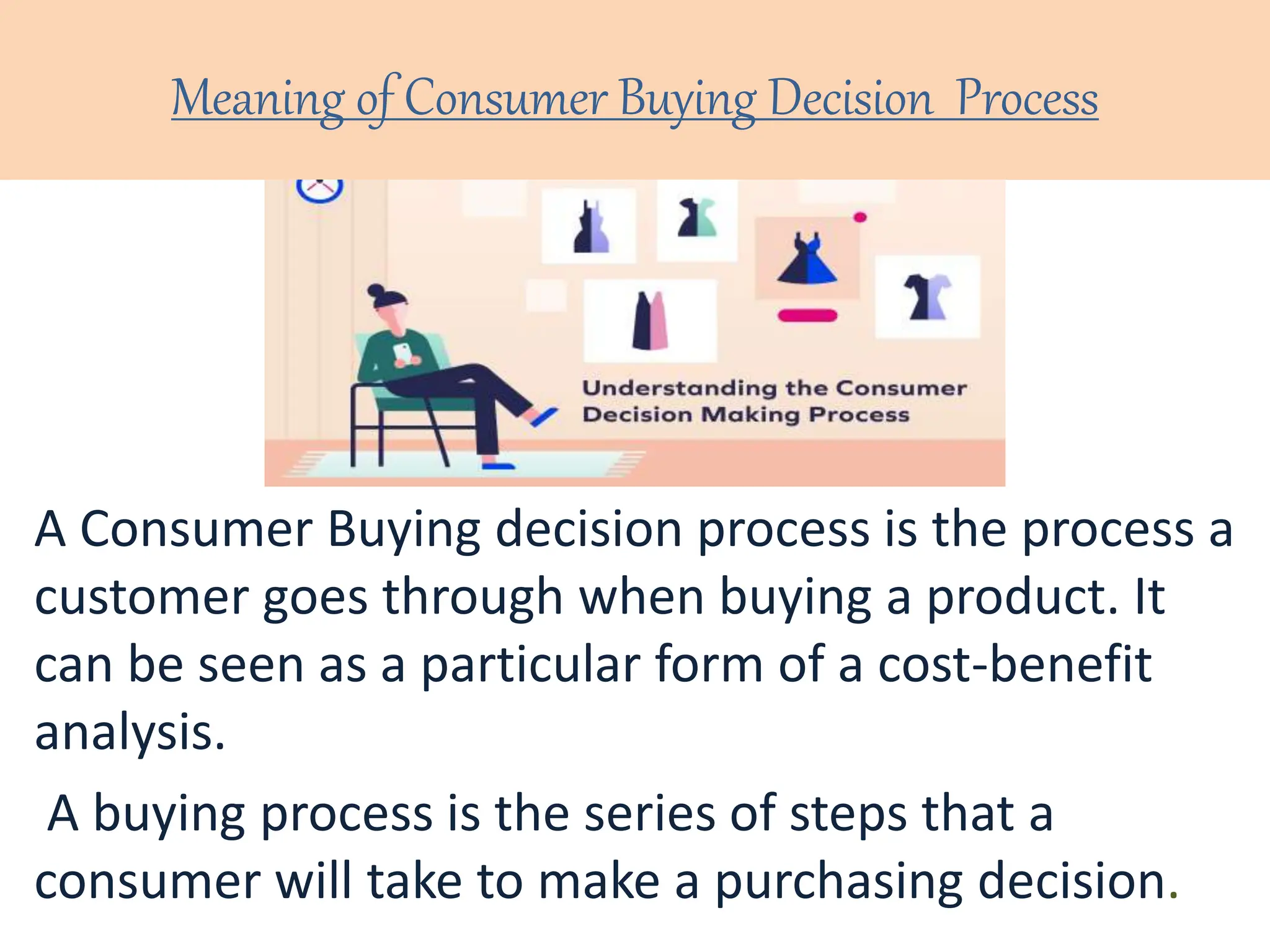
A Consumer Buying decision process is the process a
customer goes through when buying a product. It
can be seen as a particular form of a cost-benefit
analysis.
A buying process is the series of steps that a
consumer will take to make a purchasing decision.
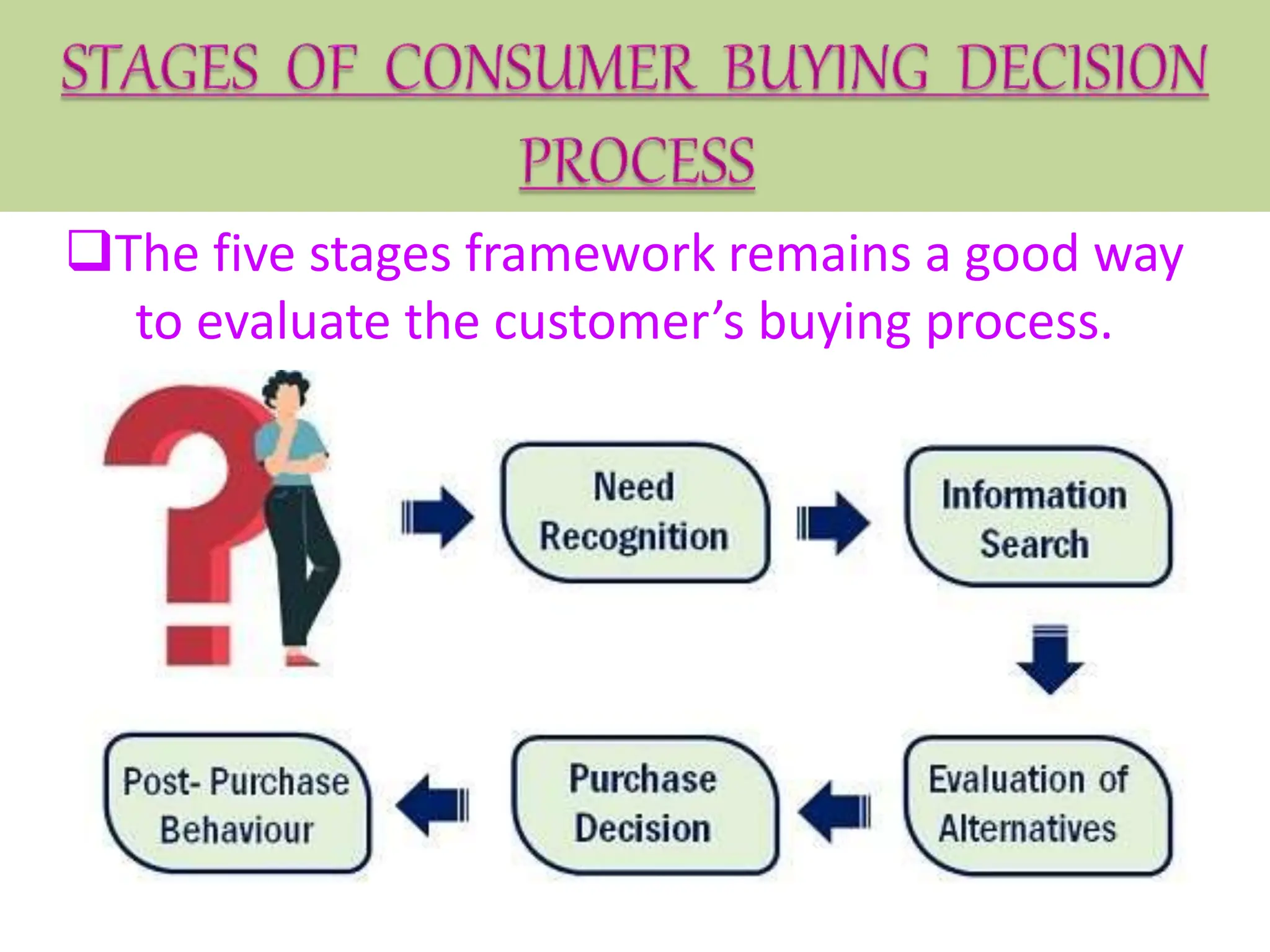
The five stages framework remains a good way
to evaluate the customer’s buying process.
1. Need Recognition
A purchase cannot take place without the
recognition of the need. The need may have
been triggered by internal stimuli such as
hunger or thirst or external stimuli such
advertising.
According to Maslow’s hierarchy, only a when
a person has fulfilled the needs of a certain
stage, can he or she move to the next stage.
2. INFORMATION SEARCH
This is the buyer’s effort at searching the internal
and external business environments to identify and
observe sources of information related to the focal
buying decisions.
Internal search refers to recalling past experiences
with the product.
External search is conducted when customer tries
to seek information from personal sources (family,
friends), commercial sources (advertisements, sales
promotions) or public sources (newspapers,
television).
3. Evaluation of alternatives
At this stage, consumers evaluate different
products/brands on the basis of varying product
attributes, and whether these can deliver the benefits
that the customers are seeking.
A factor that heavily influences this stage is the
customer’s attitude.
Involvement is another factor that influences the
evaluation process.
4. Purchase decision
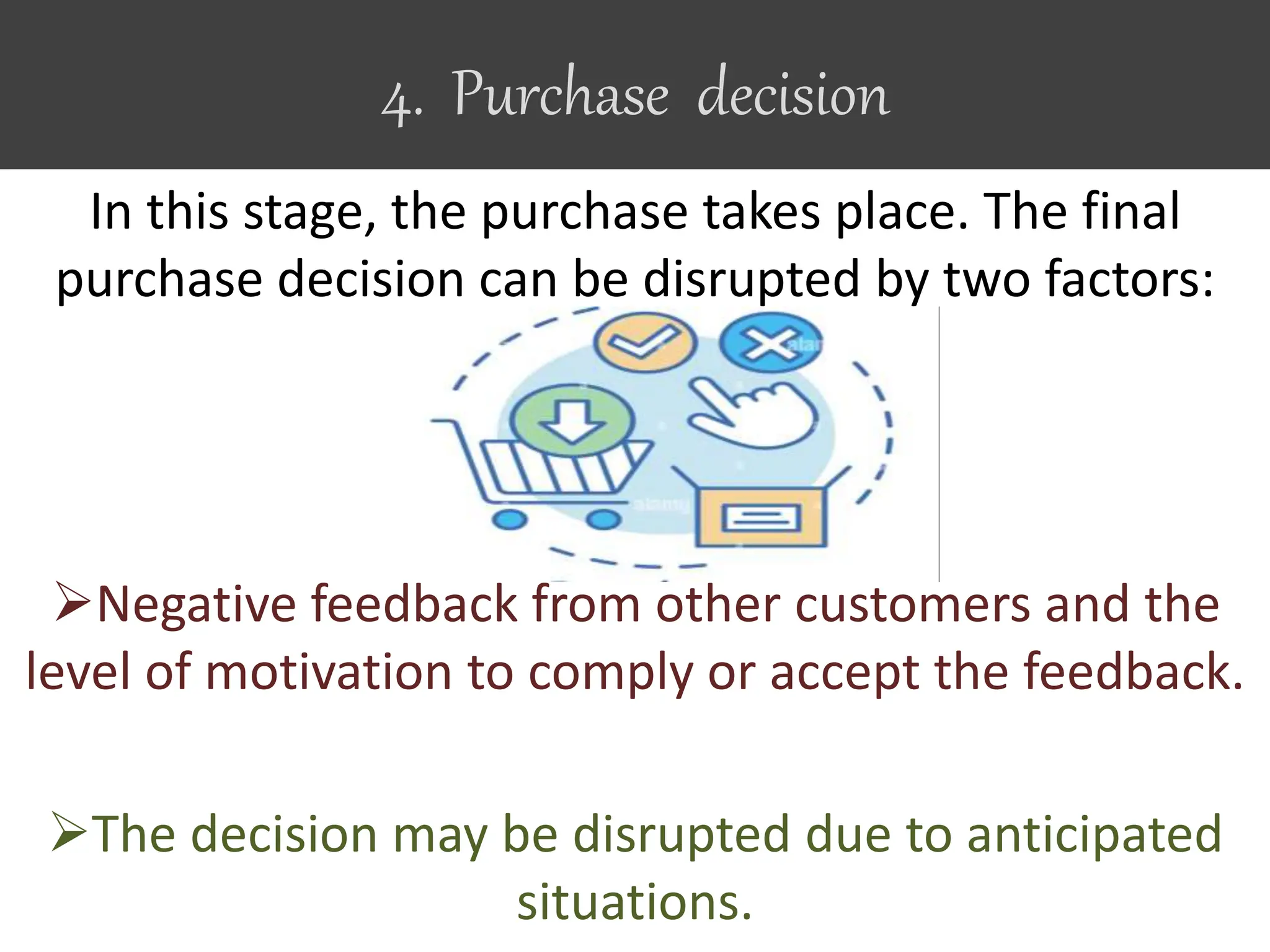
In this stage, the purchase takes place. The final
purchase decision can be disrupted by two factors:
Negative feedback from other customers and the
level of motivation to comply or accept the feedback.
The decision may be disrupted due to anticipated
situations.
5. Post-purchase behaviour
At this stage, customers will compare products with their
previous expectations and will be either satisfied or dissatisfied.
This can greatly the decision process for similar purchases from
the same company in the future, having a knock-on effect at the
information search stage and evaluation of alternatives stage.
Conclusion
 Product price should be low with high quality of
product.
 Product should be safe and healthy in use.
 Advertisement should be clearly define and easy to
understand.
 Majority of the buying behaviour s influenced by
family and other reference groups.
THANKYOU

Presentation On Consumer Buying Decisions Process

  • 2.
    • Meaning ofConsumer Buying Decision Process • Stages of Consumer Buying Decision Process
  • 3.
    Meaning of ConsumerBuying Decision Process A Consumer Buying decision process is the process a customer goes through when buying a product. It can be seen as a particular form of a cost-benefit analysis. A buying process is the series of steps that a consumer will take to make a purchasing decision.
  • 4.
    The five stagesframework remains a good way to evaluate the customer’s buying process.
  • 5.
    1. Need Recognition Apurchase cannot take place without the recognition of the need. The need may have been triggered by internal stimuli such as hunger or thirst or external stimuli such advertising. According to Maslow’s hierarchy, only a when a person has fulfilled the needs of a certain stage, can he or she move to the next stage.
  • 6.
    2. INFORMATION SEARCH Thisis the buyer’s effort at searching the internal and external business environments to identify and observe sources of information related to the focal buying decisions. Internal search refers to recalling past experiences with the product. External search is conducted when customer tries to seek information from personal sources (family, friends), commercial sources (advertisements, sales promotions) or public sources (newspapers, television).
  • 7.
    3. Evaluation ofalternatives At this stage, consumers evaluate different products/brands on the basis of varying product attributes, and whether these can deliver the benefits that the customers are seeking. A factor that heavily influences this stage is the customer’s attitude. Involvement is another factor that influences the evaluation process.
  • 8.
    4. Purchase decision Inthis stage, the purchase takes place. The final purchase decision can be disrupted by two factors: Negative feedback from other customers and the level of motivation to comply or accept the feedback. The decision may be disrupted due to anticipated situations.
  • 9.
    5. Post-purchase behaviour Atthis stage, customers will compare products with their previous expectations and will be either satisfied or dissatisfied. This can greatly the decision process for similar purchases from the same company in the future, having a knock-on effect at the information search stage and evaluation of alternatives stage.
  • 10.
    Conclusion  Product priceshould be low with high quality of product.  Product should be safe and healthy in use.  Advertisement should be clearly define and easy to understand.  Majority of the buying behaviour s influenced by family and other reference groups. THANKYOU