Consumer Behaviour In Rural
          Market
    (An Indian Scenario)


 SUBMITTED BY :-
                   VIVEK KUMAR SINGH
                           &
                   MOHIT TRIPATHI
                   MBA(BE) III SEM
                   SESSION 2011-2013
                   INSTITUTE OF BUSINESS MANAGEMENT,
                   CSJM UNIVERSITY, KANPUR
Consumer Behavior In Rural Market

ď‚— Consumer behaviour is the study of individuals, groups, or
    organizations and the processes they use to select, secure, and dispose
    of products, services, experiences, or ideas to satisfy needs and the
    impacts that these processes have on the consumer and society.
ď‚—   It blends elements from
ď‚—   Psychology,
ď‚—   Sociology
ď‚—   Social anthropology and
ď‚—   Economics
ď‚—   It attempts to understand the decision-making processes of
    buyers, both individually and in groups. It studies characteristics of
    individual consumers such as demographics and behavioral variables in
    an attempt to understand people's wants. It also tries to assess
    influences on the consumer from groups such as
    family, friends, reference groups, and society in general.
Several Myth About The Rural Sector

ď‚— Cast play a key role in behavior of community. In rural
  India, the upper cast and lower cast differences still
  continue and are considered an important facet of everyday
  life.
ď‚— There is a clear demarcation in the villages for house
  making, two areas , including natural resources such as
  drinking water and grazing land for cattle.
ď‚— In urban limited physical space and pressure on limited
  available natural resources , interaction based on economic
  status and vocations rather than on basis of caste leads to
  an absence of such division
Several Myth About The Rural Sector

ď‚— The belief that rural people do not buy brands.
ď‚— The belief that the rural consumer buy cheap products. In
  reality they seek value for money.
ď‚— The belief that the rural market is homogenous mass. In
  fact it is fascinatingly heterogeneous.
ď‚— An urban individual is free to take independent purchase
  decision. In a village, because of strong social structure,
  including caste consideration and low literacy level,
  community decision making is quite common.
Asian Journal of Technology & Management Research
  [ISSN: 2249 –0892] Vol. 01 – Issue: 01 (Jan - Jun 2011)
ď‚— The rural market account for market worth of 27$ billion.
ď‚— About 285 millions live in urban India whereas 792 million
  resides in rural areas.
 72% of India’s population resides in its 600000 villages.
ď‚— Many companies like Colgate-Palmolive, HCL & Godrej etc.
  have already furrows into rural households but still capturing the
  market is a different dream
ď‚— For quite sometime now, the life of the rural India has been the subject
  of animated discussions in the corporate suites, with the urban markets
  getting saturated for several categories of consumer goods and with
  rising rural income. For example,
ď‚— Tata chemicals ran a chain called Tata Kisan Kendra which
  offered services ranging from agriculture input to financing to advisory
  services.
ď‚— Hindustan Levers is offering deals to farmers to cover operation
  from the pre harvest to post harvest stage.
 Mahindra & Mahindra limited, India’s largest farm equipment
  company & its subsidiary Mahindra Shubhlabh services has
  operated in eleven states with 7 lacs strong Mahindra tractor customer
  base& 400+ dealers provide a complete range of products and services
  to improve farm productivity and establish market linkages to the
  commodity market chain.
The objective of this article is therefore threefold.

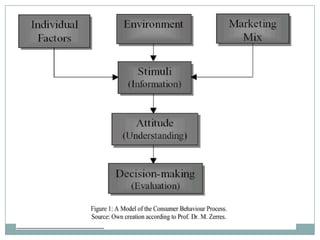
ď‚— The first objective is to develop a framework used to study consumer
  behavior in rural market.

ď‚— The second objective is to apply this frame work to examine and
  understand consumer behavior in rural areas.

ď‚— The last objective is to prefer generalization and recommendation to
  those wishing to market their productservices in the rural market.

                     CONSUMER BEHAVIOR IN RURAL MARKETING-A NEW PARADIGM
                                                  Dr.Satya Prakash Srivastava1
                                                               Manish Kumar2
Changing Behaviour Of Rural Consumer

ď‚— Better Quality Of Life
ď‚— Brand Awareness
ď‚— Desire for New Products & Fashion Consciousness
ď‚— No Desire To Save
ď‚— Influence Through Demonstration
ď‚— Role Of The Retailers
ď‚— Pricing Strategies
ď‚— Distribution Strategies
Change Of Consumer Behaviour At Glance
1.    Radio Source Of Information
2.    Source If Information
3.    Role Of Retailers
4.    Role Of Friends
5.    Role of Advertisement
6.    Brand Loyalty
7.    Income Group
8.    Role of Price
9.    Quality Product
10.   Place of Buying
THANK YOU

Consumer behavior in rural market

  • 1.
    Consumer Behaviour InRural Market (An Indian Scenario) SUBMITTED BY :- VIVEK KUMAR SINGH & MOHIT TRIPATHI MBA(BE) III SEM SESSION 2011-2013 INSTITUTE OF BUSINESS MANAGEMENT, CSJM UNIVERSITY, KANPUR
  • 2.
    Consumer Behavior InRural Market ď‚— Consumer behaviour is the study of individuals, groups, or organizations and the processes they use to select, secure, and dispose of products, services, experiences, or ideas to satisfy needs and the impacts that these processes have on the consumer and society. ď‚— It blends elements from ď‚— Psychology, ď‚— Sociology ď‚— Social anthropology and ď‚— Economics ď‚— It attempts to understand the decision-making processes of buyers, both individually and in groups. It studies characteristics of individual consumers such as demographics and behavioral variables in an attempt to understand people's wants. It also tries to assess influences on the consumer from groups such as family, friends, reference groups, and society in general.
  • 3.
    Several Myth AboutThe Rural Sector ď‚— Cast play a key role in behavior of community. In rural India, the upper cast and lower cast differences still continue and are considered an important facet of everyday life. ď‚— There is a clear demarcation in the villages for house making, two areas , including natural resources such as drinking water and grazing land for cattle. ď‚— In urban limited physical space and pressure on limited available natural resources , interaction based on economic status and vocations rather than on basis of caste leads to an absence of such division
  • 4.
    Several Myth AboutThe Rural Sector ď‚— The belief that rural people do not buy brands. ď‚— The belief that the rural consumer buy cheap products. In reality they seek value for money. ď‚— The belief that the rural market is homogenous mass. In fact it is fascinatingly heterogeneous. ď‚— An urban individual is free to take independent purchase decision. In a village, because of strong social structure, including caste consideration and low literacy level, community decision making is quite common.
  • 5.
    Asian Journal ofTechnology & Management Research [ISSN: 2249 –0892] Vol. 01 – Issue: 01 (Jan - Jun 2011)  The rural market account for market worth of 27$ billion.  About 285 millions live in urban India whereas 792 million resides in rural areas.  72% of India’s population resides in its 600000 villages.  Many companies like Colgate-Palmolive, HCL & Godrej etc. have already furrows into rural households but still capturing the market is a different dream
  • 6.
     For quitesometime now, the life of the rural India has been the subject of animated discussions in the corporate suites, with the urban markets getting saturated for several categories of consumer goods and with rising rural income. For example,  Tata chemicals ran a chain called Tata Kisan Kendra which offered services ranging from agriculture input to financing to advisory services.  Hindustan Levers is offering deals to farmers to cover operation from the pre harvest to post harvest stage.  Mahindra & Mahindra limited, India’s largest farm equipment company & its subsidiary Mahindra Shubhlabh services has operated in eleven states with 7 lacs strong Mahindra tractor customer base& 400+ dealers provide a complete range of products and services to improve farm productivity and establish market linkages to the commodity market chain.
  • 7.
    The objective ofthis article is therefore threefold. ď‚— The first objective is to develop a framework used to study consumer behavior in rural market. ď‚— The second objective is to apply this frame work to examine and understand consumer behavior in rural areas. ď‚— The last objective is to prefer generalization and recommendation to those wishing to market their productservices in the rural market. CONSUMER BEHAVIOR IN RURAL MARKETING-A NEW PARADIGM Dr.Satya Prakash Srivastava1 Manish Kumar2
  • 9.
    Changing Behaviour OfRural Consumer ď‚— Better Quality Of Life ď‚— Brand Awareness ď‚— Desire for New Products & Fashion Consciousness ď‚— No Desire To Save ď‚— Influence Through Demonstration ď‚— Role Of The Retailers ď‚— Pricing Strategies ď‚— Distribution Strategies
  • 10.
    Change Of ConsumerBehaviour At Glance 1. Radio Source Of Information 2. Source If Information 3. Role Of Retailers 4. Role Of Friends 5. Role of Advertisement 6. Brand Loyalty 7. Income Group 8. Role of Price 9. Quality Product 10. Place of Buying
  • 11.