Name: Ludwig Millan
What is Business
       English all about?
              
 Business English is typically taught to business
  people who need to use it in their daily
  duties. Sometimes they purposefully take such a
  course to help improve their performance on the
  job, other times they are required to take it and aren't
  always happy about being in your classroom. In
  some countries their performance in the English
  classroom and successful completion of a certain
  number of courses is a requirement for moving up
  the career ladder.
MEANS
                     
 what this all means is that the people in the
  classroom WANT or NEED or are REQUIRED to
  learn Business English. Motivation can be an issue in
  the classroom as students are often required to take
  classes early in the morning, before their regular
  duties begin, or late in the day following a full day of
  work. Sometimes you will even hear tummies
  rumbling as they hope to get home to dinner soon
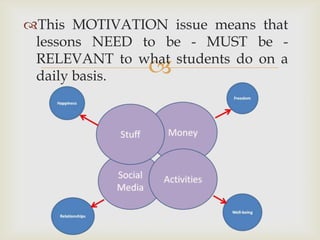
This MOTIVATION issue means that
 lessons NEED to be - MUST be -
 RELEVANT to what students do on a
 daily basis.   
RELEVANCE is a critical issue
     in Business English
                 
There are many unskilled EFL teachers
 who will say that Business English is
 just like teaching any other English
 class, except you put it in a business
 context.
Half-way Right . . .
             
 Those who suggest that you simply change "The pen
  is on the desk" to "The report is on the photocopier"
  probably have not spent much time in a Business
  English classroom, nor have they been successful at
  it.         Nonetheless,        there   are    many
  teachers, websites, and even lesson books that
  suggest that approach. They are missing the boat in
  motivating their students . . .
RELEVANCE =
              MOTIVATION
                            
 After you spend a long day at work, how would you like
  to spend another hour - or two - in a
  classroom? With, "The report is on the photocopier"?

 Think of the frustrations of the day, demanding and
  difficult clients and customers, unreasonable supervisors -
  and now you have to deal with that English teacher!

 But . . . if a student's lesson is directly related to their
  work and their success, there will be a team of people
  EAGER for assistance in that classroom.
Relevance
                          
 "Realia" or "authentic materials" are what create relevance in the Business
  English classroom. Teachers should talk to students, ask them what they
  need help with. Ask them about difficult conversations they have had and
  what the problem might have been. Ask them about writing they need to
  do, emails they must answer - and then fit your course book and lessons
  into their specific needs.

Students should be encouraged to bring their email, correspondence and
reports to the instructor so they can devise lessons and tasks for everyone to
work on - that are relevant to their work place.

 Because much business communication is confidential - or product
  information is proprietary - students should block out confidential
  information. NO ONE wants photocopied handouts to get someone fired.
GET ON THE TEAM
                          
 If a teacher's PERSONAL GOAL is to help students
  succeed, students quickly get that the teacher is on
  their team. Students quite easily pick up if their
  teacher is there just for the money, just for the "gig" -
  or        to         REALLY          help          them.

  Teaching is "helping profession" - when a student's
  interests are at heart, you will surprised how much
  fun can be had and how well classes will go.


Now GET GOING!
BIBLIOGRAPHY
             
 TAKEN OF : Bussiness english book

Link:http://www.businessenglishebook.com/Introduc
tion-to-Business-English.htm

Bussiness in english

  • 1.
  • 2.
    What is Business English all about?   Business English is typically taught to business people who need to use it in their daily duties. Sometimes they purposefully take such a course to help improve their performance on the job, other times they are required to take it and aren't always happy about being in your classroom. In some countries their performance in the English classroom and successful completion of a certain number of courses is a requirement for moving up the career ladder.
  • 3.
    MEANS   what this all means is that the people in the classroom WANT or NEED or are REQUIRED to learn Business English. Motivation can be an issue in the classroom as students are often required to take classes early in the morning, before their regular duties begin, or late in the day following a full day of work. Sometimes you will even hear tummies rumbling as they hope to get home to dinner soon
  • 4.
    This MOTIVATION issuemeans that lessons NEED to be - MUST be - RELEVANT to what students do on a daily basis. 
  • 5.
    RELEVANCE is acritical issue in Business English  There are many unskilled EFL teachers who will say that Business English is just like teaching any other English class, except you put it in a business context.
  • 6.
    Half-way Right .. .   Those who suggest that you simply change "The pen is on the desk" to "The report is on the photocopier" probably have not spent much time in a Business English classroom, nor have they been successful at it. Nonetheless, there are many teachers, websites, and even lesson books that suggest that approach. They are missing the boat in motivating their students . . .
  • 7.
    RELEVANCE = MOTIVATION   After you spend a long day at work, how would you like to spend another hour - or two - in a classroom? With, "The report is on the photocopier"?  Think of the frustrations of the day, demanding and difficult clients and customers, unreasonable supervisors - and now you have to deal with that English teacher!  But . . . if a student's lesson is directly related to their work and their success, there will be a team of people EAGER for assistance in that classroom.
  • 8.
    Relevance   "Realia" or "authentic materials" are what create relevance in the Business English classroom. Teachers should talk to students, ask them what they need help with. Ask them about difficult conversations they have had and what the problem might have been. Ask them about writing they need to do, emails they must answer - and then fit your course book and lessons into their specific needs. Students should be encouraged to bring their email, correspondence and reports to the instructor so they can devise lessons and tasks for everyone to work on - that are relevant to their work place.  Because much business communication is confidential - or product information is proprietary - students should block out confidential information. NO ONE wants photocopied handouts to get someone fired.
  • 9.
    GET ON THETEAM   If a teacher's PERSONAL GOAL is to help students succeed, students quickly get that the teacher is on their team. Students quite easily pick up if their teacher is there just for the money, just for the "gig" - or to REALLY help them. Teaching is "helping profession" - when a student's interests are at heart, you will surprised how much fun can be had and how well classes will go.
  • 10.
  • 11.
    BIBLIOGRAPHY   TAKEN OF : Bussiness english book Link:http://www.businessenglishebook.com/Introduc tion-to-Business-English.htm