Need for Library Legislation and  National Policy on Libraries in Pakistan in 2010 Bushra Almas Jaswal Chief Librarian and Associate Professor ,  Forman Christian College University, Lahore
Objectives of Study To explore the Legal and Regulatory Framework available  for Libraries in Pakistan. To study  policies and plans of the Govt. of Pakistan, especially in the financial outlay of the Five Year Plans and their impact on  the development of Library System in Pakistan from 1947 onwards. To highlight the situation of Libraries in Pakistan Vision 2030 To recommend strategies and practices to make library profession and professionals in Pakistan active participants in development of knowledge economy in Pakistan.
Legal and Regulatory Framework for Libraries in Pakistan  The Constitution 1947  -  Pakistan acquired an interim Constitution in the form of Govt. of India Act  1935  -  Seventh Schedule (legislative Lists) - List 1. Federal Legislative List  , Entry No.  11. “Libraries, museums and similar institutions, controlled or financed by the Federation.   1956  -  and successive   1962  Constitutions, followed the same pattern.  Additionally, the 1962 Constitution of the Islamic Republic of Pakistan, in Chapter VI, Third Schedule, under  Matters with respect to which the Central Legislature  has exclusive powers also mentions:  29. National libraries and museums
Legal and Regulatory Framework for Libraries in Pakistan  The Constitution 1973 -   The Constitution in the Federal Legislative List as contained in the 4 lh  Schedule [Article-70(4)]. At item  No. 15 of the Federal Legislative list , is mentions:  Entry No 15:  "Libraries, museums, and similar institutions controlled or financed by the Federation . 2004 -   The latest Constitution of Pakistan, in the Fourth Schedule [Article-70(4)], at item No. 15, of the Federal Legislative list is mentioned: (p157)   Entry No 15: "Libraries, museums, and similar institutions controlled or financed by the Federation .
Legal and Regulatory Framework for Libraries in Pakistan  Libraries as   Federal Legislative List Items   Matters in the  Fourth Schedule [Article-70(4)], at item No. 15, of the Federal Legislative list are eligible  for  Making of   Laws  or  Passing bills  with respect to those matters  Any House of Parliament and other legislative bodies  in Pakistan may  formulate and regulate policies  in relation with those mattersThe executive authority of the Federation may  extend any Federal Law  related to libraries, to Provincial Governments for carrying them into execution.   Conclusion:   Libraries of Pakistan, without any distinction of type or jurisdiction -  enjoy full legislative support  – for any  laws, Acts, Ordinances, Policies or Plans  relevant to any of the library matters – to be formulated as well as executed by any legislative body or bodies in Pakistan.
Pre-5-year Plan Period – 1948 to 1955   Development Actions for Library System in Pakistan Six-Year National Plan of Educational Development  for Pakistan - 1951 to 1957  Establishment of Directorate of Archives and Libraries  within the Ministry of Education in 1949 -  Establishment of a number of public libraries ,  Library Legislation Sind Establishment of Provincial Library and Museum Ordinance  (Ordinance IV of 1951). No. S-46-L/51-IV, passed on 8 th  September, 1951.  Sind Establishment of Provincial Library and Museum Act, 1953  (Act XV of 19530 NO. s-13-l/53. v (A) 19 TH  OCTOBER 1953,  Govt. of Sind made rules for. Books to be sent to the Sind Provincial Library  on 8 th  August 1953 – No. 359.H.(S.) – In exercise of the powers conferred by section 20 of the  Press and Registration of Books Act 1867
Development Actions for Library System in Pakistan     First Five Year Plan -  1955-60 Library Legislation The Sind Cultural Advancement Act 1955   provided for establishment of  Sind Cultural Advancement Board  within which there was a provision to create a  Library Department  with the following functions : 16. (20) Functions of Library Department  to maintain a central library at Hyderabad to establish and maintain District and Taluka libraries at headquarter of each taluka to establish and maintain village libraries in the villages having population of more than 1000 persons to establish and maintain touring libraries (Mobile Libraries) Development Actions for Library System: in 1955,  to develop the public library system in Pakistan , an  Australian Library consultant Mr. L C Key  was invited.   The Key Report  stressed that according to the terms of the constitution of Pakistan  ‘separate legislation will be required for national libraries and provincial libraries ”.
Development Planning for Library System in Pakistan     Second Five Year Plan -  1960-65 Library Development IN PLAN Two Sections, Education and Training   and   Promotion of arts, culture and sports:   …  envisages the establishment of educational  institutions at all level to be supported by comprehensive libraries and establishment of Public Libraries  at Chittagong and Khulna, a number of mobile lending libraries and   envisaged the  expansion of the activities of the  Central Government Directorate of Archives and Libraries During this Plan period: District libraries  made a start. A few of them have shown some signs of progress. Others are anxiously waiting to follow suit.  Public library recognized as  … “one that serves free all residents … and receives its financial support in whole or in part from public fund.   4,373 “box libraries” distributed to the villages  as  rural public libraries throughout the country  at the village level. Under the Basic Democracies Order, 1959, small collections of books in the local languages relating to the local needs were distributed to the headquarter of rural Union Councils, for use of 3 to 4 surrounding village
Library Legislation   Development   in Pakistan   Second Five Year Plan -  1960-65 The Ayub Government strengthened the planned provisions for public libraries, according to the 2 nd  5-year plan 1. Pakistan. Laws. The Municipal Administration Ordinance, 1960. 11 th  April 1960. Part IV. Functions in detail - Chapter XI – Culture-104 – Libraries –  A municipal committee  shall establish and maintain public libraries, reading rooms and circulating libraries as may be necessary for the use of public. 2. Pakistan. Laws. Basic Democracies Order, 1959 29 th  July, 1960 (Governor of West Pakistan as provisions of Municipal Administration Ordinance 1960) -  Schedule (Rule 3) 27. Provision of libraries and reading rooms 3. Pakistan Commission on National Education Report. Karachi: Manager publications, 1960 -  local bodies be required to maintain from their own fund and in collaboration with social and welfare agencies, active libraries and reading rooms for the benefit of public
Library System Development in Pakistan   Third   Five Year Plan -  1965 – 1970 The Third five-year Plan was   designed with the similar provisions for establishment and development of libraries  as its immediate predecessor, the Second Five Year Plan.  But the Third Five-Year Plan (1965 – 1970) was virtually abandoned by the  Yahya Khan’s  government.   In 1972,   the Bhutto government decided to run the economy through annual planning .   Development Actions for Library System: The important development during this period, regarding Library System was:  Memorandom of Association and Rules and Regulations [1967], for the Library Board of Karachi Municipal Committee.   This seems to be the continuation of previously ongoing library-related activities of the Government of Sind .
Development Planning for Library System in Pakistan     Fourth  Five Year Plan  -  1970 – 1975 This plan was the best regarding libraries.   There was a detailed separate  sections on Library Services   for books, special library grants for universities,  establishment of public libraries in districts, sub-divisions and thana headquarters,  need for training of librarians, even production of juvenile reading materials was highlighted in Plan.   Library Legislation   Pakistan People’s Party Government introduced some far-reaching reforms regarding Library System development  as Number of Laws, Acts and Ordinances were made at all levels of the Government with special focus on development of libraries at Federal, Provincial, District and Tehsil Level . E.g.  People’s Local Government Ordinances 1972  and  Local Govt. Act, 1975   in all provinces.  These Acts were actually adopted from the previous Laws of 1959-70.  The  funding responsibility for establishing the people-oriented libraries, was that of the local bodies  (compulsory for Baluchistan and Sind and optional for Punjab and NWFP), without assuring adequate public funds David G. Donovan,was invited, to prepare a feasibility report on establishment of  50,000 People’s Oriented Public Libraries  –his report was not implement able.
D evelopment Planning for Library System in Pakistan   Fifth   Five Year Plan -  1978-83 The Fifth Five-Year Plan (1978-83), prepared in 1978 under Zia regime.  Planned Library Developments: The Fifth plan has a very impressive and detailed separate section on Libraries identifying the not only the  problems underlying the inadequate library services  in the country, but also the need for  strengthening of professional training of Librarians  have also been recognized and practical recommendations for development of libraries as well as the librarians have been given. Under the programme of  National Public Libraries  the project of the National Library   of Pakistan at Islamabad was planned to be completed and major public libraries in the provinces  to be improved and developed   Financial Allocation for Libraries System Development : In this Plan, for the first time, in the Sub-sector-wise details in Table 5, at item  13, provided for  an allocation of 39.1 million rupees has been made exclusively for Libraries  &  Archives . .
D evelopment Planning for Library System in Pakistan   Sixth   Five Year Plan -  1983-88 Planned Library Developments:   Development of library system under two sections of the Plan: under  education  and a separate  Library Services Section   proposed to develop a public library system  within the guidelines provided by the recommendations of the  Cabinet Committee on Libraries  headed by the Finance Minister   Under  cultural heritage section  it planned  The National Library  with all modern and sophisticated equipment required for providing the most efficient service comparable to that being provided elsewhere in the world.   Financial Allocation for Libraries System Development:   The Plan shows a  Financial Allocation  Total - 455 million rupees )   in the  Education and Manpower Section,  exclusively,  for  Development of Public Library System  during 1983-88
Development Actions for Library System  in Pakistan  Sixth  Five Year Plan -  1983-88 The high interest of Government, in the library services and systems development is quite obvious in this period. In 1980,  Govt. of Pakistan constituted a  Cabinet Committee for the development of libraries,  Under an order of President General Muhammad Zia –ul-Haq. The Minister of Finance headed the Committee with members Minister of interior and minister of education and minister of information and broadcasting.  In 1980 on the advice of the president General Muhammad Ziaul Haq, the Ministry of Education constituted a  Technical Working Group , under the chairmanship of Dr. Anis Khurshid and librarians from each province and Federal area. The group conducted a comprehensive survey of public libraries all over Pakistan and submitted a comprehensive report in 1984. It was an overly ambitious report, recommending establishment of 8,000 public libraries in the six five-year plan.  Punjab Library Foundation was formed in 1985  under Notification no. SO(PI)6-67/83 DATED 18 JUNE 1985.
Development Planning for Library System in Pakistan   Seventh   Five Year Plan -  1988-93   The Seventh Five-Year Plan was formulated during the Zia-ul-Haq period. But after his death, in 1988, the newly elected government of Benazir Bhutto took over the charge.  The Seventh Five-Year Plan has never been implemented . So,  no significant development regarding libraries took place during this period. Development Actions for Library System: The only remarkable library-related development of this period, was completion and inaugurated Of  The National Library of Pakistan 0n August 24, 1993, by the caretaker prime minister of Pakistan, Mr.Moin Ahmad Qureshi .
Development Planning for Library System in Pakistan Eighth   Five Year Plan - 1993-98   The  Planning Commission published the Eighth Five-Year Plan In 1994  during the second term of t of Benazir Bhutto   Governmen  to cover the period 1993 – 1998.  But, in November 1996, once again, the PPP government was dismissed by the President on corruption charges and in 1997 parliamentary election, once again, Mian Nawaz Sharif was elected as the Prime Minister of Pakistan.  The plan offered an impressive menu of Library related developments in the  Education and Training Section, for Library Services  for academies institutions with an allocation of 200.0 million rupees under the head - Library Services & Museums. However, The newly formed Tourism, Youth Affairs, Culture & Sports Section has no mention about public libraries. Due to  the political unrest  and fast changing of Governments,  did not allow the implementation of policy actions planned for the library services in  Eighth Five-Year Plan.
Development Planning for Library System in Pakistan   Ninth   Five Year Plan -  1998-2003 The Ninth Plan   was formulated by Nawaz Sharif government to cover the period 1998-2003. In October 1999, this government was dismissed with the military coup by the Chief of Army Staff.  The entire country was in a state of jeopardy due to economic instability with the Nuclear Test, freezing of foreign currency accounts, devaluation of rupee, and the Kargil War in 1998. Therefore, the   Targets of Ninth Five-Year Plan were never been achieved   Ten Year Perspective Plan 2001-11 General Pervez Musharraf. Tenth President of Pakistan (2001–2008), took power on 12 October 1999.  On 7 June 2001, the National Economic Council approved the  Ten Year Perspective Plan 2001-11 .  The  Ten Year  Perspective Plan had too broad targets mostly geared towards the economic growth without many details. Libraries are mentioned only in terms of  Tehsil/ District   Resource Centers  and the  HEC Digital Library  in the  IT Sector . After 9/11, the situation facing Pakistan changed, and the key assumptions of the Perspective Plan were rendered invalid.
Development Planning for Library System in Pakistan Med. Term Dev. Framework (MTDF) - 2005-2010   In June 2004, the Planning Commission to issued Tenth Five-Year Plan 2005-10 with the new name ‘Medium Term Development Framework (MTDF) under  Musharraf Government.   Planned Library Developments :   MTDF like its predecessor, contains has no significant mention of libraries except for: In the context of  College Education , as …reforms in college education… 300 existing degree colleges will be upgraded by providing major inputs in the form of funds for infrastructure enhancement, teaching tools,  libraries , and capacity building of teachers In section  Education for Knowledge Society  A program has been launched to support the private sector institutions, which meet the basic criteria are eligible for funding on cost sharing basis in the areas of Research Support Programs, …..,  PERN, and Digital Library. In  Information and Communication Technology Section ; In addition to providing public universities with connectivity of 2 Mbps, they have also been given online access to a  digital library with over 14,000 research journals available online
Annual Plans Following MTDF The Annual Plans 2005 to 2011, seem to follow the same pattern as of MTDF itself.  The Higher Education Sections of the Plans only mention HEC DL and PERN and lost the mention of Books and libraries - 2005-06 plan mentions the Digital Library Programme to be further strengthened in terms of content, training, and functionality by introducing technologies to magnify the impact  Culture and Tourism sections have no plan for public libraries development.  Libraries are only mentioned for Colleges and schools.  2005-06 plan mentions Under German Debt swap Rs. 332.8 million has been provided for improvement of  Punjab Schools’ Libraries  and Rs.100.0 million under German Debt Swap-II for education for earthquake affected areas in NWFP   Annual Plan 2007-8, too in Education for the Knowledge Society mentions library development targets in an amount of Rs 566.2 million allocated for establishment of 590 libraries in the Middle Schools of Punjab Province In MTDF all its Annual Plans, the Library Services for the Universities or Public, have failed to earn any recognition or attention.
Development Actions for Library System During the MTDF Period   2009. Pakistan. National Education Policy (Revised). August 01, 2009. Under the18 Policy Actions adopted for  QUALITY IN TEXTBOOKS AND LEARNING MATERIALS  – 8 items at nos. 11 to 17 were added regarding some aspects of libraries and librarians with the effort of PLA Federal Branch : 2010.   National Library Act 2010   The Senate Standing Committee on Education passed the  National Library Act 2010   on Tuesday, March 9, 2010, In ISLAMABAD
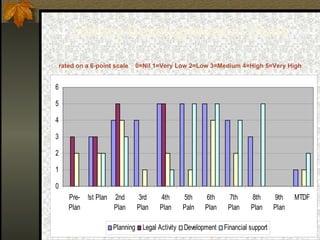
Library Development in Plans rated on a 6-point scale  0=Nil 1=Very Low 2=Low 3=Medium 4=High 5=Very High
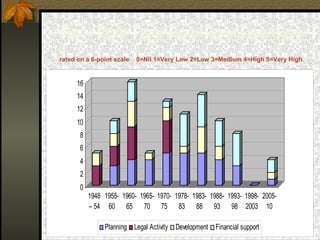
1947 – 2010 – Sad end of a Success Story  rated on a 6-point scale  0=Nil 1=Very Low 2=Low 3=Medium 4=High 5=Very High
MTDF reflects the Pakistan Vision 2030 In the Vision 2030 document too, in section 3.2.4. The Case for Reading, of Vision 2030 document, where libraries have been discussed only at very basic level in schools and in tehsils  The following paragraph also needs attention: “ One of the ironies of the present information revolution is the  decline of the reading habit  among the 15 – 30 age group, even as higher education expands.  This decline may be linked to the growth of  electronic communication and media as well as a cultural and ‘information’ climate  that does not accord books the respect they deserve . The ‘electronic’ article and even the book, on the other hand, keeps on filling computer memory discs, where its storage does not guarantee its reading in full…” This understanding needs to be changed to recognition of online reading
Points to Ponder The history presents an  uneven pattern of planning and development of Library System in Pakistan .   impressive legislative and planning efforts made for the development of Libraries, but none of the  planned or legislative schemes, could be fully implemented countrywide   Development initiatives, planning activities and financial expenditures made by various  Governments, were sadly  uncoordinated and inconsistent .  Governments changed too fast   to complete their own plans and each one discontinued the development projects started by the former Government,  without thinking about the effectiveness or usefulness of the Projects for the country and any care for the national loss of time, money and effort.
Libraries – No Fix place of their own At one times development of  public libraries  was planned under  education ministry , which does not have any administrative or management lines directly or indirectly reaching them.  While at another time,  public libraries development  was under the  Ministry of Cultural, Tourism , etc ., which has too wide a portfolio of its own, and cannot provide the attention and focus required for development of libraries.  The frequent changes in jurisdictions, resulted into a  lack of administrative focus which disturbed the administrative set up and support framework  for these libraries to perform properly.  In the most recent education policy (2009) for example, the  important policy actions regarding libraries including public libraries, have been placed under  Quality in Textbooks and Learning Materials  where due attention to these items may not be expected.
The Emergent Issues   The Libraries are  working in small pockets of separate administrative jurisdictions , with various service rules, service structure, work environments and administrative structures, absolutely different from one another.  Libraries and Librarians, working in these administrative pockets have to  fight their own separate battles , in highly dissatisfying working conditions.  Libraries work as a sub-system within another system. But, generally,  Librarians’ job and the specialized logistical and physical requirements of libraries are not clear to many administrators . So, parent body’s administrative set up cannot provide favorable conditions for libraries to perform their job as their demands mostly go to a back burner.  The general frustration in the librarians’ work force in Pakistan and the generally ineffective performance of their roles and deteriorating situation of libraries (especially in colleges) is due to these factors .
Changed Role of Library to Foster Knowledge Society Changed nature of information contents electronic service delivery  have not changed the essential cultural mission of library  to be the public repository of intellectual heritage of a country and an agency to serve the publics in the intra-generational and intergenerational dissemination of knowledge in electronic formats Digital Books and Reading Materials  -  need for Digital Libraries Libraries have to create and collect and preserve the digital content because they operate at the main points in the chain of  digital content being created every day in large numbers and which is the lifeblood of the Information Society Libraries are actually the  best hope for the development of an Information and knowledge society in Pakistan  by providing affordable access to ICT and Internet to the public. This role becomes even more important in the rural areas of Pakistan ,  where majority of the population cannot afford individual access to ICT.  So the Tehsil public libraries having computers for public, may be the only hope for developing an information society without digital divide to bridge the skills and economic gaps.
Need for a National Information Policy on Libraries This is a moment of making forward looking decisions to make the Library play its Vital role in the KNOWLEDGE SOCIETY of this fast changing and fast moving digital information is Just normal A National Policy for Library and Information Systems and Services in Pakistan, is the need of the day Which ………
National Information Policy on Libraries in Pakistan Should provide  guidance and information to the Government  of Pakistan and to the Planning Commission of Pakistan about   legal and planning needs and national priorities over library matters   Should   streamline the functions of all libraries in Pakistan  by ensuring uniform legal, administrative and financial policies for smooth functioning of all types of libraries .   Should  set out  broad guidelines to all administrative jurisdictions  under which libraries perform their functions, for the systematic and planned development of library and information services to keep with the needs of major sectoral areas and those of all sections of the community whether in the urban or the rural area Should   ensure  supply of adequate and ongoing finances  by the parent bodies or the state to libraries for ongoing infrastructure as well as collections development, staff increase and professional development
National Information Policy on Libraries in Pakistan Should recommend  minimum standards for each type of libraries   for proper functioning of the library systems, including number of staff, availability of Professional Librarians Tools, Librarians’ basic salaries and service structures, library furniture, space and number of books to be followed by the institutions governing the libraries. Should   ensure  maximum benefits from the investment of public funds, the policy should make special provisions the  sharing of resources  and provide for establishing a nationwide system of Inter-Library Loans of books and other materials supported by the State and used by all types of libraries  in one area and in case of digital resources, framework for nationwide sharing. Should create a nationwide awareness framework for the Govt., the public, and other stake holders, about   the changed role of librarians as digital / electronic information manager and the need for their skills for information retrieval, information literacy, information fluency, digitization and institutional repositories, etc. which are essential in the knowledge society of digital age.
Conclusion:   Planners of the knowledge society for Pakistan must realise that by  undermining the role of Libraries in the knowledge Society, an integral ingredient for development will remain missing   Library professionals in Pakistan  must take stock of their strengths and weaknesses and work closely to improve their professional skills  to secure a well-defined position and productive role in a changing structure of information society of Pakistan . Library Legislation is becoming old fashioned and obsolete while facing online information age . In order to get meaningful results from this Legislation, the Government needs to rephrase it and modify its scope to include modern forms of information and libraries and to broaden their scope for nationwide implication   A National Policy on Libraries and Library Systems in Pakistan, is a required instrument for Govt. of Pakistan to develop library and information systems in country. Such a Policy can clear all ambiguities about the role of libraries in a digital age and provide a uniform legal framework for all types of libraries to perform their function and to flourish
THANK YOU!!  ANY QUESTIONS ?????????  The library profession in Pakistan has reached a critical defining moment.  It may  adapt itself to the change and prosper and flourish. It may ignore the call for a change and further diminish.

Need for library legislation in Pakistan by Bushra Almas

  • 1.
    Need for LibraryLegislation and National Policy on Libraries in Pakistan in 2010 Bushra Almas Jaswal Chief Librarian and Associate Professor , Forman Christian College University, Lahore
  • 2.
    Objectives of StudyTo explore the Legal and Regulatory Framework available for Libraries in Pakistan. To study policies and plans of the Govt. of Pakistan, especially in the financial outlay of the Five Year Plans and their impact on the development of Library System in Pakistan from 1947 onwards. To highlight the situation of Libraries in Pakistan Vision 2030 To recommend strategies and practices to make library profession and professionals in Pakistan active participants in development of knowledge economy in Pakistan.
  • 3.
    Legal and RegulatoryFramework for Libraries in Pakistan The Constitution 1947 - Pakistan acquired an interim Constitution in the form of Govt. of India Act 1935 - Seventh Schedule (legislative Lists) - List 1. Federal Legislative List , Entry No. 11. “Libraries, museums and similar institutions, controlled or financed by the Federation. 1956 - and successive 1962 Constitutions, followed the same pattern. Additionally, the 1962 Constitution of the Islamic Republic of Pakistan, in Chapter VI, Third Schedule, under Matters with respect to which the Central Legislature has exclusive powers also mentions: 29. National libraries and museums
  • 4.
    Legal and RegulatoryFramework for Libraries in Pakistan The Constitution 1973 - The Constitution in the Federal Legislative List as contained in the 4 lh Schedule [Article-70(4)]. At item No. 15 of the Federal Legislative list , is mentions: Entry No 15: "Libraries, museums, and similar institutions controlled or financed by the Federation . 2004 - The latest Constitution of Pakistan, in the Fourth Schedule [Article-70(4)], at item No. 15, of the Federal Legislative list is mentioned: (p157) Entry No 15: "Libraries, museums, and similar institutions controlled or financed by the Federation .
  • 5.
    Legal and RegulatoryFramework for Libraries in Pakistan Libraries as Federal Legislative List Items Matters in the Fourth Schedule [Article-70(4)], at item No. 15, of the Federal Legislative list are eligible for Making of Laws or Passing bills with respect to those matters Any House of Parliament and other legislative bodies in Pakistan may formulate and regulate policies in relation with those mattersThe executive authority of the Federation may extend any Federal Law related to libraries, to Provincial Governments for carrying them into execution. Conclusion: Libraries of Pakistan, without any distinction of type or jurisdiction - enjoy full legislative support – for any laws, Acts, Ordinances, Policies or Plans relevant to any of the library matters – to be formulated as well as executed by any legislative body or bodies in Pakistan.
  • 6.
    Pre-5-year Plan Period– 1948 to 1955 Development Actions for Library System in Pakistan Six-Year National Plan of Educational Development for Pakistan - 1951 to 1957 Establishment of Directorate of Archives and Libraries within the Ministry of Education in 1949 - Establishment of a number of public libraries , Library Legislation Sind Establishment of Provincial Library and Museum Ordinance (Ordinance IV of 1951). No. S-46-L/51-IV, passed on 8 th September, 1951. Sind Establishment of Provincial Library and Museum Act, 1953 (Act XV of 19530 NO. s-13-l/53. v (A) 19 TH OCTOBER 1953, Govt. of Sind made rules for. Books to be sent to the Sind Provincial Library on 8 th August 1953 – No. 359.H.(S.) – In exercise of the powers conferred by section 20 of the Press and Registration of Books Act 1867
  • 7.
    Development Actions forLibrary System in Pakistan First Five Year Plan - 1955-60 Library Legislation The Sind Cultural Advancement Act 1955 provided for establishment of Sind Cultural Advancement Board within which there was a provision to create a Library Department with the following functions : 16. (20) Functions of Library Department to maintain a central library at Hyderabad to establish and maintain District and Taluka libraries at headquarter of each taluka to establish and maintain village libraries in the villages having population of more than 1000 persons to establish and maintain touring libraries (Mobile Libraries) Development Actions for Library System: in 1955, to develop the public library system in Pakistan , an Australian Library consultant Mr. L C Key was invited. The Key Report stressed that according to the terms of the constitution of Pakistan ‘separate legislation will be required for national libraries and provincial libraries ”.
  • 8.
    Development Planning forLibrary System in Pakistan Second Five Year Plan - 1960-65 Library Development IN PLAN Two Sections, Education and Training and Promotion of arts, culture and sports: … envisages the establishment of educational institutions at all level to be supported by comprehensive libraries and establishment of Public Libraries at Chittagong and Khulna, a number of mobile lending libraries and envisaged the expansion of the activities of the Central Government Directorate of Archives and Libraries During this Plan period: District libraries made a start. A few of them have shown some signs of progress. Others are anxiously waiting to follow suit. Public library recognized as … “one that serves free all residents … and receives its financial support in whole or in part from public fund. 4,373 “box libraries” distributed to the villages as rural public libraries throughout the country at the village level. Under the Basic Democracies Order, 1959, small collections of books in the local languages relating to the local needs were distributed to the headquarter of rural Union Councils, for use of 3 to 4 surrounding village
  • 9.
    Library Legislation Development in Pakistan Second Five Year Plan - 1960-65 The Ayub Government strengthened the planned provisions for public libraries, according to the 2 nd 5-year plan 1. Pakistan. Laws. The Municipal Administration Ordinance, 1960. 11 th April 1960. Part IV. Functions in detail - Chapter XI – Culture-104 – Libraries – A municipal committee shall establish and maintain public libraries, reading rooms and circulating libraries as may be necessary for the use of public. 2. Pakistan. Laws. Basic Democracies Order, 1959 29 th July, 1960 (Governor of West Pakistan as provisions of Municipal Administration Ordinance 1960) - Schedule (Rule 3) 27. Provision of libraries and reading rooms 3. Pakistan Commission on National Education Report. Karachi: Manager publications, 1960 - local bodies be required to maintain from their own fund and in collaboration with social and welfare agencies, active libraries and reading rooms for the benefit of public
  • 10.
    Library System Developmentin Pakistan Third Five Year Plan - 1965 – 1970 The Third five-year Plan was designed with the similar provisions for establishment and development of libraries as its immediate predecessor, the Second Five Year Plan. But the Third Five-Year Plan (1965 – 1970) was virtually abandoned by the Yahya Khan’s government. In 1972, the Bhutto government decided to run the economy through annual planning . Development Actions for Library System: The important development during this period, regarding Library System was: Memorandom of Association and Rules and Regulations [1967], for the Library Board of Karachi Municipal Committee. This seems to be the continuation of previously ongoing library-related activities of the Government of Sind .
  • 11.
    Development Planning forLibrary System in Pakistan Fourth Five Year Plan - 1970 – 1975 This plan was the best regarding libraries. There was a detailed separate sections on Library Services for books, special library grants for universities, establishment of public libraries in districts, sub-divisions and thana headquarters, need for training of librarians, even production of juvenile reading materials was highlighted in Plan. Library Legislation Pakistan People’s Party Government introduced some far-reaching reforms regarding Library System development as Number of Laws, Acts and Ordinances were made at all levels of the Government with special focus on development of libraries at Federal, Provincial, District and Tehsil Level . E.g. People’s Local Government Ordinances 1972 and Local Govt. Act, 1975 in all provinces. These Acts were actually adopted from the previous Laws of 1959-70. The funding responsibility for establishing the people-oriented libraries, was that of the local bodies (compulsory for Baluchistan and Sind and optional for Punjab and NWFP), without assuring adequate public funds David G. Donovan,was invited, to prepare a feasibility report on establishment of 50,000 People’s Oriented Public Libraries –his report was not implement able.
  • 12.
    D evelopment Planningfor Library System in Pakistan Fifth Five Year Plan - 1978-83 The Fifth Five-Year Plan (1978-83), prepared in 1978 under Zia regime. Planned Library Developments: The Fifth plan has a very impressive and detailed separate section on Libraries identifying the not only the problems underlying the inadequate library services in the country, but also the need for strengthening of professional training of Librarians have also been recognized and practical recommendations for development of libraries as well as the librarians have been given. Under the programme of National Public Libraries the project of the National Library of Pakistan at Islamabad was planned to be completed and major public libraries in the provinces to be improved and developed Financial Allocation for Libraries System Development : In this Plan, for the first time, in the Sub-sector-wise details in Table 5, at item 13, provided for an allocation of 39.1 million rupees has been made exclusively for Libraries & Archives . .
  • 13.
    D evelopment Planningfor Library System in Pakistan Sixth Five Year Plan - 1983-88 Planned Library Developments: Development of library system under two sections of the Plan: under education and a separate Library Services Section proposed to develop a public library system within the guidelines provided by the recommendations of the Cabinet Committee on Libraries headed by the Finance Minister Under cultural heritage section it planned The National Library with all modern and sophisticated equipment required for providing the most efficient service comparable to that being provided elsewhere in the world. Financial Allocation for Libraries System Development: The Plan shows a Financial Allocation Total - 455 million rupees ) in the Education and Manpower Section, exclusively, for Development of Public Library System during 1983-88
  • 14.
    Development Actions forLibrary System in Pakistan Sixth Five Year Plan - 1983-88 The high interest of Government, in the library services and systems development is quite obvious in this period. In 1980, Govt. of Pakistan constituted a Cabinet Committee for the development of libraries, Under an order of President General Muhammad Zia –ul-Haq. The Minister of Finance headed the Committee with members Minister of interior and minister of education and minister of information and broadcasting. In 1980 on the advice of the president General Muhammad Ziaul Haq, the Ministry of Education constituted a Technical Working Group , under the chairmanship of Dr. Anis Khurshid and librarians from each province and Federal area. The group conducted a comprehensive survey of public libraries all over Pakistan and submitted a comprehensive report in 1984. It was an overly ambitious report, recommending establishment of 8,000 public libraries in the six five-year plan. Punjab Library Foundation was formed in 1985 under Notification no. SO(PI)6-67/83 DATED 18 JUNE 1985.
  • 15.
    Development Planning forLibrary System in Pakistan Seventh Five Year Plan - 1988-93 The Seventh Five-Year Plan was formulated during the Zia-ul-Haq period. But after his death, in 1988, the newly elected government of Benazir Bhutto took over the charge. The Seventh Five-Year Plan has never been implemented . So, no significant development regarding libraries took place during this period. Development Actions for Library System: The only remarkable library-related development of this period, was completion and inaugurated Of The National Library of Pakistan 0n August 24, 1993, by the caretaker prime minister of Pakistan, Mr.Moin Ahmad Qureshi .
  • 16.
    Development Planning forLibrary System in Pakistan Eighth Five Year Plan - 1993-98 The Planning Commission published the Eighth Five-Year Plan In 1994 during the second term of t of Benazir Bhutto Governmen to cover the period 1993 – 1998. But, in November 1996, once again, the PPP government was dismissed by the President on corruption charges and in 1997 parliamentary election, once again, Mian Nawaz Sharif was elected as the Prime Minister of Pakistan. The plan offered an impressive menu of Library related developments in the Education and Training Section, for Library Services for academies institutions with an allocation of 200.0 million rupees under the head - Library Services & Museums. However, The newly formed Tourism, Youth Affairs, Culture & Sports Section has no mention about public libraries. Due to the political unrest and fast changing of Governments, did not allow the implementation of policy actions planned for the library services in Eighth Five-Year Plan.
  • 17.
    Development Planning forLibrary System in Pakistan Ninth Five Year Plan - 1998-2003 The Ninth Plan was formulated by Nawaz Sharif government to cover the period 1998-2003. In October 1999, this government was dismissed with the military coup by the Chief of Army Staff. The entire country was in a state of jeopardy due to economic instability with the Nuclear Test, freezing of foreign currency accounts, devaluation of rupee, and the Kargil War in 1998. Therefore, the Targets of Ninth Five-Year Plan were never been achieved Ten Year Perspective Plan 2001-11 General Pervez Musharraf. Tenth President of Pakistan (2001–2008), took power on 12 October 1999. On 7 June 2001, the National Economic Council approved the Ten Year Perspective Plan 2001-11 . The Ten Year Perspective Plan had too broad targets mostly geared towards the economic growth without many details. Libraries are mentioned only in terms of Tehsil/ District Resource Centers and the HEC Digital Library in the IT Sector . After 9/11, the situation facing Pakistan changed, and the key assumptions of the Perspective Plan were rendered invalid.
  • 18.
    Development Planning forLibrary System in Pakistan Med. Term Dev. Framework (MTDF) - 2005-2010 In June 2004, the Planning Commission to issued Tenth Five-Year Plan 2005-10 with the new name ‘Medium Term Development Framework (MTDF) under Musharraf Government. Planned Library Developments : MTDF like its predecessor, contains has no significant mention of libraries except for: In the context of College Education , as …reforms in college education… 300 existing degree colleges will be upgraded by providing major inputs in the form of funds for infrastructure enhancement, teaching tools, libraries , and capacity building of teachers In section Education for Knowledge Society A program has been launched to support the private sector institutions, which meet the basic criteria are eligible for funding on cost sharing basis in the areas of Research Support Programs, ….., PERN, and Digital Library. In Information and Communication Technology Section ; In addition to providing public universities with connectivity of 2 Mbps, they have also been given online access to a digital library with over 14,000 research journals available online
  • 19.
    Annual Plans FollowingMTDF The Annual Plans 2005 to 2011, seem to follow the same pattern as of MTDF itself. The Higher Education Sections of the Plans only mention HEC DL and PERN and lost the mention of Books and libraries - 2005-06 plan mentions the Digital Library Programme to be further strengthened in terms of content, training, and functionality by introducing technologies to magnify the impact Culture and Tourism sections have no plan for public libraries development. Libraries are only mentioned for Colleges and schools. 2005-06 plan mentions Under German Debt swap Rs. 332.8 million has been provided for improvement of Punjab Schools’ Libraries and Rs.100.0 million under German Debt Swap-II for education for earthquake affected areas in NWFP Annual Plan 2007-8, too in Education for the Knowledge Society mentions library development targets in an amount of Rs 566.2 million allocated for establishment of 590 libraries in the Middle Schools of Punjab Province In MTDF all its Annual Plans, the Library Services for the Universities or Public, have failed to earn any recognition or attention.
  • 20.
    Development Actions forLibrary System During the MTDF Period 2009. Pakistan. National Education Policy (Revised). August 01, 2009. Under the18 Policy Actions adopted for QUALITY IN TEXTBOOKS AND LEARNING MATERIALS – 8 items at nos. 11 to 17 were added regarding some aspects of libraries and librarians with the effort of PLA Federal Branch : 2010. National Library Act 2010 The Senate Standing Committee on Education passed the National Library Act 2010 on Tuesday, March 9, 2010, In ISLAMABAD
  • 21.
    Library Development inPlans rated on a 6-point scale 0=Nil 1=Very Low 2=Low 3=Medium 4=High 5=Very High
  • 22.
    1947 – 2010– Sad end of a Success Story rated on a 6-point scale 0=Nil 1=Very Low 2=Low 3=Medium 4=High 5=Very High
  • 23.
    MTDF reflects thePakistan Vision 2030 In the Vision 2030 document too, in section 3.2.4. The Case for Reading, of Vision 2030 document, where libraries have been discussed only at very basic level in schools and in tehsils The following paragraph also needs attention: “ One of the ironies of the present information revolution is the decline of the reading habit among the 15 – 30 age group, even as higher education expands. This decline may be linked to the growth of electronic communication and media as well as a cultural and ‘information’ climate that does not accord books the respect they deserve . The ‘electronic’ article and even the book, on the other hand, keeps on filling computer memory discs, where its storage does not guarantee its reading in full…” This understanding needs to be changed to recognition of online reading
  • 24.
    Points to PonderThe history presents an uneven pattern of planning and development of Library System in Pakistan . impressive legislative and planning efforts made for the development of Libraries, but none of the planned or legislative schemes, could be fully implemented countrywide Development initiatives, planning activities and financial expenditures made by various Governments, were sadly uncoordinated and inconsistent . Governments changed too fast to complete their own plans and each one discontinued the development projects started by the former Government, without thinking about the effectiveness or usefulness of the Projects for the country and any care for the national loss of time, money and effort.
  • 25.
    Libraries – NoFix place of their own At one times development of public libraries was planned under education ministry , which does not have any administrative or management lines directly or indirectly reaching them. While at another time, public libraries development was under the Ministry of Cultural, Tourism , etc ., which has too wide a portfolio of its own, and cannot provide the attention and focus required for development of libraries. The frequent changes in jurisdictions, resulted into a lack of administrative focus which disturbed the administrative set up and support framework for these libraries to perform properly. In the most recent education policy (2009) for example, the important policy actions regarding libraries including public libraries, have been placed under Quality in Textbooks and Learning Materials where due attention to these items may not be expected.
  • 26.
    The Emergent Issues The Libraries are working in small pockets of separate administrative jurisdictions , with various service rules, service structure, work environments and administrative structures, absolutely different from one another. Libraries and Librarians, working in these administrative pockets have to fight their own separate battles , in highly dissatisfying working conditions. Libraries work as a sub-system within another system. But, generally, Librarians’ job and the specialized logistical and physical requirements of libraries are not clear to many administrators . So, parent body’s administrative set up cannot provide favorable conditions for libraries to perform their job as their demands mostly go to a back burner. The general frustration in the librarians’ work force in Pakistan and the generally ineffective performance of their roles and deteriorating situation of libraries (especially in colleges) is due to these factors .
  • 27.
    Changed Role ofLibrary to Foster Knowledge Society Changed nature of information contents electronic service delivery have not changed the essential cultural mission of library to be the public repository of intellectual heritage of a country and an agency to serve the publics in the intra-generational and intergenerational dissemination of knowledge in electronic formats Digital Books and Reading Materials - need for Digital Libraries Libraries have to create and collect and preserve the digital content because they operate at the main points in the chain of digital content being created every day in large numbers and which is the lifeblood of the Information Society Libraries are actually the best hope for the development of an Information and knowledge society in Pakistan by providing affordable access to ICT and Internet to the public. This role becomes even more important in the rural areas of Pakistan , where majority of the population cannot afford individual access to ICT. So the Tehsil public libraries having computers for public, may be the only hope for developing an information society without digital divide to bridge the skills and economic gaps.
  • 28.
    Need for aNational Information Policy on Libraries This is a moment of making forward looking decisions to make the Library play its Vital role in the KNOWLEDGE SOCIETY of this fast changing and fast moving digital information is Just normal A National Policy for Library and Information Systems and Services in Pakistan, is the need of the day Which ………
  • 29.
    National Information Policyon Libraries in Pakistan Should provide guidance and information to the Government of Pakistan and to the Planning Commission of Pakistan about legal and planning needs and national priorities over library matters Should streamline the functions of all libraries in Pakistan by ensuring uniform legal, administrative and financial policies for smooth functioning of all types of libraries . Should set out  broad guidelines to all administrative jurisdictions under which libraries perform their functions, for the systematic and planned development of library and information services to keep with the needs of major sectoral areas and those of all sections of the community whether in the urban or the rural area Should ensure supply of adequate and ongoing finances by the parent bodies or the state to libraries for ongoing infrastructure as well as collections development, staff increase and professional development
  • 30.
    National Information Policyon Libraries in Pakistan Should recommend minimum standards for each type of libraries for proper functioning of the library systems, including number of staff, availability of Professional Librarians Tools, Librarians’ basic salaries and service structures, library furniture, space and number of books to be followed by the institutions governing the libraries. Should ensure maximum benefits from the investment of public funds, the policy should make special provisions the sharing of resources  and provide for establishing a nationwide system of Inter-Library Loans of books and other materials supported by the State and used by all types of libraries in one area and in case of digital resources, framework for nationwide sharing. Should create a nationwide awareness framework for the Govt., the public, and other stake holders, about the changed role of librarians as digital / electronic information manager and the need for their skills for information retrieval, information literacy, information fluency, digitization and institutional repositories, etc. which are essential in the knowledge society of digital age.
  • 31.
    Conclusion: Planners of the knowledge society for Pakistan must realise that by undermining the role of Libraries in the knowledge Society, an integral ingredient for development will remain missing Library professionals in Pakistan must take stock of their strengths and weaknesses and work closely to improve their professional skills to secure a well-defined position and productive role in a changing structure of information society of Pakistan . Library Legislation is becoming old fashioned and obsolete while facing online information age . In order to get meaningful results from this Legislation, the Government needs to rephrase it and modify its scope to include modern forms of information and libraries and to broaden their scope for nationwide implication A National Policy on Libraries and Library Systems in Pakistan, is a required instrument for Govt. of Pakistan to develop library and information systems in country. Such a Policy can clear all ambiguities about the role of libraries in a digital age and provide a uniform legal framework for all types of libraries to perform their function and to flourish
  • 32.
    THANK YOU!! ANY QUESTIONS ????????? The library profession in Pakistan has reached a critical defining moment. It may adapt itself to the change and prosper and flourish. It may ignore the call for a change and further diminish.

Editor's Notes

  • #7 Six-Year National Plan of Educational Development for Pakistan - 1951 to 1957 –number of activities on the legislative structure for libraries, triggered by the Plan. 2. first move of the Government of Pakistan, towards recognizing the central role of libraries in national development 3. particularly in the Punjab, including: the Municipal Library, Vehari (1947), the Central Library, Bahawalpur (1948), Sindh Provincial Library, Hyderabad (1952), the Municipal Library, Dera Ghazi Khan (1952), the Municipal Library, Faisalabad (1953) and Iqbal Library, Jhelum (1954)
  • #8 5yr - It is not an authorizing document in the sense that it does not authorize expenditure to the relevant operating agencies. Instead, it provides a broad framework for formulation of the planning process based on its recommendations. Prepared under the National Planning Board , - based on more formal planning T his plan could not be implemented, mainly because rapid changes in government and a lack of political support because the political instability in the country led to a neglect of economic policy . No Library Development in Plan:
  • #9 This plan was hailed as a model that other developing countries could follow. Pakistan's success, however, partially depended on generous infusions of foreign aid , particularly from the United States . After the 1965 Indo-Pakistani War over Kashmir , the level of foreign assistance declined. More resources than had been intended also were diverted to defense.
  • #10 These Laws were later adopted as local bodies ACTs and Ordinances in Bhutto Government
  • #11 After the 1965 Indo-Pakistani War over Kashmir, the level of foreign assistance declined. Moreover, more resources than actually planned, had to be diverted to defence. As a result, the Third Five-Year Plan (1965-70), which was prepared by the Ayub Khan Government, could only produce a modest growth during the Yahya Khan period (1969 – 1971) . Actually the serious planning on national level was completely ignored during Yahya Khan Regime.
  • #12 None of these recommendations could actually be implemented as the Plan was abandoned by Bhutto Government in 1971 but ppp govt took some far-reaching steps for libraries
  • #13 The implementation of this Plan was adversely affected after the Soviet invasion of Afghanistan, due to increase in defense expenditures and a flood of Afghan refugees to Pakistan in December 1979. But, some of the plan's goals were attained
  • #14 ( Federal-300 million rupees , Provincial -155 million rupees , Punjab-80 million rupees, Sind - 25 million rupees, NWFP - 30 million rupees, Baluchistan-20 million rupees,
  • #15 The Sixth Plan continued the approach of the previous plans and financial allocations were provided for a number of projects on an ad hoc basis. A number of museums, an art gallery, a library, a national archives building and sports stadium were planned. The emphasis, unfortunately, remained on brick and mortar aspects of development, while conceptual issues were not addressed adequately.
  • #19 In June 2004, the Planning Commission gave a new name to the Five Year Plan – The Medium Term Development Framework (MTDF). Thirty two Working Groups on various areas of development produced the MTDF 2005-2010.
  • #23 Peaks show 2nsd Plan in Ayub Govt., 4 th Plan in Bhutto Govt. and 5 th and Sixth Plans in Zia Govt. After that the decline of Library development started. Seventh and 8 th plans were better but never properly implemented. Ninth Plan was not even published and MTDF has no focus on traditional libraries and lacks the understanding about the vital role of Library Professionals while planning for a Knowledge Society
  • #24 There seems to be a clear inability to recognize the new information formats on Internet and to relate the reading of electronic and digital books and articles with online library services consider reading online as decline of reading habits.
  • #26 System of Libraries in Pakistan has emerged in bits and pieces spread over 63 years. The constitutional provisions for establishing libraries translated differently by various Governments at various times.
  • #28 The Case for Reading “ An important instrument for enriching one’s cultural roots is books, and the libraries in which they are kept. Book reading also contributes to the flourishing of a civilized society through engagement in social and political activities as well as the arts. One of the ironies of the present information revolution is the decline of the reading habit among the 15 – 30 age group, even as higher education expands. This decline may be linked to the growth of electronic communication and media as well as a cultural and ‘information’ climate that does not accord books the respect they deserve . The ‘electronic’ article and even the book, on the other hand, keeps on filling computer memory discs, where its storage does not guarantee its reading in full….. All this has a particularly severe impact on the quality of education, …..The reading habit must be encouraged from the early age, and we need to expand the public libraries for children and parents right down to the tehsil administrative unit, in addition to establishing and expanding them inside every school. Pakistan must now ensure that not -for-profit public libraries (with special access for the handicapped) and reading rooms are an essential component of every one of its public or private housing projects.”
  • #29 Amendment and nationwide expansion of existing The Library Legislation to match the Vision 2030