Autism
Stephanie Burwell
Preview
Autism
Definitions
Prevalence
signs and symptoms
assessments and diagnosis
treatments and supports
Classical Autism
● also known as autistic disorder

● the most common condition of autism
  spectrum disorders

● neurological and developmental disability

● affects communication and social
  interactions as well as behavior and senses.
Definitions

Educational Definition (Individuals with Disabilities Education Act, or
IDEA 2004)

Autism is a developmental disability that significantly affects verbal and
nonverbal communication and social interaction. It is generally evident before
age 3 and adversely affects a child's educational performance. Other
characteristics often associated with autism include engagement in repetitive
activities and stereotyped movements, resistance to environmental change or
change in daily routines, and unusual responses to sensory experiences.
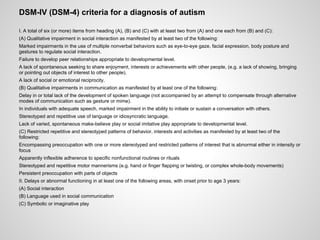
DSM-IV (DSM-4) criteria for a diagnosis of autism

I. A total of six (or more) items from heading (A), (B) and (C) with at least two from (A) and one each from (B) and (C):
(A) Qualitative impairment in social interaction as manifested by at least two of the following:
Marked impairments in the use of multiple nonverbal behaviors such as eye-to-eye gaze, facial expression, body posture and
gestures to regulate social interaction.
Failure to develop peer relationships appropriate to developmental level.
A lack of spontaneous seeking to share enjoyment, interests or achievements with other people, (e.g. a lack of showing, bringing
or pointing out objects of interest to other people).
A lack of social or emotional reciprocity.
(B) Qualitative impairments in communication as manifested by at least one of the following:
Delay in or total lack of the development of spoken language (not accompanied by an attempt to compensate through alternative
modes of communication such as gesture or mime).
In individuals with adequate speech, marked impairment in the ability to initiate or sustain a conversation with others.
Stereotyped and repetitive use of language or idiosyncratic language.
Lack of varied, spontaneous make-believe play or social imitative play appropriate to developmental level.
(C) Restricted repetitive and stereotyped patterns of behavior, interests and activities as manifested by at least two of the
following:
Encompassing preoccupation with one or more stereotyped and restricted patterns of interest that is abnormal either in intensity or
focus
Apparently inflexible adherence to specific nonfunctional routines or rituals
Stereotyped and repetitive motor mannerisms (e.g. hand or finger flapping or twisting, or complex whole-body movements)
Persistent preoccupation with parts of objects
II. Delays or abnormal functioning in at least one of the following areas, with onset prior to age 3 years:
(A) Social interaction
(B) Language used in social communication
(C) Symbolic or imaginative play
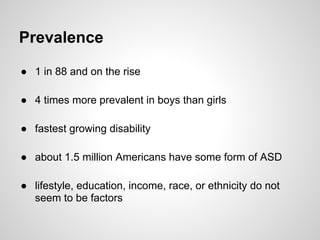
Prevalence

● 1 in 88 and on the rise

● 4 times more prevalent in boys than girls

● fastest growing disability

● about 1.5 million Americans have some form of ASD

● lifestyle, education, income, race, or ethnicity do not
  seem to be factors
Etiology
● no one knows why

● researchers are studying genetics and
  environmental toxins

● no one case of autism is the same

● no one cause of autism is the same
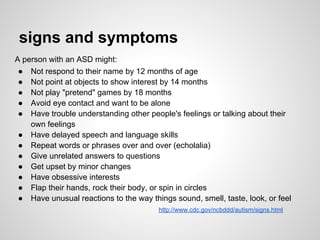
signs and symptoms
A person with an ASD might:
 ● Not respond to their name by 12 months of age
 ● Not point at objects to show interest by 14 months
 ● Not play "pretend" games by 18 months
 ● Avoid eye contact and want to be alone
 ● Have trouble understanding other people's feelings or talking about their
    own feelings
 ● Have delayed speech and language skills
 ● Repeat words or phrases over and over (echolalia)
 ● Give unrelated answers to questions
 ● Get upset by minor changes
 ● Have obsessive interests
 ● Flap their hands, rock their body, or spin in circles
 ● Have unusual reactions to the way things sound, smell, taste, look, or feel
                                        http://www.cdc.gov/ncbddd/autism/signs.html
diagnosis, screening, and evaluation
diagnosis

●   two step process: screening and comprehensive evaluation

standardized screening instruments

●   behavioral observation using a standardized diagnostic scale
●   Checklist for Autism in Toddlers (CHAT)
●   Screening Tool for Autism in Two-Year-Olds (STAT)

comprehensive diagnostic evaluation

●   Autism Diagnostic Observation Schedule (ADOS)
●   Autism Diagnostic Interview-Revised (ADI-R)
●   Childhood Autism Rating Scale (CARS)
Behavioral Implications
Some children and adults diagnosed with
autism may have difficulties in the following
behavioral areas:
● self-stimulatory behaviors
● oppositional behavior
● hyperactivity
● aggression
● temper tantrums
● self-injury
● destructiveness
● obsessive compulsive behaviors
● rituals and routines
Medical Implications
hypersensitive or hyposensitive
● auditory stimuli
● movement
● pain
● visual stimuli

stress and anxiety
ADD, ADHD
epilepsy

some individuals with autism may take medication
Treatment or Cure
● no cure

● studies have shown that early and intensive therapy
  and interventions may improve symptoms of ASD

Team                                   Interventions
Developmental Pediatrician             Applied Behavior Analysis
Child Psychiatrist                     Speech and Language Therapy
Board Certified Behavior Analyst       Treatment and Education of Autistic and Related
                                       Communication Handicapped         Children
Child Psychologist
                                       (TEACCH)
Special or General Education Teacher
                                       Picture Exchange Communication Systems
Occupational Therapist                 (PECS)
Physical Therapist                     Occupational Therapy
Speech/Language Therapist              Physical Therapy
Social Worker
Neuropsychologist
supports
when working with a person who has autism:
●   provide visuals
●   written or picture lists of materials
●   reinforcement token board
●   written or picture schedule
●   map of the school or other buildings
●   model assignments
●   list, model, and teach behavioral expectations
●   prepare for change
●   practice change in routine
●   be sure to get individuals attention before talking
●   be short and to the point
●   use dos instead of don'ts
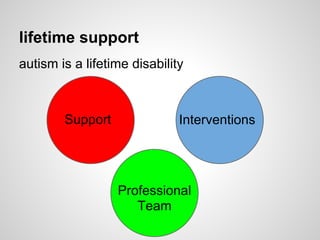
lifetime support
autism is a lifetime disability


        Support               Interventions


                  Professional
                     Team
Resources
http://www.cdc.gov/ncbddd/autism/facts.html

http://www.autism.com/

http://www.autism-society.org/about-autism/

http://www.autismspeaks.org/autism-apps

http://www.researchautism.org/professionals/index.asp

Burwell autism

  • 1.
  • 2.
  • 3.
    Classical Autism ● alsoknown as autistic disorder ● the most common condition of autism spectrum disorders ● neurological and developmental disability ● affects communication and social interactions as well as behavior and senses.
  • 4.
    Definitions Educational Definition (Individualswith Disabilities Education Act, or IDEA 2004) Autism is a developmental disability that significantly affects verbal and nonverbal communication and social interaction. It is generally evident before age 3 and adversely affects a child's educational performance. Other characteristics often associated with autism include engagement in repetitive activities and stereotyped movements, resistance to environmental change or change in daily routines, and unusual responses to sensory experiences.
  • 5.
    DSM-IV (DSM-4) criteriafor a diagnosis of autism I. A total of six (or more) items from heading (A), (B) and (C) with at least two from (A) and one each from (B) and (C): (A) Qualitative impairment in social interaction as manifested by at least two of the following: Marked impairments in the use of multiple nonverbal behaviors such as eye-to-eye gaze, facial expression, body posture and gestures to regulate social interaction. Failure to develop peer relationships appropriate to developmental level. A lack of spontaneous seeking to share enjoyment, interests or achievements with other people, (e.g. a lack of showing, bringing or pointing out objects of interest to other people). A lack of social or emotional reciprocity. (B) Qualitative impairments in communication as manifested by at least one of the following: Delay in or total lack of the development of spoken language (not accompanied by an attempt to compensate through alternative modes of communication such as gesture or mime). In individuals with adequate speech, marked impairment in the ability to initiate or sustain a conversation with others. Stereotyped and repetitive use of language or idiosyncratic language. Lack of varied, spontaneous make-believe play or social imitative play appropriate to developmental level. (C) Restricted repetitive and stereotyped patterns of behavior, interests and activities as manifested by at least two of the following: Encompassing preoccupation with one or more stereotyped and restricted patterns of interest that is abnormal either in intensity or focus Apparently inflexible adherence to specific nonfunctional routines or rituals Stereotyped and repetitive motor mannerisms (e.g. hand or finger flapping or twisting, or complex whole-body movements) Persistent preoccupation with parts of objects II. Delays or abnormal functioning in at least one of the following areas, with onset prior to age 3 years: (A) Social interaction (B) Language used in social communication (C) Symbolic or imaginative play
  • 6.
    Prevalence ● 1 in88 and on the rise ● 4 times more prevalent in boys than girls ● fastest growing disability ● about 1.5 million Americans have some form of ASD ● lifestyle, education, income, race, or ethnicity do not seem to be factors
  • 7.
    Etiology ● no oneknows why ● researchers are studying genetics and environmental toxins ● no one case of autism is the same ● no one cause of autism is the same
  • 8.
    signs and symptoms Aperson with an ASD might: ● Not respond to their name by 12 months of age ● Not point at objects to show interest by 14 months ● Not play "pretend" games by 18 months ● Avoid eye contact and want to be alone ● Have trouble understanding other people's feelings or talking about their own feelings ● Have delayed speech and language skills ● Repeat words or phrases over and over (echolalia) ● Give unrelated answers to questions ● Get upset by minor changes ● Have obsessive interests ● Flap their hands, rock their body, or spin in circles ● Have unusual reactions to the way things sound, smell, taste, look, or feel http://www.cdc.gov/ncbddd/autism/signs.html
  • 9.
    diagnosis, screening, andevaluation diagnosis ● two step process: screening and comprehensive evaluation standardized screening instruments ● behavioral observation using a standardized diagnostic scale ● Checklist for Autism in Toddlers (CHAT) ● Screening Tool for Autism in Two-Year-Olds (STAT) comprehensive diagnostic evaluation ● Autism Diagnostic Observation Schedule (ADOS) ● Autism Diagnostic Interview-Revised (ADI-R) ● Childhood Autism Rating Scale (CARS)
  • 10.
    Behavioral Implications Some childrenand adults diagnosed with autism may have difficulties in the following behavioral areas: ● self-stimulatory behaviors ● oppositional behavior ● hyperactivity ● aggression ● temper tantrums ● self-injury ● destructiveness ● obsessive compulsive behaviors ● rituals and routines
  • 11.
    Medical Implications hypersensitive orhyposensitive ● auditory stimuli ● movement ● pain ● visual stimuli stress and anxiety ADD, ADHD epilepsy some individuals with autism may take medication
  • 12.
    Treatment or Cure ●no cure ● studies have shown that early and intensive therapy and interventions may improve symptoms of ASD Team Interventions Developmental Pediatrician Applied Behavior Analysis Child Psychiatrist Speech and Language Therapy Board Certified Behavior Analyst Treatment and Education of Autistic and Related Communication Handicapped Children Child Psychologist (TEACCH) Special or General Education Teacher Picture Exchange Communication Systems Occupational Therapist (PECS) Physical Therapist Occupational Therapy Speech/Language Therapist Physical Therapy Social Worker Neuropsychologist
  • 13.
    supports when working witha person who has autism: ● provide visuals ● written or picture lists of materials ● reinforcement token board ● written or picture schedule ● map of the school or other buildings ● model assignments ● list, model, and teach behavioral expectations ● prepare for change ● practice change in routine ● be sure to get individuals attention before talking ● be short and to the point ● use dos instead of don'ts
  • 14.
    lifetime support autism isa lifetime disability Support Interventions Professional Team
  • 15.