Bullous dermatoses
Dr Hala Abi-Rached Megarbane
Associate Professor
University of Balamand
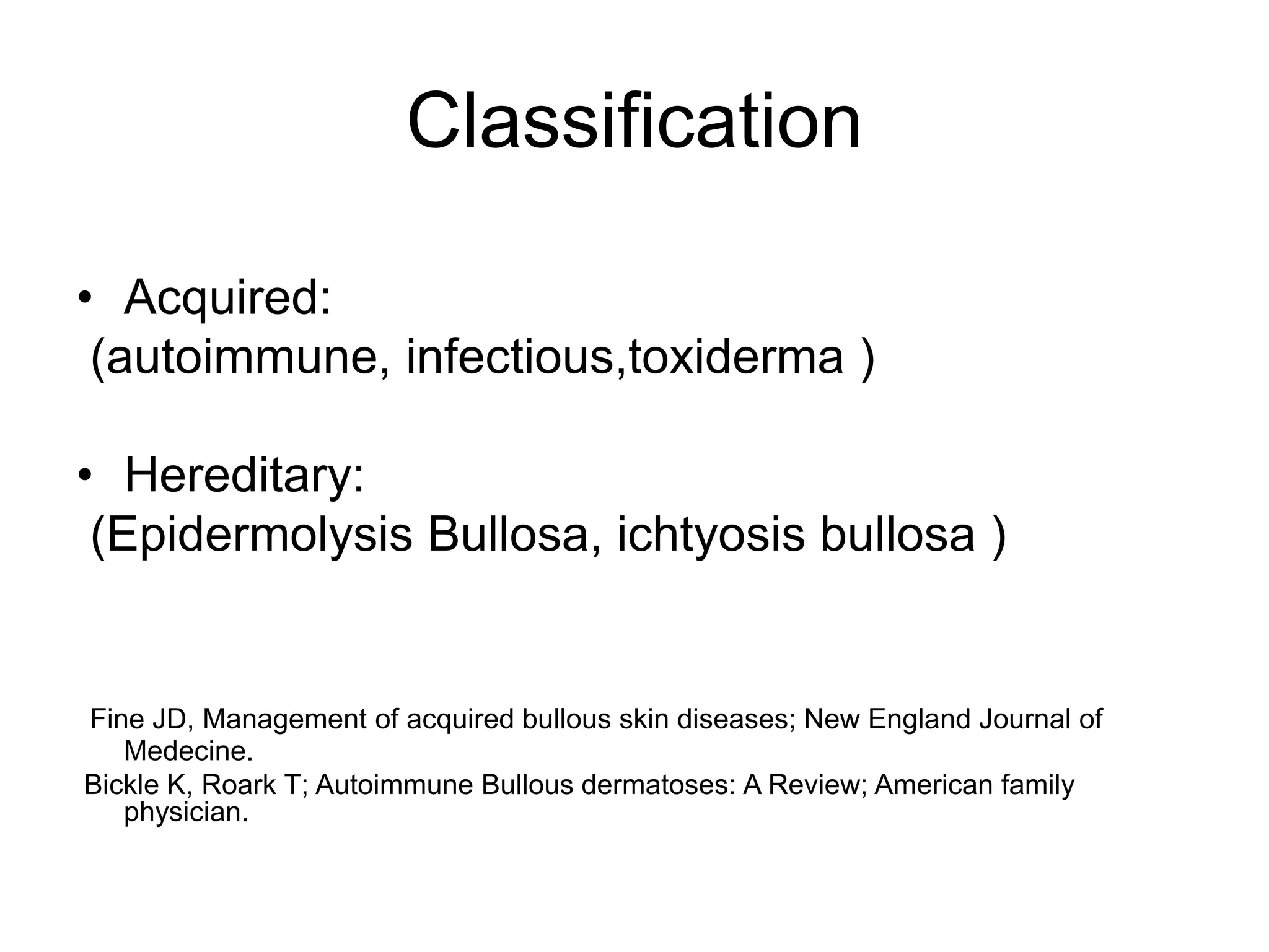
Classification
• Acquired:
(autoimmune, infectious,toxiderma )
• Hereditary:
(Epidermolysis Bullosa, ichtyosis bullosa )
Fine JD, Management of acquired bullous skin diseases; New England Journal of
Medecine.
Bickle K, Roark T; Autoimmune Bullous dermatoses: A Review; American family
physician.
Epidermal and Epidermal-Dermal
Cohesion
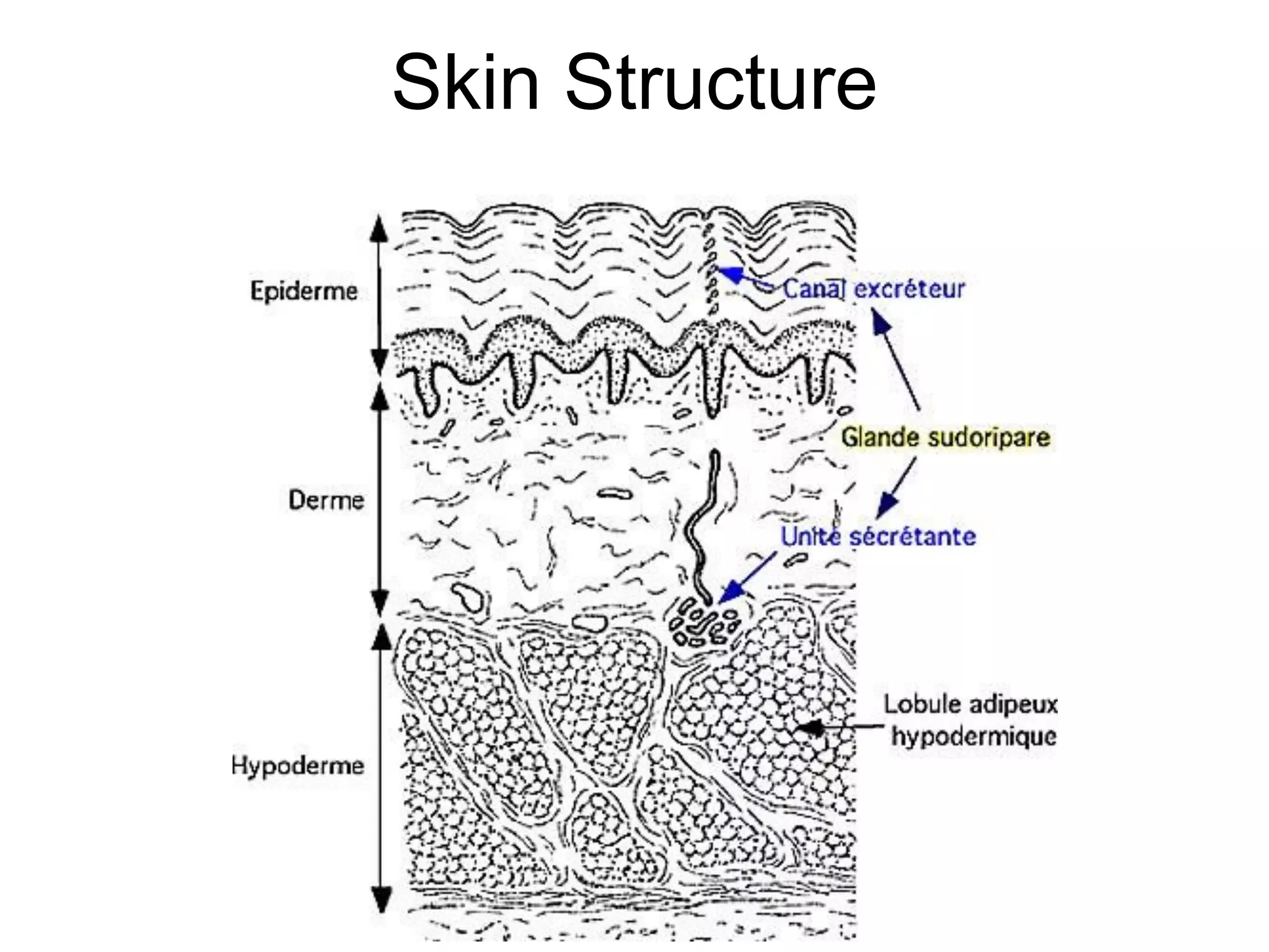
Skin Structure
Epidermal and Epidermal-Dermal
Cohesion
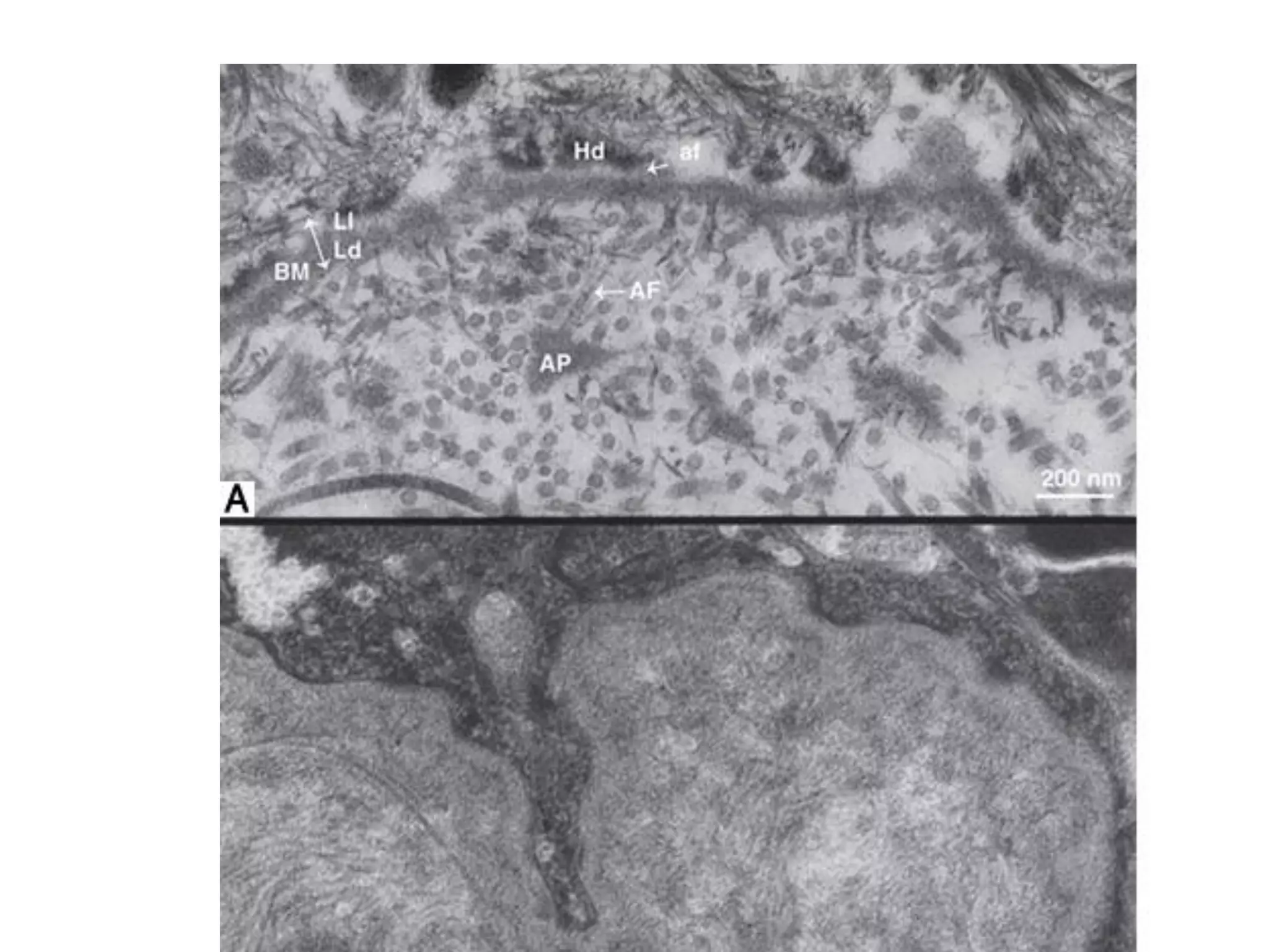
• Desmosomes, hemidesmosomes, and the epidermal
basement membrane
• They represent distinct molecular adhesion complexes
• Mutations in the genes encoding protein components of
the above cause hereditary skin diseases
• These proteins are targeted in autoimmune skin
blistering diseases ( pemphigus or pemphigoid group
and in epidermolysis bullosa acquisita)
Epidermal and Epidermal-Dermal
Cohesion
• The major components of desmosomes belong to three
major gene families:
 Plakins (desmoplakins) , Armadillo proteins (plakophilins and
plakoglobins), and Desmosomal cadherins (desmogleins,
desmocollins).
 Cytoplasmic proteins (desmoplakins , plakophilins and
plakoglobins) and
 Transmenbrane proteins (desmogleins and desmocollins)
Epidermal and Epidermal-
Dermal Cohesion
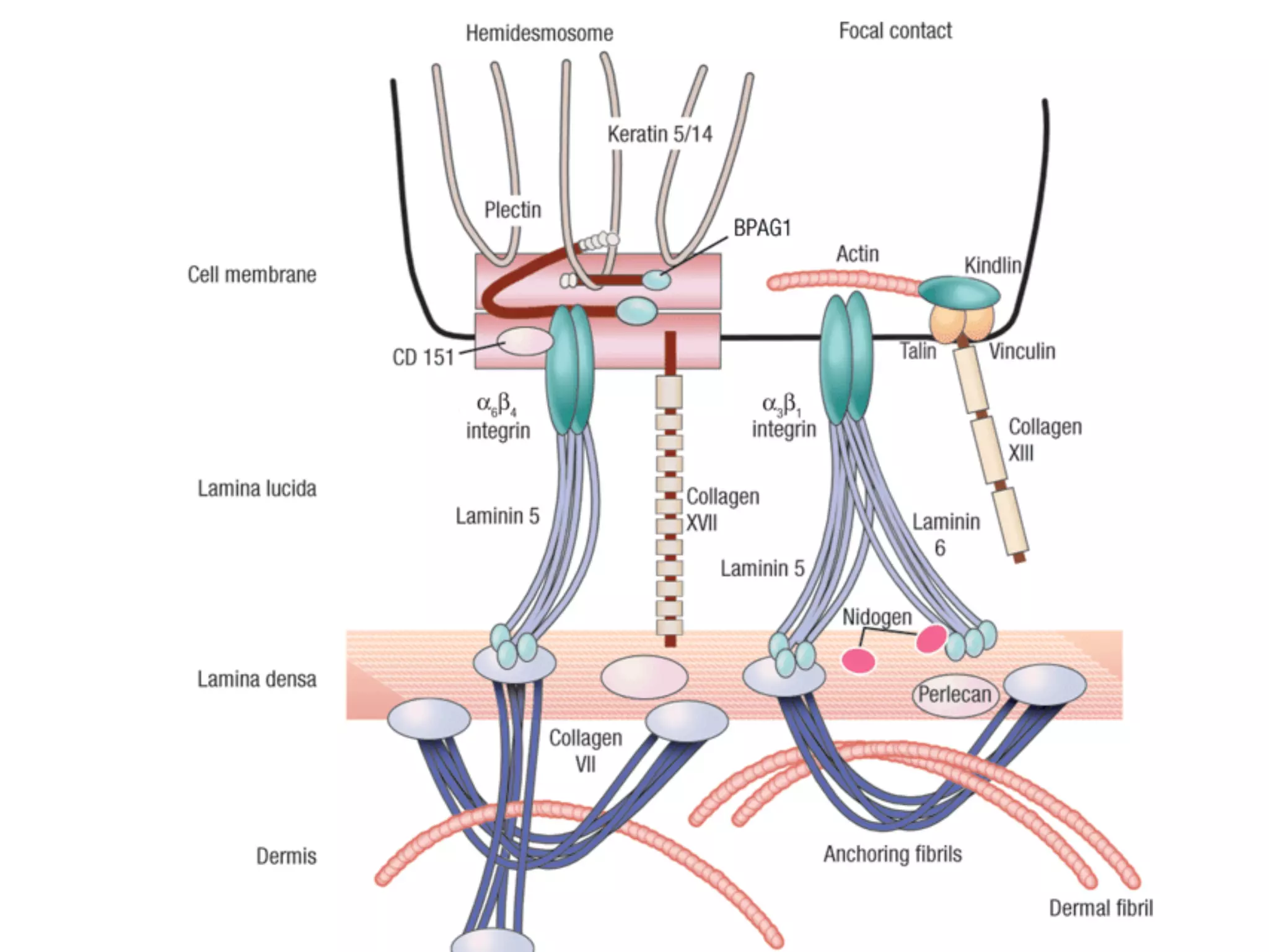
• The hemidesmosomal components comprise:
1. Cytoplasmic proteins [ plakin homologues (plectine,
BPAG1)]
2. Trasmembrane components [integrins, and collagenous
transmembrane (BPAG2)].
• All basement membranes contain collagen IV, laminins,
nidogens, and perlecan.
• Anchoring fibrils ( to the dermis) are composed mainly of
collagen VII
Autoimmune Bullous Dermatoses
• Pemphigus vulgaris
• Paraneoplastic pemphigus
• Bullous pemphigoid
• Herpes gestationis
• Cicatricial pemphigoid
• Dermatitis herpetiform
• Linear IgA dermatosis
• Epidermolysis bullosa acquisita
Pemphigus vulgaris
• Mean age of onset: 40-60 years
• Skin and mucous membranes
• Fatal if not treated
Pemphigus vulgaris
• Lesions start in the oral mucosa
• Followed by skin lesions
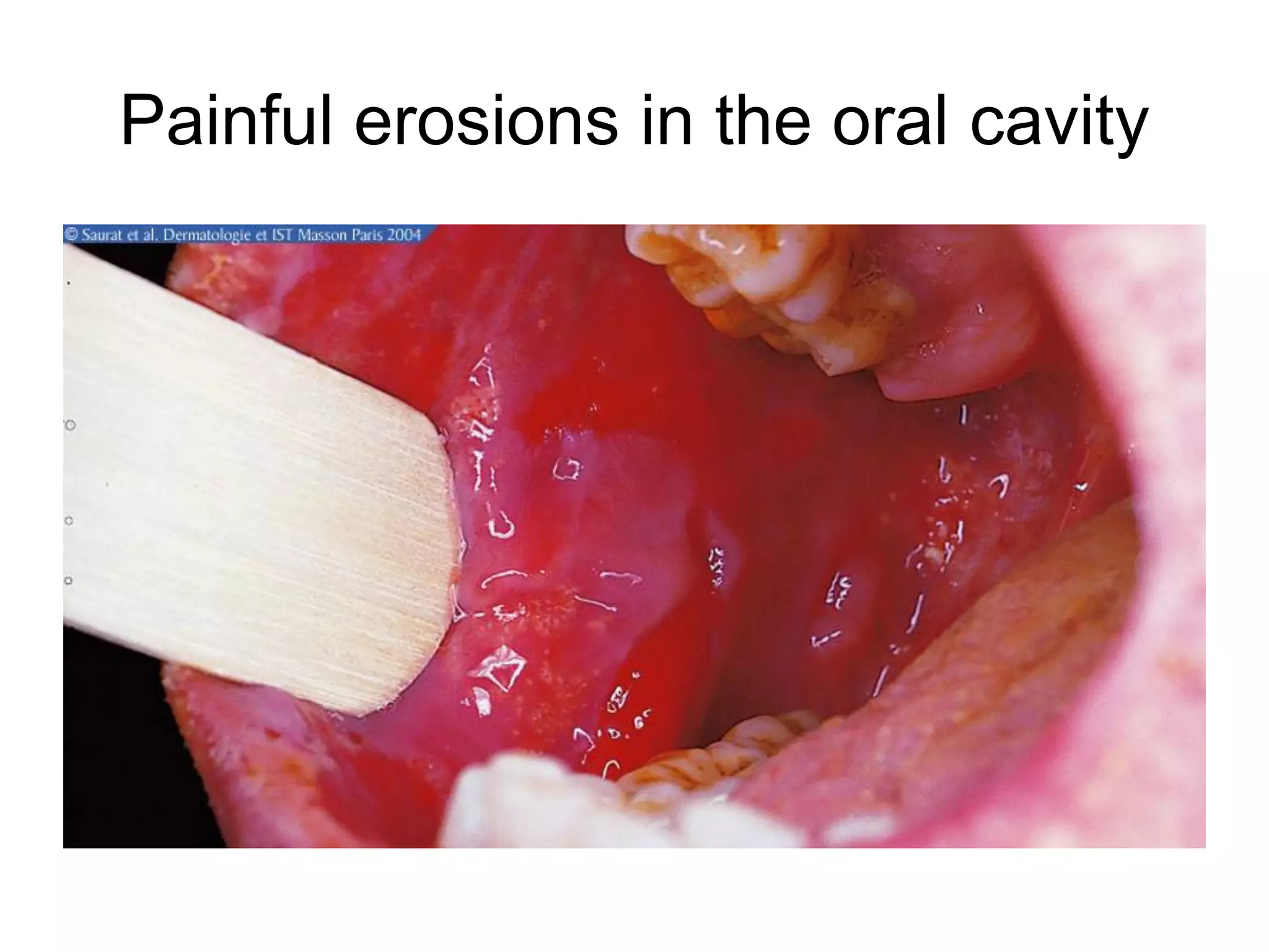
• Flaccid blisters, fragile, rupture easily, painful
erosions.
• Site of predilection (scalp, face, chest, axillae,
groin, umbilicus, pharynx, larynx, oral cavity)
Painful erosions in the oral cavity
Pemphigus Vulgaris
Flaccid blisters
Seborreic Pemphigus
Pemphigus Vulgaris
• Light: Suprabasilar blister with acantholysis
• DIF: Intercellular IgG and C3
• IIF: Circulating antibodies against keratinocytes
membranes
• Target antigen: Desmoglein 3 (130 Kd),
localised in desmosomes.
Direct Immunofluorescence
Treatment
• Oral corticosteroids (1mg/kg/day) +
immunosuppressive agents.
• Azathioprine, Mycophenolate Mofetil,
Methotrexate, Cyclophosphamide
• Plasmapheresis
Paraneoplastic Pemphigus
• Most common malignancy associated is
non-Hodgkin lymphoma
• Next most common in frequency are
chronic lymphocytic leukemia,
Castleman’s disease, and thymoma.
• Also: Waldenstrom’s macroglobulinemia,
sarcomas
Paraneoplastic Pemphigus
Clinical findings
• The signature clinical finding is the early
onset of severe refractory oral mucosal
involvement.
Paraneoplastic Pemphigus
-
Histology
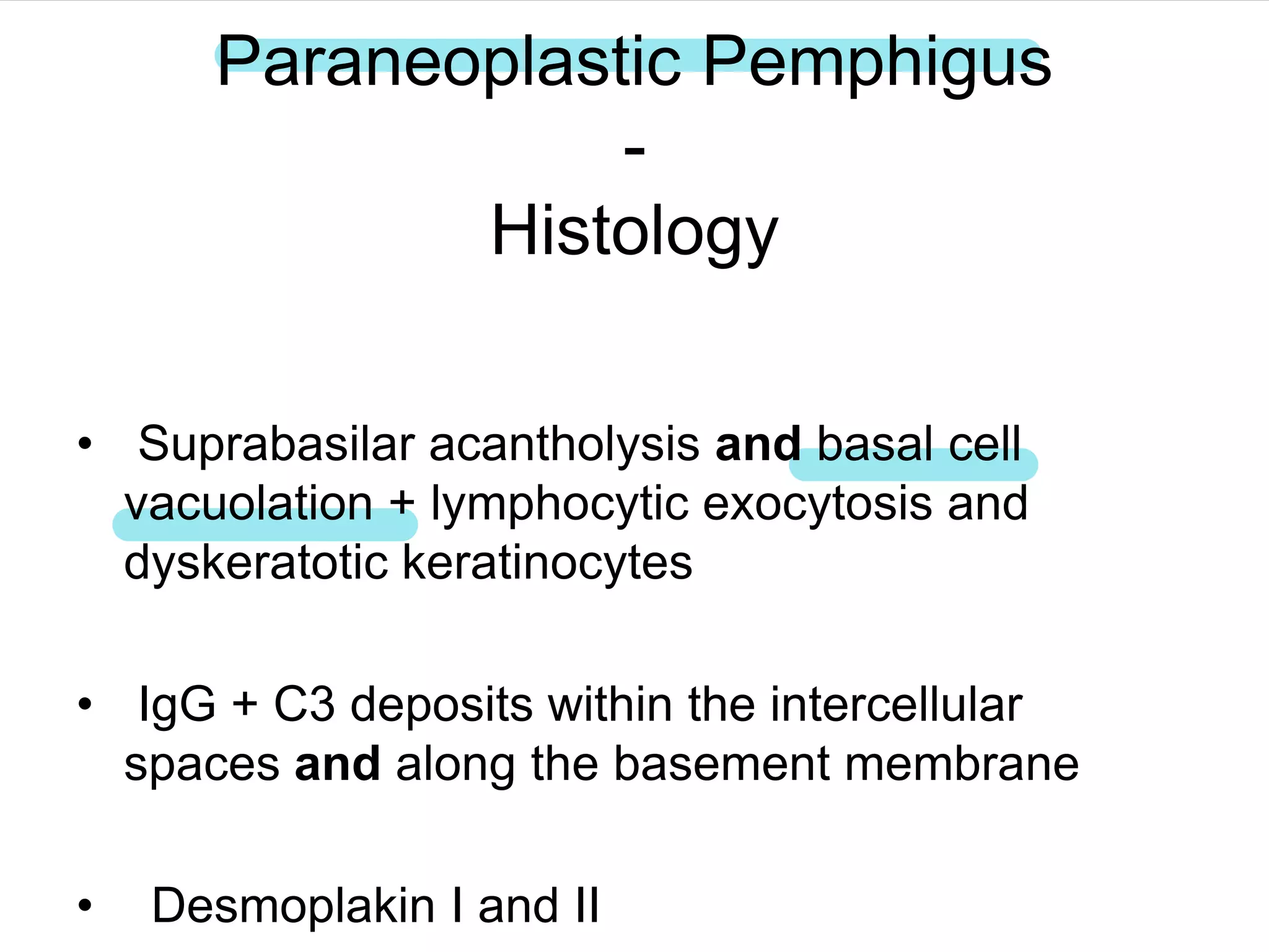
• Suprabasilar acantholysis and basal cell
vacuolation + lymphocytic exocytosis and
dyskeratotic keratinocytes
• IgG + C3 deposits within the intercellular
spaces and along the basement membrane
• Desmoplakin I and II
Paraneoplastic Pemphigus
Evolution and treatment
May precede clinical appearance of neoplasm
• Very poor prognosis
• Treatment usually unsuccessful
• Remission if a benign tumor is resected
• Immunosuppressive treatment, plasmapheresis,
immunophoresis.
Autoimmune Bullous Dermatoses
• Pemphigus vulgaris
• Paraneoplastic pemphigus
• Bullous pemphigoid
• Herpes gestationis
• Cicatricial pemphigoid
• Dermatitis herpetiform
• Linear IgA dermatosis
• Epidermolysis bullosa acquisita
Bullous Pemphigoid
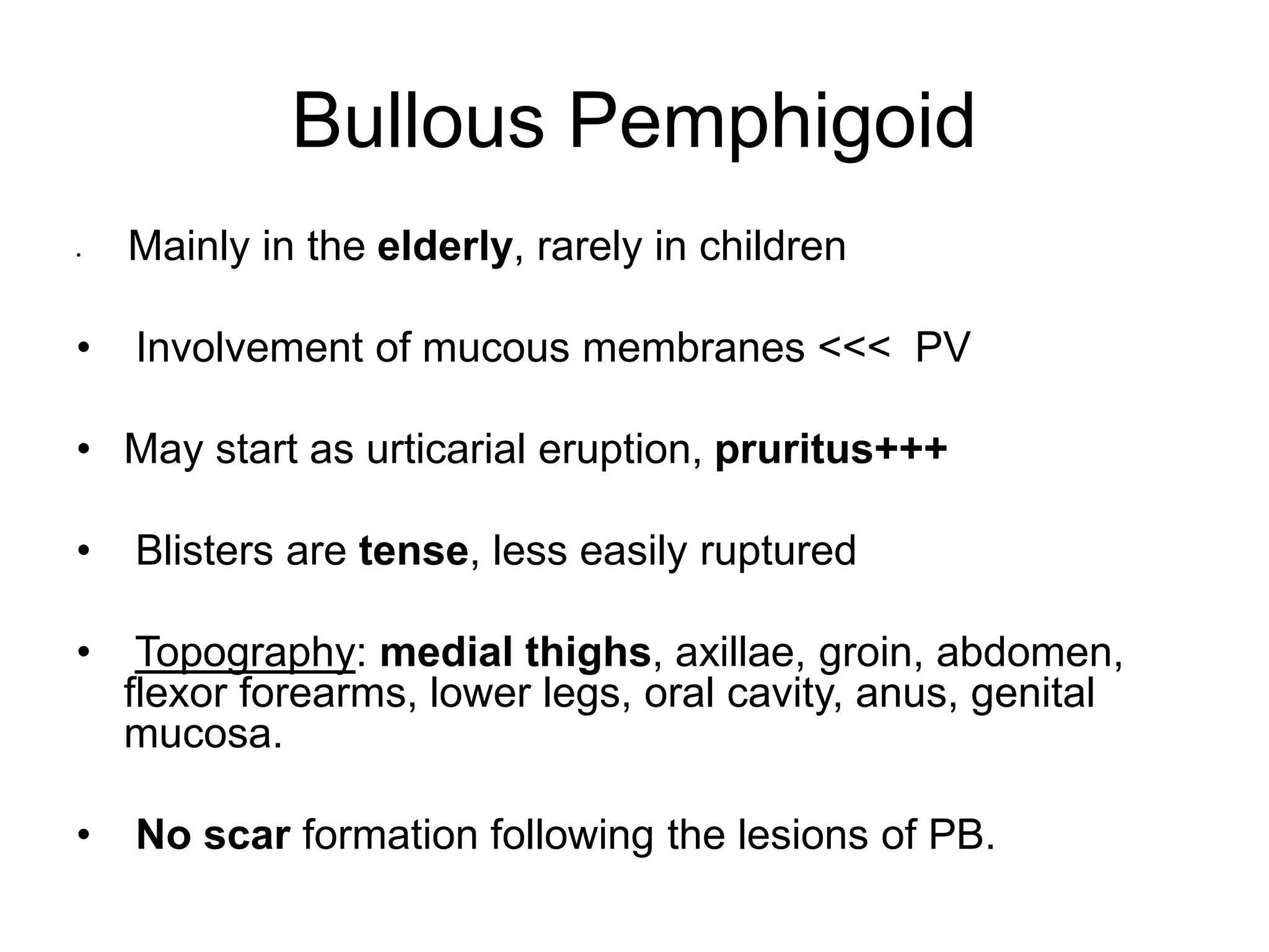
• Mainly in the elderly, rarely in children
• Involvement of mucous membranes <<< PV
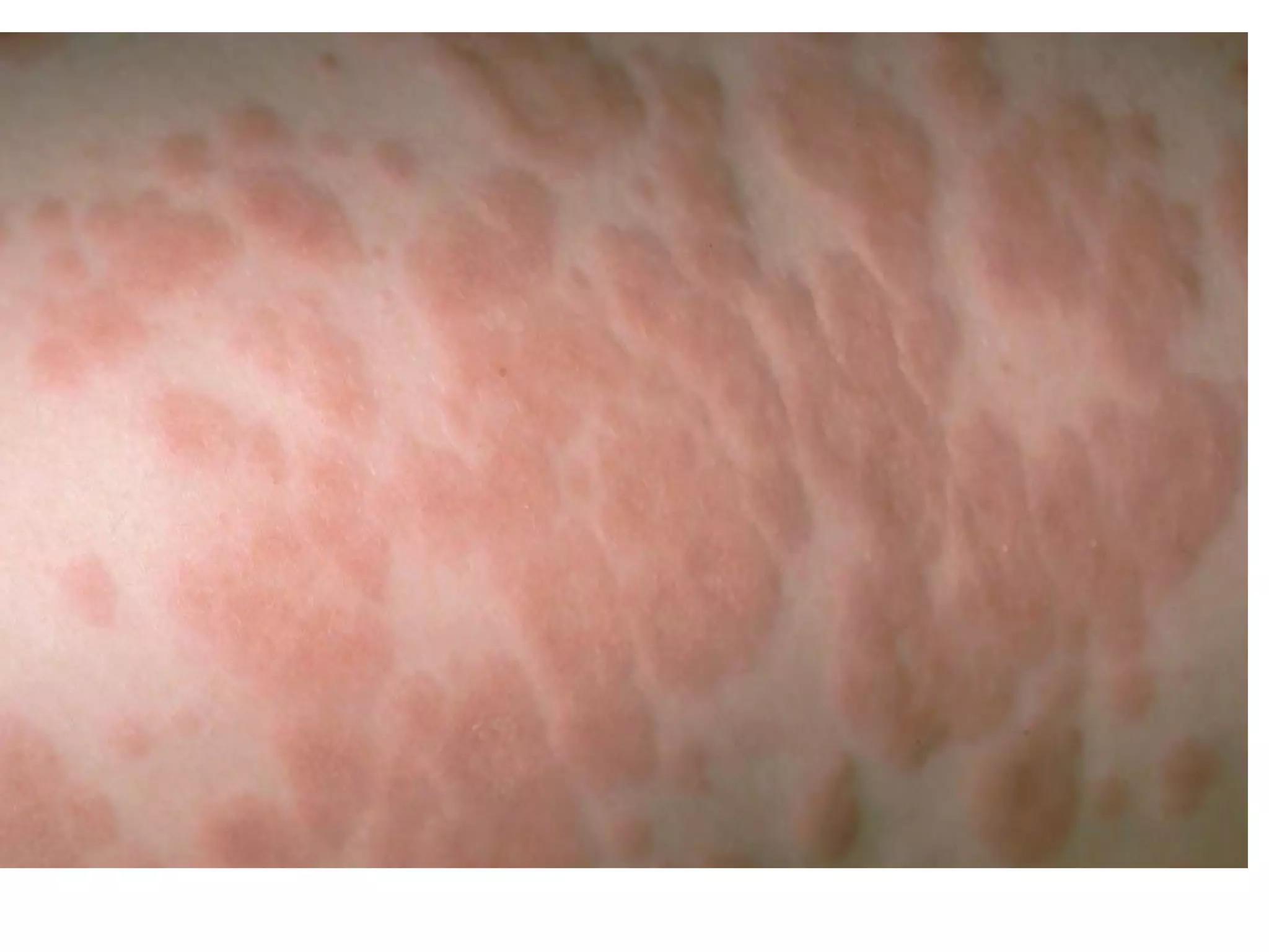
• May start as urticarial eruption, pruritus+++
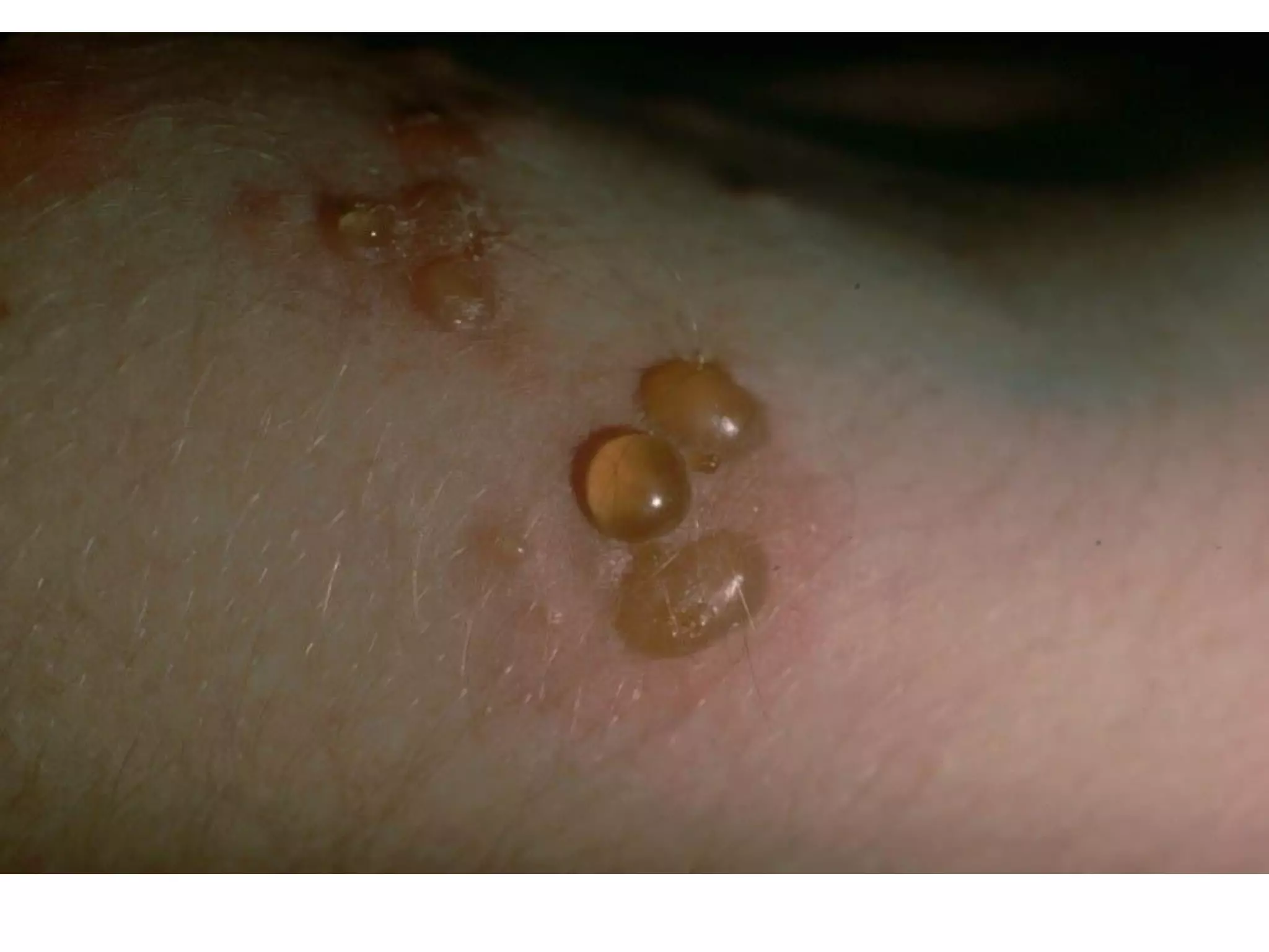
• Blisters are tense, less easily ruptured
• Topography: medial thighs, axillae, groin, abdomen,
flexor forearms, lower legs, oral cavity, anus, genital
mucosa.
• No scar formation following the lesions of PB.
Bullous Pemphigoid
Bullous Pemphigoid
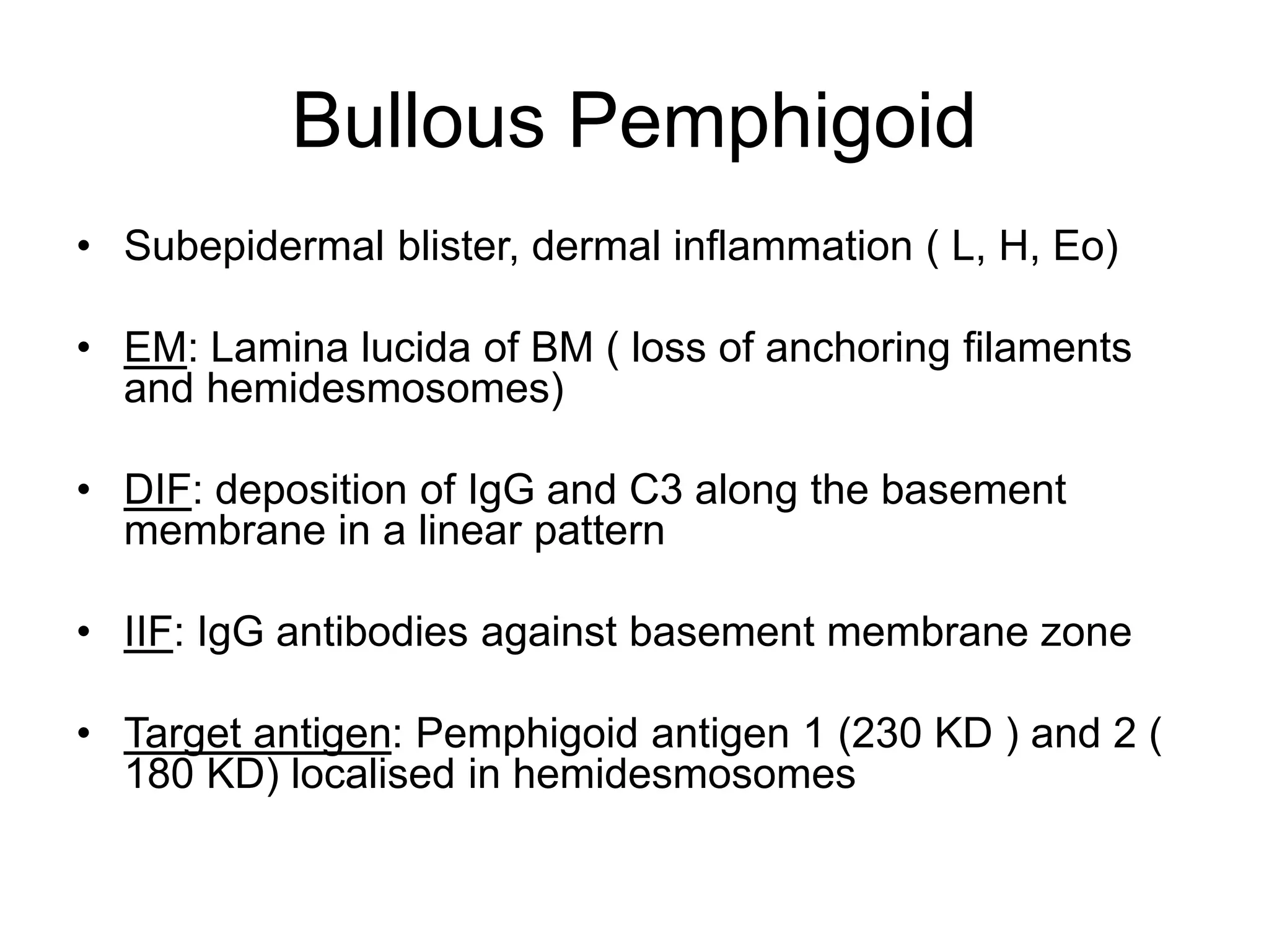
• Subepidermal blister, dermal inflammation ( L, H, Eo)
• EM: Lamina lucida of BM ( loss of anchoring filaments
and hemidesmosomes)
• DIF: deposition of IgG and C3 along the basement
membrane in a linear pattern
• IIF: IgG antibodies against basement membrane zone
• Target antigen: Pemphigoid antigen 1 (230 KD ) and 2 (
180 KD) localised in hemidesmosomes
Direct Immunofluorescence
Treatment
• Systemic corticosteroids ( 0.5 to 1mg/kg/day)
• + Immunosuppressive agents
( Azathioprine :100 to 150 mg/day or
Mycophenolate Mofetil: 2 g/day or Methotrexate:
low-dose methotrexate as a steroid-sparing
agent)
• Anti-TNF
• Very potent topical corticosteroids in localised
cases
Autoimmune Bullous Dermatoses
• Pemphigus vulgaris
• Paraneoplastic pemphigus
• Bullous pemphigoid
• Herpes gestationis (Pemphigoid
Gestationis)
• Cicatricial pemphigoid
• Dermatitis herpetiform
• Linear IgA dermatosis
• Epidermolysis bullosa acquisita
Herpes gestationis
or
Pemphigoid Gestationis
• Bullous pemphigoid of pregnancy
• Develop during the second and third trimesters
• Abrupt onset of extremely pruritic urticarial
papules and blisters (abdomen,trunk)
• Resolves spontaneously within weeks to months
after delivery
• Dramatic flares can occur at or immediately after
delivery
• May recur with subsequent pregnancies
Herpes Gestationis
• No increase in fetal or maternal mortality
• Greater prevalence of premature and
small-for-gestational-age (SGA) babies
• 5-10% of infants born to affected mothers
may present with transient cutaneous
involvement that resolves as maternal
autoantibodies are cleared.
Treatment
• Prednisone at 0.5 mg/kg/d (starting dose)
• Tapered to minimum dose required to
control the disease
• Steroid-sparing agents may be used after
delivery in resistant cases
• Topical steroids may be initiated in mild
cases
Autoimmune Bullous Dermatoses
• Pemphigus vulgaris
• Paraneoplastic pemphigus
• Bullous pemphigoid
• Herpes gestationis
• Cicatricial pemphigoid
• Dermatitis herpetiform
• Linear IgA dermatosis
• Epidermolysis bullosa acquisita
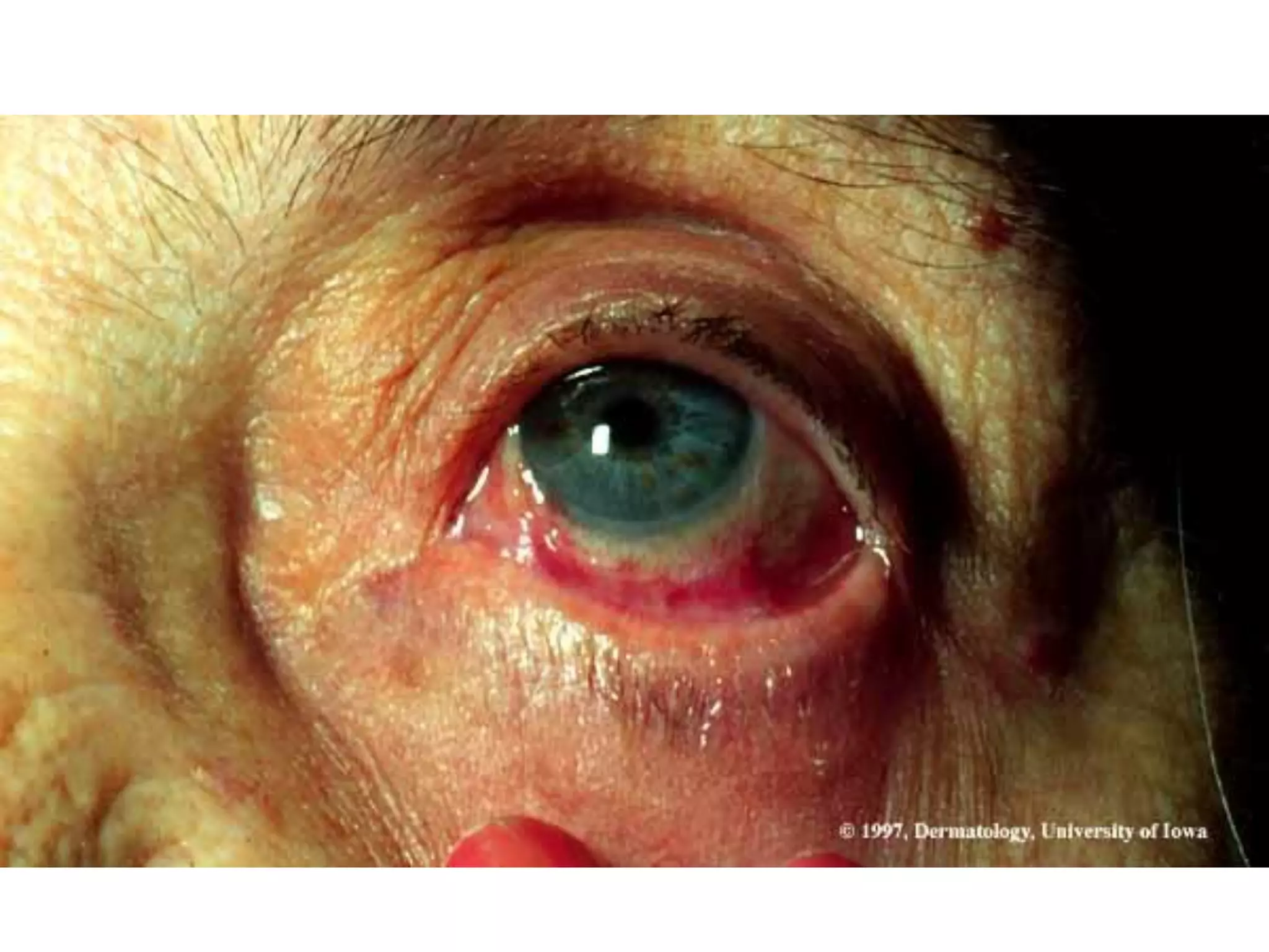
Cicatricial Pemphigoid
• Severe erosive lesions of the skin and mucous
membrane
• Skin involvement in 1/3 of patients
• Tense bullae, erosions, ulcers
• Healing with scars
• Ocular lesions scarring, fibrosis, blindness
• Esophagus occlusion, supraglottic stenosis
Cicatricial Pemphigoid
• Subepidermal blisters + mixed inflammatory infiltrate
• Fibroblast proliferation in older lesions
• DIF: linear deposition of C3 and IgG along the
basement membrane ( IgA and IgM )
• EM: loss of anchoring filaments
• Target Antigens: BPA2 (180 KD), laminin-5 Ag
Course and Treatment
• Chronic progressive disease
• Multidisciplinary approach
(otolaryngology, ophtalmology, gastroenterology,
gynecology)
• Topical corticosteroids ( mouthwash)
• Dapsone ( 50 to 100 mg/day) +/- systemic steroids
• Ocular involvement: systemic steroids +
cyclophosphamide ( 0.5 to 2 mg/kg/j) or azathioprine or
mycophenolate mofetil ( 1.5 to 3 g/day)
•
Autoimmune Bullous Dermatoses
• Pemphigus vulgaris
• Paraneoplastic pemphigus
• Bullous pemphigoid
• Herpes gestationis
• Cicatricial pemphigoid
• Dermatitis herpetiform
• Linear IgA dermatosis
• Epidermolysis bullosa acquisita
Dermatitis herpetiformis
• Onset: 20 and 40 years
• Papulovesicular and urticarial lesions (wheals)
• Extensor surfaces in a symmetric distribution
• Pruritus+++
• Associated with a gluten-sensitive enteropathy
Dermatitis Herpetiformis
Dermatitis herpetiformis
• Subepidermal vesicles, neutrophilic
microabcesses in dermal papillae and
dermal infiltration of N + Eo
• DIF: IgA in tips of dermal papillae
• Positive Antiendomysial, antigliadine,
antitransglutaminase antibodies in sera
Dermatitis Herpetiformis
Treatment
• Dapsone (2 mg/kg/j) or sulfapyridine (=
salazopyrine 3 to 6g/j )
• Check G6PD before starting Dapsone
• Blood count / month ( hemolytic anemia)
• Gluten free diet
Autoimmune Bullous Dermatoses
• Pemphigus vulgaris
• Paraneoplastic pemphigus
• Bullous pemphigoid
• Herpes gestationis
• Cicatricial pemphigoid
• Dermatitis herpetiform
• Linear IgA dermatosis
• Epidermolysis bullosa acquisita
Linear IgA dermatosis
• Children and young adults
• Pruritic annular papules, vesicules
(« collarettes »)
• Extensor surfaces, symmetric distribution
• Possible mucous involvement
Linear IgA Disease
Histopathology
• Subepidermal bullae
• Neutrophils collections (basement membrane,
dermal papillary tips)
• DIF: linear IgA along basement membrane.
• Target Antigen: Basement Membrane Ag (97 kd)
Treatment
• Dapsone ( 100mg/day) or sulfapyridine (
1.5 to 3 g/day)
• Low-dose prednisone may be required in
resistant cases
Autoimmune Bullous Dermatoses
• Pemphigus vulgaris
• Paraneoplastic pemphigus
• Bullous pemphigoid
• Herpes gestationis
• Cicatricial pemphigoid
• Dermatitis herpetiform
• Linear IgA dermatosis
• Epidermolysis bullosa acquisita
Epidermolysis bullosa acquisita
• Blistering subepidermal
• Skin and mucus membranes
• Clinically: blisters, scars, and milia
• Trauma-prone areas (extensor surfaces
of elbows, knees, ankles, and buttocks) .
• Generalized inflammatory skin blister
phenotype mimic bullous pemphigoid
Epidermolysis bullosa acquisita
Patient with epidermolysis bullosa acquisita who has
severe blistering, erosions, scarring, and milia
formation on trauma-prone areas of her skin. This is
the classic presentation
Histopathology
• Subepidermal (below lamina densa)
• DIF: IgG and/or C3 linearly along the
dermoepidermal junction
• A positive DIF and IgG deposits within the sub-
lamina densa zone are necessary criteria for
the diagnosis of EBA.
• Target antigen : type VII collagen (290 and 145
kd)
Epidermolysis bullosa acquisita
• Related features may include an
underlying systemic disease such as
inflammatory bowel disease.
• Treatment options limited and often
difficult
Classification
• Acquired:
(autoimmune, infectious, toxiderma )
• Hereditary:
(Epidermolysis Bullosa, ichtyosis bullosa )
Fine JD, Management of acquired bullous skin diseases; New England Journal of
Medecine.
Bickle K, Roark T; Autoimmune Bullous dermatoses: A Review; American family
physician.
Bullous Toxidermic reactions
• Erythema multiforme
• Stevens-Johnson Syndrome
• Toxic epidermal necrolysis
Erythema Multiforme
• Cell-mediated hypersensitivity reaction
• Minor form
• Causes:
- infectious ( Herpes simplex,
Mycoplasma Pneumoniae, Chlamydiae)
- drugs
• 20% occur in childhood
Erythema Multiforme
• Lesions are red papules that
evolve into target lesions
• Blister or crust in the central
zone
• Topography: face and acral
• Mucous membrane
involvement: light to severe
Treatment
• Oral corticosteroids?, thalidomide, dapsone,
other immunosuppressive agents
• Acyclovir, Valacyclovir ( therapeutic trial even if
no preceding herpes simplex infection has been
documented)
• Oral erythromycine (chlamidiae, mycoplasma)
• Ophtalmologic care (artificial tears, topical
vitamin A)
Clinical criteria for Stevens-
Johnson syndrome
• Acute mucocutaneous syndrome
• Prodrome of upper respiratory illness with fever, cough, headache
and malaise
• Abrupt onset of symmetrical red papules
• Rapid evolution to target lesions, large bullae or extensive areas of
denuded skin.
• At least two mucosal surfaces involved with erosions and
crusting
• Duration of at least 3 weeks
Stevens-Johnson
Stevens-Johnson
Stevens-Johnson
Eetiology and pathogenesis
• Preceding infections with Mycoplasma
pneumoniae
• Drugs: NSAIDs, anticonvulsivants,
penicillins, tetracycline, doxycycline,
sulphonaides
• Combination of infection and drug
Pathology
• Extensive epithelial necrosis
• Inflamatory infiltrate
Prognosis and treatment
• 4 to 6 weeks course
• Complications: dehydration, electrolyte
imbalance, secondary bacterial infection,
cutaneous scarring and dyspigmentation.
• Ocular sequalae, contracture over joints
Prognosis and treatment
• Hospitalization
• Immediate withdrawal of any suspected
drug
• Correction of fluid and electrolyte
imbalance
• Warming the environment
• Prevention of secondary infection and
sepsis
Treatment
• Use of corticosteroids is controversial
• May lower the period of acute eruption and
fever
• May adversely affect morbidity and mortality
• Other: Mycophenolate Mofetil, IVIG
Toxic Epidermal Necrolysis
• Severe, life-threatening, bullous disease
• Widespread detachment of the epidermis denudation
of large areas of body surface > 30%
• Mucous membrane +++
• Cause: systemically administered medication
• Differential diagnosis: staphylococcal scalded skin
syndrome
Histology
• Necrosis of the full thickness of the
epidermis
Treatment
• Use of corticosteroids is controversial and
cannot be recommended
• IVIG may be of benefit (risk for
anaphylaxis)
• Supportive treatment +++ (meticulous
nursing care in burn units, large volumes
of fluids, electrolytes etc…)
Classification
• Acquired:
(autoimmune, infectious, toxiderma )
• Hereditary:
(Epidermolysis Bullosa, ichtyosis bullosa )
Fine JD, Management of acquired bullous skin diseases; New England Journal of Medecine.
Bickle K, Roark T; Autoimmune Bullous dermatoses: A Review; American family physician.
Epidermolysis Bullosa
3 categories:
• EB simplex (EBS)
• Junctional EB (JEB)
• Dystrophic EB (DEB)
Epidermolysis Bullosa
• Several subtypes within each category
• Clinically and genetically distinct
• Mutations in at least 10 different genes
EBS
JEB
DEB
Epidermolysis Bullosa
Simplex
• Weber-Cockayne EBS  KRT5 and 14
• Kobner EBS KRT5 and 14
• Dowling-Meara EBS  KRT5 and 14
Epidermolysis Bullosa
Simplex
• Blisters on hands and feet +++, trunk and limbs
• Plamo-plantar hyperkeratosis
• Nail dystrophy
• Oropharyngeal blistering ( D-M EBS)
• Hot environment,friction and trauma may induce
blistering
Epidermolysis Bullosa
Simplex
• Prognosis is good
• Disability, limitations on the distance they
can walk…
Dystrophic Epidermolysis
Bullosa
• Blistering below the lamina densa
• Type VII collagen defect
• Tendency of the blisters to heal with
mutilating scarring
Dystrophic Epidermolysis
Bullosa
• Dominant DEB
• Generalized Hallopeau-Siemens DEB
• Generalized non-Hallopeau-Siemens
DEB
• Clinical Overlap
Dystrophic Epidermolysis
Bullosa
• Tendency for blistered area to heal with atrophic
scarring
• Milia in recently healed areas
• Development of joint contractures and fusion of
fingers and toes
• Tendency for epitheliomas in reccurently
ulcerated and scarred areas
Dystrophic Epidermolysis
Bullosa
• Blistering of the oral, pharyngeal and oesophageal mucosa
Leading to:
- Reduced nutritional intake
- Progressive contraction of the mouth
- Progressive fixation of the tongue
- Oesophageal stricture
• Conjunctival bullae
• Genitourinary tract strictures
Prognosis in DEB
• Extraordinary variation in prognosis
• Correlates with the amount of collagen VII
at the basement membrane
• Complete absence suggests a worse
outlook
Junctional epidermolysis bullosa
• Herlitz JEB laminine 5
• non-Herlitz JEBcollagen XVII laminine 5
• JEB with pyloric atresia integrin alpha6 B4
Junctional epidermolysis bullosa
• EB letalis
• Some may survive
• Non-cutaneous features +++ cause
significant morbidity
Junctional epidermolysis bullosa
-
Non-cutaneous features
• Integrin ( A6, B4) is found in other
epithelia than skin including
gastrointestinal and urogenital tract.
Junctional epidermolysis bullosa
• Laryngeal involvement ( hoarseness)
• Pyloric atresia
• Urogenital tract involvement ( bladder,
urethra)
• Teeth, eyes
JEB
Treatment of EB
• General skin care ( special non-adhesive
dressings and bandages)
• Pain control ++++
• Management of complications
• Conservative approach ++++
Classification
• Acquired:
(autoimmune, infectious, toxiderma )
• Hereditary:
(Epidermolysis Bullosa, ichtyosis bullosa )
Fine JD, Management of acquired bullous skin diseases; New England Journal of Medecine.
Bickle K, Roark T; Autoimmune Bullous dermatoses: A Review; American family physician.
Ichtyosis bullosa
• Genetic skin disease ( genes encoding keratin)
• Widespread blistering in infancy
• Blistering improves with age
• Hyperkeratosis, desquamation, erythroderma,
lichenification…
THANK YOU
!!!!!!!!!!!!!!!!!!!!

Bullous lesions.pdf

  • 1.
    Bullous dermatoses Dr HalaAbi-Rached Megarbane Associate Professor University of Balamand
  • 2.
    Classification • Acquired: (autoimmune, infectious,toxiderma) • Hereditary: (Epidermolysis Bullosa, ichtyosis bullosa ) Fine JD, Management of acquired bullous skin diseases; New England Journal of Medecine. Bickle K, Roark T; Autoimmune Bullous dermatoses: A Review; American family physician.
  • 3.
  • 4.
  • 6.
    Epidermal and Epidermal-Dermal Cohesion •Desmosomes, hemidesmosomes, and the epidermal basement membrane • They represent distinct molecular adhesion complexes • Mutations in the genes encoding protein components of the above cause hereditary skin diseases • These proteins are targeted in autoimmune skin blistering diseases ( pemphigus or pemphigoid group and in epidermolysis bullosa acquisita)
  • 7.
    Epidermal and Epidermal-Dermal Cohesion •The major components of desmosomes belong to three major gene families:  Plakins (desmoplakins) , Armadillo proteins (plakophilins and plakoglobins), and Desmosomal cadherins (desmogleins, desmocollins).  Cytoplasmic proteins (desmoplakins , plakophilins and plakoglobins) and  Transmenbrane proteins (desmogleins and desmocollins)
  • 9.
    Epidermal and Epidermal- DermalCohesion • The hemidesmosomal components comprise: 1. Cytoplasmic proteins [ plakin homologues (plectine, BPAG1)] 2. Trasmembrane components [integrins, and collagenous transmembrane (BPAG2)]. • All basement membranes contain collagen IV, laminins, nidogens, and perlecan. • Anchoring fibrils ( to the dermis) are composed mainly of collagen VII
  • 14.
    Autoimmune Bullous Dermatoses •Pemphigus vulgaris • Paraneoplastic pemphigus • Bullous pemphigoid • Herpes gestationis • Cicatricial pemphigoid • Dermatitis herpetiform • Linear IgA dermatosis • Epidermolysis bullosa acquisita
  • 15.
    Pemphigus vulgaris • Meanage of onset: 40-60 years • Skin and mucous membranes • Fatal if not treated
  • 16.
    Pemphigus vulgaris • Lesionsstart in the oral mucosa • Followed by skin lesions • Flaccid blisters, fragile, rupture easily, painful erosions. • Site of predilection (scalp, face, chest, axillae, groin, umbilicus, pharynx, larynx, oral cavity)
  • 17.
    Painful erosions inthe oral cavity
  • 18.
  • 19.
  • 20.
    Pemphigus Vulgaris • Light:Suprabasilar blister with acantholysis • DIF: Intercellular IgG and C3 • IIF: Circulating antibodies against keratinocytes membranes • Target antigen: Desmoglein 3 (130 Kd), localised in desmosomes.
  • 23.
  • 24.
    Treatment • Oral corticosteroids(1mg/kg/day) + immunosuppressive agents. • Azathioprine, Mycophenolate Mofetil, Methotrexate, Cyclophosphamide • Plasmapheresis
  • 25.
    Paraneoplastic Pemphigus • Mostcommon malignancy associated is non-Hodgkin lymphoma • Next most common in frequency are chronic lymphocytic leukemia, Castleman’s disease, and thymoma. • Also: Waldenstrom’s macroglobulinemia, sarcomas
  • 26.
    Paraneoplastic Pemphigus Clinical findings •The signature clinical finding is the early onset of severe refractory oral mucosal involvement.
  • 28.
    Paraneoplastic Pemphigus - Histology • Suprabasilaracantholysis and basal cell vacuolation + lymphocytic exocytosis and dyskeratotic keratinocytes • IgG + C3 deposits within the intercellular spaces and along the basement membrane • Desmoplakin I and II
  • 30.
    Paraneoplastic Pemphigus Evolution andtreatment May precede clinical appearance of neoplasm • Very poor prognosis • Treatment usually unsuccessful • Remission if a benign tumor is resected • Immunosuppressive treatment, plasmapheresis, immunophoresis.
  • 31.
    Autoimmune Bullous Dermatoses •Pemphigus vulgaris • Paraneoplastic pemphigus • Bullous pemphigoid • Herpes gestationis • Cicatricial pemphigoid • Dermatitis herpetiform • Linear IgA dermatosis • Epidermolysis bullosa acquisita
  • 32.
    Bullous Pemphigoid • Mainlyin the elderly, rarely in children • Involvement of mucous membranes <<< PV • May start as urticarial eruption, pruritus+++ • Blisters are tense, less easily ruptured • Topography: medial thighs, axillae, groin, abdomen, flexor forearms, lower legs, oral cavity, anus, genital mucosa. • No scar formation following the lesions of PB.
  • 33.
  • 34.
    Bullous Pemphigoid • Subepidermalblister, dermal inflammation ( L, H, Eo) • EM: Lamina lucida of BM ( loss of anchoring filaments and hemidesmosomes) • DIF: deposition of IgG and C3 along the basement membrane in a linear pattern • IIF: IgG antibodies against basement membrane zone • Target antigen: Pemphigoid antigen 1 (230 KD ) and 2 ( 180 KD) localised in hemidesmosomes
  • 36.
  • 38.
    Treatment • Systemic corticosteroids( 0.5 to 1mg/kg/day) • + Immunosuppressive agents ( Azathioprine :100 to 150 mg/day or Mycophenolate Mofetil: 2 g/day or Methotrexate: low-dose methotrexate as a steroid-sparing agent) • Anti-TNF • Very potent topical corticosteroids in localised cases
  • 39.
    Autoimmune Bullous Dermatoses •Pemphigus vulgaris • Paraneoplastic pemphigus • Bullous pemphigoid • Herpes gestationis (Pemphigoid Gestationis) • Cicatricial pemphigoid • Dermatitis herpetiform • Linear IgA dermatosis • Epidermolysis bullosa acquisita
  • 40.
    Herpes gestationis or Pemphigoid Gestationis •Bullous pemphigoid of pregnancy • Develop during the second and third trimesters • Abrupt onset of extremely pruritic urticarial papules and blisters (abdomen,trunk) • Resolves spontaneously within weeks to months after delivery • Dramatic flares can occur at or immediately after delivery • May recur with subsequent pregnancies
  • 44.
    Herpes Gestationis • Noincrease in fetal or maternal mortality • Greater prevalence of premature and small-for-gestational-age (SGA) babies • 5-10% of infants born to affected mothers may present with transient cutaneous involvement that resolves as maternal autoantibodies are cleared.
  • 45.
    Treatment • Prednisone at0.5 mg/kg/d (starting dose) • Tapered to minimum dose required to control the disease • Steroid-sparing agents may be used after delivery in resistant cases • Topical steroids may be initiated in mild cases
  • 46.
    Autoimmune Bullous Dermatoses •Pemphigus vulgaris • Paraneoplastic pemphigus • Bullous pemphigoid • Herpes gestationis • Cicatricial pemphigoid • Dermatitis herpetiform • Linear IgA dermatosis • Epidermolysis bullosa acquisita
  • 47.
    Cicatricial Pemphigoid • Severeerosive lesions of the skin and mucous membrane • Skin involvement in 1/3 of patients • Tense bullae, erosions, ulcers • Healing with scars • Ocular lesions scarring, fibrosis, blindness • Esophagus occlusion, supraglottic stenosis
  • 49.
    Cicatricial Pemphigoid • Subepidermalblisters + mixed inflammatory infiltrate • Fibroblast proliferation in older lesions • DIF: linear deposition of C3 and IgG along the basement membrane ( IgA and IgM ) • EM: loss of anchoring filaments • Target Antigens: BPA2 (180 KD), laminin-5 Ag
  • 51.
    Course and Treatment •Chronic progressive disease • Multidisciplinary approach (otolaryngology, ophtalmology, gastroenterology, gynecology) • Topical corticosteroids ( mouthwash) • Dapsone ( 50 to 100 mg/day) +/- systemic steroids • Ocular involvement: systemic steroids + cyclophosphamide ( 0.5 to 2 mg/kg/j) or azathioprine or mycophenolate mofetil ( 1.5 to 3 g/day) •
  • 52.
    Autoimmune Bullous Dermatoses •Pemphigus vulgaris • Paraneoplastic pemphigus • Bullous pemphigoid • Herpes gestationis • Cicatricial pemphigoid • Dermatitis herpetiform • Linear IgA dermatosis • Epidermolysis bullosa acquisita
  • 53.
    Dermatitis herpetiformis • Onset:20 and 40 years • Papulovesicular and urticarial lesions (wheals) • Extensor surfaces in a symmetric distribution • Pruritus+++ • Associated with a gluten-sensitive enteropathy
  • 54.
  • 55.
  • 56.
    Dermatitis herpetiformis • Subepidermalvesicles, neutrophilic microabcesses in dermal papillae and dermal infiltration of N + Eo • DIF: IgA in tips of dermal papillae • Positive Antiendomysial, antigliadine, antitransglutaminase antibodies in sera
  • 58.
  • 59.
    Treatment • Dapsone (2mg/kg/j) or sulfapyridine (= salazopyrine 3 to 6g/j ) • Check G6PD before starting Dapsone • Blood count / month ( hemolytic anemia) • Gluten free diet
  • 60.
    Autoimmune Bullous Dermatoses •Pemphigus vulgaris • Paraneoplastic pemphigus • Bullous pemphigoid • Herpes gestationis • Cicatricial pemphigoid • Dermatitis herpetiform • Linear IgA dermatosis • Epidermolysis bullosa acquisita
  • 61.
    Linear IgA dermatosis •Children and young adults • Pruritic annular papules, vesicules (« collarettes ») • Extensor surfaces, symmetric distribution • Possible mucous involvement
  • 62.
  • 63.
    Histopathology • Subepidermal bullae •Neutrophils collections (basement membrane, dermal papillary tips) • DIF: linear IgA along basement membrane. • Target Antigen: Basement Membrane Ag (97 kd)
  • 64.
    Treatment • Dapsone (100mg/day) or sulfapyridine ( 1.5 to 3 g/day) • Low-dose prednisone may be required in resistant cases
  • 65.
    Autoimmune Bullous Dermatoses •Pemphigus vulgaris • Paraneoplastic pemphigus • Bullous pemphigoid • Herpes gestationis • Cicatricial pemphigoid • Dermatitis herpetiform • Linear IgA dermatosis • Epidermolysis bullosa acquisita
  • 66.
    Epidermolysis bullosa acquisita •Blistering subepidermal • Skin and mucus membranes • Clinically: blisters, scars, and milia • Trauma-prone areas (extensor surfaces of elbows, knees, ankles, and buttocks) . • Generalized inflammatory skin blister phenotype mimic bullous pemphigoid
  • 67.
  • 68.
    Patient with epidermolysisbullosa acquisita who has severe blistering, erosions, scarring, and milia formation on trauma-prone areas of her skin. This is the classic presentation
  • 69.
    Histopathology • Subepidermal (belowlamina densa) • DIF: IgG and/or C3 linearly along the dermoepidermal junction • A positive DIF and IgG deposits within the sub- lamina densa zone are necessary criteria for the diagnosis of EBA. • Target antigen : type VII collagen (290 and 145 kd)
  • 72.
    Epidermolysis bullosa acquisita •Related features may include an underlying systemic disease such as inflammatory bowel disease. • Treatment options limited and often difficult
  • 73.
    Classification • Acquired: (autoimmune, infectious,toxiderma ) • Hereditary: (Epidermolysis Bullosa, ichtyosis bullosa ) Fine JD, Management of acquired bullous skin diseases; New England Journal of Medecine. Bickle K, Roark T; Autoimmune Bullous dermatoses: A Review; American family physician.
  • 74.
    Bullous Toxidermic reactions •Erythema multiforme • Stevens-Johnson Syndrome • Toxic epidermal necrolysis
  • 75.
    Erythema Multiforme • Cell-mediatedhypersensitivity reaction • Minor form • Causes: - infectious ( Herpes simplex, Mycoplasma Pneumoniae, Chlamydiae) - drugs • 20% occur in childhood
  • 76.
    Erythema Multiforme • Lesionsare red papules that evolve into target lesions • Blister or crust in the central zone • Topography: face and acral • Mucous membrane involvement: light to severe
  • 77.
    Treatment • Oral corticosteroids?,thalidomide, dapsone, other immunosuppressive agents • Acyclovir, Valacyclovir ( therapeutic trial even if no preceding herpes simplex infection has been documented) • Oral erythromycine (chlamidiae, mycoplasma) • Ophtalmologic care (artificial tears, topical vitamin A)
  • 78.
    Clinical criteria forStevens- Johnson syndrome • Acute mucocutaneous syndrome • Prodrome of upper respiratory illness with fever, cough, headache and malaise • Abrupt onset of symmetrical red papules • Rapid evolution to target lesions, large bullae or extensive areas of denuded skin. • At least two mucosal surfaces involved with erosions and crusting • Duration of at least 3 weeks
  • 79.
  • 80.
  • 81.
  • 82.
    Eetiology and pathogenesis •Preceding infections with Mycoplasma pneumoniae • Drugs: NSAIDs, anticonvulsivants, penicillins, tetracycline, doxycycline, sulphonaides • Combination of infection and drug
  • 83.
    Pathology • Extensive epithelialnecrosis • Inflamatory infiltrate
  • 84.
    Prognosis and treatment •4 to 6 weeks course • Complications: dehydration, electrolyte imbalance, secondary bacterial infection, cutaneous scarring and dyspigmentation. • Ocular sequalae, contracture over joints
  • 85.
    Prognosis and treatment •Hospitalization • Immediate withdrawal of any suspected drug • Correction of fluid and electrolyte imbalance • Warming the environment • Prevention of secondary infection and sepsis
  • 86.
    Treatment • Use ofcorticosteroids is controversial • May lower the period of acute eruption and fever • May adversely affect morbidity and mortality • Other: Mycophenolate Mofetil, IVIG
  • 87.
    Toxic Epidermal Necrolysis •Severe, life-threatening, bullous disease • Widespread detachment of the epidermis denudation of large areas of body surface > 30% • Mucous membrane +++ • Cause: systemically administered medication • Differential diagnosis: staphylococcal scalded skin syndrome
  • 89.
    Histology • Necrosis ofthe full thickness of the epidermis
  • 90.
    Treatment • Use ofcorticosteroids is controversial and cannot be recommended • IVIG may be of benefit (risk for anaphylaxis) • Supportive treatment +++ (meticulous nursing care in burn units, large volumes of fluids, electrolytes etc…)
  • 91.
    Classification • Acquired: (autoimmune, infectious,toxiderma ) • Hereditary: (Epidermolysis Bullosa, ichtyosis bullosa ) Fine JD, Management of acquired bullous skin diseases; New England Journal of Medecine. Bickle K, Roark T; Autoimmune Bullous dermatoses: A Review; American family physician.
  • 92.
    Epidermolysis Bullosa 3 categories: •EB simplex (EBS) • Junctional EB (JEB) • Dystrophic EB (DEB)
  • 94.
    Epidermolysis Bullosa • Severalsubtypes within each category • Clinically and genetically distinct • Mutations in at least 10 different genes
  • 95.
  • 96.
  • 97.
  • 99.
    Epidermolysis Bullosa Simplex • Weber-CockayneEBS  KRT5 and 14 • Kobner EBS KRT5 and 14 • Dowling-Meara EBS  KRT5 and 14
  • 102.
    Epidermolysis Bullosa Simplex • Blisterson hands and feet +++, trunk and limbs • Plamo-plantar hyperkeratosis • Nail dystrophy • Oropharyngeal blistering ( D-M EBS) • Hot environment,friction and trauma may induce blistering
  • 104.
    Epidermolysis Bullosa Simplex • Prognosisis good • Disability, limitations on the distance they can walk…
  • 105.
    Dystrophic Epidermolysis Bullosa • Blisteringbelow the lamina densa • Type VII collagen defect • Tendency of the blisters to heal with mutilating scarring
  • 108.
    Dystrophic Epidermolysis Bullosa • DominantDEB • Generalized Hallopeau-Siemens DEB • Generalized non-Hallopeau-Siemens DEB • Clinical Overlap
  • 109.
    Dystrophic Epidermolysis Bullosa • Tendencyfor blistered area to heal with atrophic scarring • Milia in recently healed areas • Development of joint contractures and fusion of fingers and toes • Tendency for epitheliomas in reccurently ulcerated and scarred areas
  • 111.
    Dystrophic Epidermolysis Bullosa • Blisteringof the oral, pharyngeal and oesophageal mucosa Leading to: - Reduced nutritional intake - Progressive contraction of the mouth - Progressive fixation of the tongue - Oesophageal stricture • Conjunctival bullae • Genitourinary tract strictures
  • 112.
    Prognosis in DEB •Extraordinary variation in prognosis • Correlates with the amount of collagen VII at the basement membrane • Complete absence suggests a worse outlook
  • 113.
    Junctional epidermolysis bullosa •Herlitz JEB laminine 5 • non-Herlitz JEBcollagen XVII laminine 5 • JEB with pyloric atresia integrin alpha6 B4
  • 116.
    Junctional epidermolysis bullosa •EB letalis • Some may survive • Non-cutaneous features +++ cause significant morbidity
  • 117.
    Junctional epidermolysis bullosa - Non-cutaneousfeatures • Integrin ( A6, B4) is found in other epithelia than skin including gastrointestinal and urogenital tract.
  • 118.
    Junctional epidermolysis bullosa •Laryngeal involvement ( hoarseness) • Pyloric atresia • Urogenital tract involvement ( bladder, urethra) • Teeth, eyes
  • 119.
  • 120.
    Treatment of EB •General skin care ( special non-adhesive dressings and bandages) • Pain control ++++ • Management of complications • Conservative approach ++++
  • 121.
    Classification • Acquired: (autoimmune, infectious,toxiderma ) • Hereditary: (Epidermolysis Bullosa, ichtyosis bullosa ) Fine JD, Management of acquired bullous skin diseases; New England Journal of Medecine. Bickle K, Roark T; Autoimmune Bullous dermatoses: A Review; American family physician.
  • 122.
    Ichtyosis bullosa • Geneticskin disease ( genes encoding keratin) • Widespread blistering in infancy • Blistering improves with age • Hyperkeratosis, desquamation, erythroderma, lichenification…
  • 123.