BUILDING A SUCCESSFUL BYOD
PROGRAM:
A NEW PARADIGM FOR THE
EDUCATION COMMUNITY
www.iKeepSafe.org/BYOD
*
Agenda
• About iKeepSafe
•
•
•
•

BYOD Roundtable
Stakeholder Responsibilities
Implementation
Discussion
www.iKeepSafe.org/BYOD
About iKeepSafe
Dedicated to promoting the health and safety of
youth online
•

Curriculum materials to teach Internet safety, ethics
and the healthy use of technology

•

Generation Safe™ suite for school staff:
professional development, self assessment survey
and incident response tools

•

BEaPRO™ resources to help parents teach their
children to become safe, ethical, and responsible
digital citizens
*
Developing the BYOD
Materials
• Growing awareness of challenges around
BYOD
• Privacy, safety, security, access, device
management, professional development,
infrastructure, learning content, policies,
funding, and technical support

• iKeepSafe invited a variety of stakeholders and
thought leaders to join a roundtable discussion

*
BYOD Roundtable
• Linnette Attai, President and Founder, PlayWell, LLC
• Julie Baker, Marketing Content Manager, Kaspersky Lab
• Kyle Brumbaugh, Member of the Board of Directors, Computer Using Educators (CUE)
• Elizabeth Calhoon, Academic Technology Specialist

• Jeff Gaffney, Director of Sales-SLED, Kaspersky Lab
• Camilla Gagliolo, Program Director, ISTE
• Frank Gallagher, Executive Director, Cable in the Classroom
• Nancy Gifford, Counsel, Wiggen & Dana LLP
• Marsali Hancock, President and CEO, iKeepSafe

• Mary Heston, Social Media Director, Wired Mom
• Charles Leitch, Founding Principal, Patterson Buchanan Fobes & Leitch LLP
• Amber Lindsay, Director of Program Development and Outreach, iKeepSafe
• Sally Linford, Director of Communications, iKeepSafe
• Ethan Parry, Director of Public Relations, iKeepSafe
• Tim Sullivan, Publisher, Parent Teacher Organization
• Glen Warren, VP of Government Relations, California School Library Association (Chair)
*
BYOD Roundtable Goals
• Explore building a successful BYOD program
• Consider all stakeholder challenges
• Examine benefits and complexities of
implementing a BYOD culture in schools
• Special attention paid to issues around civil
liberties, access, FERPA, CIPA and updated
COPPA amendments

*
Outcomes
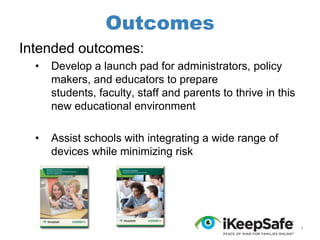
Intended outcomes:
•

Develop a launch pad for administrators, policy
makers, and educators to prepare
students, faculty, staff and parents to thrive in this
new educational environment

•

Assist schools with integrating a wide range of
devices while minimizing risk

*
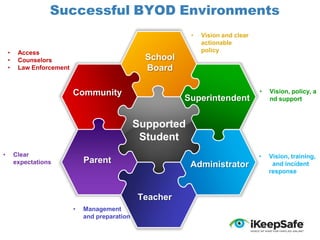
Successful BYOD Environments
•
•
•
•

Access
Counselors
Law Enforcement

Vision and clear
actionable
policy

School
Board
Superintendent

•

Vision, policy, a
nd support

•

Community

Vision, training,
and incident
response

Supported
Student
•

Clear
expectations

Parent

Administrator

Teacher
•

Management
and preparation
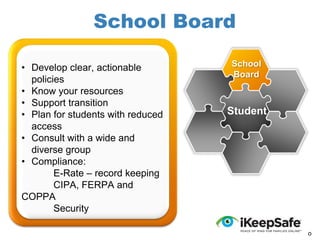
School Board
• Develop clear, actionable
policies
• Know your resources
• Support transition
• Plan for students with reduced
access
• Consult with a wide and
diverse group
• Compliance:
E-Rate – record keeping
CIPA, FERPA and
COPPA
Security

School
Board

Student

o
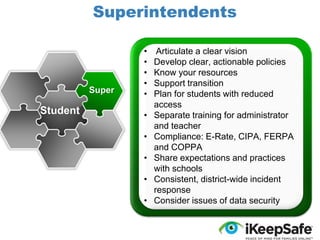
Superintendents

Super

Student

•
•
•
•
•
•
•
•
•
•

Articulate a clear vision
Develop clear, actionable policies
Know your resources
Support transition
Plan for students with reduced
access
Separate training for administrator
and teacher
Compliance: E-Rate, CIPA, FERPA
and COPPA
Share expectations and practices
with schools
Consistent, district-wide incident
response
Consider issues of data security
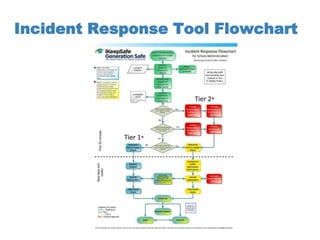
Incident Response Tool Flowchart
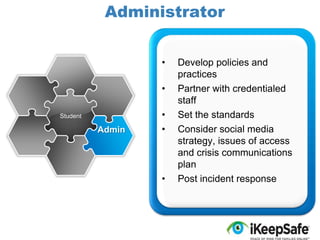
Administrator
•
•
Student

Admin

•
•

•

Develop policies and
practices
Partner with credentialed
staff
Set the standards
Consider social media
strategy, issues of access
and crisis communications
plan
Post incident response
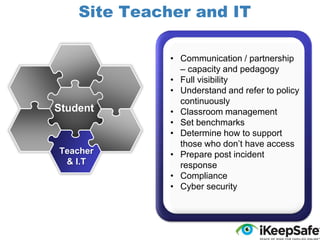
Site Teacher and IT

•

Student

• Communication / partnership
– capacity and pedagogy
• Full visibility
• Understand and refer to policy
continuously
• Classroom management
• Set benchmarks
• Determine how to support
those who don’t have access
• Prepare post incident
response
• Compliance
• Cyber security
StStr

Teacher
& I.T
Parents
Board

Community

Super

Student
Parent

Admin
Teacher

• Policy - No surprises
BEaPRO™
• Clear expectations
• Provide support for
parents with low
access
• Crisis communication
plan
• Provide digital literacy
training
Community

Community

Student

•
•
•
•
•
•

Public relations plan
Crisis management
Identify Wi-Fi access
Law enforcement
Support services
Digital literacy training

Your Logo
Students
BEaPRO™
Balance
Ethics
Privacy

Reputation
Relationships
Online Security

Supported
Student

• “No surprise” policies
• Include student voice
• Clear expectations
about social media
• Clear expectations
specific to devices on
and off campus
• Support students with
limited access
• Post incident response
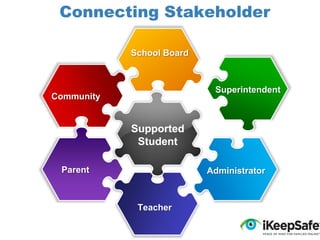
Connecting Stakeholder
School Board

Superintendent

Community

Supported
Student
Parent

Administrator

Teacher
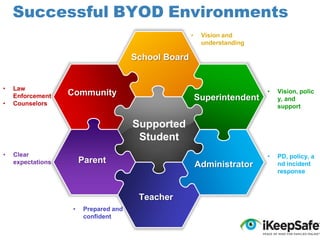
Successful BYOD Environments
•

Vision and
understanding

School Board

•
•

Law
Enforcement
Counselors

Superintendent

•

Vision, polic
y, and
support

•

Community

PD, policy, a
nd incident
response

Supported
Student
•

Clear
expectations

Parent

Administrator

Teacher
•

Prepared and
confident
Download BYOD Whitepaper

www.iKeepSafe.org/BYOD
For More Information
Visit iKeepSafe for educators at:
www.iKeepSafe.org/educator
Access the full white papers:
www.iKeepSafe.org/BYOD
BEaPRO™:
http://www.ikeepsafe.org/be-a-pro/info/
Generation Safe™:
http://generationsafe.ikeepsafe.org/

*

CETPA Presentation: Building A Successful BYOD Program

  • 1.
    BUILDING A SUCCESSFULBYOD PROGRAM: A NEW PARADIGM FOR THE EDUCATION COMMUNITY www.iKeepSafe.org/BYOD *
  • 2.
    Agenda • About iKeepSafe • • • • BYODRoundtable Stakeholder Responsibilities Implementation Discussion www.iKeepSafe.org/BYOD
  • 3.
    About iKeepSafe Dedicated topromoting the health and safety of youth online • Curriculum materials to teach Internet safety, ethics and the healthy use of technology • Generation Safe™ suite for school staff: professional development, self assessment survey and incident response tools • BEaPRO™ resources to help parents teach their children to become safe, ethical, and responsible digital citizens *
  • 4.
    Developing the BYOD Materials •Growing awareness of challenges around BYOD • Privacy, safety, security, access, device management, professional development, infrastructure, learning content, policies, funding, and technical support • iKeepSafe invited a variety of stakeholders and thought leaders to join a roundtable discussion *
  • 5.
    BYOD Roundtable • LinnetteAttai, President and Founder, PlayWell, LLC • Julie Baker, Marketing Content Manager, Kaspersky Lab • Kyle Brumbaugh, Member of the Board of Directors, Computer Using Educators (CUE) • Elizabeth Calhoon, Academic Technology Specialist • Jeff Gaffney, Director of Sales-SLED, Kaspersky Lab • Camilla Gagliolo, Program Director, ISTE • Frank Gallagher, Executive Director, Cable in the Classroom • Nancy Gifford, Counsel, Wiggen & Dana LLP • Marsali Hancock, President and CEO, iKeepSafe • Mary Heston, Social Media Director, Wired Mom • Charles Leitch, Founding Principal, Patterson Buchanan Fobes & Leitch LLP • Amber Lindsay, Director of Program Development and Outreach, iKeepSafe • Sally Linford, Director of Communications, iKeepSafe • Ethan Parry, Director of Public Relations, iKeepSafe • Tim Sullivan, Publisher, Parent Teacher Organization • Glen Warren, VP of Government Relations, California School Library Association (Chair) *
  • 6.
    BYOD Roundtable Goals •Explore building a successful BYOD program • Consider all stakeholder challenges • Examine benefits and complexities of implementing a BYOD culture in schools • Special attention paid to issues around civil liberties, access, FERPA, CIPA and updated COPPA amendments *
  • 7.
    Outcomes Intended outcomes: • Develop alaunch pad for administrators, policy makers, and educators to prepare students, faculty, staff and parents to thrive in this new educational environment • Assist schools with integrating a wide range of devices while minimizing risk *
  • 8.
    Successful BYOD Environments • • • • Access Counselors LawEnforcement Vision and clear actionable policy School Board Superintendent • Vision, policy, a nd support • Community Vision, training, and incident response Supported Student • Clear expectations Parent Administrator Teacher • Management and preparation
  • 9.
    School Board • Developclear, actionable policies • Know your resources • Support transition • Plan for students with reduced access • Consult with a wide and diverse group • Compliance: E-Rate – record keeping CIPA, FERPA and COPPA Security School Board Student o
  • 10.
    Superintendents Super Student • • • • • • • • • • Articulate a clearvision Develop clear, actionable policies Know your resources Support transition Plan for students with reduced access Separate training for administrator and teacher Compliance: E-Rate, CIPA, FERPA and COPPA Share expectations and practices with schools Consistent, district-wide incident response Consider issues of data security
  • 11.
  • 12.
    Administrator • • Student Admin • • • Develop policies and practices Partnerwith credentialed staff Set the standards Consider social media strategy, issues of access and crisis communications plan Post incident response
  • 13.
    Site Teacher andIT • Student • Communication / partnership – capacity and pedagogy • Full visibility • Understand and refer to policy continuously • Classroom management • Set benchmarks • Determine how to support those who don’t have access • Prepare post incident response • Compliance • Cyber security StStr Teacher & I.T
  • 14.
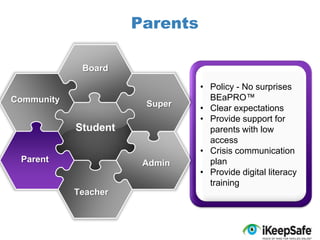
    Parents Board Community Super Student Parent Admin Teacher • Policy -No surprises BEaPRO™ • Clear expectations • Provide support for parents with low access • Crisis communication plan • Provide digital literacy training
  • 15.
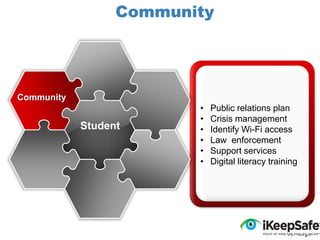
    Community Community Student • • • • • • Public relations plan Crisismanagement Identify Wi-Fi access Law enforcement Support services Digital literacy training Your Logo
  • 16.
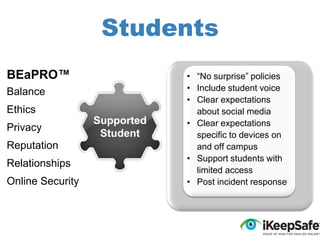
    Students BEaPRO™ Balance Ethics Privacy Reputation Relationships Online Security Supported Student • “Nosurprise” policies • Include student voice • Clear expectations about social media • Clear expectations specific to devices on and off campus • Support students with limited access • Post incident response
  • 17.
  • 18.
    Successful BYOD Environments • Visionand understanding School Board • • Law Enforcement Counselors Superintendent • Vision, polic y, and support • Community PD, policy, a nd incident response Supported Student • Clear expectations Parent Administrator Teacher • Prepared and confident
  • 19.
  • 20.
    For More Information VisitiKeepSafe for educators at: www.iKeepSafe.org/educator Access the full white papers: www.iKeepSafe.org/BYOD BEaPRO™: http://www.ikeepsafe.org/be-a-pro/info/ Generation Safe™: http://generationsafe.ikeepsafe.org/ *

Editor's Notes

  • #8 Multi-faceted, matrix approach to BYOD program developmentPartnership and reliability between all levelsLaying the groundwork prior to identifying platforms and devices
  • #10 School boardsDeveloping clear, actionable policies around technology in schools ultimately resides with the boards. But developing such policies requires a robust and deep information-gathering process. Examining policies and practices of other districts is a place to begin, as is reaching out to various members of the education technology industry for input. It’s critical to know what resources your districts will need to implement any program, as well. Understanding what technology infrastructure is currently in place – how it operates and where it is challenged – can help to inform a starting point for any new plan. Hearing from teachers who have been trained on existing technology programs is also vital. Some technology can enhance learning, while other products may seem progressive, but don’t actually operate as expected in the classroom. In addition, consider what technology teachers in your area are currently using. Are you looking at a gradual plan to enhance existing resources, or do you envision replacing tools entirely? How will your decisions impact the classroom experience for teachers and students? How quickly will teachers be able to implement the plan? At the beginning of the process, consulting with a wide and diverse group is critical. Embracing the viewpoints of different stakeholders and of members of the education and technology field outside of your core communities will help in formulating a perspective on the most effective program for your schools. In addition, throughout the process of building your BYOD program policy, be mindful of E-Rate requirements. Policies on technology programs must include instructions on careful record-keeping for procurement in order to keep your schools prepared for audits. In addition, to meet CIPA requirements, Internet safety policies must be updated as technology changes. Technology polices for your districts should include information, resources, and expectations around these Federal Communications Commission (FCC) concerns.
  • #11 Superintendents have a significant role in ensuring that a technology program is embraced and optimized. The superintendent is the leader in moving any program forward, and success depends in part on understanding the school board perspective and direction. Not all school readyTransistion each school not just the first few
  • #12 Full visibility on administrator policies and expectationsTraining on devices and new classroom management techniquesSupport students who don’t own devicesReview requirements around regulationsDetermine how you will support students who don’t have access to a device or who don’t have Internet access in the home. For BYOD programs that invite multiple devices into the classroom, it will also be necessary to ensure that students are receiving equivalent education on different devices. IT Advise on existing network capabilitiesEnsure cyber security protocols and practices are in place and adequate to meet the needsIdentify requirements for expansionTrain on data security protocols
  • #13 Develop teachings around digital citizenship Define expectations around privacy and behavior:Screen-time management, ethics, privacy, reputation, relationships, securityBuild in accountability
  • #14 Develop teachings around digital citizenship Define expectations around privacy and behavior:Screen-time management, ethics, privacy, reputation, relationships, securityBuild in accountability
  • #15 Develop teachings around digital citizenship Define expectations around privacy and behavior:Screen-time management, ethics, privacy, reputation, relationships, securityBuild in accountability