
1 
The UBER effect 
design4learning as a customized service 
Pieter de Vries
2 
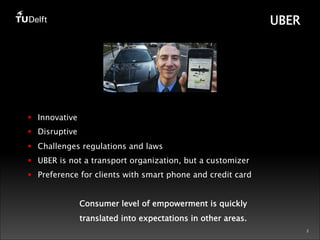
UBER 
§ Innovative 
§ Disruptive 
§ Challenges regulations and laws 
§ UBER is not a transport organization, but a customizer 
§ Preference for clients with smart phone and credit card 
Consumer level of empowerment is quickly 
translated into expectations in other areas.
3 
UBER-like education 
This would be student-centered 
Learning is personalized 
Learning is competency-based 
Learning happens anytime, anywhere 
Students take ownership over their learning
4 
Faculty perception of online learning 
§ Remain highly skeptical about the efficacy of 
online education 
§ Consider the instructor-student relationship 
essential for learning 
§ Believe that ownership of online courses belongs 
with them 
§ Feel there is too little support for online course 
development 
§ Don’t want outside companies to create their 
courses or curriculum 
Inside Higher Ed, Nov 21, 2014
5 
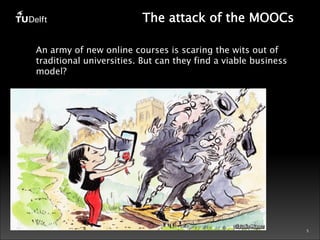
The attack of the MOOCs 
An army of new online courses is scaring the wits out of 
traditional universities. But can they find a viable business 
model?
6 
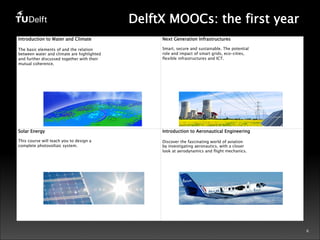
DelftX MOOCs: the first year 
Introduction to Water and Climate 
The basic elements of and the relation 
between water and climate are highlighted 
and further discussed together with their 
mutual coherence. 
Next Generation Infrastructures 
Smart, secure and sustainable. The potential 
role and impact of smart grids, eco-cities, 
flexible infrastructures and ICT. 
Solar Energy 
This course will teach you to design a 
complete photovoltaic system. 
Introduction to Aeronautical Engineering 
Discover the fascinating world of aviation 
by investigating aeronautics, with a closer 
look at aerodynamics and flight mechanics.
7
8 
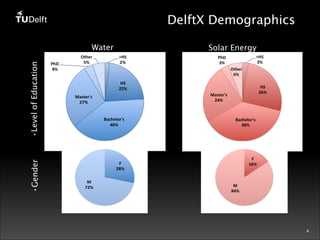
DelftX Demographics 
Water 
Treatment 
Solar Energy 
• Gender • Level of Education
9 
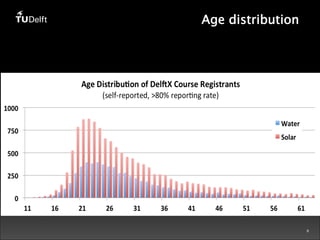
Age distribution
10 
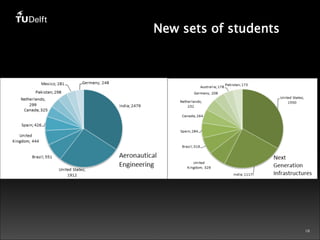
New sets of students
11 
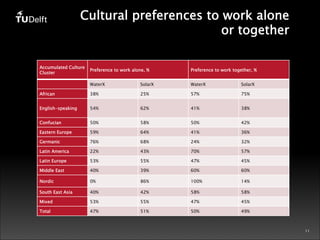
Cultural preferences to work alone 
or together 
Accumulated Culture 
Cluster 
Preference to work alone, % 
Preference to work together, % 
WaterX 
SolarX 
WaterX 
SolarX 
African 
38% 
25% 
57% 
75% 
English-speaking 
54% 
62% 
41% 
38% 
Confucian 
50% 
58% 
50% 
42% 
Eastern Europe 
59% 
64% 
41% 
36% 
Germanic 
76% 
68% 
24% 
32% 
Latin America 
22% 
43% 
70% 
57% 
Latin Europe 
53% 
55% 
47% 
45% 
Middle East 
40% 
39% 
60% 
60% 
Nordic 
0% 
86% 
100% 
14% 
South East Asia 
40% 
42% 
58% 
58% 
Mixed 
53% 
55% 
47% 
45% 
Total 
47% 
51% 
50% 
49%
Issues to consider 
12 
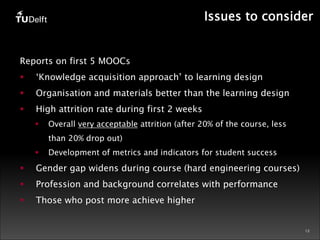
Reports on first 5 MOOCs 
§ ‘Knowledge acquisition approach’ to learning design 
§ Organisation and materials better than the learning design 
§ High attrition rate during first 2 weeks 
§ Overall very acceptable attrition (after 20% of the course, less 
than 20% drop out) 
§ Development of metrics and indicators for student success 
§ Gender gap widens during course (hard engineering courses) 
§ Profession and background correlates with performance 
§ Those who post more achieve higher
13 
Possible future 
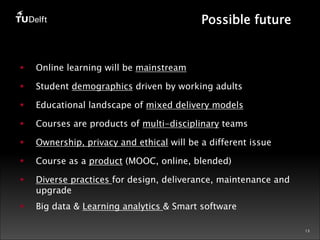
§ Online learning will be mainstream 
§ Student demographics driven by working adults 
§ Educational landscape of mixed delivery models 
§ Courses are products of multi-disciplinary teams 
§ Ownership, privacy and ethical will be a different issue 
§ Course as a product (MOOC, online, blended) 
§ Diverse practices for design, deliverance, maintenance and 
upgrade 
§ Big data & Learning analytics & Smart software
14 
Our vision 
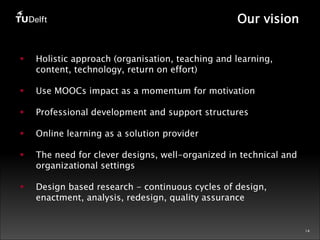
§ Holistic approach (organisation, teaching and learning, 
content, technology, return on effort) 
§ Use MOOCs impact as a momentum for motivation 
§ Professional development and support structures 
§ Online learning as a solution provider 
§ The need for clever designs, well-organized in technical and 
organizational settings 
§ Design based research - continuous cycles of design, 
enactment, analysis, redesign, quality assurance
15 
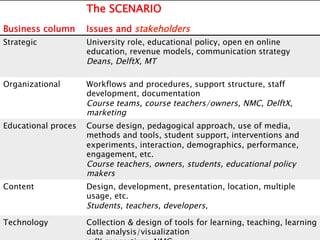
Business column 
The SCENARIO 
Issues and stakeholders 
Strategic University role, educational policy, open en online 
education, revenue models, communication strategy 
Deans, DelftX, MT 
Organizational Workflows and procedures, support structure, staff 
development, documentation 
Course teams, course teachers/owners, NMC, DelftX, 
marketing 
Educational proces Course design, pedagogical approach, use of media, 
methods and tools, student support, interventions and 
experiments, interaction, demographics, performance, 
engagement, etc. 
Course teachers, owners, students, educational policy 
makers 
Content Design, development, presentation, location, multiple 
usage, etc. 
Students, teachers, developers, 
Technology Collection & design of tools for learning, teaching, learning 
data analysis/visualization 
edX consortium, NMC
16 
What is the UBER effect? 
Customized service 
Creates a network of peers in which the participants 
interact and share in the value creation. 
The UBER effect 
Technological affordances (apps) that allow for 
partial real time design4learning
17

At the OU conference on Design4Learning: 'the UBER effect'

  • 1.
    1 The UBEReffect design4learning as a customized service Pieter de Vries
  • 2.
    2 UBER §Innovative § Disruptive § Challenges regulations and laws § UBER is not a transport organization, but a customizer § Preference for clients with smart phone and credit card Consumer level of empowerment is quickly translated into expectations in other areas.
  • 3.
    3 UBER-like education This would be student-centered Learning is personalized Learning is competency-based Learning happens anytime, anywhere Students take ownership over their learning
  • 4.
    4 Faculty perceptionof online learning § Remain highly skeptical about the efficacy of online education § Consider the instructor-student relationship essential for learning § Believe that ownership of online courses belongs with them § Feel there is too little support for online course development § Don’t want outside companies to create their courses or curriculum Inside Higher Ed, Nov 21, 2014
  • 5.
    5 The attackof the MOOCs An army of new online courses is scaring the wits out of traditional universities. But can they find a viable business model?
  • 6.
    6 DelftX MOOCs:the first year Introduction to Water and Climate The basic elements of and the relation between water and climate are highlighted and further discussed together with their mutual coherence. Next Generation Infrastructures Smart, secure and sustainable. The potential role and impact of smart grids, eco-cities, flexible infrastructures and ICT. Solar Energy This course will teach you to design a complete photovoltaic system. Introduction to Aeronautical Engineering Discover the fascinating world of aviation by investigating aeronautics, with a closer look at aerodynamics and flight mechanics.
  • 7.
  • 8.
    8 DelftX Demographics Water Treatment Solar Energy • Gender • Level of Education
  • 9.
  • 10.
    10 New setsof students
  • 11.
    11 Cultural preferencesto work alone or together Accumulated Culture Cluster Preference to work alone, % Preference to work together, % WaterX SolarX WaterX SolarX African 38% 25% 57% 75% English-speaking 54% 62% 41% 38% Confucian 50% 58% 50% 42% Eastern Europe 59% 64% 41% 36% Germanic 76% 68% 24% 32% Latin America 22% 43% 70% 57% Latin Europe 53% 55% 47% 45% Middle East 40% 39% 60% 60% Nordic 0% 86% 100% 14% South East Asia 40% 42% 58% 58% Mixed 53% 55% 47% 45% Total 47% 51% 50% 49%
  • 12.
    Issues to consider 12 Reports on first 5 MOOCs § ‘Knowledge acquisition approach’ to learning design § Organisation and materials better than the learning design § High attrition rate during first 2 weeks § Overall very acceptable attrition (after 20% of the course, less than 20% drop out) § Development of metrics and indicators for student success § Gender gap widens during course (hard engineering courses) § Profession and background correlates with performance § Those who post more achieve higher
  • 13.
    13 Possible future § Online learning will be mainstream § Student demographics driven by working adults § Educational landscape of mixed delivery models § Courses are products of multi-disciplinary teams § Ownership, privacy and ethical will be a different issue § Course as a product (MOOC, online, blended) § Diverse practices for design, deliverance, maintenance and upgrade § Big data & Learning analytics & Smart software
  • 14.
    14 Our vision § Holistic approach (organisation, teaching and learning, content, technology, return on effort) § Use MOOCs impact as a momentum for motivation § Professional development and support structures § Online learning as a solution provider § The need for clever designs, well-organized in technical and organizational settings § Design based research - continuous cycles of design, enactment, analysis, redesign, quality assurance
  • 15.
    15 Business column The SCENARIO Issues and stakeholders Strategic University role, educational policy, open en online education, revenue models, communication strategy Deans, DelftX, MT Organizational Workflows and procedures, support structure, staff development, documentation Course teams, course teachers/owners, NMC, DelftX, marketing Educational proces Course design, pedagogical approach, use of media, methods and tools, student support, interventions and experiments, interaction, demographics, performance, engagement, etc. Course teachers, owners, students, educational policy makers Content Design, development, presentation, location, multiple usage, etc. Students, teachers, developers, Technology Collection & design of tools for learning, teaching, learning data analysis/visualization edX consortium, NMC
  • 16.
    16 What isthe UBER effect? Customized service Creates a network of peers in which the participants interact and share in the value creation. The UBER effect Technological affordances (apps) that allow for partial real time design4learning
  • 17.