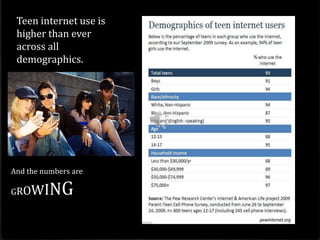
Teen internet use is
 higher than ever
 across all
 demographics.


And the numbers are

GROW    ING
“Unfortunately, many children are
                                                        not learning effective digital or
                                                        media literacy skills at home or at
                                                        school …In fact, many parents and
                                                        teachers tell us that they don’t
                                                        sufficiently understand digital
                                                        technology, much less know how to
                                                        teach kids about how use it
                                                        effectively.” FCC Chairman


From The Online Safety and Technology Working Group’s
2010 report to Congress: Read the full report here.


 “[students ]can get around the
firewalls, but they don’t need to. They
have [the Internet on cellphones] in
their pockets; they can do what they
want to do.” Mike Donlin , educator
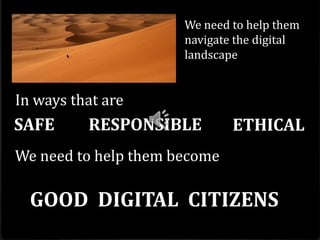
We need to help them
                      navigate the digital
                      landscape


In ways that are
SAFE      RESPONSIBLE         ETHICAL
We need to help them become

  GOOD DIGITAL CITIZENS
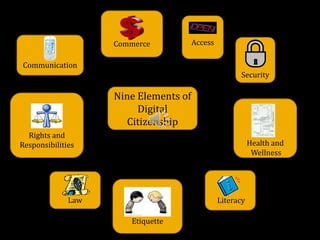
Commerce           Access

Communication
                                                      Security

                    Nine Elements of
                         Digital
                      Citizenship
  Rights and
Responsibilities                                           Health and
                                                            Wellness


              Law                               Literacy

                       Etiquette
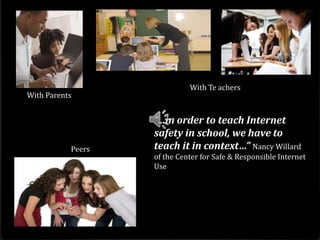
With Te achers
With Parents


                   “…in order to teach Internet
                   safety in school, we have to
           Peers   teach it in context…” Nancy Willard
                   of the Center for Safe & Responsible Internet
                   Use
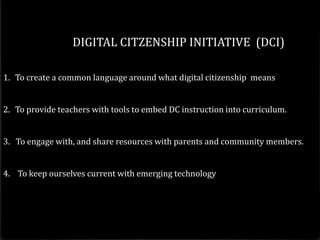
DIGITAL CITZENSHIP INITIATIVE (DCI)

1. To create a common language around what digital citizenship means


2. To provide teachers with tools to embed DC instruction into curriculum.


3. To engage with, and share resources with parents and community members.


4. To keep ourselves current with emerging technology
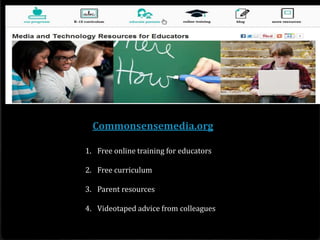
Commonsensemedia.org

1. Free online training for educators

2. Free curriculum

3. Parent resources

4. Videotaped advice from colleagues
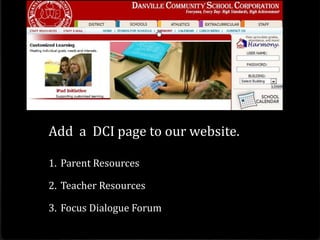
Add a DCI page to our website.

1. Parent Resources

2. Teacher Resources

3. Focus Dialogue Forum
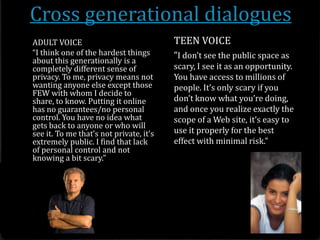
Cross generational dialogues
ADULT VOICE                              TEEN VOICE
“I think one of the hardest things       “I don’t see the public space as
about this generationally is a
completely different sense of            scary, I see it as an opportunity.
privacy. To me, privacy means not        You have access to millions of
wanting anyone else except those         people. It’s only scary if you
FEW with whom I decide to
share, to know. Putting it online        don’t know what you’re doing,
has no guarantees/no personal            and once you realize exactly the
control. You have no idea what           scope of a Web site, it’s easy to
gets back to anyone or who will
see it. To me that’s not private, it’s   use it properly for the best
extremely public. I find that lack       effect with minimal risk.”
of personal control and not
knowing a bit scary.”
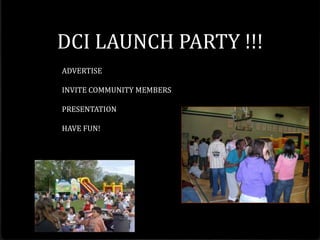
DCI LAUNCH PARTY !!!
ADVERTISE

INVITE COMMUNITY MEMBERS

PRESENTATION

HAVE FUN!
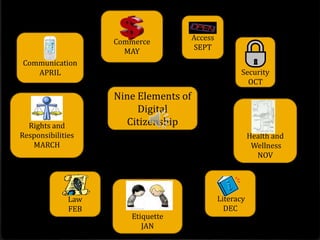
Access
                    Commerce
                                       SEPT
                      MAY
Communication
   APRIL                                              Security
                                                        OCT
                    Nine Elements of
                         Digital
  Rights and          Citizenship
Responsibilities                                           Health and
   MARCH                                                    Wellness
                                                             NOV


              Law                               Literacy
              FEB                                 DEC
                       Etiquette
                          JAN
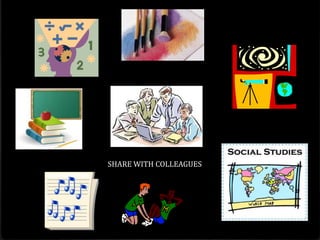
SHARE WITH COLLEAGUES
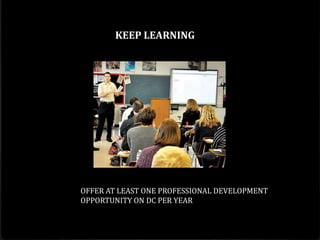
KEEP LEARNING


OFFER AT LEAST ONE PROFESSIONAL DEVELOPMENT
OPPORTUNITY ON DC PER YEAR
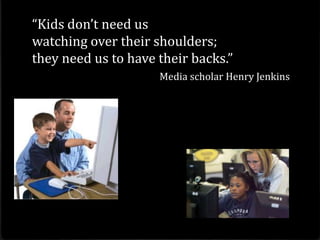
“Kids don’t need us
watching over their shoulders;
they need us to have their backs.”
                     Media scholar Henry Jenkins
SOURCES
Davis, K., Katz, S., Santo, R., & James, C. (2010). “Fostering Cross-Generational Dialogues
     about the Ethics of Online Life.” Journal Of Media Literacy Education, 2(2), 124-150.
     Retrieved from http://jmle.org/blog/?p=302.


Global Kids, Inc. , The GoodPlay Project at Harvard University’s Project Zero & Common
   Sense Media. (2009). “Meeting of Minds: Cross-Generational Dialogue on the Ethics of
   Digital Life.” (p.11). Retreived from
   http://www.macfound.org/atf/cf/%7Bb0386ce3-8b29-4162-8098- e466fb856794%7D/DML-FOCUS-DIALOGUE-REPORT-0910.PDF.


Pew Research Center (2012) [Demographics of Teen Internet Users Graphic] Pew
  Internet and American Life Project. Retrieved from
  http://www.pewinternet.org/Static-Pages/Trend-Data-for-Teens/Whos-Online.aspx


Ribble, M.(2007-2012) Digital Citizenship Using Technology Wisely: Nine Themes of
     Digital Citizenship. Retrieved from http://www.digitalcitizenship.net/Nine_Elements.html
Sources

Ribble, M. (2008), Passport to Digital Citizenship:Journey Toward Appropriate
   Technology Use at School and at Home. Learning & Leading with Technology
   (December/January 2008- 09), pp. 14-17. Retreived from
    http://www.iste.org/Libraries/ Leading_and_Learning_Docs/December_January_2008_2009_Passport_to_Digital_Citizenship.sflb.ashx


The Online Safety and Technology Working Group. (2010, June) Youth Safety on a
    Living Internet. Retrieved from
     http://www.ntia.doc.gov/files/ntia/publications/ostwg_final_report_070610.pdf

Digital citizenship

  • 2.
    Teen internet useis higher than ever across all demographics. And the numbers are GROW ING
  • 3.
    “Unfortunately, many childrenare not learning effective digital or media literacy skills at home or at school …In fact, many parents and teachers tell us that they don’t sufficiently understand digital technology, much less know how to teach kids about how use it effectively.” FCC Chairman From The Online Safety and Technology Working Group’s 2010 report to Congress: Read the full report here. “[students ]can get around the firewalls, but they don’t need to. They have [the Internet on cellphones] in their pockets; they can do what they want to do.” Mike Donlin , educator
  • 4.
    We need tohelp them navigate the digital landscape In ways that are SAFE RESPONSIBLE ETHICAL We need to help them become GOOD DIGITAL CITIZENS
  • 5.
    Commerce Access Communication Security Nine Elements of Digital Citizenship Rights and Responsibilities Health and Wellness Law Literacy Etiquette
  • 6.
    With Te achers WithParents “…in order to teach Internet safety in school, we have to Peers teach it in context…” Nancy Willard of the Center for Safe & Responsible Internet Use
  • 7.
    DIGITAL CITZENSHIP INITIATIVE(DCI) 1. To create a common language around what digital citizenship means 2. To provide teachers with tools to embed DC instruction into curriculum. 3. To engage with, and share resources with parents and community members. 4. To keep ourselves current with emerging technology
  • 8.
    Commonsensemedia.org 1. Free onlinetraining for educators 2. Free curriculum 3. Parent resources 4. Videotaped advice from colleagues
  • 9.
    Add a DCIpage to our website. 1. Parent Resources 2. Teacher Resources 3. Focus Dialogue Forum
  • 10.
    Cross generational dialogues ADULTVOICE TEEN VOICE “I think one of the hardest things “I don’t see the public space as about this generationally is a completely different sense of scary, I see it as an opportunity. privacy. To me, privacy means not You have access to millions of wanting anyone else except those people. It’s only scary if you FEW with whom I decide to share, to know. Putting it online don’t know what you’re doing, has no guarantees/no personal and once you realize exactly the control. You have no idea what scope of a Web site, it’s easy to gets back to anyone or who will see it. To me that’s not private, it’s use it properly for the best extremely public. I find that lack effect with minimal risk.” of personal control and not knowing a bit scary.”
  • 11.
    DCI LAUNCH PARTY!!! ADVERTISE INVITE COMMUNITY MEMBERS PRESENTATION HAVE FUN!
  • 12.
    Access Commerce SEPT MAY Communication APRIL Security OCT Nine Elements of Digital Rights and Citizenship Responsibilities Health and MARCH Wellness NOV Law Literacy FEB DEC Etiquette JAN
  • 13.
  • 14.
    KEEP LEARNING OFFER ATLEAST ONE PROFESSIONAL DEVELOPMENT OPPORTUNITY ON DC PER YEAR
  • 15.
    “Kids don’t needus watching over their shoulders; they need us to have their backs.” Media scholar Henry Jenkins
  • 16.
    SOURCES Davis, K., Katz,S., Santo, R., & James, C. (2010). “Fostering Cross-Generational Dialogues about the Ethics of Online Life.” Journal Of Media Literacy Education, 2(2), 124-150. Retrieved from http://jmle.org/blog/?p=302. Global Kids, Inc. , The GoodPlay Project at Harvard University’s Project Zero & Common Sense Media. (2009). “Meeting of Minds: Cross-Generational Dialogue on the Ethics of Digital Life.” (p.11). Retreived from http://www.macfound.org/atf/cf/%7Bb0386ce3-8b29-4162-8098- e466fb856794%7D/DML-FOCUS-DIALOGUE-REPORT-0910.PDF. Pew Research Center (2012) [Demographics of Teen Internet Users Graphic] Pew Internet and American Life Project. Retrieved from http://www.pewinternet.org/Static-Pages/Trend-Data-for-Teens/Whos-Online.aspx Ribble, M.(2007-2012) Digital Citizenship Using Technology Wisely: Nine Themes of Digital Citizenship. Retrieved from http://www.digitalcitizenship.net/Nine_Elements.html
  • 17.
    Sources Ribble, M. (2008),Passport to Digital Citizenship:Journey Toward Appropriate Technology Use at School and at Home. Learning & Leading with Technology (December/January 2008- 09), pp. 14-17. Retreived from http://www.iste.org/Libraries/ Leading_and_Learning_Docs/December_January_2008_2009_Passport_to_Digital_Citizenship.sflb.ashx The Online Safety and Technology Working Group. (2010, June) Youth Safety on a Living Internet. Retrieved from http://www.ntia.doc.gov/files/ntia/publications/ostwg_final_report_070610.pdf