Solis, Miguel
Art 160
 Buddhism was
introduced to Japan in
the mid-sixth century,
when Seong of Baekje
sent a statue of
Buddha to Emporer
Kimmei
This is the oldest sculpture of Buddha in Japan, though
it has survived many years due to earthquakes and
other causes some of the sculpture is damaged.
By :Kuratsukuri-no-Tori
609 AC
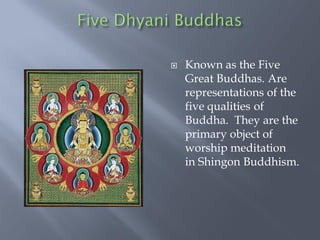
 Known as the Five
Great Buddhas. Are
representations of the
five qualities of
Buddha. They are the
primary object of
worship meditation
in Shingon Buddhism.
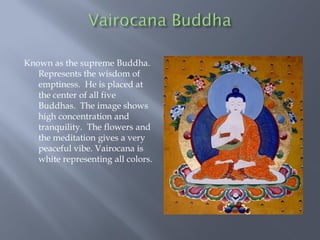
Known as the supreme Buddha.
Represents the wisdom of
emptiness. He is placed at
the center of all five
Buddhas. The image shows
high concentration and
tranquility. The flowers and
the meditation gives a very
peaceful vibe. Vairocana is
white representing all colors.
The Dhyani Buddha
Akshobhya', Tibetan
thangka, late 13th
century, Honolulu
Museum of Art. Made
in the late 13th century.
Akshobhya known as the
immovable one, represents
consciousness as an aspect of
reality. The bright red and dark
image give it a very powerful
look. Akshobhvya helps you
distinguish reality and illusions in
your mind.
Also known as infinite
light. He is the Buddha
in the Pure Land where
everyone enjoys endless
happiness. Many call
upon Amitabha before
dying hoping to join
him after death.
west side of Borobudur, ca. 1863-
1866 By: van Kinsbergen
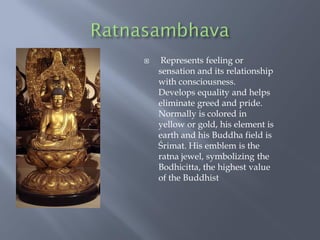
 Represents feeling or
sensation and its relationship
with consciousness.
Develops equality and helps
eliminate greed and pride.
Normally is colored in
yellow or gold, his element is
earth and his Buddha field is
Śrimat. His emblem is the
ratna jewel, symbolizing the
Bodhicitta, the highest value
of the Buddhist
 He known as the Lord of Karma
and the Buddha of unfailing
accomplishment. His name
literally means high success. He
is the Buddha of fearlessness and
all wisdom. He is normally in
green and radiating green light
as the color represents peace and
tranquility of nature. He helps
eliminate envy, anxiety, and fear.
 http://en.wikipedia.org/wiki/File:Asuka_dera_d
aibutsu.jpg
 Http://en.wikipedia.org/wiki/Five_Dhyani_Bud
dhas
 http://en.wikipedia.org/wiki/File:BuddhaLoutsS
m.jpg
 http://en.wikipedia.org/wiki/Akshobhya
 http://www.britannica.com/EBchecked/topic/20
850/Amitabha
 http://www.manjushri.com/Buddha-
List/Ratnasambhava.html
 http://tsl.org/2013/11/amoghasiddhi-dhyani-
buddha/

Buddhist art 1

  • 1.
  • 2.
     Buddhism was introducedto Japan in the mid-sixth century, when Seong of Baekje sent a statue of Buddha to Emporer Kimmei
  • 3.
    This is theoldest sculpture of Buddha in Japan, though it has survived many years due to earthquakes and other causes some of the sculpture is damaged. By :Kuratsukuri-no-Tori 609 AC
  • 4.
     Known asthe Five Great Buddhas. Are representations of the five qualities of Buddha. They are the primary object of worship meditation in Shingon Buddhism.
  • 5.
    Known as thesupreme Buddha. Represents the wisdom of emptiness. He is placed at the center of all five Buddhas. The image shows high concentration and tranquility. The flowers and the meditation gives a very peaceful vibe. Vairocana is white representing all colors.
  • 6.
    The Dhyani Buddha Akshobhya',Tibetan thangka, late 13th century, Honolulu Museum of Art. Made in the late 13th century. Akshobhya known as the immovable one, represents consciousness as an aspect of reality. The bright red and dark image give it a very powerful look. Akshobhvya helps you distinguish reality and illusions in your mind.
  • 7.
    Also known asinfinite light. He is the Buddha in the Pure Land where everyone enjoys endless happiness. Many call upon Amitabha before dying hoping to join him after death. west side of Borobudur, ca. 1863- 1866 By: van Kinsbergen
  • 8.
     Represents feelingor sensation and its relationship with consciousness. Develops equality and helps eliminate greed and pride. Normally is colored in yellow or gold, his element is earth and his Buddha field is Śrimat. His emblem is the ratna jewel, symbolizing the Bodhicitta, the highest value of the Buddhist
  • 9.
     He knownas the Lord of Karma and the Buddha of unfailing accomplishment. His name literally means high success. He is the Buddha of fearlessness and all wisdom. He is normally in green and radiating green light as the color represents peace and tranquility of nature. He helps eliminate envy, anxiety, and fear.
  • 10.
     http://en.wikipedia.org/wiki/File:Asuka_dera_d aibutsu.jpg  Http://en.wikipedia.org/wiki/Five_Dhyani_Bud dhas http://en.wikipedia.org/wiki/File:BuddhaLoutsS m.jpg  http://en.wikipedia.org/wiki/Akshobhya  http://www.britannica.com/EBchecked/topic/20 850/Amitabha  http://www.manjushri.com/Buddha- List/Ratnasambhava.html  http://tsl.org/2013/11/amoghasiddhi-dhyani- buddha/