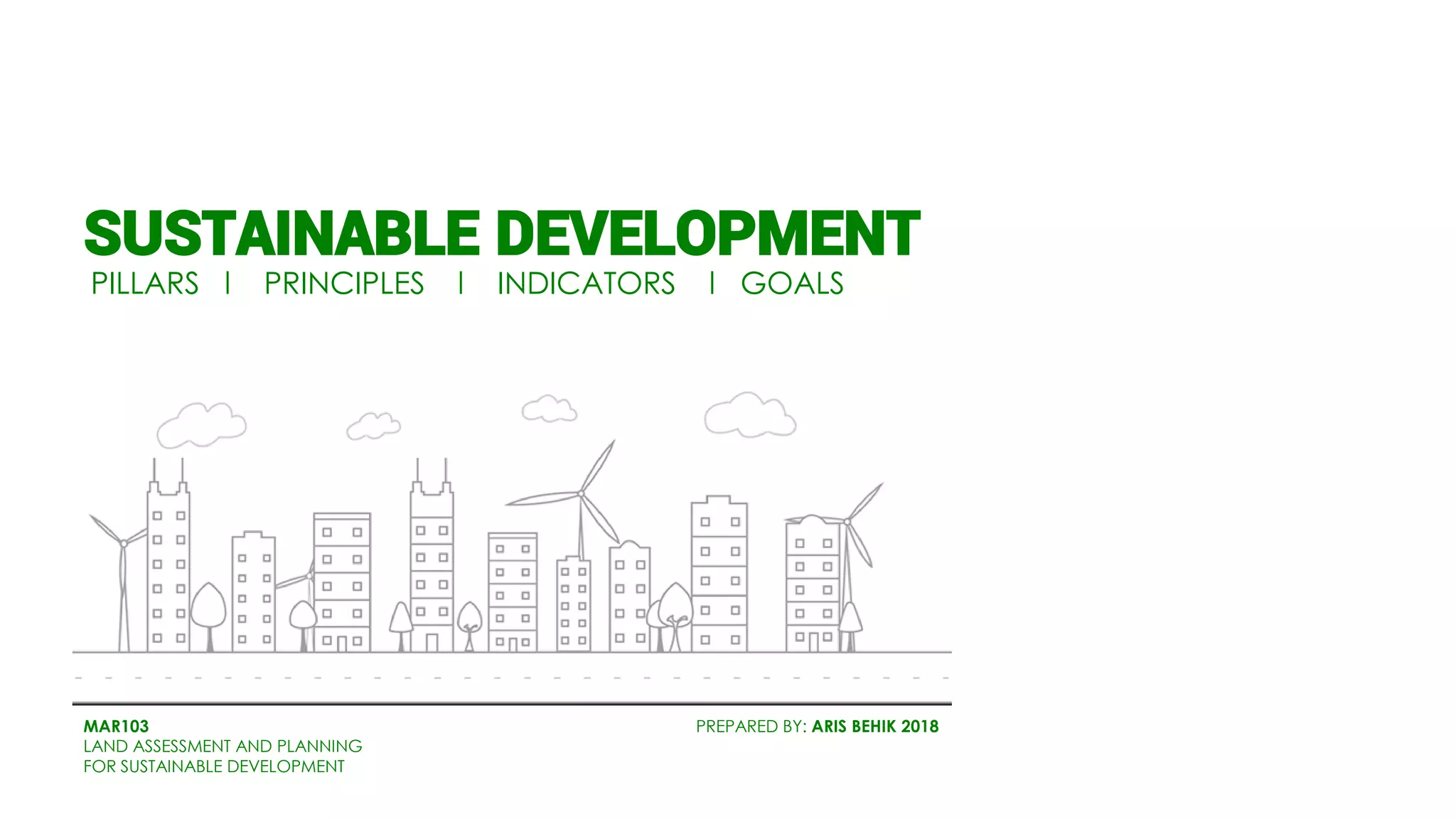
SUSTAINABLE DEVELOPMENT
PILLARS l PRINCIPLES l INDICATORS l GOALS
MAR103
LAND ASSESSMENT AND PLANNING
FOR SUSTAINABLE DEVELOPMENT
PREPARED BY: ARIS BEHIK 2018
SUSTAINABLE DEVELOPMENT
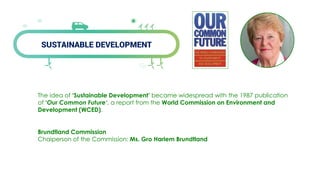
Brundtland Commission
Chaiperson of the Commission: Ms. Gro Harlem Brundtland
The idea of ‘Sustainable Development’ became widespread with the 1987 publication
of ‘Our Common Future‘, a report from the World Commission on Environment and
Development (WCED).
SUSTAINABLE DEVELOPMENT
‘Our Common Future‘, also known as the Brundtland Report
which was published by the United Nations placed
environmental issues firmly on the political agenda;
it aimed to discuss the environment and development as one single issue.
Brundtland argues:
"...the "environment" is where we live; and "development" is what we all do in
attempting to improve our lot within that abode. The two are inseparable."
SUSTAINABLE DEVELOPMENT
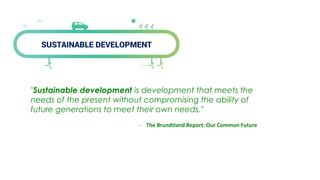
"Sustainable development is development that meets the
needs of the present without compromising the ability of
future generations to meet their own needs."
- The Brundtland Report: Our Common Future
SUSTAINABLE DEVELOPMENT
The concept of sustainable development focused attention on finding
strategies to promote economic and social advancement in ways
which:
 avoid environmental degradation, over-exploitation or pollution
 sidelined less productive debates about whether to prioritize
development or the environment
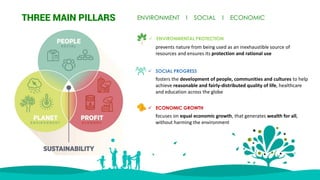
THREE MAIN PILLARS ENVIRONMENT l SOCIAL l ECONOMIC
 ENVIRONMENTAL PROTECTION
 SOCIAL PROGRESS
 ECONOMIC GROWTH
prevents nature from being used as an inexhaustible source of
resources and ensures its protection and rational use
fosters the development of people, communities and cultures to help
achieve reasonable and fairly-distributed quality of life, healthcare
and education across the globe
focuses on equal economic growth, that generates wealth for all,
without harming the environment
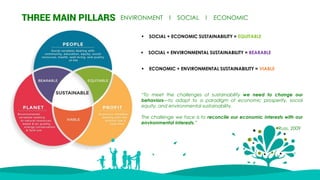
THREE MAIN PILLARS ENVIRONMENT l SOCIAL l ECONOMIC
 SOCIAL + ENVIRONMENTAL SUSTAINABILITY = BEARABLE
 SOCIAL + ECONOMIC SUSTAINABILITY = EQUITABLE
 ECONOMIC + ENVIRONMENTAL SUSTAINABILITY = VIABLE
“To meet the challenges of sustainability we need to change our
behaviors—to adapt to a paradigm of economic prosperity, social
equity, and environmental sustainability.
The challenge we face is to reconcile our economic interests with our
environmental interests.”
- Russ, 2009
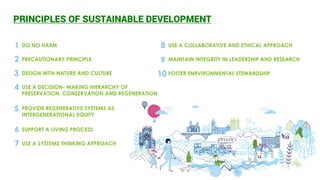
PRINCIPLES OF SUSTAINABLE DEVELOPMENT
DO NO HARM
PRECAUTIONARY PRINCIPLE
DESIGN WITH NATURE AND CULTURE
USE A DECISION- MAKING HIERARCHY OF
PRESERVATION, CONSERVATION AND REGENERATION
PROVIDE REGENERATIVE SYSTEMS AS
INTERGENERATIONAL EQUITY
SUPPORT A LIVING PROCESS
USE A SYSTEMS THINKING APPROACH
USE A COLLABORATIVE AND ETHICAL APPROACH
MAINTAIN INTEGRITY IN LEADERSHIP AND RESEARCH
FOSTER ENRVIRONMENTAL STEWARDSHIP
1
2
3
4
5
6
7
8
9
10
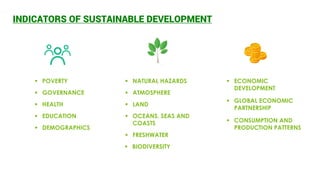
INDICATORS OF SUSTAINABLE DEVELOPMENT
 POVERTY
 GOVERNANCE
 HEALTH
 EDUCATION
 DEMOGRAPHICS
 NATURAL HAZARDS
 ATMOSPHERE
 LAND
 OCEANS, SEAS AND
COASTS
 FRESHWATER
 BIODIVERSITY
 ECONOMIC
DEVELOPMENT
 GLOBAL ECONOMIC
PARTNERSHIP
 CONSUMPTION AND
PRODUCTION PATTERNS
The SUSTAINABLE DEVELOPMENT GOALS (SGDs)
otherwise known as the Global Goals, are a universal
call to action to end poverty, protect the planet and
ensure that all people enjoy peace and prosperity.
“Transforming our World: the 2030
Agenda for Sustainable Development”
These are a collection of 17 global goals set by the
United Nations Development Programme.
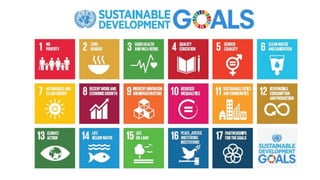
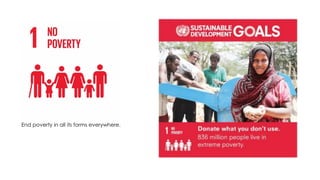
End poverty in all its forms everywhere.
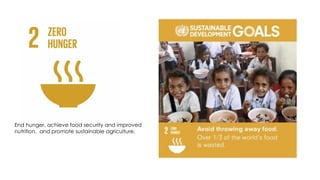
End hunger, achieve food security and improved
nutrition, and promote sustainable agriculture.
Ensuring healthy lives and promoting the well-
being for all at all ages is essential to sustainable
development.
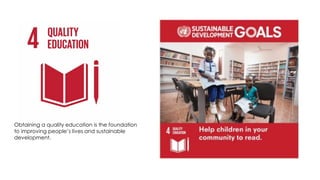
Obtaining a quality education is the foundation
to improving people’s lives and sustainable
development.
Gender equality is not only a fundamental
human right, but a necessary foundation for a
peaceful, prosperous and sustainable world.
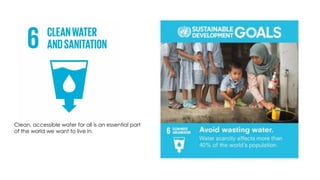
Clean, accessible water for all is an essential part
of the world we want to live in.
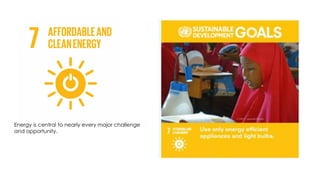
Energy is central to nearly every major challenge
and opportunity.
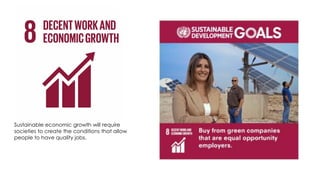
Sustainable economic growth will require
societies to create the conditions that allow
people to have quality jobs.
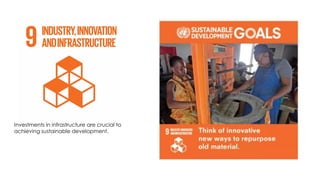
Investments in infrastructure are crucial to
achieving sustainable development.
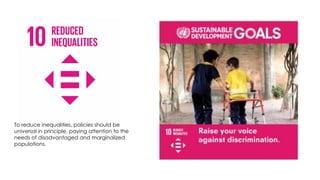
To reduce inequalities, policies should be
universal in principle, paying attention to the
needs of disadvantaged and marginalized
populations.
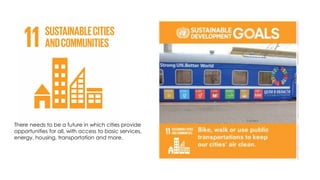
There needs to be a future in which cities provide
opportunities for all, with access to basic services,
energy, housing, transportation and more.
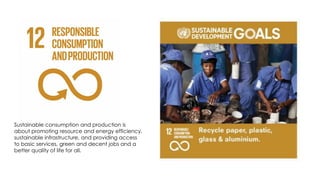
Sustainable consumption and production is
about promoting resource and energy efficiency,
sustainable infrastructure, and providing access
to basic services, green and decent jobs and a
better quality of life for all.
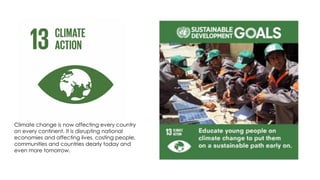
Climate change is now affecting every country
on every continent. It is disrupting national
economies and affecting lives, costing people,
communities and countries dearly today and
even more tomorrow.
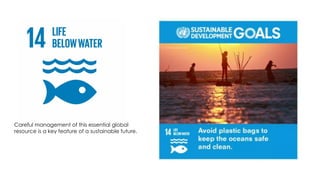
Careful management of this essential global
resource is a key feature of a sustainable future.
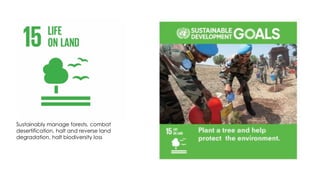
Sustainably manage forests, combat
desertification, halt and reverse land
degradation, halt biodiversity loss
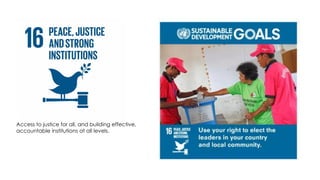
Access to justice for all, and building effective,
accountable institutions at all levels.
Revitalize the global partnership for sustainable
development
“We do not inherit the earth from our
ancestors; we borrow it from our children.”
- Chief Seattle
- E N D -

Sustainable Development: A Report for MAR103

  • 1.
    SUSTAINABLE DEVELOPMENT PILLARS lPRINCIPLES l INDICATORS l GOALS MAR103 LAND ASSESSMENT AND PLANNING FOR SUSTAINABLE DEVELOPMENT PREPARED BY: ARIS BEHIK 2018
  • 2.
    SUSTAINABLE DEVELOPMENT Brundtland Commission Chaipersonof the Commission: Ms. Gro Harlem Brundtland The idea of ‘Sustainable Development’ became widespread with the 1987 publication of ‘Our Common Future‘, a report from the World Commission on Environment and Development (WCED).
  • 3.
    SUSTAINABLE DEVELOPMENT ‘Our CommonFuture‘, also known as the Brundtland Report which was published by the United Nations placed environmental issues firmly on the political agenda; it aimed to discuss the environment and development as one single issue. Brundtland argues: "...the "environment" is where we live; and "development" is what we all do in attempting to improve our lot within that abode. The two are inseparable."
  • 4.
    SUSTAINABLE DEVELOPMENT "Sustainable developmentis development that meets the needs of the present without compromising the ability of future generations to meet their own needs." - The Brundtland Report: Our Common Future
  • 5.
    SUSTAINABLE DEVELOPMENT The conceptof sustainable development focused attention on finding strategies to promote economic and social advancement in ways which:  avoid environmental degradation, over-exploitation or pollution  sidelined less productive debates about whether to prioritize development or the environment
  • 6.
    THREE MAIN PILLARSENVIRONMENT l SOCIAL l ECONOMIC  ENVIRONMENTAL PROTECTION  SOCIAL PROGRESS  ECONOMIC GROWTH prevents nature from being used as an inexhaustible source of resources and ensures its protection and rational use fosters the development of people, communities and cultures to help achieve reasonable and fairly-distributed quality of life, healthcare and education across the globe focuses on equal economic growth, that generates wealth for all, without harming the environment
  • 7.
    THREE MAIN PILLARSENVIRONMENT l SOCIAL l ECONOMIC  SOCIAL + ENVIRONMENTAL SUSTAINABILITY = BEARABLE  SOCIAL + ECONOMIC SUSTAINABILITY = EQUITABLE  ECONOMIC + ENVIRONMENTAL SUSTAINABILITY = VIABLE “To meet the challenges of sustainability we need to change our behaviors—to adapt to a paradigm of economic prosperity, social equity, and environmental sustainability. The challenge we face is to reconcile our economic interests with our environmental interests.” - Russ, 2009
  • 8.
    PRINCIPLES OF SUSTAINABLEDEVELOPMENT DO NO HARM PRECAUTIONARY PRINCIPLE DESIGN WITH NATURE AND CULTURE USE A DECISION- MAKING HIERARCHY OF PRESERVATION, CONSERVATION AND REGENERATION PROVIDE REGENERATIVE SYSTEMS AS INTERGENERATIONAL EQUITY SUPPORT A LIVING PROCESS USE A SYSTEMS THINKING APPROACH USE A COLLABORATIVE AND ETHICAL APPROACH MAINTAIN INTEGRITY IN LEADERSHIP AND RESEARCH FOSTER ENRVIRONMENTAL STEWARDSHIP 1 2 3 4 5 6 7 8 9 10
  • 9.
    INDICATORS OF SUSTAINABLEDEVELOPMENT  POVERTY  GOVERNANCE  HEALTH  EDUCATION  DEMOGRAPHICS  NATURAL HAZARDS  ATMOSPHERE  LAND  OCEANS, SEAS AND COASTS  FRESHWATER  BIODIVERSITY  ECONOMIC DEVELOPMENT  GLOBAL ECONOMIC PARTNERSHIP  CONSUMPTION AND PRODUCTION PATTERNS
  • 10.
    The SUSTAINABLE DEVELOPMENTGOALS (SGDs) otherwise known as the Global Goals, are a universal call to action to end poverty, protect the planet and ensure that all people enjoy peace and prosperity. “Transforming our World: the 2030 Agenda for Sustainable Development” These are a collection of 17 global goals set by the United Nations Development Programme.
  • 12.
    End poverty inall its forms everywhere.
  • 13.
    End hunger, achievefood security and improved nutrition, and promote sustainable agriculture.
  • 14.
    Ensuring healthy livesand promoting the well- being for all at all ages is essential to sustainable development.
  • 15.
    Obtaining a qualityeducation is the foundation to improving people’s lives and sustainable development.
  • 16.
    Gender equality isnot only a fundamental human right, but a necessary foundation for a peaceful, prosperous and sustainable world.
  • 17.
    Clean, accessible waterfor all is an essential part of the world we want to live in.
  • 18.
    Energy is centralto nearly every major challenge and opportunity.
  • 19.
    Sustainable economic growthwill require societies to create the conditions that allow people to have quality jobs.
  • 20.
    Investments in infrastructureare crucial to achieving sustainable development.
  • 21.
    To reduce inequalities,policies should be universal in principle, paying attention to the needs of disadvantaged and marginalized populations.
  • 22.
    There needs tobe a future in which cities provide opportunities for all, with access to basic services, energy, housing, transportation and more.
  • 23.
    Sustainable consumption andproduction is about promoting resource and energy efficiency, sustainable infrastructure, and providing access to basic services, green and decent jobs and a better quality of life for all.
  • 24.
    Climate change isnow affecting every country on every continent. It is disrupting national economies and affecting lives, costing people, communities and countries dearly today and even more tomorrow.
  • 25.
    Careful management ofthis essential global resource is a key feature of a sustainable future.
  • 26.
    Sustainably manage forests,combat desertification, halt and reverse land degradation, halt biodiversity loss
  • 27.
    Access to justicefor all, and building effective, accountable institutions at all levels.
  • 28.
    Revitalize the globalpartnership for sustainable development
  • 29.
    “We do notinherit the earth from our ancestors; we borrow it from our children.” - Chief Seattle - E N D -