Contents
• Definition
• Epidemiology
• Etiology
• Pathogenesis
• Diagnosis (H/O – Exam – Inv – D.D )
• TTT
• Control
• Prognosis
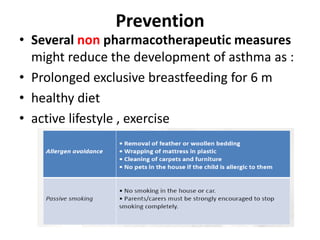
• Prevention
• Special types
• Summary & Home messages
References
• Nelson textbook
• UpToDate
• AAP
• BTS
• NAEPP
• GINA
• SINA
Definition
• It is a chronic inflammatory disease of the
airways with the following clinical features:
• Episodic and/or persistent symptoms of
airway obstruction as wheezing,
breathlessness, chest tightness and coughing
particularly at night.
• Bronchial hyperresponsiveness to triggers
• Bronchial good responsiveness to ttt
• Alternative diagnoses are excluded
Epidemiology
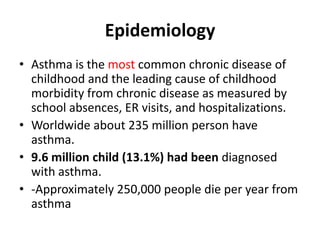
• Asthma is the most common chronic disease of
childhood and the leading cause of childhood
morbidity from chronic disease as measured by
school absences, ER visits, and hospitalizations.
• Worldwide about 235 million person have
asthma.
• 9.6 million child (13.1%) had been diagnosed
with asthma.
• -Approximately 250,000 people die per year from
asthma
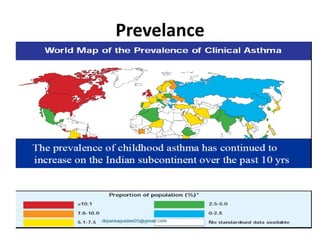
Prevelance
Incidence
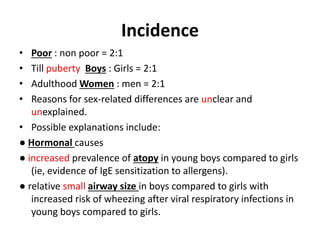
• Poor : non poor = 2:1
• Till puberty Boys : Girls = 2:1
• Adulthood Women : men = 2:1
• Reasons for sex-related differences are unclear and
unexplained.
• Possible explanations include:
● Hormonal causes
● increased prevalence of atopy in young boys compared to girls
(ie, evidence of IgE sensitization to allergens).
● relative small airway size in boys compared to girls with
increased risk of wheezing after viral respiratory infections in
young boys compared to girls.
When does asthma begin?
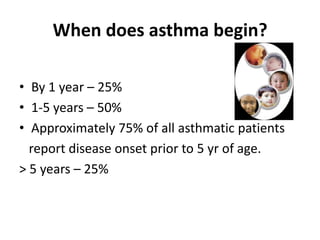
• By 1 year – 25%
• 1-5 years – 50%
• Approximately 75% of all asthmatic patients
report disease onset prior to 5 yr of age.
> 5 years – 25%
Etiology
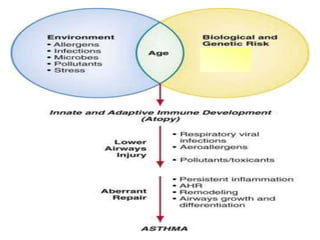
• Although the cause of childhood asthma has not
been determined
• Research implicates that it is multifactorial due to
combination of :
• Genetic vulnerabilities (Family H/O)
• Environmental exposure (Inducers – Triggers)
• Associated Comorbid conditions (GERD,Atopy)
{Allergic Rhinitis ,Allergic conjunctivitis,
dermatitis,eczema,Food allergy}
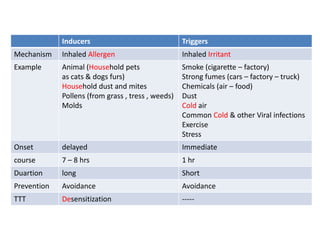
Inducers Triggers
Mechanism Inhaled Allergen Inhaled Irritant
Example Animal (Household pets
as cats & dogs furs)
Household dust and mites
Pollens (from grass , tress , weeds)
Molds
Smoke (cigarette – factory)
Strong fumes (cars – factory – truck)
Chemicals (air – food)
Dust
Cold air
Common Cold & other Viral infections
Exercise
Stress
Onset delayed Immediate
course 7 – 8 hrs 1 hr
Duartion long Short
Prevention Avoidance Avoidance
TTT Desensitization -----
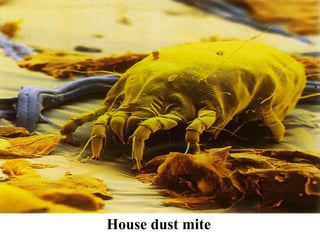
House dust mite
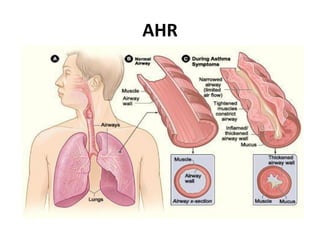
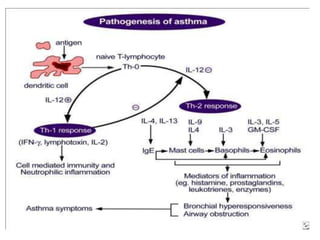
AHR
History
• Intermittent dry cough
• Wheezing
• Shortness of breath and chest tightness
• Intermittent, nonfocal chest pain.
• Respiratory symptoms can be worse at night
• Daytime symptoms, often linked with physical
activities or exercise.
• limitation of physical activities, general fatigue.
Symptomatology
• Cough – 90%
• Wheezing – 74%
• Exercise induced symptoms (wheeze or cough)
– 55%
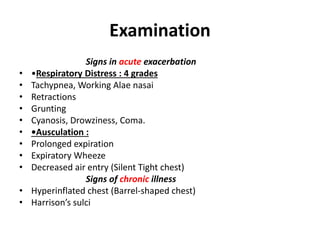
Examination
Signs in acute exacerbation
• •Respiratory Distress : 4 grades
• Tachypnea, Working Alae nasai
• Retractions
• Grunting
• Cyanosis, Drowziness, Coma.
• •Ausculation :
• Prolonged expiration
• Expiratory Wheeze
• Decreased air entry (Silent Tight chest)
Signs of chronic illness
• Hyperinflated chest (Barrel-shaped chest)
• Harrison’s sulci
Investigations
• PFTs
• Spirometry FEV1 or PEF
• feasible in children > 5 yr of age.
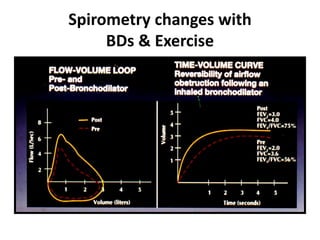
Spirometry changes with
BDs & Exercise
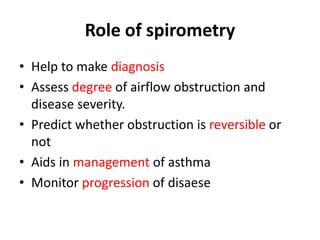
Role of spirometry
• Help to make diagnosis
• Assess degree of airflow obstruction and
disease severity.
• Predict whether obstruction is reversible or
not
• Aids in management of asthma
• Monitor progression of disaese
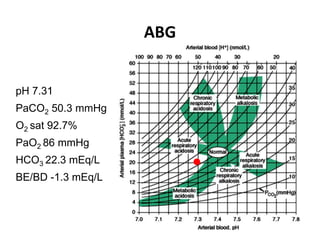
pH 7.31
PaCO2 50.3 mmHg
O2 sat 92.7%
PaO2 86 mmHg
HCO3 22.3 mEq/L
BE/BD -1.3 mEq/L
ABG
CXR
• often appear to be normal, or nonspecific
findings of hyperinflation and peribronchial
thickening.
• hyperinflation in asthma can mimic
pneumothorax.
• Also complications and co morbidities can be
looked.
Skin prick test
− When suspected Atopy :
− Risk factors :
− +ve family history
− Clinical markers :
− Atopic dermatitis & Eczema
− Lab markers :
• Peripheral blood and tissue eosinophilia
•  Serum total IgE
•  specific IgE
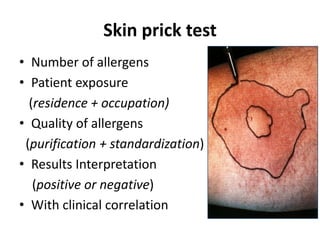
Skin prick test
• Number of allergens
• Patient exposure
(residence + occupation)
• Quality of allergens
(purification + standardization)
• Results Interpretation
(positive or negative)
• With clinical correlation
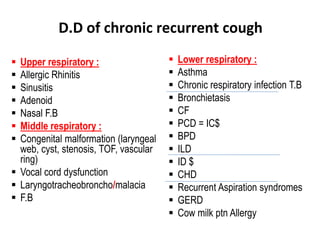
 Lower respiratory :
 Asthma
 Chronic respiratory infection T.B
 Bronchietasis
 CF
 PCD = IC$
 BPD
 ILD
 ID $
 CHD
 Recurrent Aspiration syndromes
 GERD
 Cow milk ptn Allergy
 Upper respiratory :
 Allergic Rhinitis
 Sinusitis
 Adenoid
 Nasal F.B
 Middle respiratory :
 Congenital malformation (laryngeal
web, cyst, stenosis, TOF, vascular
ring)
 Vocal cord dysfunction
 Laryngotracheobroncho/malacia
 F.B
D.D of chronic recurrent cough
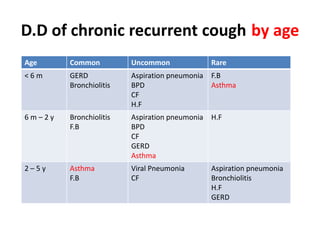
D.D of chronic recurrent cough by age
Age Common Uncommon Rare
< 6 m GERD
Bronchiolitis
Aspiration pneumonia
BPD
CF
H.F
F.B
Asthma
6 m – 2 y Bronchiolitis
F.B
Aspiration pneumonia
BPD
CF
GERD
Asthma
H.F
2 – 5 y Asthma
F.B
Viral Pneumonia
CF
Aspiration pneumonia
Bronchiolitis
H.F
GERD
How to rule out mimics ?
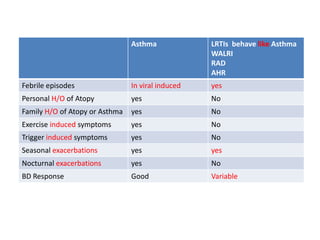
Asthma LRTIs behave like Asthma
WALRI
RAD
AHR
Febrile episodes In viral induced yes
Personal H/O of Atopy yes No
Family H/O of Atopy or Asthma yes No
Exercise induced symptoms yes No
Trigger induced symptoms yes No
Seasonal exacerbations yes yes
Nocturnal exacerbations yes No
BD Response Good Variable
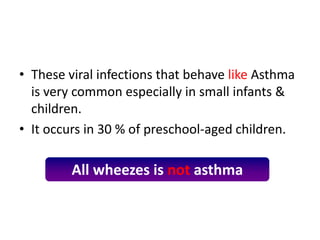
• These viral infections that behave like Asthma
is very common especially in small infants &
children.
• It occurs in 30 % of preschool-aged children.
All wheezes is not asthma
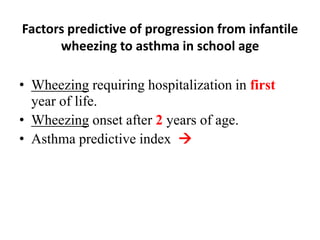
Factors predictive of progression from infantile
wheezing to asthma in school age
• Wheezing requiring hospitalization in first
year of life.
• Wheezing onset after 2 years of age.
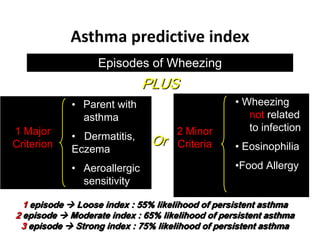
• Asthma predictive index 
Asthma predictive index
Episodes of Wheezing
PLUS
Or
1 Major
Criterion
• Parent with
asthma
• Dermatitis,
Eczema
• Aeroallergic
sensitivity
2 Minor
Criteria
• Wheezing
not related
to infection
• Eosinophilia
•Food Allergy
1 episode  Loose index : 55% likelihood of persistent asthma
2 episode  Moderate index : 65% likelihood of persistent asthma
3 episode  Strong index : 75% likelihood of persistent asthma
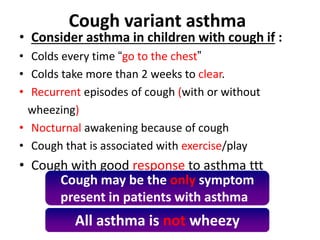
Cough variant asthma
• Consider asthma in children with cough if :
• Colds every time “go to the chest”
• Colds take more than 2 weeks to clear.
• Recurrent episodes of cough (with or without
wheezing)
• Nocturnal awakening because of cough
• Cough that is associated with exercise/play
• Cough with good response to asthma ttt
All asthma is not wheezy
Cough may be the only symptom
present in patients with asthma
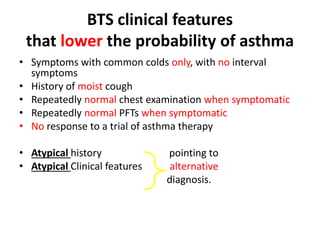
BTS clinical features
that lower the probability of asthma
• Symptoms with common colds only, with no interval
symptoms
• History of moist cough
• Repeatedly normal chest examination when symptomatic
• Repeatedly normal PFTs when symptomatic
• No response to a trial of asthma therapy
• Atypical history pointing to
• Atypical Clinical features alternative
diagnosis.
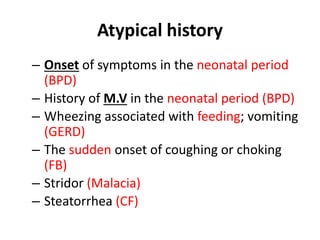
Atypical history
– Onset of symptoms in the neonatal period
(BPD)
– History of M.V in the neonatal period (BPD)
– Wheezing associated with feeding; vomiting
(GERD)
– The sudden onset of coughing or choking
(FB)
– Stridor (Malacia)
– Steatorrhea (CF)
Atypical clinical features
– FTT (CF – ID $)
– Clubbing (CF – ILD)
– Murmur (CHD)
– Fixed monophonic/asymmetric wheeze
(Sequestration)
– Fixed or focal finding on CXR (Sequestration)
Exclude specific conditions by specific Inv
 Structural problems or F.B : Laryngoscopy &
bronchoscopy
 GERD: Ba swallow, pH probes, endoscopes
 PCD: nasal ciliary motility, Exhaled NO, EM, saccharine
test
 BPD , Bronchiectasis: HRCT scan, BAL
 CF: sweat Cl test, nasal potentials, genotypes
 ILD : Lung Biopsy
 ID syndromes: Ig subtypes, lymphocytes & neutrophil
function, HIV
 CHD: echo, angiography
 TB: mantoux test, induced sputum/ gastric lavage/ BAL
Culture, microscopy & PCR
Management of asthma
• Parents's education to enhance the parents's
knowledge and skills for self-management
with written action plan.
• Identification and management of
precipitating factors and associated co-morbid
conditions that may worsen asthma.
• Assessment and treatment of acute asthma
exacerbations.
• Long term control therapy.
Classifying acute asthma exacerbation
Profound
(Impending R.F)
SevereModerateMild
At rest/leaning forwardAt rest/Sits uprightAt restwalkingDyspnea
nonewordsphrasessentencesspeech
confusedagitatednormalnormalConsciousness
Tight silent chest++++++Wheezes
paradoxical++++++Accessory ms
undetermined++++++RR
bradycardia> 140< 140< 110HR
< 85< 9090 – 95> 95Spo2
> 45> 42< 42< 40PCo2
< 25< 4040 – 70> 60 – 70PEF in > 5 y
Consider ETTPICUHospitalHomemanagement
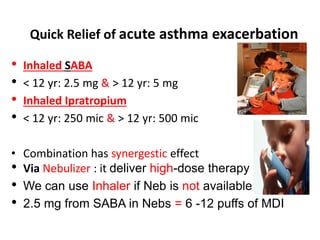
• Inhaled SABA
• < 12 yr: 2.5 mg & > 12 yr: 5 mg
• Inhaled Ipratropium
• < 12 yr: 250 mic & > 12 yr: 500 mic
• Combination has synergestic effect
• Via Nebulizer : it deliver high-dose therapy
• We can use Inhaler if Neb is not available
• 2.5 mg from SABA in Nebs = 6 -12 puffs of MDI
Quick Relief of acute asthma exacerbation
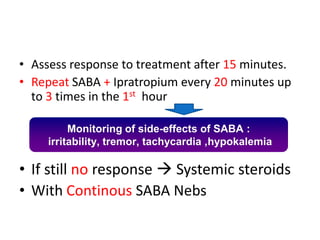
• Assess response to treatment after 15 minutes.
• Repeat SABA + Ipratropium every 20 minutes up
to 3 times in the 1st hour
• If still no response  Systemic steroids
• With Continous SABA Nebs
Monitoring of side-effects of SABA :
irritability, tremor, tachycardia ,hypokalemia
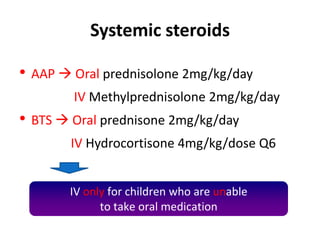
Systemic steroids
• AAP  Oral prednisolone 2mg/kg/day
IV Methylprednisolone 2mg/kg/day
• BTS  Oral prednisone 2mg/kg/day
IV Hydrocortisone 4mg/kg/dose Q6
IV only for children who are unable
to take oral medication
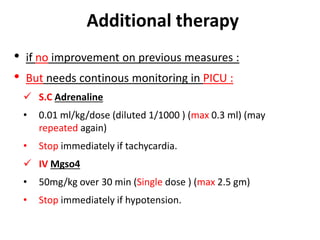
Additional therapy
• if no improvement on previous measures :
• But needs continous monitoring in PICU :
 S.C Adrenaline
• 0.01 ml/kg/dose (diluted 1/1000 ) (max 0.3 ml) (may
repeated again)
• Stop immediately if tachycardia.
 IV Mgso4
• 50mg/kg over 30 min (Single dose ) (max 2.5 gm)
• Stop immediately if hypotension.
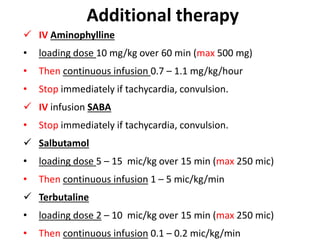
Additional therapy
 IV Aminophylline
• loading dose 10 mg/kg over 60 min (max 500 mg)
• Then continuous infusion 0.7 – 1.1 mg/kg/hour
• Stop immediately if tachycardia, convulsion.
 IV infusion SABA
• Stop immediately if tachycardia, convulsion.
 Salbutamol
• loading dose 5 – 15 mic/kg over 15 min (max 250 mic)
• Then continuous infusion 1 – 5 mic/kg/min
 Terbutaline
• loading dose 2 – 10 mic/kg over 15 min (max 250 mic)
• Then continuous infusion 0.1 – 0.2 mic/kg/min
Nonstandard therapy
• Heliox — a mixture of helium and O2 that enhances beta-
agonist delivery because the lower gas density will result in
lower flow resistance with greater response & earlier
discharge from the hospital.
• The NAEPP guidelines suggest combined administration of
beta-agonists with heliox in patients with life-threatening
exacerbations or who are not responding to conventional
therapy.
• However, the use of heliox should not delay intubation once it
is considered necessary.
• Ketamine — it is the drug of choice to provide sedation and
analgesia before intubating a child with life-threatening
exacerbations , due to its BD effect.
Nonrecommended therapy
• Antibiotics
•are not beneficial.
• Oseltamivir
• are not beneficial.
• Oral BD
• not recommended except if inhaled BD is not available.
• LTRAs
• are not effective in acute asthma exacerbations
• Inhaled Steroids
• are not as effective as systemic steroids for severe acute
asthma exacerbations
• should not be used as a substitute.
• Do not stop & Do not double dose of ICS during prescription
of systemic steroids for severe acute asthma exacerbations.
Goals of long-term control
• Maintain control of symptoms
• Maintain normal activity levels, including
exercise
• Maintain normal PFTs as possible
• Avoid adverse effects from asthma
medications
• Prevent asthma exacerbations
• Prevent asthma morbidity and mortality
Drugs control asthma only , but do not cure
Indications of long-term control
• ≥ 2 use of SABA in 1 week
• ≥ 2 use of systemic steroids in 6 months
• ≥ 4 exacerbations in 1 year
Long-term control medications
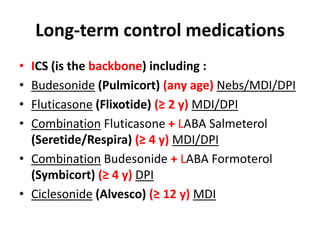
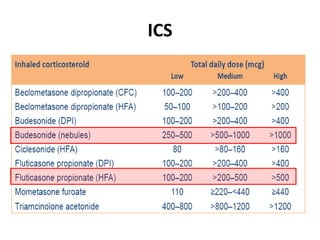
• ICS (is the backbone) including :
• Budesonide (Pulmicort) (any age) Nebs/MDI/DPI
• Fluticasone (Flixotide) (≥ 2 y) MDI/DPI
• Combination Fluticasone + LABA Salmeterol
(Seretide/Respira) (≥ 4 y) MDI/DPI
• Combination Budesonide + LABA Formoterol
(Symbicort) (≥ 4 y) DPI
• Ciclesonide (Alvesco) (≥ 12 y) MDI
ICS
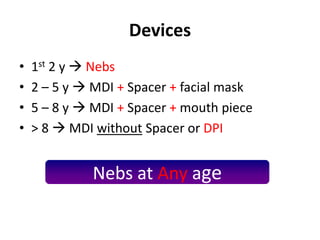
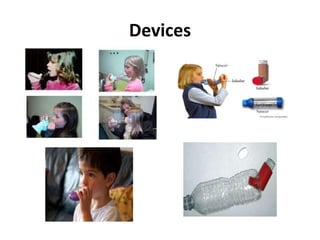
Devices
• 1st 2 y  Nebs
• 2 – 5 y  MDI + Spacer + facial mask
• 5 – 8 y  MDI + Spacer + mouth piece
• > 8  MDI without Spacer or DPI
Nebs at Any age
Devices
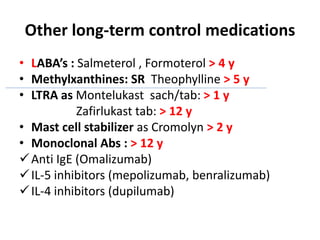
Other long-term control medications
• LABA’s : Salmeterol , Formoterol > 4 y
• Methylxanthines: SR Theophylline > 5 y
• LTRA as Montelukast sach/tab: > 1 y
Zafirlukast tab: > 12 y
• Mast cell stabilizer as Cromolyn > 2 y
• Monoclonal Abs : > 12 y
Anti IgE (Omalizumab)
IL-5 inhibitors (mepolizumab, benralizumab)
IL-4 inhibitors (dupilumab)
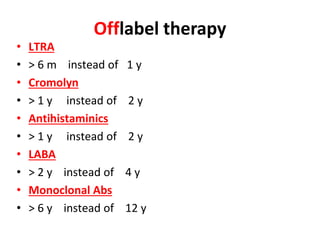
Offlabel therapy
• LTRA
• > 6 m instead of 1 y
• Cromolyn
• > 1 y instead of 2 y
• Antihistaminics
• > 1 y instead of 2 y
• LABA
• > 2 y instead of 4 y
• Monoclonal Abs
• > 6 y instead of 12 y
New cases
Or
Patients not on control therapy
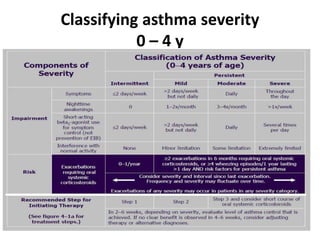
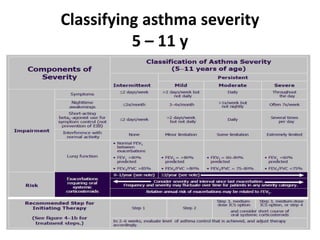
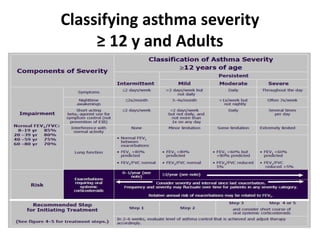
Classifying asthma severity
0 – 4 y
Classifying asthma severity
5 – 11 y
Classifying asthma severity
≥ 12 y and Adults
Old cases
Or
Patients already on control
therapy
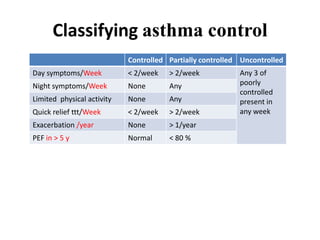
Classifying asthma control
UncontrolledPartially controlledControlled
Any 3 of
poorly
controlled
present in
any week
> 2/week< 2/weekDay symptoms/Week
AnyNoneNight symptoms/Week
AnyNoneLimited physical activity
> 2/week< 2/weekQuick relief ttt/Week
> 1/yearNoneExacerbation /year
< 80 %NormalPEF in > 5 y
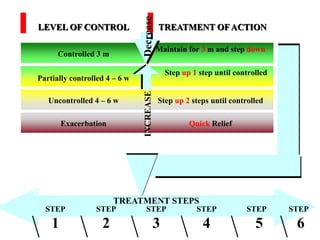
Controlled 3 m
Partially controlled 4 – 6 w
Uncontrolled 4 – 6 w
Exacerbation
LEVEL OF CONTROL
Maintain for 3 m and step down
Step up 1 step until controlled
Step up 2 steps until controlled
Quick Relief
TREATMENT OF ACTION
TREATMENT STEPS
REDUCE INCREASE
STEP
1
STEP
2
STEP
3
STEP
4
STEP STEP
5 6
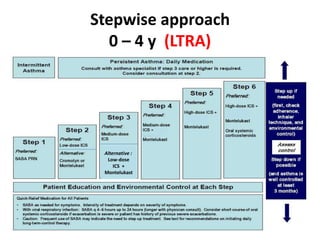
Stepwise approach
0 – 4 y (LTRA)
Alternative :
Low-dose
ICS +
Montelukast
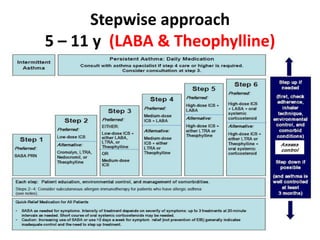
Stepwise approach
5 – 11 y (LABA & Theophylline)
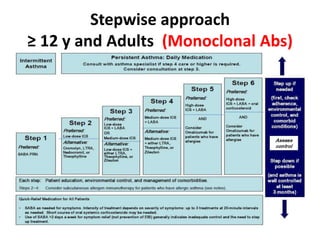
Stepwise approach
≥ 12 y and Adults (Monoclonal Abs)
Stepwise approach
• Stepping up :
• if asthma partially controlled or uncontrolled for 4–6 weeks
• Important: first check for common causes (incorrect inhaler
technique, poor compliance, symptoms not due to asthma)
• Stepping down :
• if asthma controlled for 3 months
• reduce ICS doses (usually by 25-50%).
• till reach each patient’s minimum effective dose, that controls both
symptoms and exacerbations.
• Then shifted to single daily dose.
• Then stop other controllers as LTRA/LABA/Theophylline
• F/U
• 4-6 weeks after initiation of treatment, then every 3 months
• After an exacerbation, within 1 week.
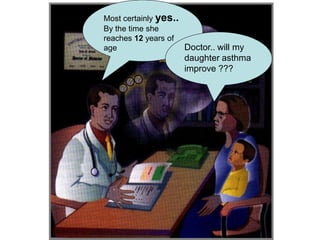
Most certainly yes..
By the time she
reaches 12 years of
age Doctor.. will my
daughter asthma
improve ???
• Yes, by the time she reaches …. y.
• No, it’s a lifelong disease & therapy.
• May be, what is most important is to
reach the lowest dose of anti-
inflammatory therapy adequately
controlling the disease.
Prognosis
• 2 out of 3 children their asthma will improve.
• Asthma severity by the ages of 10 yr of age is
predictive index of asthma persistence in
adulthood :
• Children with mild asthma and normal PFTs are
mostlikely to improve over time, with some of
them become periodically asthmatic (disease
free for months to years)
• Children with moderate to severe asthma and
with impaired PFTs are mostlikely to have
persistent asthma as adults.
Prevention
• Several non pharmacotherapeutic measures
might reduce the development of asthma as :
• Prolonged exclusive breastfeeding for 6 m
• healthy diet
• active lifestyle , exercise
Special types of asthma
• Paracetamol is the safest antipyretic to avoid
Aspirin-induced asthma.
• SABA before exercise is better to avoid Exercise-
induced asthma.
• Intermittent asthma does not need controllers
and and treat as step 1.
• Seasonal asthma may not need controllers ; treat
as uncontrolled asthma in the season & treat as
step 1 rest of the year after the season.
Summary & Home messages
• Asthma is an inflammatory illness exacerbates with
infections.
• Diagnosis of asthma is clinical, and relies on history.
• A family history of asthma / atopy increases risk of
asthma.
• In children < 3 yrs, Asthma likes is an important D.D.
• All asthma is not wheezey & All wheezes is not
asthma.
Summary & Home messages
• Patient education is a very important part of
asthma management.
• Clinical grading, decides long term control plan.
• Treatment should be stepped up or down
depending upon patient response.
• ICS is the mainstay of long term asthma control.
• 2 out of 3 children their asthma will improve.
• Drugs control asthma only , but do not cure.
Thank You

Bronchial Asthma

  • 2.
    Contents • Definition • Epidemiology •Etiology • Pathogenesis • Diagnosis (H/O – Exam – Inv – D.D ) • TTT • Control • Prognosis • Prevention • Special types • Summary & Home messages
  • 3.
    References • Nelson textbook •UpToDate • AAP • BTS • NAEPP • GINA • SINA
  • 4.
    Definition • It isa chronic inflammatory disease of the airways with the following clinical features: • Episodic and/or persistent symptoms of airway obstruction as wheezing, breathlessness, chest tightness and coughing particularly at night. • Bronchial hyperresponsiveness to triggers • Bronchial good responsiveness to ttt • Alternative diagnoses are excluded
  • 5.
    Epidemiology • Asthma isthe most common chronic disease of childhood and the leading cause of childhood morbidity from chronic disease as measured by school absences, ER visits, and hospitalizations. • Worldwide about 235 million person have asthma. • 9.6 million child (13.1%) had been diagnosed with asthma. • -Approximately 250,000 people die per year from asthma
  • 6.
  • 7.
    Incidence • Poor :non poor = 2:1 • Till puberty Boys : Girls = 2:1 • Adulthood Women : men = 2:1 • Reasons for sex-related differences are unclear and unexplained. • Possible explanations include: ● Hormonal causes ● increased prevalence of atopy in young boys compared to girls (ie, evidence of IgE sensitization to allergens). ● relative small airway size in boys compared to girls with increased risk of wheezing after viral respiratory infections in young boys compared to girls.
  • 8.
    When does asthmabegin? • By 1 year – 25% • 1-5 years – 50% • Approximately 75% of all asthmatic patients report disease onset prior to 5 yr of age. > 5 years – 25%
  • 9.
    Etiology • Although thecause of childhood asthma has not been determined • Research implicates that it is multifactorial due to combination of : • Genetic vulnerabilities (Family H/O) • Environmental exposure (Inducers – Triggers) • Associated Comorbid conditions (GERD,Atopy) {Allergic Rhinitis ,Allergic conjunctivitis, dermatitis,eczema,Food allergy}
  • 10.
    Inducers Triggers Mechanism InhaledAllergen Inhaled Irritant Example Animal (Household pets as cats & dogs furs) Household dust and mites Pollens (from grass , tress , weeds) Molds Smoke (cigarette – factory) Strong fumes (cars – factory – truck) Chemicals (air – food) Dust Cold air Common Cold & other Viral infections Exercise Stress Onset delayed Immediate course 7 – 8 hrs 1 hr Duartion long Short Prevention Avoidance Avoidance TTT Desensitization -----
  • 11.
  • 13.
  • 15.
    History • Intermittent drycough • Wheezing • Shortness of breath and chest tightness • Intermittent, nonfocal chest pain. • Respiratory symptoms can be worse at night • Daytime symptoms, often linked with physical activities or exercise. • limitation of physical activities, general fatigue.
  • 16.
    Symptomatology • Cough –90% • Wheezing – 74% • Exercise induced symptoms (wheeze or cough) – 55%
  • 17.
    Examination Signs in acuteexacerbation • •Respiratory Distress : 4 grades • Tachypnea, Working Alae nasai • Retractions • Grunting • Cyanosis, Drowziness, Coma. • •Ausculation : • Prolonged expiration • Expiratory Wheeze • Decreased air entry (Silent Tight chest) Signs of chronic illness • Hyperinflated chest (Barrel-shaped chest) • Harrison’s sulci
  • 18.
    Investigations • PFTs • SpirometryFEV1 or PEF • feasible in children > 5 yr of age.
  • 19.
  • 20.
    Role of spirometry •Help to make diagnosis • Assess degree of airflow obstruction and disease severity. • Predict whether obstruction is reversible or not • Aids in management of asthma • Monitor progression of disaese
  • 21.
    pH 7.31 PaCO2 50.3mmHg O2 sat 92.7% PaO2 86 mmHg HCO3 22.3 mEq/L BE/BD -1.3 mEq/L ABG
  • 22.
    CXR • often appearto be normal, or nonspecific findings of hyperinflation and peribronchial thickening. • hyperinflation in asthma can mimic pneumothorax. • Also complications and co morbidities can be looked.
  • 23.
    Skin prick test −When suspected Atopy : − Risk factors : − +ve family history − Clinical markers : − Atopic dermatitis & Eczema − Lab markers : • Peripheral blood and tissue eosinophilia •  Serum total IgE •  specific IgE
  • 24.
    Skin prick test •Number of allergens • Patient exposure (residence + occupation) • Quality of allergens (purification + standardization) • Results Interpretation (positive or negative) • With clinical correlation
  • 25.
     Lower respiratory:  Asthma  Chronic respiratory infection T.B  Bronchietasis  CF  PCD = IC$  BPD  ILD  ID $  CHD  Recurrent Aspiration syndromes  GERD  Cow milk ptn Allergy  Upper respiratory :  Allergic Rhinitis  Sinusitis  Adenoid  Nasal F.B  Middle respiratory :  Congenital malformation (laryngeal web, cyst, stenosis, TOF, vascular ring)  Vocal cord dysfunction  Laryngotracheobroncho/malacia  F.B D.D of chronic recurrent cough
  • 26.
    D.D of chronicrecurrent cough by age Age Common Uncommon Rare < 6 m GERD Bronchiolitis Aspiration pneumonia BPD CF H.F F.B Asthma 6 m – 2 y Bronchiolitis F.B Aspiration pneumonia BPD CF GERD Asthma H.F 2 – 5 y Asthma F.B Viral Pneumonia CF Aspiration pneumonia Bronchiolitis H.F GERD
  • 27.
    How to ruleout mimics ?
  • 28.
    Asthma LRTIs behavelike Asthma WALRI RAD AHR Febrile episodes In viral induced yes Personal H/O of Atopy yes No Family H/O of Atopy or Asthma yes No Exercise induced symptoms yes No Trigger induced symptoms yes No Seasonal exacerbations yes yes Nocturnal exacerbations yes No BD Response Good Variable
  • 29.
    • These viralinfections that behave like Asthma is very common especially in small infants & children. • It occurs in 30 % of preschool-aged children. All wheezes is not asthma
  • 30.
    Factors predictive ofprogression from infantile wheezing to asthma in school age • Wheezing requiring hospitalization in first year of life. • Wheezing onset after 2 years of age. • Asthma predictive index 
  • 31.
    Asthma predictive index Episodesof Wheezing PLUS Or 1 Major Criterion • Parent with asthma • Dermatitis, Eczema • Aeroallergic sensitivity 2 Minor Criteria • Wheezing not related to infection • Eosinophilia •Food Allergy 1 episode  Loose index : 55% likelihood of persistent asthma 2 episode  Moderate index : 65% likelihood of persistent asthma 3 episode  Strong index : 75% likelihood of persistent asthma
  • 32.
    Cough variant asthma •Consider asthma in children with cough if : • Colds every time “go to the chest” • Colds take more than 2 weeks to clear. • Recurrent episodes of cough (with or without wheezing) • Nocturnal awakening because of cough • Cough that is associated with exercise/play • Cough with good response to asthma ttt All asthma is not wheezy Cough may be the only symptom present in patients with asthma
  • 33.
    BTS clinical features thatlower the probability of asthma • Symptoms with common colds only, with no interval symptoms • History of moist cough • Repeatedly normal chest examination when symptomatic • Repeatedly normal PFTs when symptomatic • No response to a trial of asthma therapy • Atypical history pointing to • Atypical Clinical features alternative diagnosis.
  • 34.
    Atypical history – Onsetof symptoms in the neonatal period (BPD) – History of M.V in the neonatal period (BPD) – Wheezing associated with feeding; vomiting (GERD) – The sudden onset of coughing or choking (FB) – Stridor (Malacia) – Steatorrhea (CF)
  • 35.
    Atypical clinical features –FTT (CF – ID $) – Clubbing (CF – ILD) – Murmur (CHD) – Fixed monophonic/asymmetric wheeze (Sequestration) – Fixed or focal finding on CXR (Sequestration)
  • 36.
    Exclude specific conditionsby specific Inv  Structural problems or F.B : Laryngoscopy & bronchoscopy  GERD: Ba swallow, pH probes, endoscopes  PCD: nasal ciliary motility, Exhaled NO, EM, saccharine test  BPD , Bronchiectasis: HRCT scan, BAL  CF: sweat Cl test, nasal potentials, genotypes  ILD : Lung Biopsy  ID syndromes: Ig subtypes, lymphocytes & neutrophil function, HIV  CHD: echo, angiography  TB: mantoux test, induced sputum/ gastric lavage/ BAL Culture, microscopy & PCR
  • 37.
    Management of asthma •Parents's education to enhance the parents's knowledge and skills for self-management with written action plan. • Identification and management of precipitating factors and associated co-morbid conditions that may worsen asthma. • Assessment and treatment of acute asthma exacerbations. • Long term control therapy.
  • 38.
    Classifying acute asthmaexacerbation Profound (Impending R.F) SevereModerateMild At rest/leaning forwardAt rest/Sits uprightAt restwalkingDyspnea nonewordsphrasessentencesspeech confusedagitatednormalnormalConsciousness Tight silent chest++++++Wheezes paradoxical++++++Accessory ms undetermined++++++RR bradycardia> 140< 140< 110HR < 85< 9090 – 95> 95Spo2 > 45> 42< 42< 40PCo2 < 25< 4040 – 70> 60 – 70PEF in > 5 y Consider ETTPICUHospitalHomemanagement
  • 39.
    • Inhaled SABA •< 12 yr: 2.5 mg & > 12 yr: 5 mg • Inhaled Ipratropium • < 12 yr: 250 mic & > 12 yr: 500 mic • Combination has synergestic effect • Via Nebulizer : it deliver high-dose therapy • We can use Inhaler if Neb is not available • 2.5 mg from SABA in Nebs = 6 -12 puffs of MDI Quick Relief of acute asthma exacerbation
  • 40.
    • Assess responseto treatment after 15 minutes. • Repeat SABA + Ipratropium every 20 minutes up to 3 times in the 1st hour • If still no response  Systemic steroids • With Continous SABA Nebs Monitoring of side-effects of SABA : irritability, tremor, tachycardia ,hypokalemia
  • 41.
    Systemic steroids • AAP Oral prednisolone 2mg/kg/day IV Methylprednisolone 2mg/kg/day • BTS  Oral prednisone 2mg/kg/day IV Hydrocortisone 4mg/kg/dose Q6 IV only for children who are unable to take oral medication
  • 42.
    Additional therapy • ifno improvement on previous measures : • But needs continous monitoring in PICU :  S.C Adrenaline • 0.01 ml/kg/dose (diluted 1/1000 ) (max 0.3 ml) (may repeated again) • Stop immediately if tachycardia.  IV Mgso4 • 50mg/kg over 30 min (Single dose ) (max 2.5 gm) • Stop immediately if hypotension.
  • 43.
    Additional therapy  IVAminophylline • loading dose 10 mg/kg over 60 min (max 500 mg) • Then continuous infusion 0.7 – 1.1 mg/kg/hour • Stop immediately if tachycardia, convulsion.  IV infusion SABA • Stop immediately if tachycardia, convulsion.  Salbutamol • loading dose 5 – 15 mic/kg over 15 min (max 250 mic) • Then continuous infusion 1 – 5 mic/kg/min  Terbutaline • loading dose 2 – 10 mic/kg over 15 min (max 250 mic) • Then continuous infusion 0.1 – 0.2 mic/kg/min
  • 44.
    Nonstandard therapy • Heliox— a mixture of helium and O2 that enhances beta- agonist delivery because the lower gas density will result in lower flow resistance with greater response & earlier discharge from the hospital. • The NAEPP guidelines suggest combined administration of beta-agonists with heliox in patients with life-threatening exacerbations or who are not responding to conventional therapy. • However, the use of heliox should not delay intubation once it is considered necessary. • Ketamine — it is the drug of choice to provide sedation and analgesia before intubating a child with life-threatening exacerbations , due to its BD effect.
  • 45.
    Nonrecommended therapy • Antibiotics •arenot beneficial. • Oseltamivir • are not beneficial. • Oral BD • not recommended except if inhaled BD is not available. • LTRAs • are not effective in acute asthma exacerbations • Inhaled Steroids • are not as effective as systemic steroids for severe acute asthma exacerbations • should not be used as a substitute. • Do not stop & Do not double dose of ICS during prescription of systemic steroids for severe acute asthma exacerbations.
  • 46.
    Goals of long-termcontrol • Maintain control of symptoms • Maintain normal activity levels, including exercise • Maintain normal PFTs as possible • Avoid adverse effects from asthma medications • Prevent asthma exacerbations • Prevent asthma morbidity and mortality Drugs control asthma only , but do not cure
  • 47.
    Indications of long-termcontrol • ≥ 2 use of SABA in 1 week • ≥ 2 use of systemic steroids in 6 months • ≥ 4 exacerbations in 1 year
  • 48.
    Long-term control medications •ICS (is the backbone) including : • Budesonide (Pulmicort) (any age) Nebs/MDI/DPI • Fluticasone (Flixotide) (≥ 2 y) MDI/DPI • Combination Fluticasone + LABA Salmeterol (Seretide/Respira) (≥ 4 y) MDI/DPI • Combination Budesonide + LABA Formoterol (Symbicort) (≥ 4 y) DPI • Ciclesonide (Alvesco) (≥ 12 y) MDI
  • 49.
  • 50.
    Devices • 1st 2y  Nebs • 2 – 5 y  MDI + Spacer + facial mask • 5 – 8 y  MDI + Spacer + mouth piece • > 8  MDI without Spacer or DPI Nebs at Any age
  • 51.
  • 52.
    Other long-term controlmedications • LABA’s : Salmeterol , Formoterol > 4 y • Methylxanthines: SR Theophylline > 5 y • LTRA as Montelukast sach/tab: > 1 y Zafirlukast tab: > 12 y • Mast cell stabilizer as Cromolyn > 2 y • Monoclonal Abs : > 12 y Anti IgE (Omalizumab) IL-5 inhibitors (mepolizumab, benralizumab) IL-4 inhibitors (dupilumab)
  • 53.
    Offlabel therapy • LTRA •> 6 m instead of 1 y • Cromolyn • > 1 y instead of 2 y • Antihistaminics • > 1 y instead of 2 y • LABA • > 2 y instead of 4 y • Monoclonal Abs • > 6 y instead of 12 y
  • 54.
    New cases Or Patients noton control therapy
  • 55.
  • 56.
  • 57.
  • 58.
  • 59.
    Classifying asthma control UncontrolledPartiallycontrolledControlled Any 3 of poorly controlled present in any week > 2/week< 2/weekDay symptoms/Week AnyNoneNight symptoms/Week AnyNoneLimited physical activity > 2/week< 2/weekQuick relief ttt/Week > 1/yearNoneExacerbation /year < 80 %NormalPEF in > 5 y
  • 60.
    Controlled 3 m Partiallycontrolled 4 – 6 w Uncontrolled 4 – 6 w Exacerbation LEVEL OF CONTROL Maintain for 3 m and step down Step up 1 step until controlled Step up 2 steps until controlled Quick Relief TREATMENT OF ACTION TREATMENT STEPS REDUCE INCREASE STEP 1 STEP 2 STEP 3 STEP 4 STEP STEP 5 6
  • 61.
    Stepwise approach 0 –4 y (LTRA) Alternative : Low-dose ICS + Montelukast
  • 62.
    Stepwise approach 5 –11 y (LABA & Theophylline)
  • 63.
    Stepwise approach ≥ 12y and Adults (Monoclonal Abs)
  • 64.
    Stepwise approach • Steppingup : • if asthma partially controlled or uncontrolled for 4–6 weeks • Important: first check for common causes (incorrect inhaler technique, poor compliance, symptoms not due to asthma) • Stepping down : • if asthma controlled for 3 months • reduce ICS doses (usually by 25-50%). • till reach each patient’s minimum effective dose, that controls both symptoms and exacerbations. • Then shifted to single daily dose. • Then stop other controllers as LTRA/LABA/Theophylline • F/U • 4-6 weeks after initiation of treatment, then every 3 months • After an exacerbation, within 1 week.
  • 65.
    Most certainly yes.. Bythe time she reaches 12 years of age Doctor.. will my daughter asthma improve ???
  • 66.
    • Yes, bythe time she reaches …. y. • No, it’s a lifelong disease & therapy. • May be, what is most important is to reach the lowest dose of anti- inflammatory therapy adequately controlling the disease.
  • 67.
    Prognosis • 2 outof 3 children their asthma will improve. • Asthma severity by the ages of 10 yr of age is predictive index of asthma persistence in adulthood : • Children with mild asthma and normal PFTs are mostlikely to improve over time, with some of them become periodically asthmatic (disease free for months to years) • Children with moderate to severe asthma and with impaired PFTs are mostlikely to have persistent asthma as adults.
  • 68.
    Prevention • Several nonpharmacotherapeutic measures might reduce the development of asthma as : • Prolonged exclusive breastfeeding for 6 m • healthy diet • active lifestyle , exercise
  • 69.
    Special types ofasthma • Paracetamol is the safest antipyretic to avoid Aspirin-induced asthma. • SABA before exercise is better to avoid Exercise- induced asthma. • Intermittent asthma does not need controllers and and treat as step 1. • Seasonal asthma may not need controllers ; treat as uncontrolled asthma in the season & treat as step 1 rest of the year after the season.
  • 70.
    Summary & Homemessages • Asthma is an inflammatory illness exacerbates with infections. • Diagnosis of asthma is clinical, and relies on history. • A family history of asthma / atopy increases risk of asthma. • In children < 3 yrs, Asthma likes is an important D.D. • All asthma is not wheezey & All wheezes is not asthma.
  • 71.
    Summary & Homemessages • Patient education is a very important part of asthma management. • Clinical grading, decides long term control plan. • Treatment should be stepped up or down depending upon patient response. • ICS is the mainstay of long term asthma control. • 2 out of 3 children their asthma will improve. • Drugs control asthma only , but do not cure.
  • 72.