Bringing the Outdoors in:
Integrating Nature into the
Early Childhood Classroom
Beth Edwards
www.greenspacetx.com
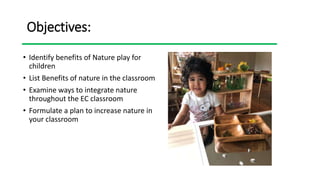
Objectives:
• Identify benefits of Nature play for
children
• List Benefits of nature in the classroom
• Examine ways to integrate nature
throughout the EC classroom
• Formulate a plan to increase nature in
your classroom
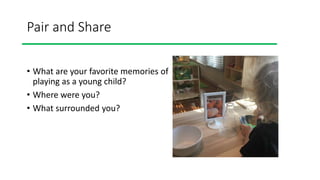
Pair and Share
• What are your favorite memories of
playing as a young child?
• Where were you?
• What surrounded you?
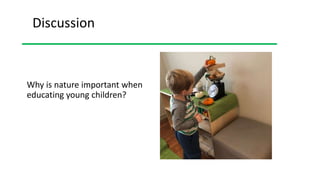
Why is nature important when
educating young children?
Discussion
Benefits of Nature Play
• Natural elements allow longer
periods of sustained focus and
concentration
• Sensory development in infancy and
toddlerhood is critical to behavior
regulation and school readiness
• Supports physical, cognitive,
language and social emotional
development- BUILDS BRAINS
• Supports inquiry base learning
• Nature connects all cultures
• Offers a child-centered, intrinsically
motivating space to learn
• Promotes collaboration
• Promotes an appreciation for nature
• Affords opportunities to learn about
respect and care for the natural
environment
• Encourages physical activity helping
to reduce childhood obesity
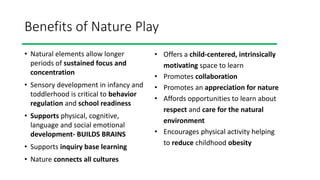
Benefits of Nature Rich Classrooms
• Natural color pallets create a peaceful
and calming environment
• Nature and natural material engage all
the senses (plastic materials all feel the
same, smell the same)
• Children are less distracted and
overstimulated in nature rich settings,
better able to regulate their own
behaviors
• Promotes the use of the classroom as the
third teacher
• Children are drawn to nature, natural
materials and real tools.
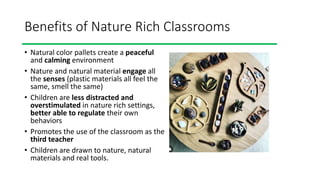
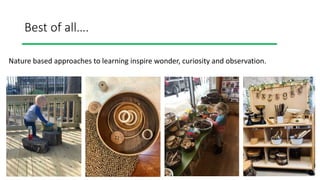
Best of all….
Nature based approaches to learning inspire wonder, curiosity and observation.
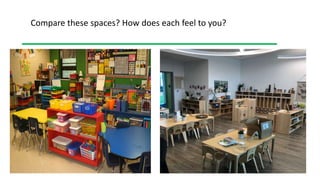
Compare these spaces? How does each feel to you?
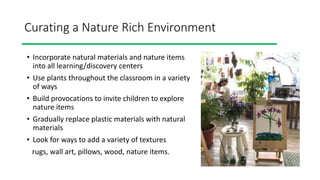
Curating a Nature Rich Environment
• Incorporate natural materials and nature items
into all learning/discovery centers
• Use plants throughout the classroom in a variety
of ways
• Build provocations to invite children to explore
nature items
• Gradually replace plastic materials with natural
materials
• Look for ways to add a variety of textures
rugs, wall art, pillows, wood, nature items.
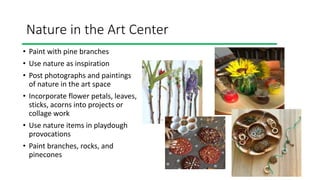
Nature in the Art Center
• Paint with pine branches
• Use nature as inspiration
• Post photographs and paintings
of nature in the art space
• Incorporate flower petals, leaves,
sticks, acorns into projects or
collage work
• Use nature items in playdough
provocations
• Paint branches, rocks, and
pinecones
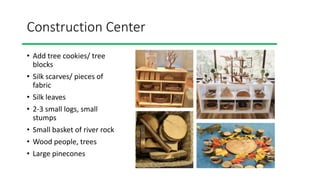
Construction Center
• Add tree cookies/ tree
blocks
• Silk scarves/ pieces of
fabric
• Silk leaves
• 2-3 small logs, small
stumps
• Small basket of river rock
• Wood people, trees
• Large pinecones
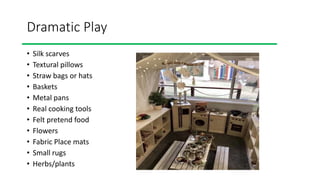
Dramatic Play
• Silk scarves
• Textural pillows
• Straw bags or hats
• Baskets
• Metal pans
• Real cooking tools
• Felt pretend food
• Flowers
• Fabric Place mats
• Small rugs
• Herbs/plants
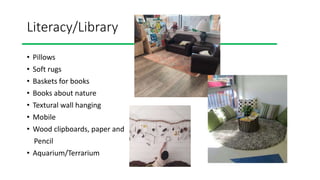
Literacy/Library
• Pillows
• Soft rugs
• Baskets for books
• Books about nature
• Textural wall hanging
• Mobile
• Wood clipboards, paper and
Pencil
• Aquarium/Terrarium
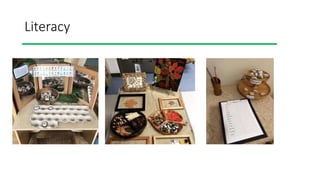
Literacy
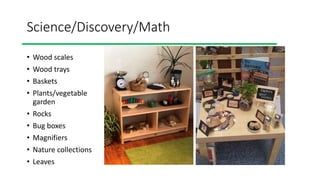
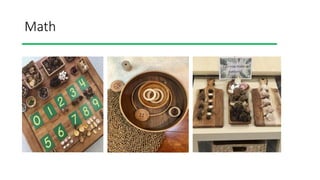
Science/Discovery/Math
• Wood scales
• Wood trays
• Baskets
• Plants/vegetable
garden
• Rocks
• Bug boxes
• Magnifiers
• Nature collections
• Leaves
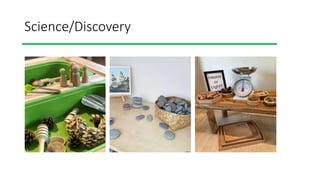
Science/Discovery
Math
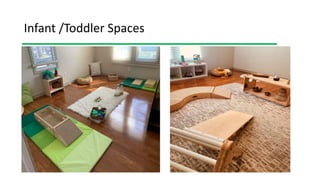
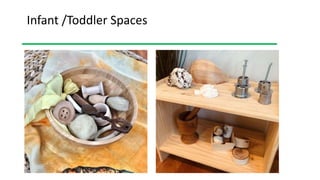
Infant /Toddler Spaces
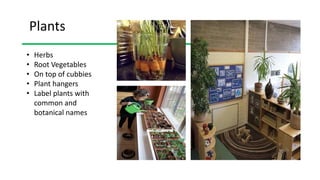
Plants
• Herbs
• Root Vegetables
• On top of cubbies
• Plant hangers
• Label plants with
common and
botanical names
Workshop:
• Describe two of your favorite learning activities that you do routinely.
What materials from nature can you use to do the activities?
• Action Plan:
List three ways you plan to incorporate Nature into your classroom.
Resources:
Websites:
Naturalearning.org
Childrenandnature.org
www.playstudiofw.com
Bringing the Outside In:
Ideas for Creating Nature-Based Classroom Experiences for Young Children
By Sandra Duncan and Jody Martin
Questions?

Bringing Nature in Classroom

  • 1.
    Bringing the Outdoorsin: Integrating Nature into the Early Childhood Classroom Beth Edwards www.greenspacetx.com
  • 2.
    Objectives: • Identify benefitsof Nature play for children • List Benefits of nature in the classroom • Examine ways to integrate nature throughout the EC classroom • Formulate a plan to increase nature in your classroom
  • 3.
    Pair and Share •What are your favorite memories of playing as a young child? • Where were you? • What surrounded you?
  • 4.
    Why is natureimportant when educating young children? Discussion
  • 5.
    Benefits of NaturePlay • Natural elements allow longer periods of sustained focus and concentration • Sensory development in infancy and toddlerhood is critical to behavior regulation and school readiness • Supports physical, cognitive, language and social emotional development- BUILDS BRAINS • Supports inquiry base learning • Nature connects all cultures • Offers a child-centered, intrinsically motivating space to learn • Promotes collaboration • Promotes an appreciation for nature • Affords opportunities to learn about respect and care for the natural environment • Encourages physical activity helping to reduce childhood obesity
  • 6.
    Benefits of NatureRich Classrooms • Natural color pallets create a peaceful and calming environment • Nature and natural material engage all the senses (plastic materials all feel the same, smell the same) • Children are less distracted and overstimulated in nature rich settings, better able to regulate their own behaviors • Promotes the use of the classroom as the third teacher • Children are drawn to nature, natural materials and real tools.
  • 7.
    Best of all…. Naturebased approaches to learning inspire wonder, curiosity and observation.
  • 8.
    Compare these spaces?How does each feel to you?
  • 9.
    Curating a NatureRich Environment • Incorporate natural materials and nature items into all learning/discovery centers • Use plants throughout the classroom in a variety of ways • Build provocations to invite children to explore nature items • Gradually replace plastic materials with natural materials • Look for ways to add a variety of textures rugs, wall art, pillows, wood, nature items.
  • 10.
    Nature in theArt Center • Paint with pine branches • Use nature as inspiration • Post photographs and paintings of nature in the art space • Incorporate flower petals, leaves, sticks, acorns into projects or collage work • Use nature items in playdough provocations • Paint branches, rocks, and pinecones
  • 11.
    Construction Center • Addtree cookies/ tree blocks • Silk scarves/ pieces of fabric • Silk leaves • 2-3 small logs, small stumps • Small basket of river rock • Wood people, trees • Large pinecones
  • 12.
    Dramatic Play • Silkscarves • Textural pillows • Straw bags or hats • Baskets • Metal pans • Real cooking tools • Felt pretend food • Flowers • Fabric Place mats • Small rugs • Herbs/plants
  • 13.
    Literacy/Library • Pillows • Softrugs • Baskets for books • Books about nature • Textural wall hanging • Mobile • Wood clipboards, paper and Pencil • Aquarium/Terrarium
  • 14.
  • 15.
    Science/Discovery/Math • Wood scales •Wood trays • Baskets • Plants/vegetable garden • Rocks • Bug boxes • Magnifiers • Nature collections • Leaves
  • 16.
  • 17.
  • 18.
  • 19.
  • 20.
    Plants • Herbs • RootVegetables • On top of cubbies • Plant hangers • Label plants with common and botanical names
  • 21.
    Workshop: • Describe twoof your favorite learning activities that you do routinely. What materials from nature can you use to do the activities? • Action Plan: List three ways you plan to incorporate Nature into your classroom.
  • 22.
    Resources: Websites: Naturalearning.org Childrenandnature.org www.playstudiofw.com Bringing the OutsideIn: Ideas for Creating Nature-Based Classroom Experiences for Young Children By Sandra Duncan and Jody Martin Questions?