BRICKS, BEADS AND BONES
Harappan Civilization
( also known as Indus Civilization)
2300-1750 BCE or 2600-1900 BCE)
Materials from the subcontinent
and beyond
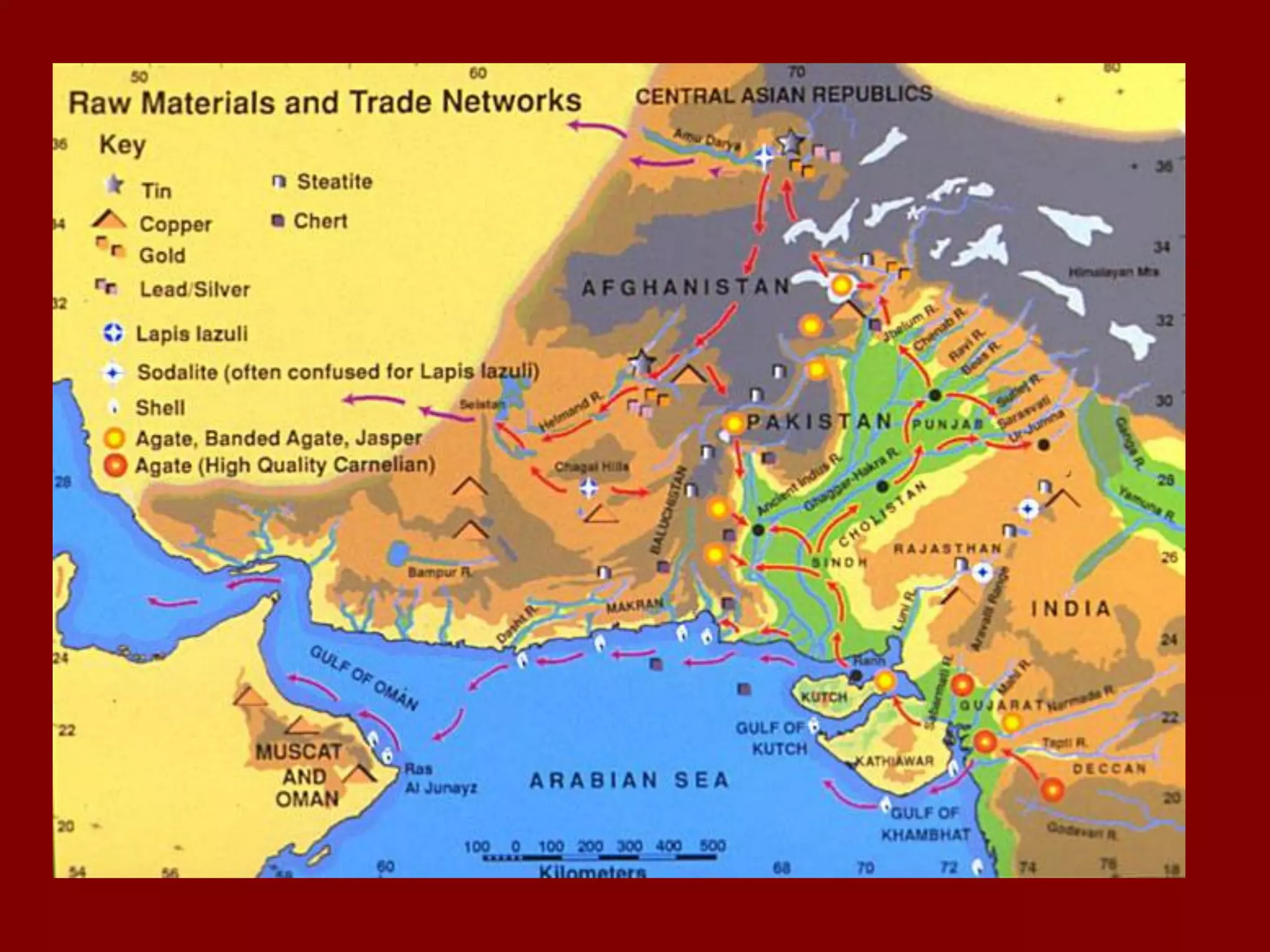
• They established settlements such as Nageshwar
and Balakot in areas where shell was available.
• Other such sites were Shortughai, in far-off
Afghanistan,near the best source of lapis lazuli, a
blue stone that was apparently very highly valued.
• Lothal which was near sources of carnelian (from
Bharuch in Gujarat), steatite (from south Rajasthan
and north Gujarat) and metal (from Rajasthan).
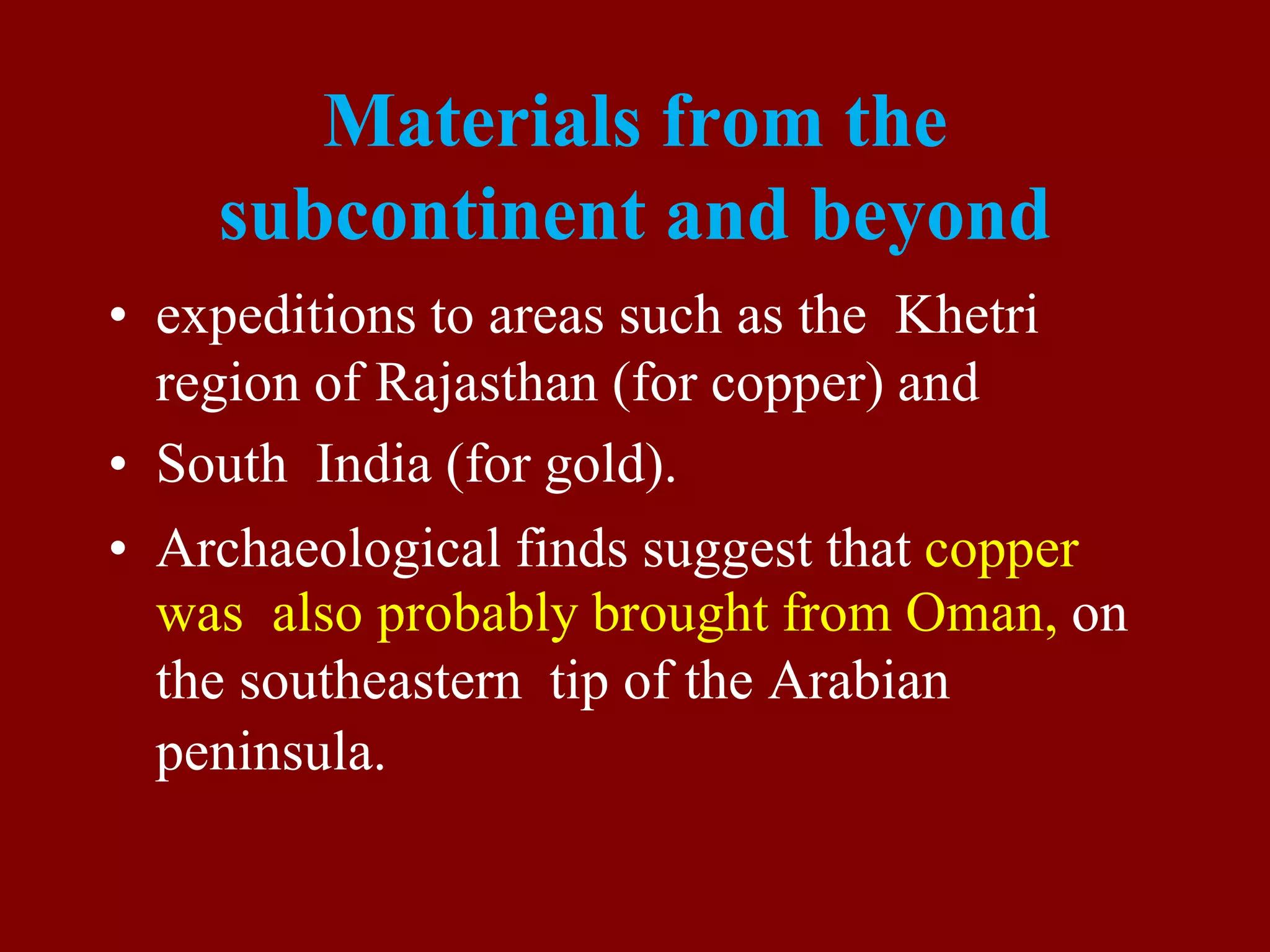
Materials from the
subcontinent and beyond
• expeditions to areas such as the Khetri
region of Rajasthan (for copper) and
• South India (for gold).
• Archaeological finds suggest that copper
was also probably brought from Oman, on
the southeastern tip of the Arabian
peninsula.
Contact with distant lands
• Chemical analyses have shown that both the
Omani copper and Harappan artefacts have
traces of nickel, suggesting a common origin.
• A distinctive type of vessel, a large Harappan
jar coated with a thick layer of black clay has
been found at Omani sites.
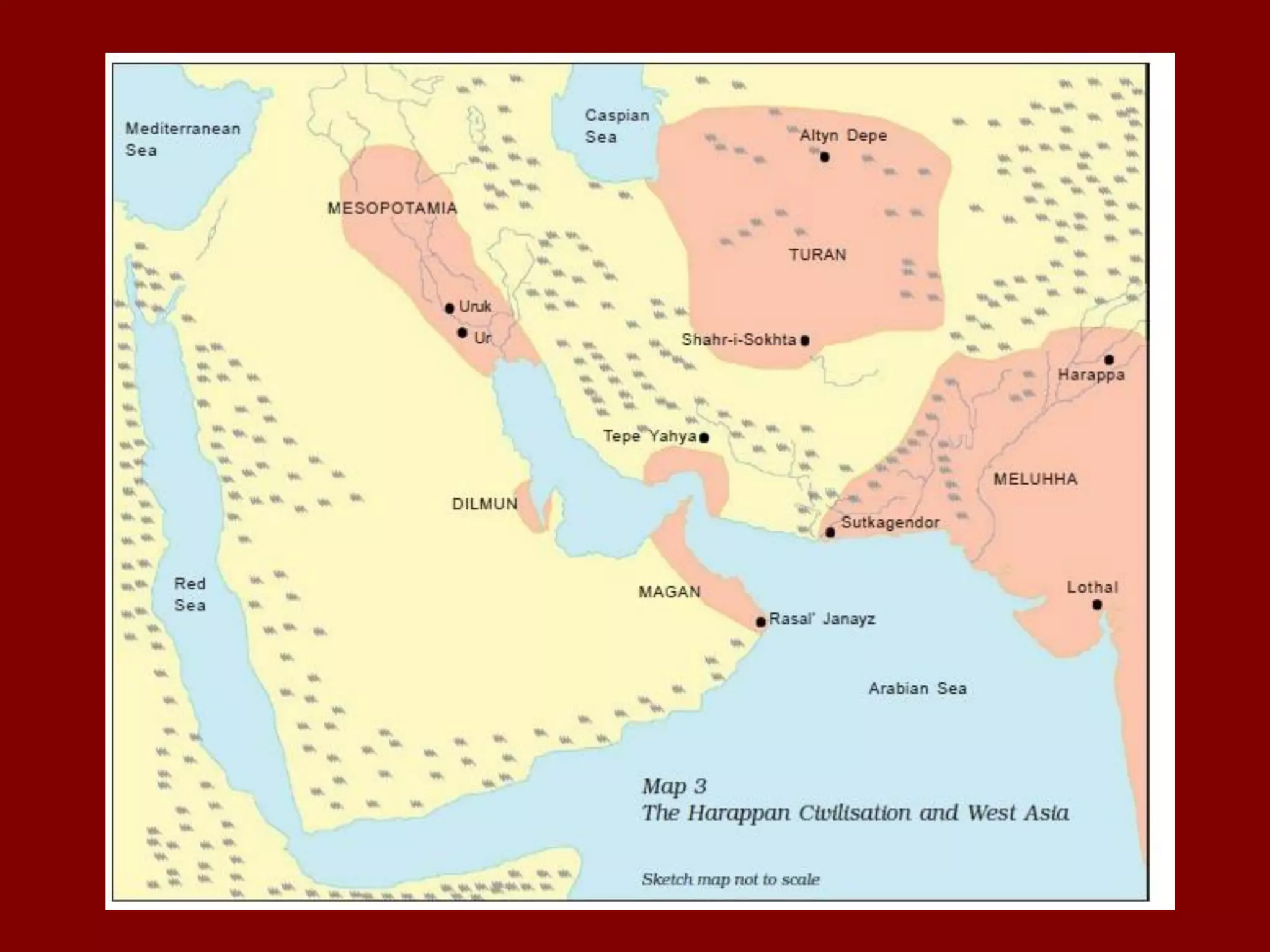
• Mesopotamian texts refer to copper coming
from a region called Magan, perhaps a name for
Oman, and interestingly enough copper found at
Mesopotamian sites also contains traces of
nickel.
Contact with distant lands
• Other archaeological finds suggestive of
long distance contacts include Harappan
seals, weights, dice and beads.
• It is worth noting that Mesopotamian texts
mention contact with regions named
Dilmun (probably the island of Bahrain),
Magan and Meluhha, possibly the
Harappan region.
Assignments
• List the materials used to make beads in the
Harappan civilisation. Describe the process
by which any one kind of bead was made.
• List the raw materials required for craft
production in the Harappan civilisation and
discuss how these might have been
obtained.

Bricks Beads and Bones- 3.pdf

  • 1.
    BRICKS, BEADS ANDBONES Harappan Civilization ( also known as Indus Civilization) 2300-1750 BCE or 2600-1900 BCE)
  • 3.
    Materials from thesubcontinent and beyond • They established settlements such as Nageshwar and Balakot in areas where shell was available. • Other such sites were Shortughai, in far-off Afghanistan,near the best source of lapis lazuli, a blue stone that was apparently very highly valued. • Lothal which was near sources of carnelian (from Bharuch in Gujarat), steatite (from south Rajasthan and north Gujarat) and metal (from Rajasthan).
  • 4.
    Materials from the subcontinentand beyond • expeditions to areas such as the Khetri region of Rajasthan (for copper) and • South India (for gold). • Archaeological finds suggest that copper was also probably brought from Oman, on the southeastern tip of the Arabian peninsula.
  • 7.
    Contact with distantlands • Chemical analyses have shown that both the Omani copper and Harappan artefacts have traces of nickel, suggesting a common origin. • A distinctive type of vessel, a large Harappan jar coated with a thick layer of black clay has been found at Omani sites. • Mesopotamian texts refer to copper coming from a region called Magan, perhaps a name for Oman, and interestingly enough copper found at Mesopotamian sites also contains traces of nickel.
  • 9.
    Contact with distantlands • Other archaeological finds suggestive of long distance contacts include Harappan seals, weights, dice and beads. • It is worth noting that Mesopotamian texts mention contact with regions named Dilmun (probably the island of Bahrain), Magan and Meluhha, possibly the Harappan region.
  • 11.
    Assignments • List thematerials used to make beads in the Harappan civilisation. Describe the process by which any one kind of bead was made. • List the raw materials required for craft production in the Harappan civilisation and discuss how these might have been obtained.