PRESENTED BY – GAURI NANDA
CLASS – XII (HUMANITIES)
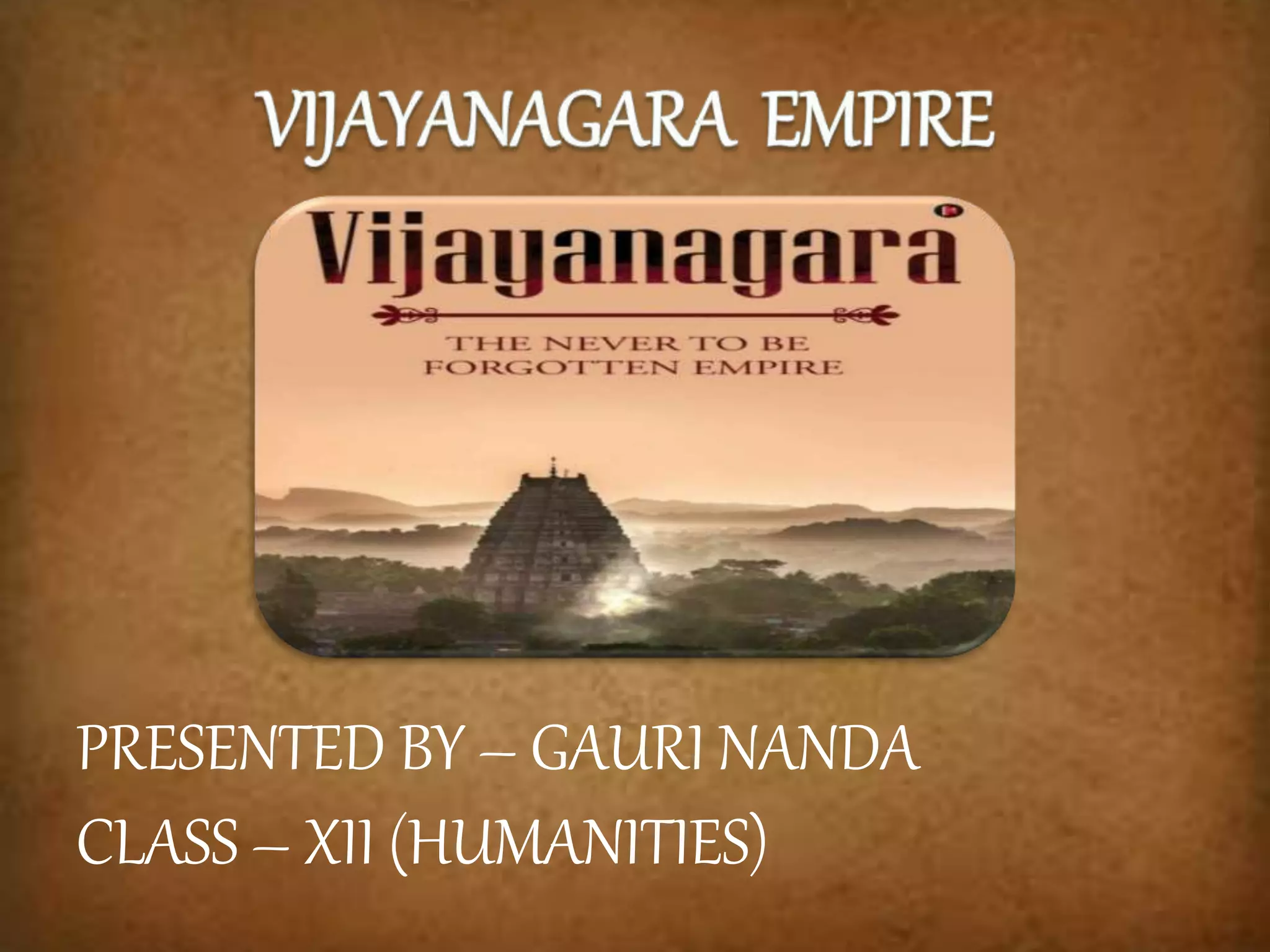
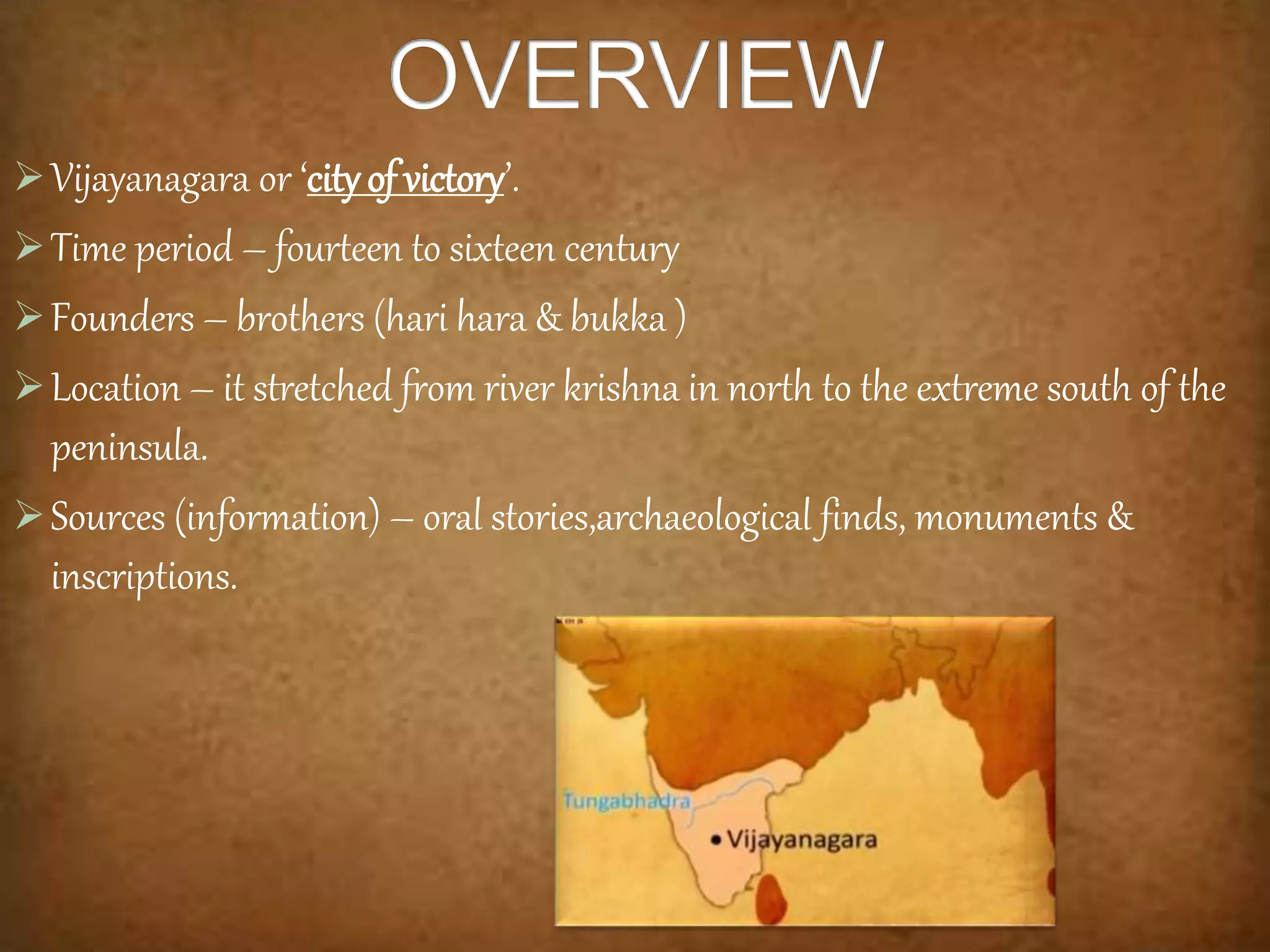
Vijayanagara or ‘city of victory’.
Time period – fourteen to sixteen century
Founders – brothers (hari hara & bukka )
Location – it stretched from river krishna in north to the extreme south of the
peninsula.
Sources (information) – oral stories,archaeological finds, monuments &
inscriptions.
the empire’s legacy includes many monuments spread over south india,the best
known of which is the group at hampi.
Archaeological excavations at city of victory have revealed the empire’s power &
wealth.
This empire created a period in the history of southernindia that surpassed
regionalism by promoting hinduism as a unifying factor.
Colonel Colin Mackenzie was an Engineer &antiquarian.
 In 1800, he excavated the ruins at hampi.
 Mackenzie only prepared the first survey map of this site
 The history of the city was reconstructed through information of the priest of the virupaksha
temple , foreign travellers & literature written in saskrit, tamil & telugu.
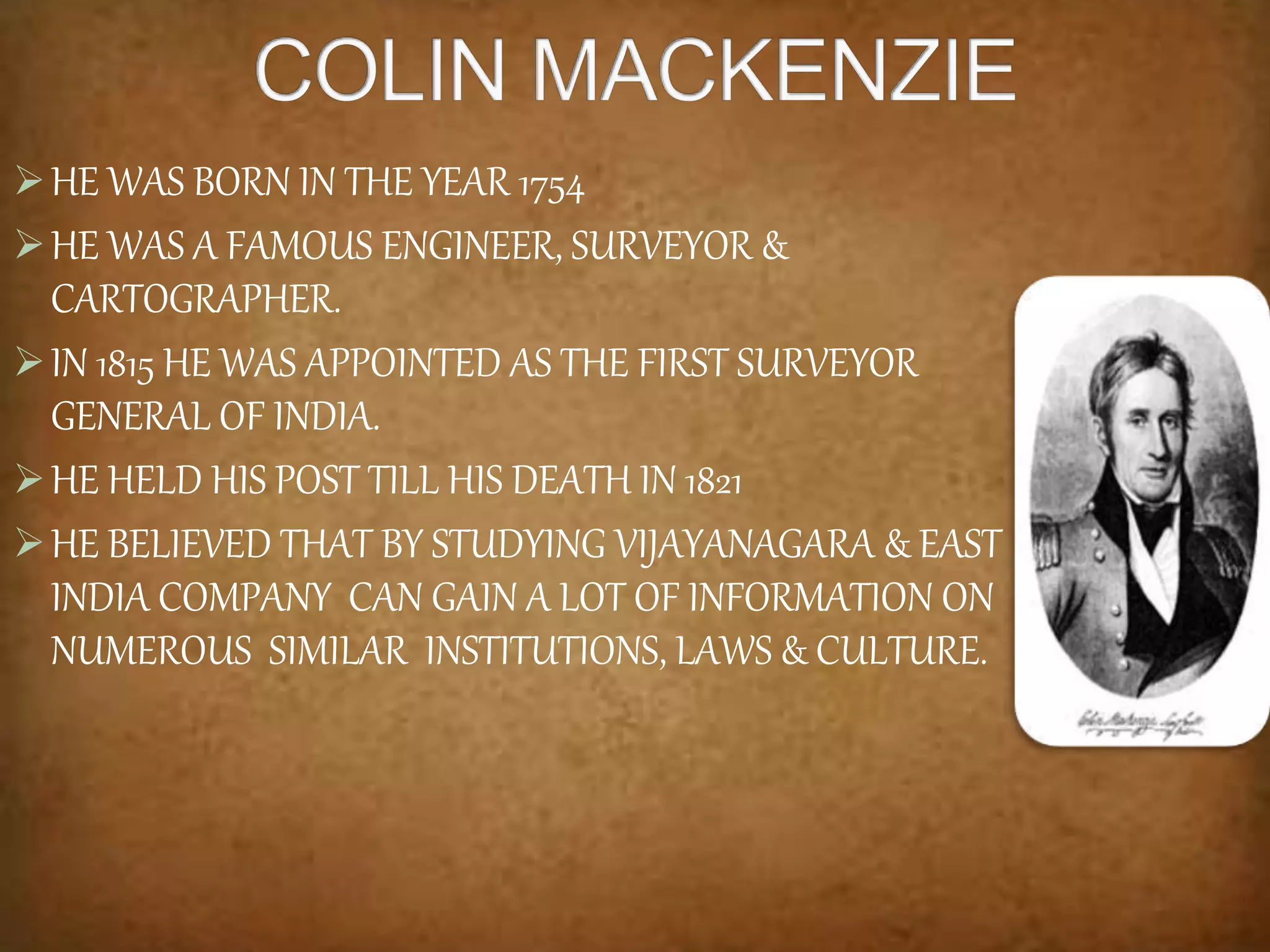
HE WAS BORN IN THE YEAR 1754
HE WAS A FAMOUS ENGINEER, SURVEYOR &
CARTOGRAPHER.
IN 1815 HE WAS APPOINTED AS THE FIRST SURVEYOR
GENERAL OF INDIA.
HE HELD HIS POST TILL HIS DEATH IN 1821
HE BELIEVED THAT BY STUDYING VIJAYANAGARA & EAST
INDIA COMPANY CAN GAIN A LOT OF INFORMATION ON
NUMEROUS SIMILAR INSTITUTIONS, LAWS & CULTURE.
Through the epigraphic evidences it seen that two brothers , harihara & bukka ,
founded the vijayanagara empire in 1336.
People of this empire spoke different languages & followed various religious
traditions .
On the northern border the empire kings fought with sultans of deccan &
gajapati rulers of orissa.
THE EMPIRE HAD A WELL ORGANISED ADMINISTRATIVE SYSTEM.
THE KING WAS HEAD OF ALL STATES IN EMPIRE.
THERE WAS COUNCIL OF MINISTERS – TO ASSIST THE KING IN
ADMINISTRATION WORK.
THE EMPIRE WAS DIVIDED INTO SIX PROVINCES.
 Naik - a governor who administered each province.
 The provinces were divided into districts.
 The districts were further divided into smaller units namely villages.
 The village was looked after by hereditary officers like –
 Accountants
 Watchmen
 The weightsmen
 Officers in charge of forced labour
 Mahanayakacharya – he is an officer & contact point between the villagers & central
administration.
THE ARMY CONSISTED OF –
INFANTRY
CAVALRY
ELEPHANTRY
THE COMMANDER IN CHIEF WAS IN CHARGE OF THE ARMY.
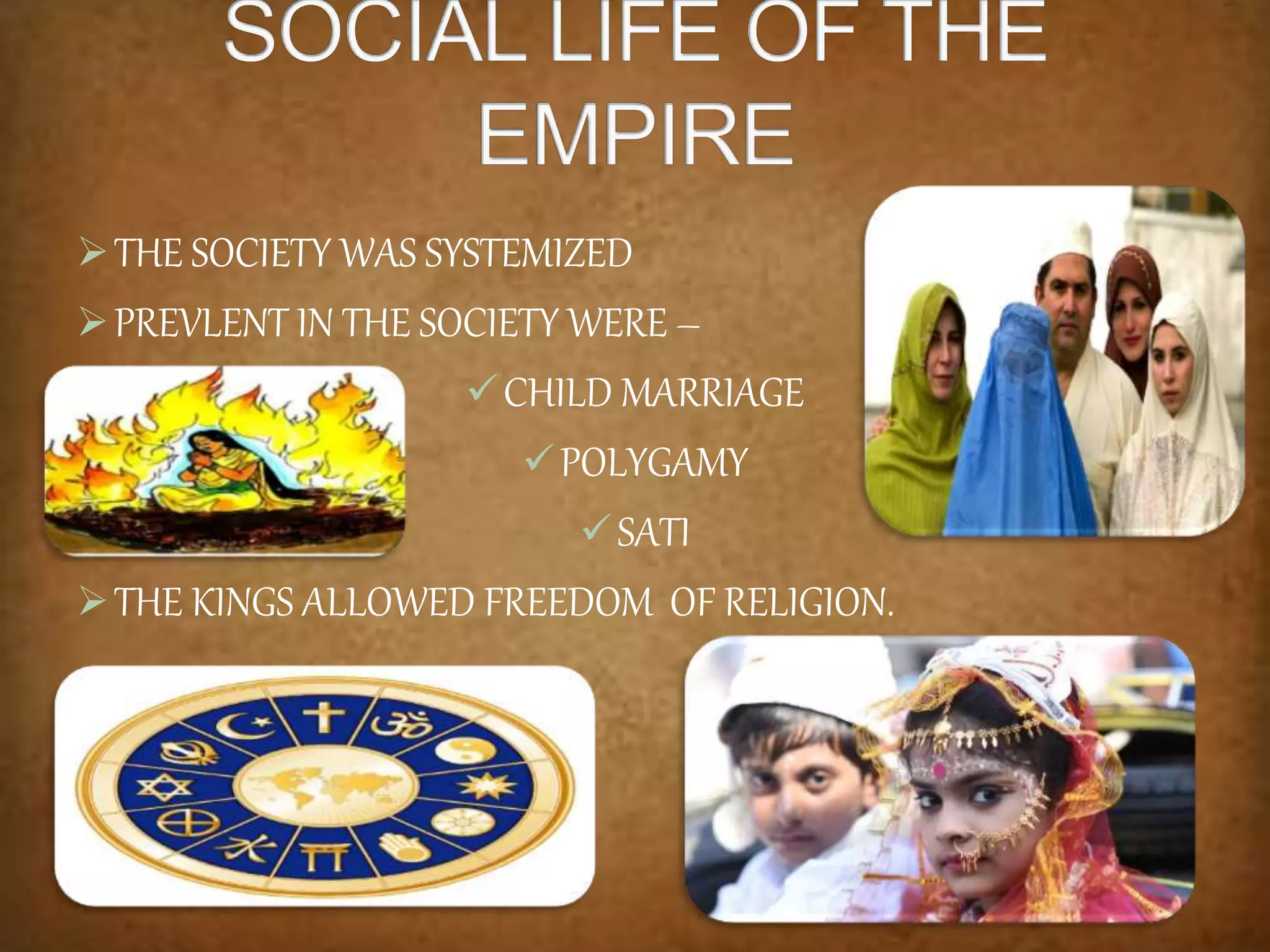
THE SOCIETY WAS SYSTEMIZED
PREVLENT IN THE SOCIETY WERE –
CHILD MARRIAGE
POLYGAMY
SATI
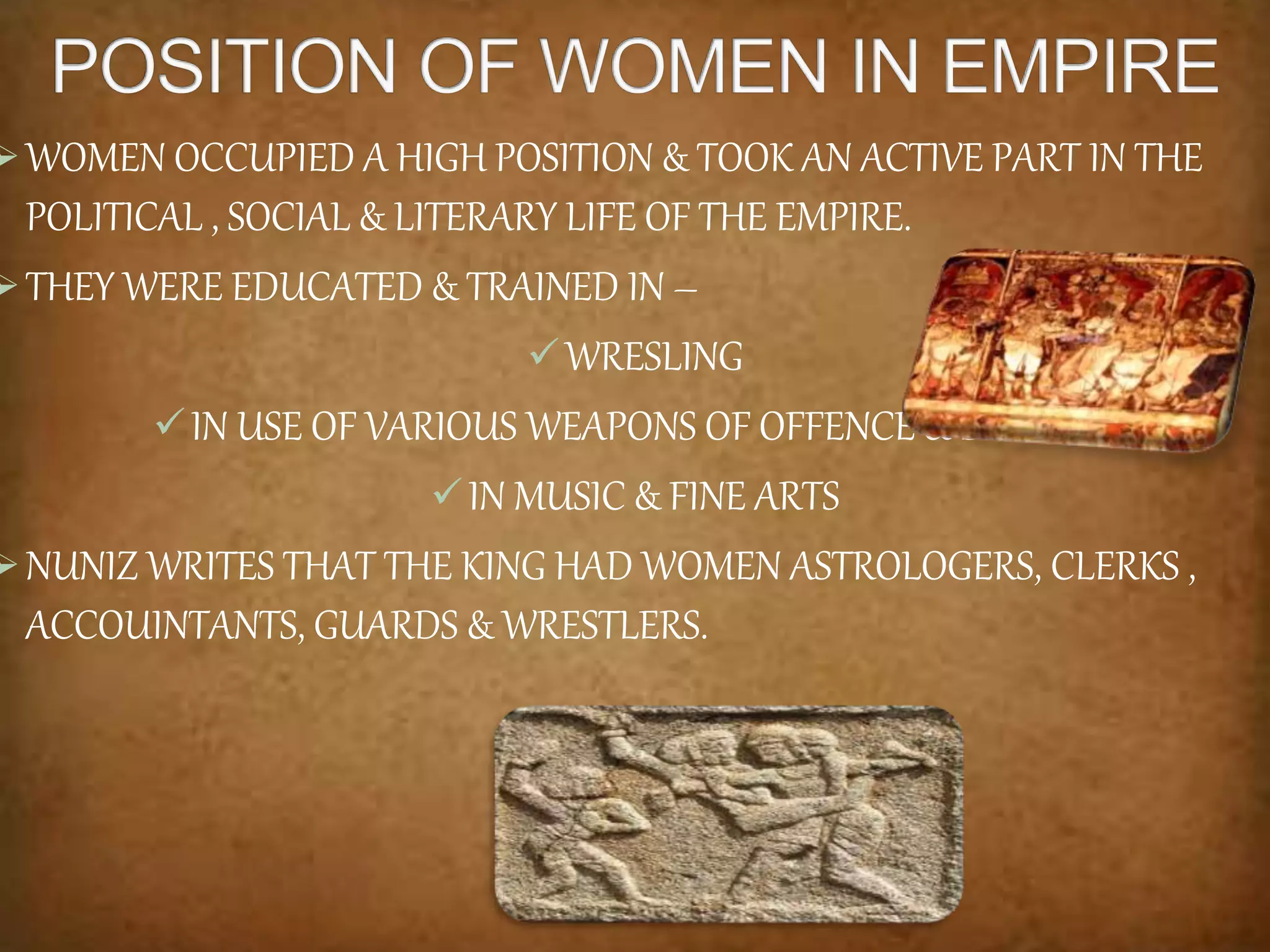
THE KINGS ALLOWED FREEDOM OF RELIGION.
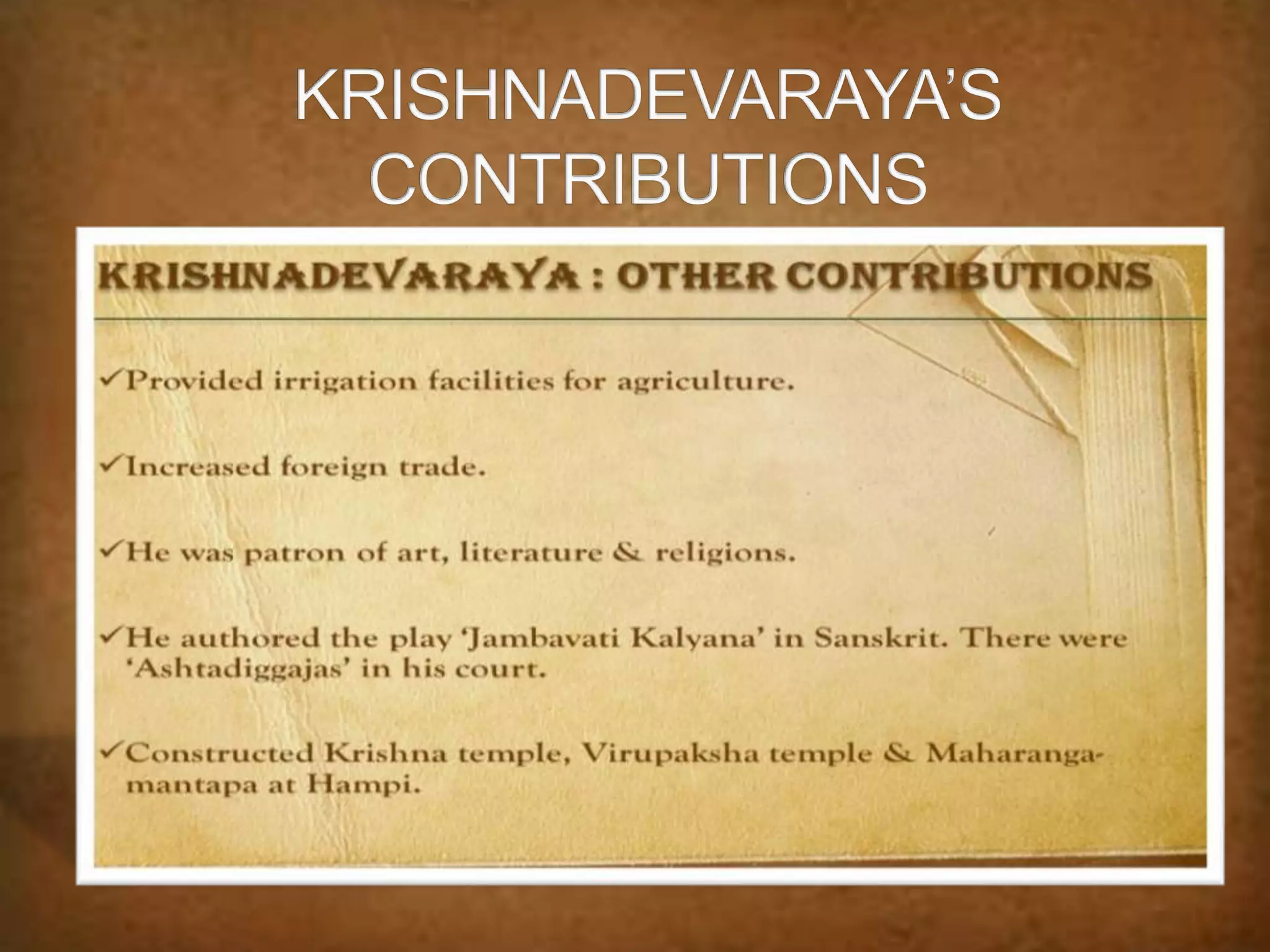
WOMEN OCCUPIED A HIGH POSITION & TOOK AN ACTIVE PART IN THE
POLITICAL , SOCIAL & LITERARY LIFE OF THE EMPIRE.
THEY WERE EDUCATED & TRAINED IN –
WRESLING
IN USE OF VARIOUS WEAPONS OF OFFENCE & DEFENCE
IN MUSIC & FINE ARTS
NUNIZ WRITES THAT THE KING HAD WOMEN ASTROLOGERS, CLERKS ,
ACCOUINTANTS, GUARDS & WRESTLERS.
HE WAS OF THE TULUVA DYNASTY WAS THE MOST FAMOUS
KING OF THE VIJAYANAGARA EMPIRE.
ACCORDING TO DOMINGO PAES, A PORTUGUESE TRAVELLER
- “KRISHNADEVA RAYA WAS THE MOST FEARED & PERFECT
KING THERE COULD POSSIBLY BE “.
HE CONQUERED SIVASAMUDRAM IN 1510 AD & RAICHUR IN 1512 AD
IN 1523 AD HE CAPTURED ORISSA & WARANGAL
HIS EMPIRE EXTENTED FROM RIVER KRISHNA IN THE NORTH TO RIVER
CAUVERY IN THE SOUTH , THE ARABIAN SEA IN WEST & BAY OF BENGAL
IN EAST.
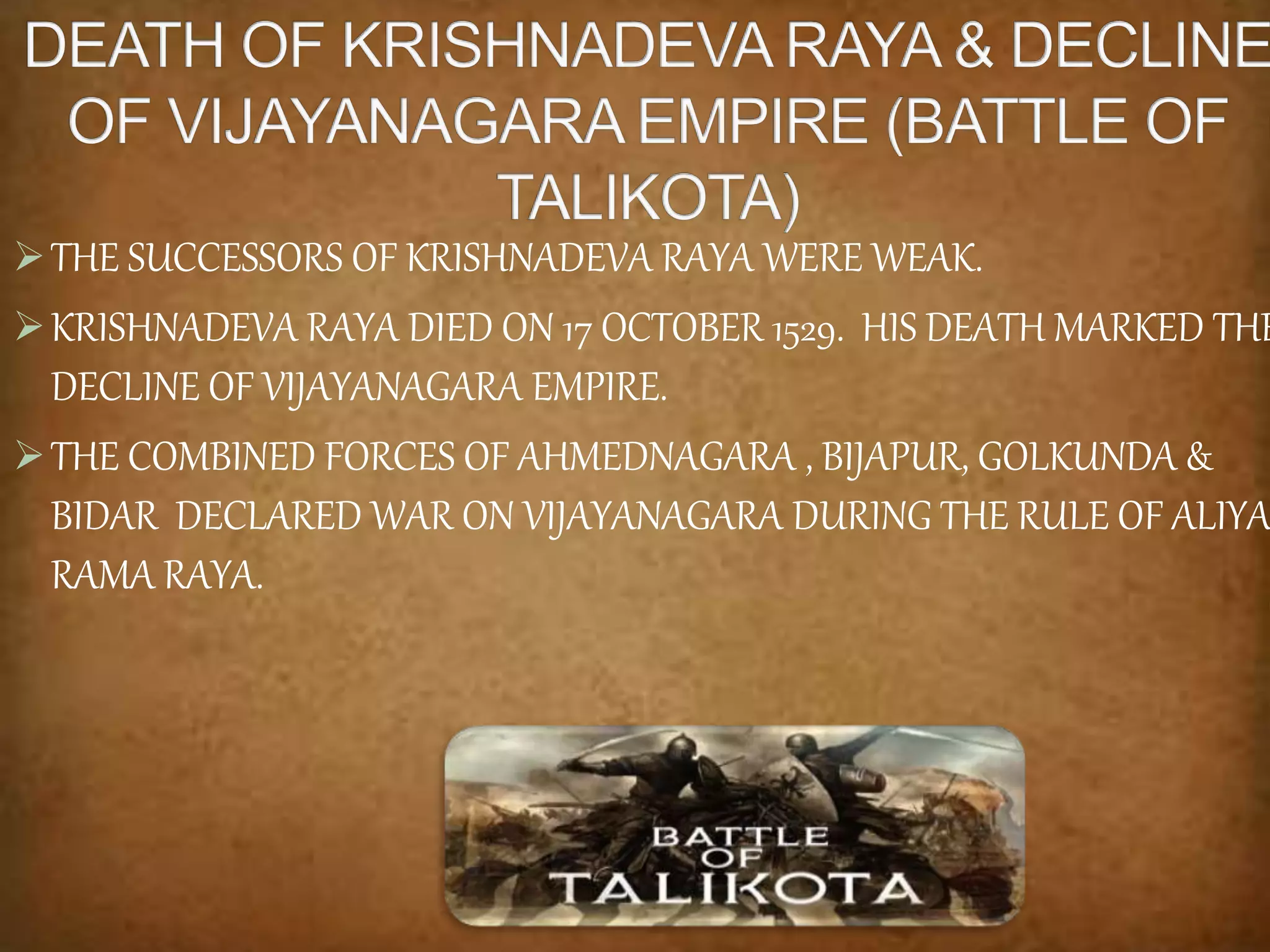
THE SUCCESSORS OF KRISHNADEVA RAYA WERE WEAK.
KRISHNADEVA RAYA DIED ON 17 OCTOBER 1529. HIS DEATH MARKED THE
DECLINE OF VIJAYANAGARA EMPIRE.
THE COMBINED FORCES OF AHMEDNAGARA , BIJAPUR, GOLKUNDA &
BIDAR DECLARED WAR ON VIJAYANAGARA DURING THE RULE OF ALIYA
RAMA RAYA.
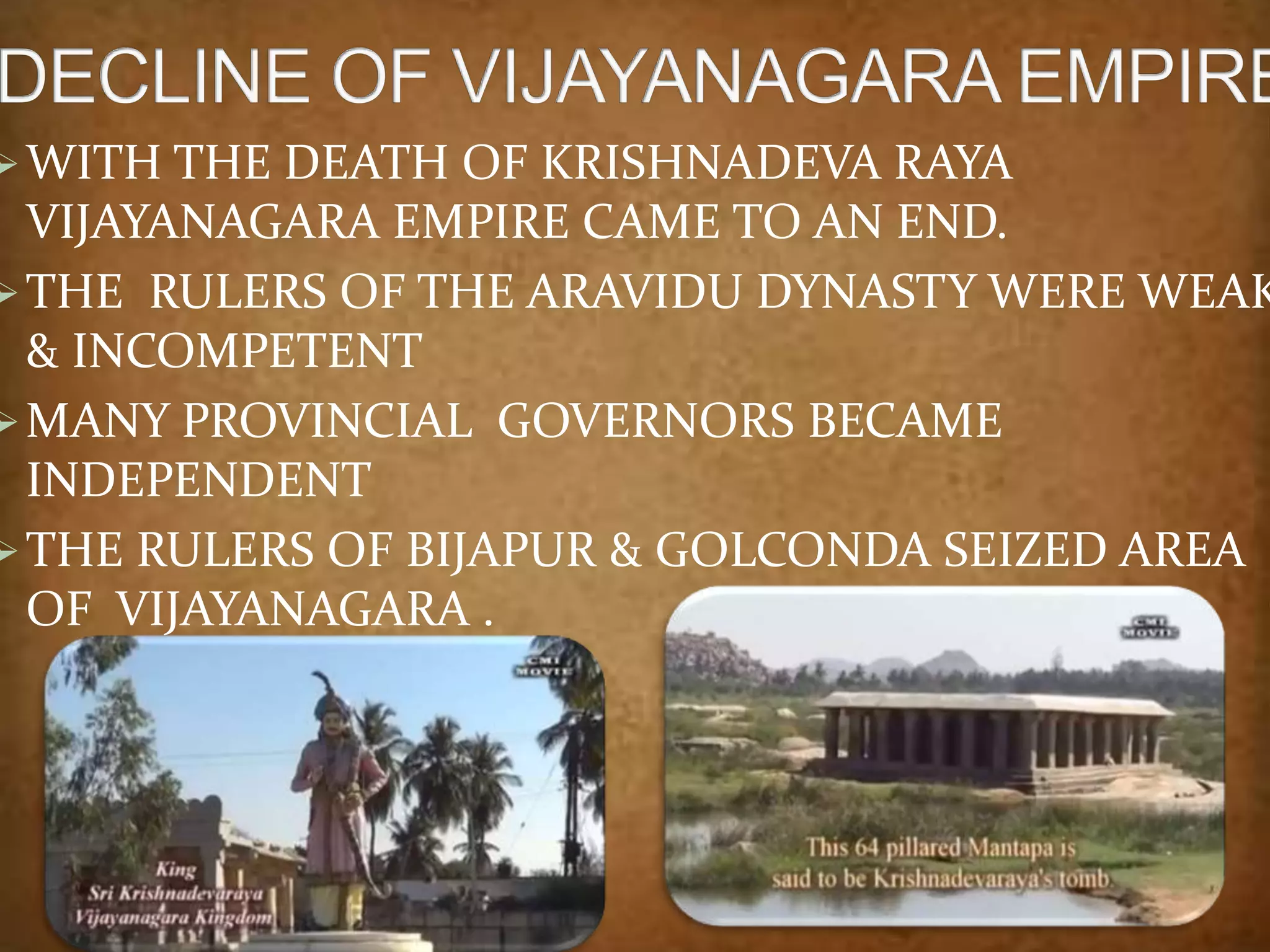
WITH THE DEATH OF KRISHNADEVA RAYA
VIJAYANAGARA EMPIRE CAME TO AN END.
THE RULERS OF THE ARAVIDU DYNASTY WERE WEAK
& INCOMPETENT
MANY PROVINCIAL GOVERNORS BECAME
INDEPENDENT
THE RULERS OF BIJAPUR & GOLCONDA SEIZED AREA
OF VIJAYANAGARA .
VIJAYANAGARA  EMPIRE PPT BY GAURI NANDA CLASS XII.pptx

VIJAYANAGARA EMPIRE PPT BY GAURI NANDA CLASS XII.pptx

  • 1.
    PRESENTED BY –GAURI NANDA CLASS – XII (HUMANITIES)
  • 2.
    Vijayanagara or ‘cityof victory’. Time period – fourteen to sixteen century Founders – brothers (hari hara & bukka ) Location – it stretched from river krishna in north to the extreme south of the peninsula. Sources (information) – oral stories,archaeological finds, monuments & inscriptions.
  • 3.
    the empire’s legacyincludes many monuments spread over south india,the best known of which is the group at hampi. Archaeological excavations at city of victory have revealed the empire’s power & wealth. This empire created a period in the history of southernindia that surpassed regionalism by promoting hinduism as a unifying factor.
  • 4.
    Colonel Colin Mackenziewas an Engineer &antiquarian.  In 1800, he excavated the ruins at hampi.  Mackenzie only prepared the first survey map of this site  The history of the city was reconstructed through information of the priest of the virupaksha temple , foreign travellers & literature written in saskrit, tamil & telugu.
  • 5.
    HE WAS BORNIN THE YEAR 1754 HE WAS A FAMOUS ENGINEER, SURVEYOR & CARTOGRAPHER. IN 1815 HE WAS APPOINTED AS THE FIRST SURVEYOR GENERAL OF INDIA. HE HELD HIS POST TILL HIS DEATH IN 1821 HE BELIEVED THAT BY STUDYING VIJAYANAGARA & EAST INDIA COMPANY CAN GAIN A LOT OF INFORMATION ON NUMEROUS SIMILAR INSTITUTIONS, LAWS & CULTURE.
  • 6.
    Through the epigraphicevidences it seen that two brothers , harihara & bukka , founded the vijayanagara empire in 1336. People of this empire spoke different languages & followed various religious traditions . On the northern border the empire kings fought with sultans of deccan & gajapati rulers of orissa.
  • 8.
    THE EMPIRE HADA WELL ORGANISED ADMINISTRATIVE SYSTEM. THE KING WAS HEAD OF ALL STATES IN EMPIRE. THERE WAS COUNCIL OF MINISTERS – TO ASSIST THE KING IN ADMINISTRATION WORK. THE EMPIRE WAS DIVIDED INTO SIX PROVINCES.
  • 9.
     Naik -a governor who administered each province.  The provinces were divided into districts.  The districts were further divided into smaller units namely villages.  The village was looked after by hereditary officers like –  Accountants  Watchmen  The weightsmen  Officers in charge of forced labour  Mahanayakacharya – he is an officer & contact point between the villagers & central administration.
  • 12.
    THE ARMY CONSISTEDOF – INFANTRY CAVALRY ELEPHANTRY THE COMMANDER IN CHIEF WAS IN CHARGE OF THE ARMY.
  • 14.
    THE SOCIETY WASSYSTEMIZED PREVLENT IN THE SOCIETY WERE – CHILD MARRIAGE POLYGAMY SATI THE KINGS ALLOWED FREEDOM OF RELIGION.
  • 15.
    WOMEN OCCUPIED AHIGH POSITION & TOOK AN ACTIVE PART IN THE POLITICAL , SOCIAL & LITERARY LIFE OF THE EMPIRE. THEY WERE EDUCATED & TRAINED IN – WRESLING IN USE OF VARIOUS WEAPONS OF OFFENCE & DEFENCE IN MUSIC & FINE ARTS NUNIZ WRITES THAT THE KING HAD WOMEN ASTROLOGERS, CLERKS , ACCOUINTANTS, GUARDS & WRESTLERS.
  • 16.
    HE WAS OFTHE TULUVA DYNASTY WAS THE MOST FAMOUS KING OF THE VIJAYANAGARA EMPIRE. ACCORDING TO DOMINGO PAES, A PORTUGUESE TRAVELLER - “KRISHNADEVA RAYA WAS THE MOST FEARED & PERFECT KING THERE COULD POSSIBLY BE “.
  • 17.
    HE CONQUERED SIVASAMUDRAMIN 1510 AD & RAICHUR IN 1512 AD IN 1523 AD HE CAPTURED ORISSA & WARANGAL HIS EMPIRE EXTENTED FROM RIVER KRISHNA IN THE NORTH TO RIVER CAUVERY IN THE SOUTH , THE ARABIAN SEA IN WEST & BAY OF BENGAL IN EAST.
  • 21.
    THE SUCCESSORS OFKRISHNADEVA RAYA WERE WEAK. KRISHNADEVA RAYA DIED ON 17 OCTOBER 1529. HIS DEATH MARKED THE DECLINE OF VIJAYANAGARA EMPIRE. THE COMBINED FORCES OF AHMEDNAGARA , BIJAPUR, GOLKUNDA & BIDAR DECLARED WAR ON VIJAYANAGARA DURING THE RULE OF ALIYA RAMA RAYA.
  • 22.
    WITH THE DEATHOF KRISHNADEVA RAYA VIJAYANAGARA EMPIRE CAME TO AN END. THE RULERS OF THE ARAVIDU DYNASTY WERE WEAK & INCOMPETENT MANY PROVINCIAL GOVERNORS BECAME INDEPENDENT THE RULERS OF BIJAPUR & GOLCONDA SEIZED AREA OF VIJAYANAGARA .