Global Standard British Retail
         Consortium (BRC)

                  Tuesday, 4th October 2011
                              By,
      Gabriel MAROT, Naim KHALID, Pragash RAMADOSS


1
Contents
    1.   History
    2.   Objectives; reasons for setting up
    3.   Fundamental requirements
    4.   Focus on five requirements
    5.   Audit practice
            1.   certification
            2.   Grading
            3.   Report
            4.   Enrolement


2
1. History of BRC
    Created in 1998 by several British retailers
    So as to strengthen food safety in companies producing
     private labels
    The key element for this creation is the English crisis: BSE:
     loss of confidence in the law
    This standard is compulsory for companies who produce
     English private labels products


3
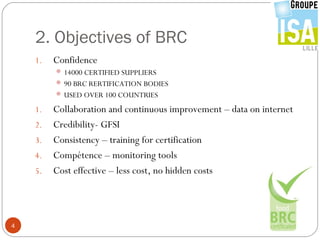
2. Objectives of BRC
    1.   Confidence
          14000 CERTIFIED SUPPLIERS
          90 BRC RERTIFICATION BODIES
          USED OVER 100 COUNTRIES

    1.   Collaboration and continuous improvement – data on internet
    2.   Credibility- GFSI
    3.   Consistency – training for certification
    4.   Compétence – monitoring tools
    5.   Cost effective – less cost, no hidden costs


4
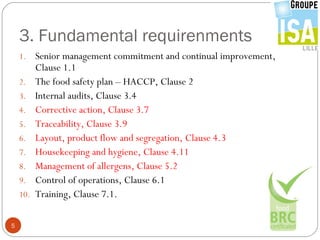
3. Fundamental requirenments
    1.    Senior management commitment and continual improvement,
          Clause 1.1
    2.    The food safety plan – HACCP, Clause 2
    3.    Internal audits, Clause 3.4
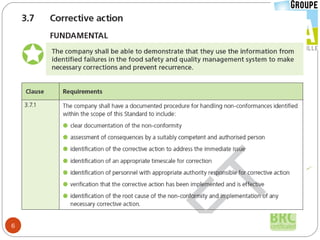
    4.    Corrective action, Clause 3.7
    5.    Traceability, Clause 3.9
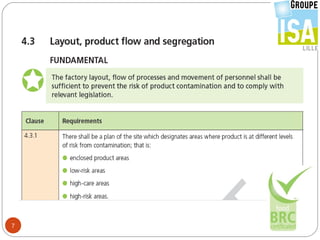
    6.    Layout, product flow and segregation, Clause 4.3
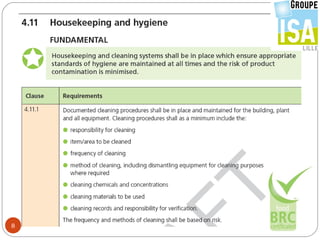
    7.    Housekeeping and hygiene, Clause 4.11
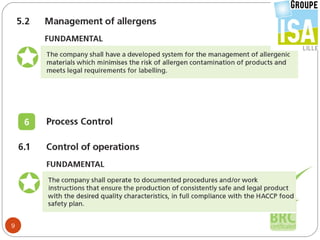
    8.    Management of allergens, Clause 5.2
    9.    Control of operations, Clause 6.1
    10.   Training, Clause 7.1.

5
6
7
8
9
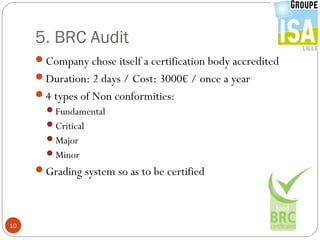
5. BRC Audit
     Company chose itself a certification body accredited
     Duration: 2 days / Cost: 3000€ / once a year
     4 types of Non conformities:
       Fundamental
       Critical
       Major
       Minor
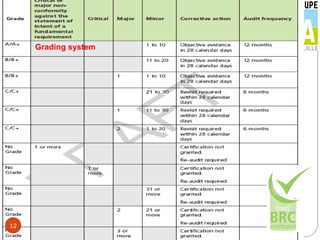
     Grading system so as to be certified


10
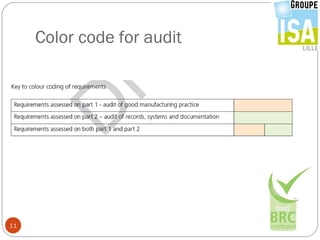
Color code for audit


11
Grading system


12
Audit report
      It is written – any lanugaue
      The audit report must assist the reader to be informed of:
     1. the food safety controls in place and improvements since the last audit
     2. ‘best practice’ systems, procedures, equipment or fabrication in place
     3. non-conformities, the corrective action taken and plans to correct the root
        cause

      Reports shall be prepared and dispatched to the company within 42
      Later on uploading on internet BRC website
      Audit report shall be kept for five years by the Certification Body.


13
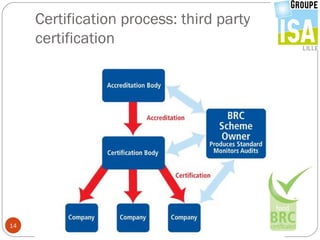
Certification process: third party
     certification


14
Enrolment
     BRC directory
     Certification board
     Certified (yes or no)
     If no- continual development and encouragement


15
16

Brc presentation

  • 1.
    Global Standard BritishRetail Consortium (BRC) Tuesday, 4th October 2011 By, Gabriel MAROT, Naim KHALID, Pragash RAMADOSS 1
  • 2.
    Contents 1. History 2. Objectives; reasons for setting up 3. Fundamental requirements 4. Focus on five requirements 5. Audit practice 1. certification 2. Grading 3. Report 4. Enrolement 2
  • 3.
    1. History ofBRC Created in 1998 by several British retailers So as to strengthen food safety in companies producing private labels The key element for this creation is the English crisis: BSE: loss of confidence in the law This standard is compulsory for companies who produce English private labels products 3
  • 4.
    2. Objectives ofBRC 1. Confidence  14000 CERTIFIED SUPPLIERS  90 BRC RERTIFICATION BODIES  USED OVER 100 COUNTRIES 1. Collaboration and continuous improvement – data on internet 2. Credibility- GFSI 3. Consistency – training for certification 4. Compétence – monitoring tools 5. Cost effective – less cost, no hidden costs 4
  • 5.
    3. Fundamental requirenments 1. Senior management commitment and continual improvement, Clause 1.1 2. The food safety plan – HACCP, Clause 2 3. Internal audits, Clause 3.4 4. Corrective action, Clause 3.7 5. Traceability, Clause 3.9 6. Layout, product flow and segregation, Clause 4.3 7. Housekeeping and hygiene, Clause 4.11 8. Management of allergens, Clause 5.2 9. Control of operations, Clause 6.1 10. Training, Clause 7.1. 5
  • 6.
  • 7.
  • 8.
  • 9.
  • 10.
    5. BRC Audit Company chose itself a certification body accredited Duration: 2 days / Cost: 3000€ / once a year 4 types of Non conformities: Fundamental Critical Major Minor Grading system so as to be certified 10
  • 11.
  • 12.
  • 13.
    Audit report  It is written – any lanugaue  The audit report must assist the reader to be informed of: 1. the food safety controls in place and improvements since the last audit 2. ‘best practice’ systems, procedures, equipment or fabrication in place 3. non-conformities, the corrective action taken and plans to correct the root cause  Reports shall be prepared and dispatched to the company within 42  Later on uploading on internet BRC website  Audit report shall be kept for five years by the Certification Body. 13
  • 14.
    Certification process: thirdparty certification 14
  • 15.
    Enrolment BRC directory Certification board Certified (yes or no) If no- continual development and encouragement 15
  • 16.