What is your brand?
Every company has a brand whether
   they created it through design
           or by accident.

   Your brand is everything you
        offer, say, and do.
Effective brands
          evoke strong emotions.


(Customer’s buy from emotion and back it up with their head.)
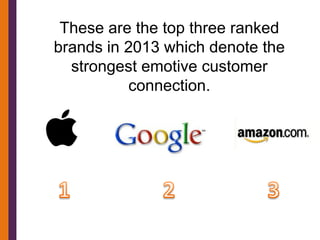
These are the top three ranked
brands in 2013 which denote the
  strongest emotive customer
          connection.
QUESTION


Why is Apple the #1 rated brand?
ANSWER


  Apple has created a
  community based on
imagination, design, and
      innovation.
*Apple is like having a good friend. That's what's
interesting about this brand. Somewhere they have created this really
humanistic, beyond-business relationship with users and created a
cult-like relationship with their brand. It's a big tribe, everyone is one of
them. You're part of the brand.

Branding has become as powerful as religion. People's connections
with brands transcend commerce. Nike sparked customers' ire when it
was revealed the company's products were assembled in sweatshops.
Customers were not pissed about the products. It's about the
company's ethics. It's interesting how emotionally involved people are.


*Commentary from Marketer Marc Gobe, author of Emotional Branding
Emotional brands have
        three commonalities:

The company projects a humanistic corporate
culture and a strong corporate ethic, characterized
by volunteerism, support of good causes or
involvement in the community.
Nike blundered here. Apple, on the other hand, comes across as
profoundly humanist. Its founding ethos was power to the people
through technology, and it remains committed to computers in
education. It's always about people.
Emotional brands have
       three commonalities:

The company has a unique visual and verbal
vocabulary, expressed in product design and
advertising.

 This is true of Apple. Its products and advertising are clearly
recognizable. (So is Target's, or even Wal-Mart's).
Emotional brands have
    three commonalities:

The company has established a "heartfelt connection" with
its customers. This can take several forms, from building
trust to establishing a community around a product.

 In Apple's case, its products are designed around people: Take
the iPod, it brings an emotional, sensory experience to computing.
Apple's design is people-driven.
Identifying Your
  Brand Level
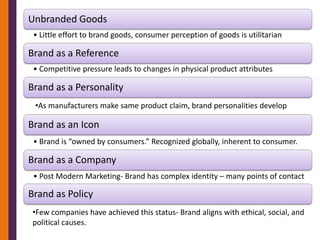
Unbranded Goods
 • Little effort to brand goods, consumer perception of goods is utilitarian

Brand as a Reference
 • Competitive pressure leads to changes in physical product attributes

Brand as a Personality
 •As manufacturers make same product claim, brand personalities develop

Brand as an Icon
 • Brand is “owned by consumers.” Recognized globally, inherent to consumer.

Brand as a Company
 • Post Modern Marketing- Brand has complex identity – many points of contact

Brand as Policy
 •Few companies have achieved this status- Brand aligns with ethical, social, and
 political causes.
Your Brand
Components
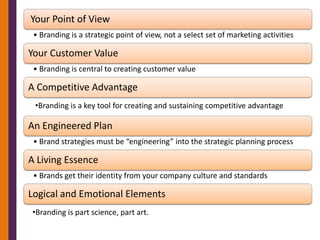
Your Point of View
 • Branding is a strategic point of view, not a select set of marketing activities

Your Customer Value
 • Branding is central to creating customer value

A Competitive Advantage
 •Branding is a key tool for creating and sustaining competitive advantage

An Engineered Plan
 • Brand strategies must be “engineering” into the strategic planning process

A Living Essence
 • Brands get their identity from your company culture and standards

Logical and Emotional Elements
•Branding is part science, part art.
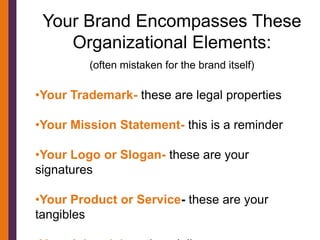
Your Brand Encompasses These
    Organizational Elements:
         (often mistaken for the brand itself)

•Your Trademark- these are legal properties

•Your Mission Statement- this is a reminder

•Your Logo or Slogan- these are your
signatures

•Your Product or Service- these are your
tangibles
How to Design a
Successful Brand
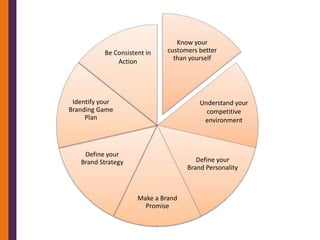
Know your
           Be Consistent in    customers better
               Action            than yourself


 Identify your                           Understand your
Branding Game                              competitive
     Plan                                 environment


    Define your
   Brand Strategy                       Define your
                                     Brand Personality


                      Make a Brand
                        Promise
Know Your Customers Better Than You
Know Yourself
Customers buy for their reasons, not yours. If you want to sell
them your product, you must sell to their concerns, not your own.
Every piece of marketing copy must focus upon them. If you don’t
speak their language, you don’t get their money. With branding as
with selling, if you don’t understand your customers, you won’t
build a brand of which they want to be a part.
Understand your Competitive
Environment
Start by asking your existing customers “If you weren’t with us,
with whom would you be working?” Identify the companies to
whom you most often lose business. Learn as much as you can
about these competitors, including:

• how customers perceive them

•what makes them unique

•and why they win the business they do.
Define Your Brand Personality
People choose brands based upon whether or not the
characteristics of the product or company brand fit them. If you
have defined your ideal customer well and understand your
competitive environment, you can select a brand personality which
will appeal to your audience.
Make a Brand Promise
Find out what is important to your customers about choosing a business
like yours and what benefits they get from doing so. Make sure your brand
promise is important and valuable to the customers you want most. Your
brand promise should be stated clearly, in concise language so everyone
in your organization and your customers understand it.
Define your Brand Strategy
You now understand your customer and your competitive environment.
Your strategy comes out of that information. You need to develop a brand
that is distinct from your competitors.

Where will you position yourself?

How are you going to approach your customers?
Identify Your Branding Game Plan
Moving to action, you need to define the specific actions you will take to
create your brand. They must be the tangible demonstration of your
company’s values and beliefs. They come directly from your brand
personality, brand promise, and brand strategy. The hardest part of your
branding process will not be designing your tactics. The hardest part is
being consistent in supporting your brand.
Be Consistent in Action
A brand builds over time. A brand becomes successful after years of
consistent action. Keep that in mind as you move forward in building your
brand
Your brand needs constant tweaking.

You have to start somewhere.

So, you launch your company and brand, see
what works, and you keep adjusting.

What ultimately matters is what the
customer thinks and feels.
Ways to check your brand ranking:

1.    Google+ Reviews
2.    Yelp
3.    Search Engine
4.    rankingthebrands.com

Branding explanation powerpoint

  • 1.
  • 2.
    Every company hasa brand whether they created it through design or by accident. Your brand is everything you offer, say, and do.
  • 3.
    Effective brands evoke strong emotions. (Customer’s buy from emotion and back it up with their head.)
  • 4.
    These are thetop three ranked brands in 2013 which denote the strongest emotive customer connection.
  • 5.
    QUESTION Why is Applethe #1 rated brand?
  • 6.
    ANSWER Applehas created a community based on imagination, design, and innovation.
  • 7.
    *Apple is likehaving a good friend. That's what's interesting about this brand. Somewhere they have created this really humanistic, beyond-business relationship with users and created a cult-like relationship with their brand. It's a big tribe, everyone is one of them. You're part of the brand. Branding has become as powerful as religion. People's connections with brands transcend commerce. Nike sparked customers' ire when it was revealed the company's products were assembled in sweatshops. Customers were not pissed about the products. It's about the company's ethics. It's interesting how emotionally involved people are. *Commentary from Marketer Marc Gobe, author of Emotional Branding
  • 8.
    Emotional brands have three commonalities: The company projects a humanistic corporate culture and a strong corporate ethic, characterized by volunteerism, support of good causes or involvement in the community. Nike blundered here. Apple, on the other hand, comes across as profoundly humanist. Its founding ethos was power to the people through technology, and it remains committed to computers in education. It's always about people.
  • 9.
    Emotional brands have three commonalities: The company has a unique visual and verbal vocabulary, expressed in product design and advertising. This is true of Apple. Its products and advertising are clearly recognizable. (So is Target's, or even Wal-Mart's).
  • 10.
    Emotional brands have three commonalities: The company has established a "heartfelt connection" with its customers. This can take several forms, from building trust to establishing a community around a product. In Apple's case, its products are designed around people: Take the iPod, it brings an emotional, sensory experience to computing. Apple's design is people-driven.
  • 11.
    Identifying Your Brand Level
  • 12.
    Unbranded Goods •Little effort to brand goods, consumer perception of goods is utilitarian Brand as a Reference • Competitive pressure leads to changes in physical product attributes Brand as a Personality •As manufacturers make same product claim, brand personalities develop Brand as an Icon • Brand is “owned by consumers.” Recognized globally, inherent to consumer. Brand as a Company • Post Modern Marketing- Brand has complex identity – many points of contact Brand as Policy •Few companies have achieved this status- Brand aligns with ethical, social, and political causes.
  • 13.
  • 14.
    Your Point ofView • Branding is a strategic point of view, not a select set of marketing activities Your Customer Value • Branding is central to creating customer value A Competitive Advantage •Branding is a key tool for creating and sustaining competitive advantage An Engineered Plan • Brand strategies must be “engineering” into the strategic planning process A Living Essence • Brands get their identity from your company culture and standards Logical and Emotional Elements •Branding is part science, part art.
  • 15.
    Your Brand EncompassesThese Organizational Elements: (often mistaken for the brand itself) •Your Trademark- these are legal properties •Your Mission Statement- this is a reminder •Your Logo or Slogan- these are your signatures •Your Product or Service- these are your tangibles
  • 16.
    How to Designa Successful Brand
  • 17.
    Know your Be Consistent in customers better Action than yourself Identify your Understand your Branding Game competitive Plan environment Define your Brand Strategy Define your Brand Personality Make a Brand Promise
  • 18.
    Know Your CustomersBetter Than You Know Yourself Customers buy for their reasons, not yours. If you want to sell them your product, you must sell to their concerns, not your own. Every piece of marketing copy must focus upon them. If you don’t speak their language, you don’t get their money. With branding as with selling, if you don’t understand your customers, you won’t build a brand of which they want to be a part.
  • 19.
    Understand your Competitive Environment Startby asking your existing customers “If you weren’t with us, with whom would you be working?” Identify the companies to whom you most often lose business. Learn as much as you can about these competitors, including: • how customers perceive them •what makes them unique •and why they win the business they do.
  • 20.
    Define Your BrandPersonality People choose brands based upon whether or not the characteristics of the product or company brand fit them. If you have defined your ideal customer well and understand your competitive environment, you can select a brand personality which will appeal to your audience.
  • 21.
    Make a BrandPromise Find out what is important to your customers about choosing a business like yours and what benefits they get from doing so. Make sure your brand promise is important and valuable to the customers you want most. Your brand promise should be stated clearly, in concise language so everyone in your organization and your customers understand it.
  • 22.
    Define your BrandStrategy You now understand your customer and your competitive environment. Your strategy comes out of that information. You need to develop a brand that is distinct from your competitors. Where will you position yourself? How are you going to approach your customers?
  • 23.
    Identify Your BrandingGame Plan Moving to action, you need to define the specific actions you will take to create your brand. They must be the tangible demonstration of your company’s values and beliefs. They come directly from your brand personality, brand promise, and brand strategy. The hardest part of your branding process will not be designing your tactics. The hardest part is being consistent in supporting your brand.
  • 24.
    Be Consistent inAction A brand builds over time. A brand becomes successful after years of consistent action. Keep that in mind as you move forward in building your brand
  • 25.
    Your brand needsconstant tweaking. You have to start somewhere. So, you launch your company and brand, see what works, and you keep adjusting. What ultimately matters is what the customer thinks and feels.
  • 26.
    Ways to checkyour brand ranking: 1. Google+ Reviews 2. Yelp 3. Search Engine 4. rankingthebrands.com