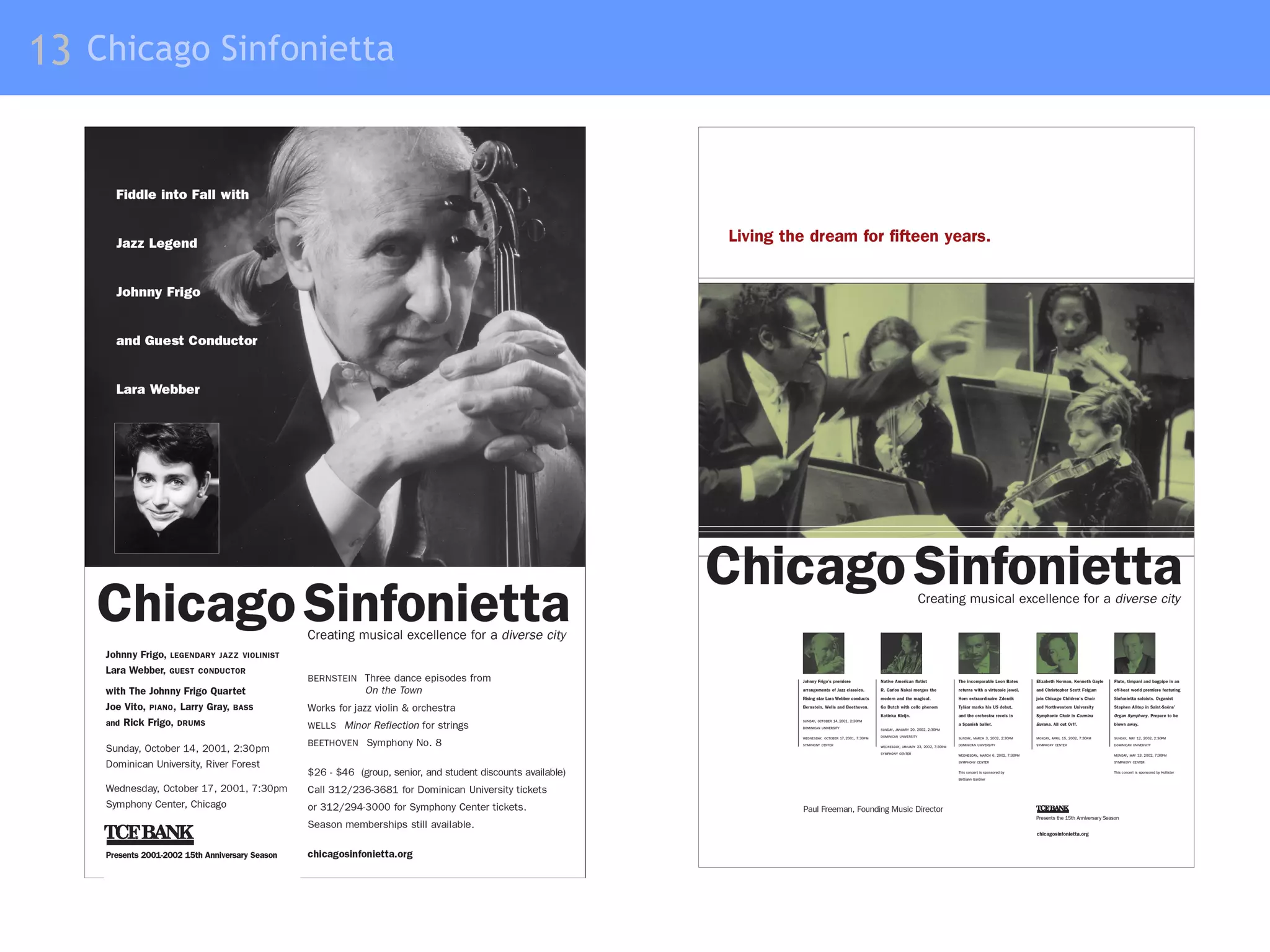
The Chicago Sinfonietta was founded in 1987 and performs classical, romantic, and modern music with a focus on diversity. In 2004, its brand was refreshed to position it as providing unique, live symphonic performances
The Old Town School of Folk Music – The Early Years Founded in 1957 during the “folk boom” First location Old Town Brand identity was about music from the folk revival mixed with the social/political context of the time
3.
The Old TownSchool of Folk Music – The Middle Years In the late 60s and early 70s, the popularity of singers/songwriters like Steve Goodman, Arlo Guthrie and others help push enrollment up to 1,000 New programs are added to broaden the appeal Brand identity evolves to be less about folk music and more about personal expression
4.
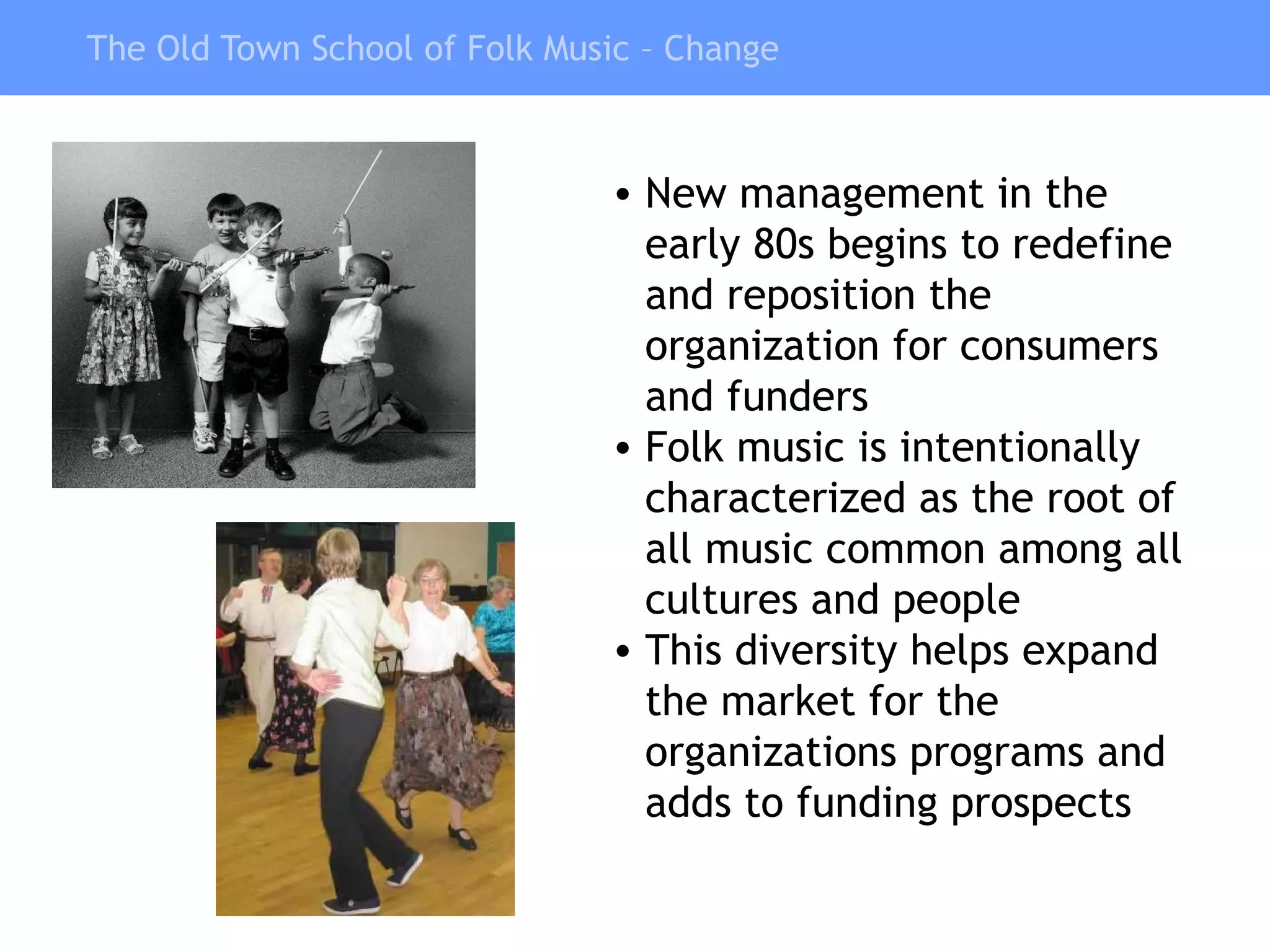
The Old TownSchool of Folk Music – Change New management in the early 80s begins to redefine and reposition the organization for consumers and funders Folk music is intentionally characterized as the root of all music common among all cultures and people This diversity helps expand the market for the organizations programs and adds to funding prospects
5.
The Old TownSchool of Folk Music – Now Folk music is now manifested by a huge selection of classes and concerts that define the OTS brand For adults and teens; cool, worldly, communal, creative, intelligent For parents and children; discovery, development, creativity, community. OTS is a classic “third place” Consistent messaging Imagery and positioning make OTS a niche owner Word of mouth is huge and customer loyalty has been earned and well cared for Technology is not being used particularly well, but offers opportunities for extending the brand
6.
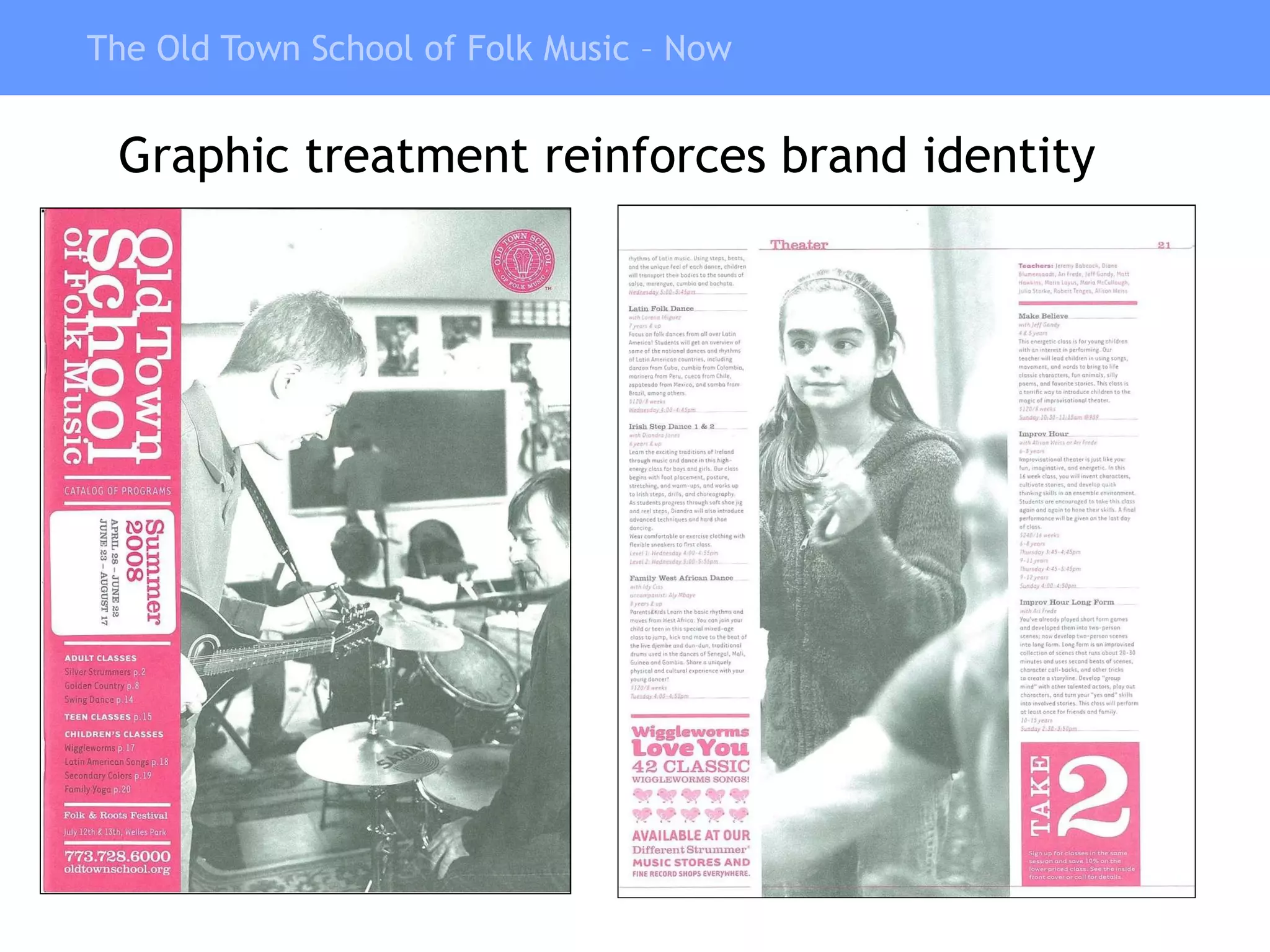
The Old TownSchool of Folk Music – Now Graphic treatment reinforces brand identity
7.
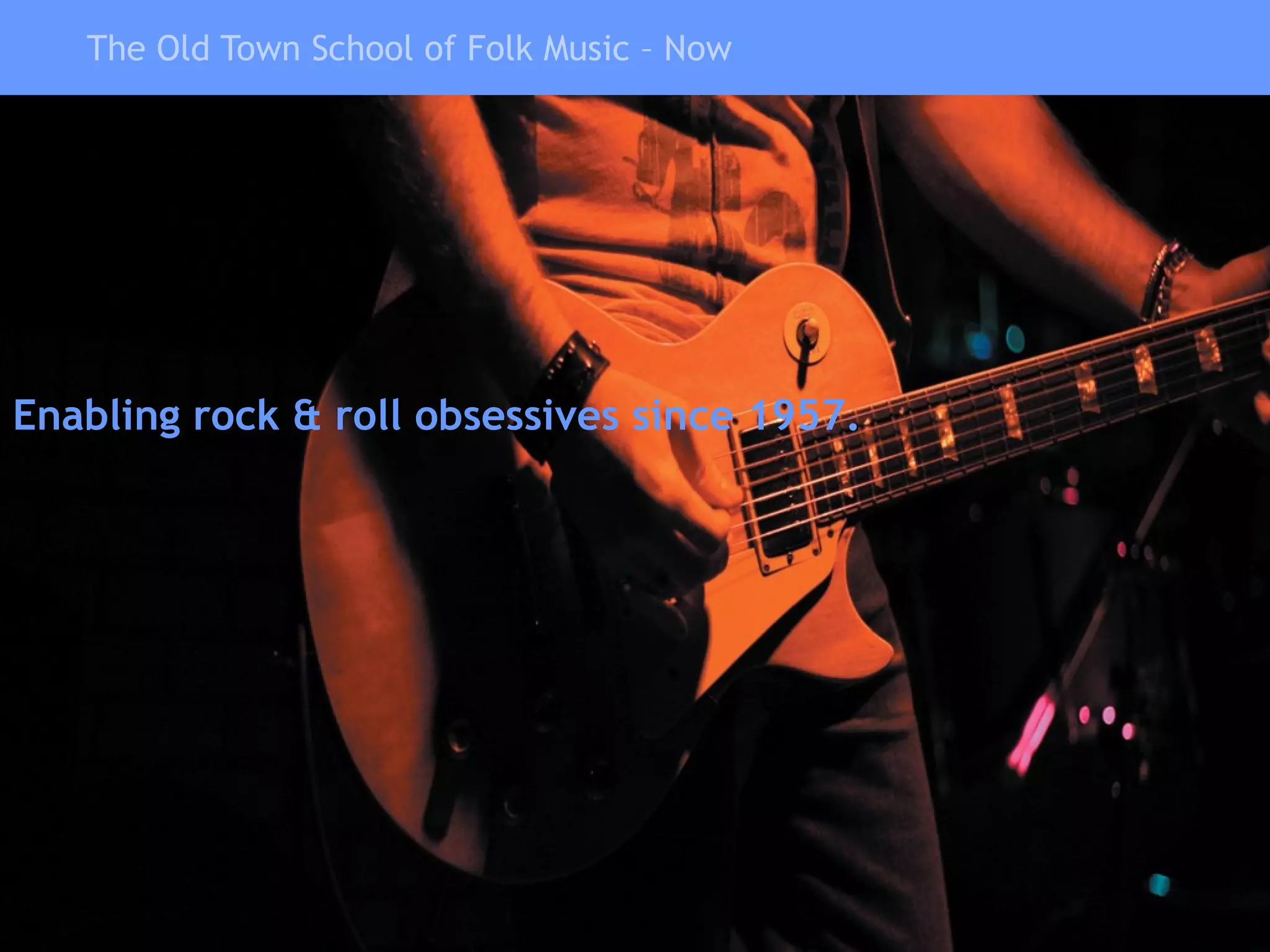
The Old TownSchool of Folk Music – Now Enabling rock & roll obsessives since 1957.
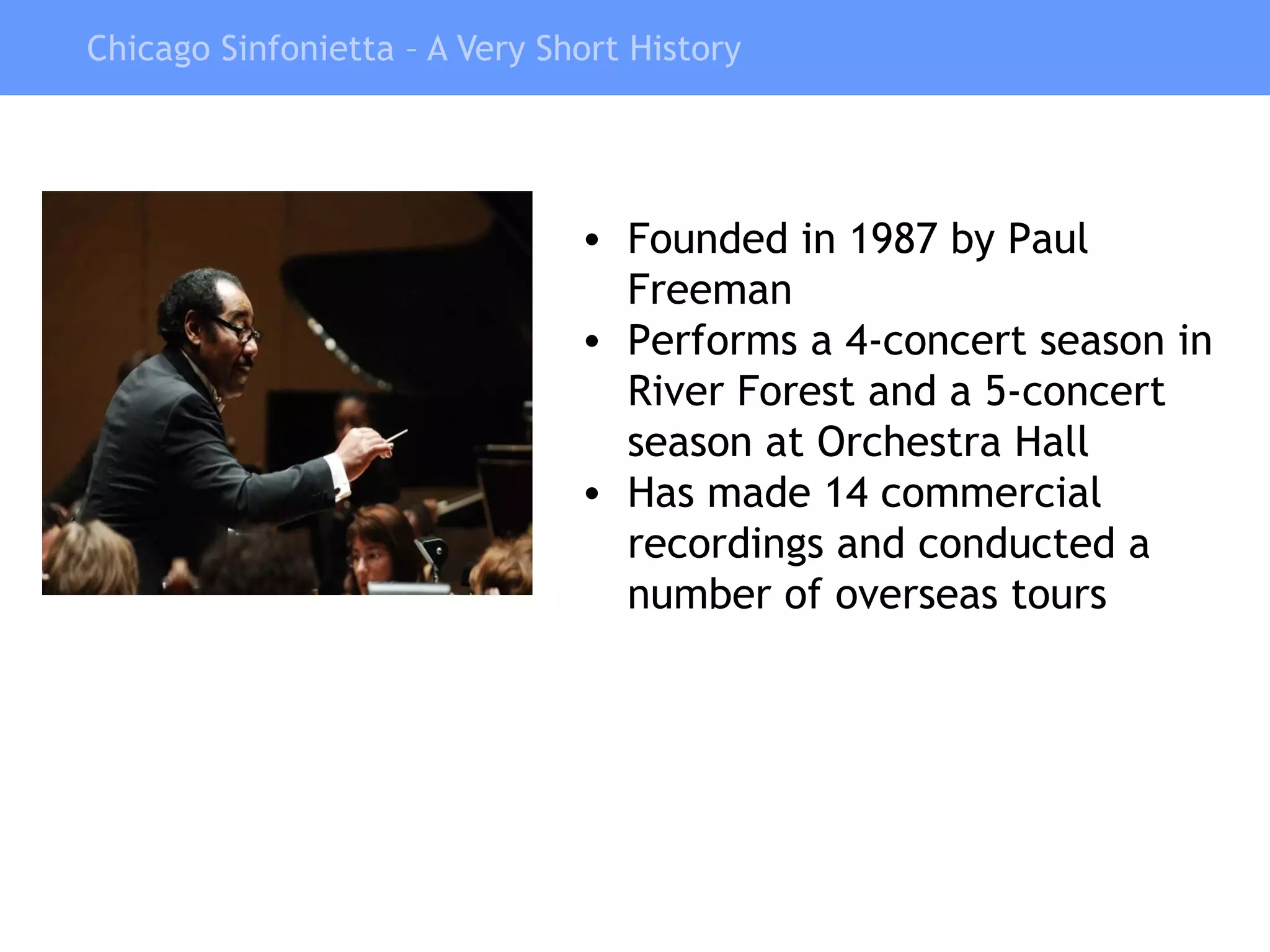
Chicago Sinfonietta –A Very Short History Founded in 1987 by Paul Freeman Performs a 4-concert season in River Forest and a 5-concert season at Orchestra Hall Has made 14 commercial recordings and conducted a number of overseas tours
10.
The Brand ModelBrand is about “performing music from the classical, romantic, and modern periods” and diversity Programming is interesting and a little offbeat Successful in attracting a diverse audience
11.
Chicago Sinfonietta –Brand Refreshing/Focusing In 2004 a small group comprised of marketing professionals and Sinfonietta staff was recruited to review, focus and refresh the brand and positioning strategies Process took three months Assessed customer data Reviewed competitive landscape Assessed organization’s opportunities Deliverable a one-page brand strategy
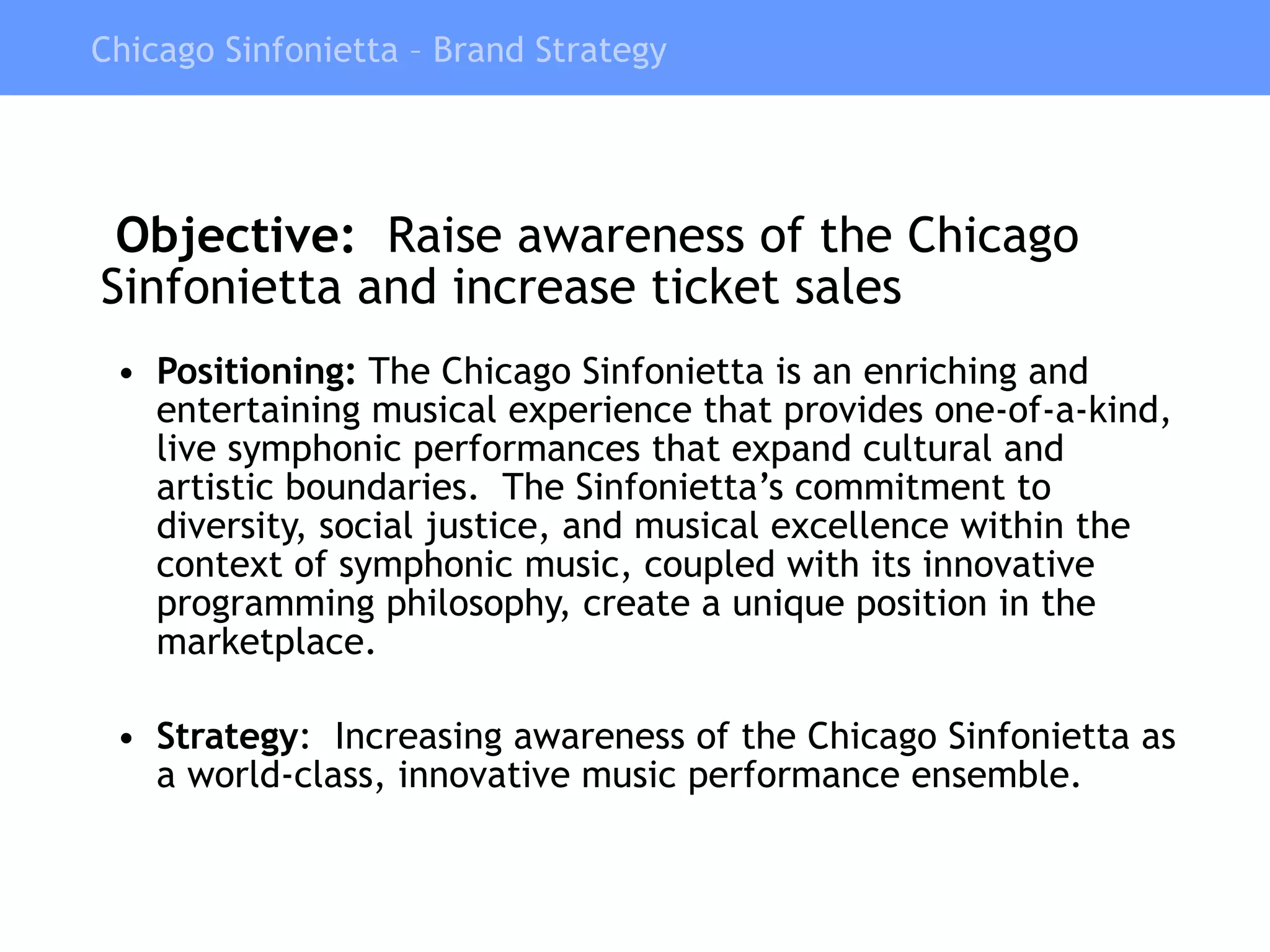
Objective: Raise awareness of the Chicago Sinfonietta and increase ticket sales Positioning: The Chicago Sinfonietta is an enriching and entertaining musical experience that provides one-of-a-kind, live symphonic performances that expand cultural and artistic boundaries. The Sinfonietta’s commitment to diversity, social justice, and musical excellence within the context of symphonic music, coupled with its innovative programming philosophy, create a unique position in the marketplace. Strategy : Increasing awareness of the Chicago Sinfonietta as a world-class, innovative music performance ensemble. Chicago Sinfonietta – Brand Strategy
15.
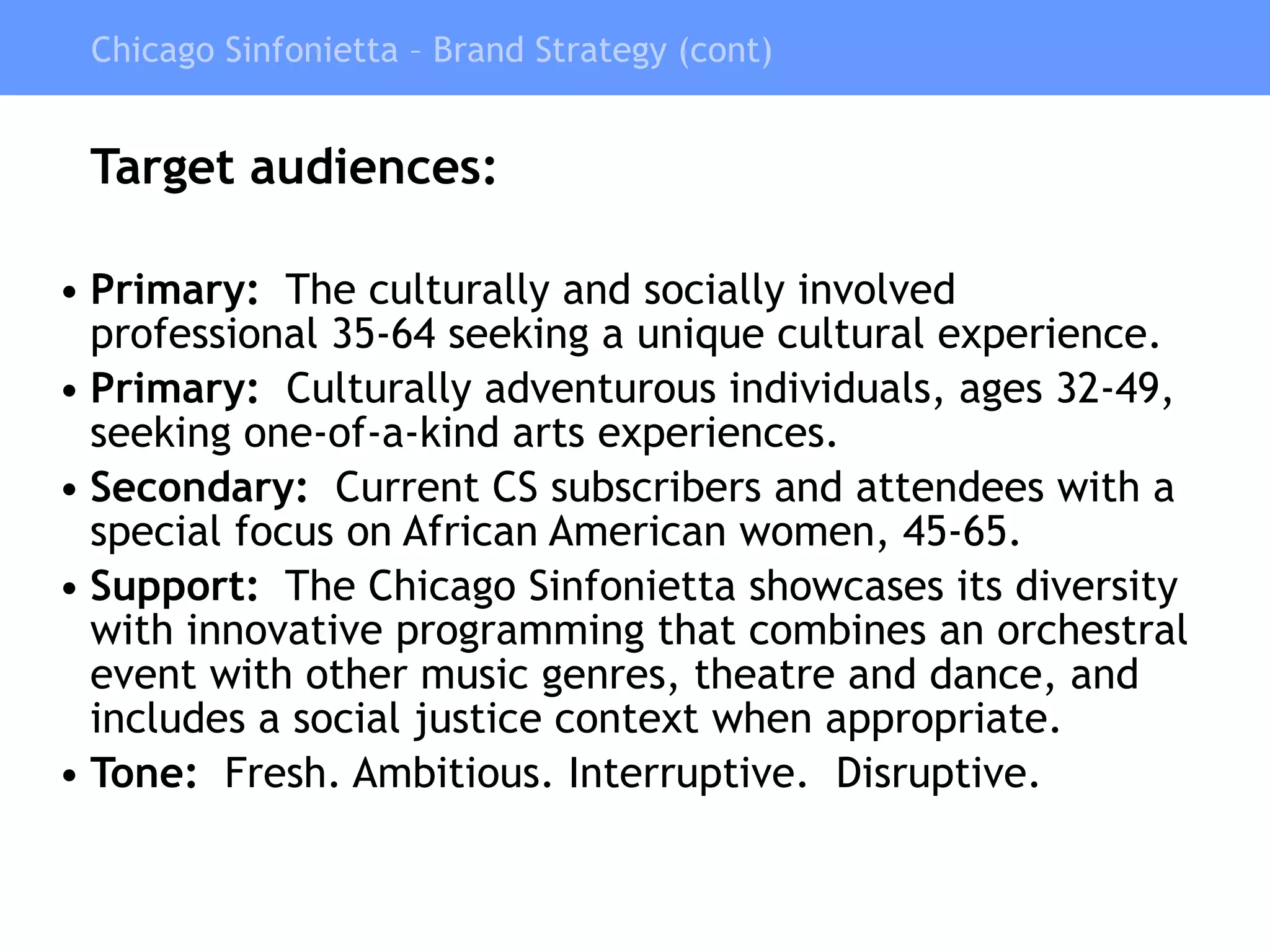
Target audiences: Primary: The culturally and socially involved professional 35-64 seeking a unique cultural experience. Primary: Culturally adventurous individuals, ages 32-49, seeking one-of-a-kind arts experiences. Secondary: Current CS subscribers and attendees with a special focus on African American women, 45-65. Support: The Chicago Sinfonietta showcases its diversity with innovative programming that combines an orchestral event with other music genres, theatre and dance, and includes a social justice context when appropriate. Tone: Fresh. Ambitious. Interruptive. Disruptive. Chicago Sinfonietta – Brand Strategy (cont)
16.
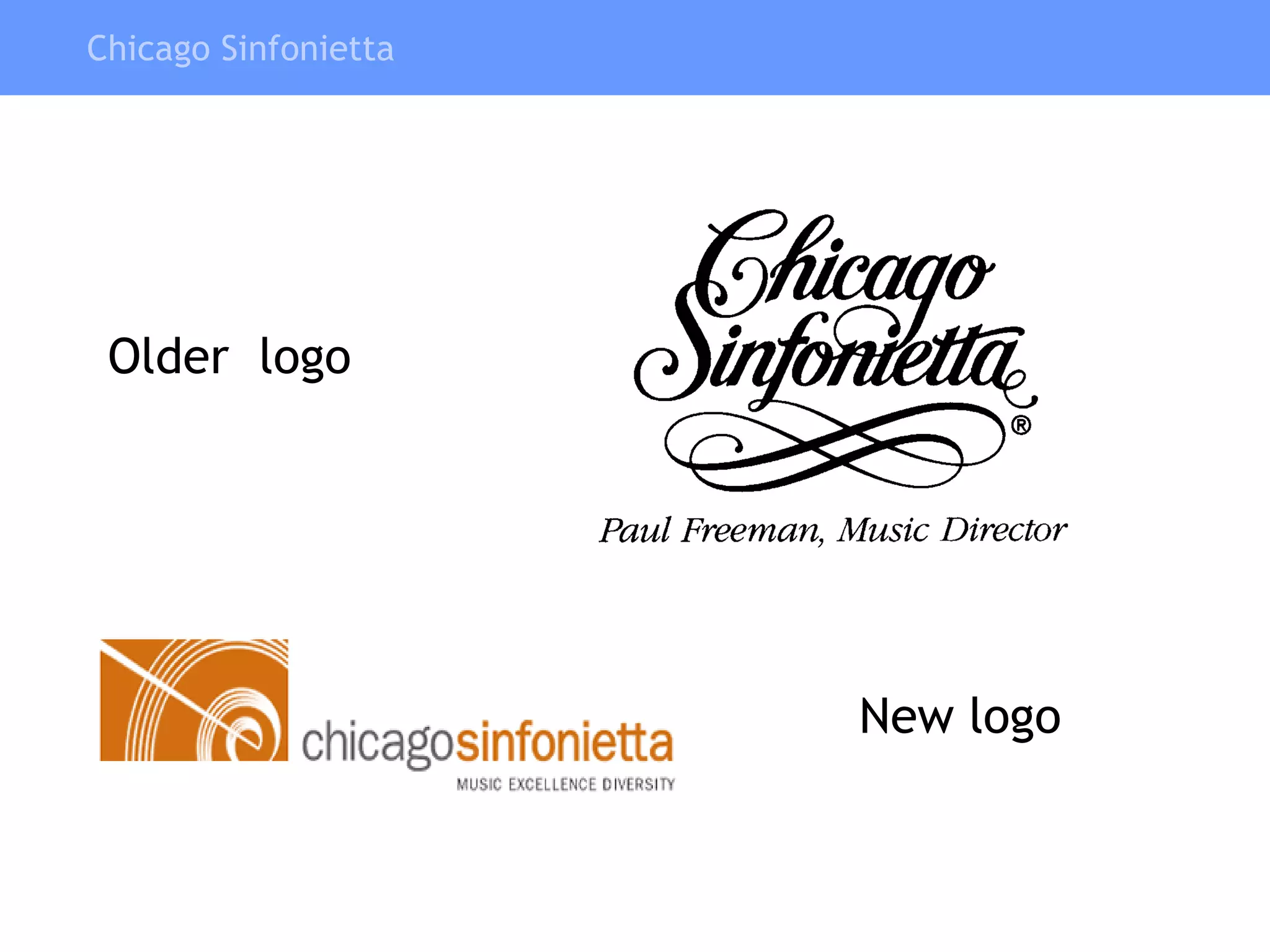
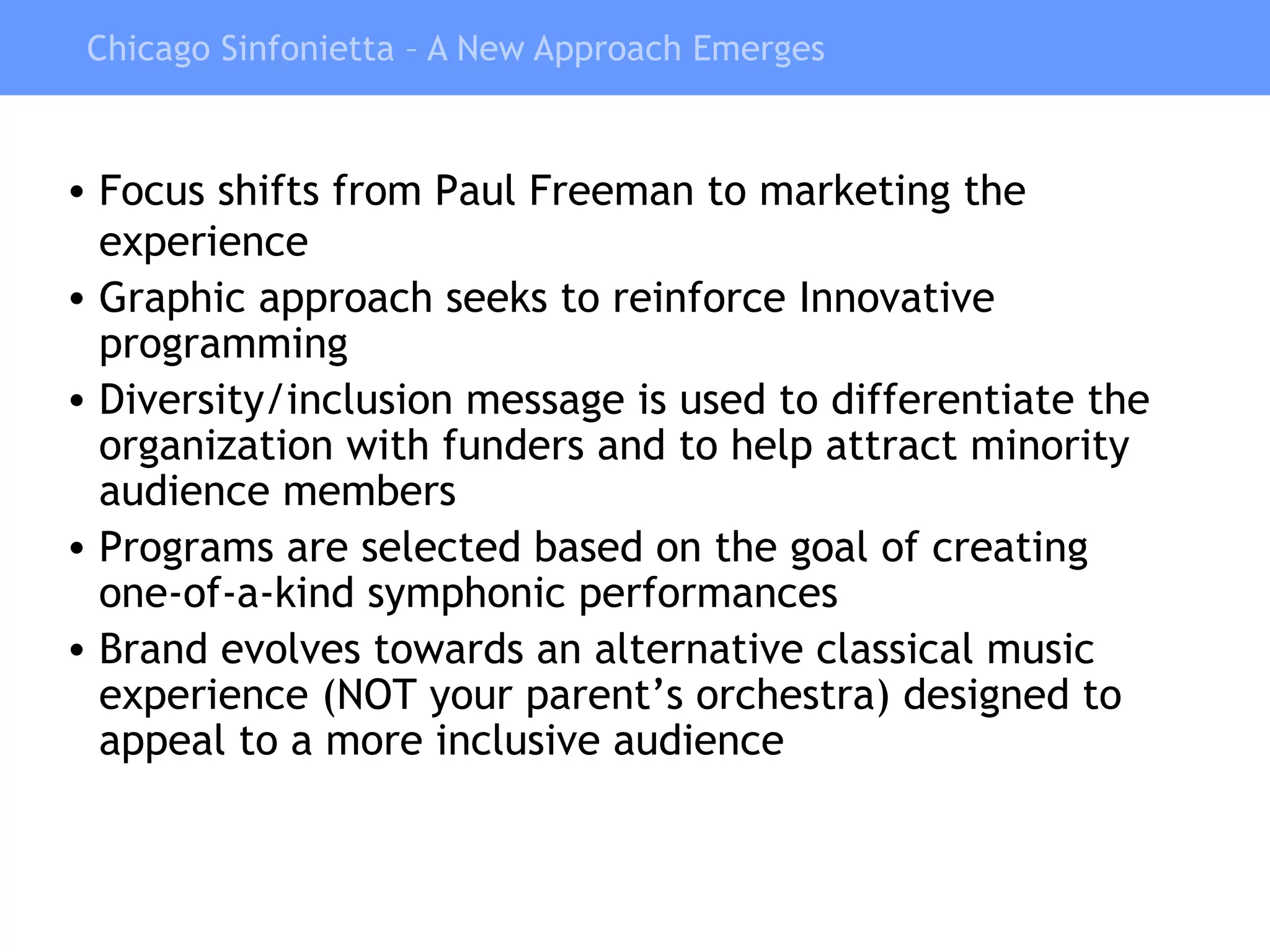
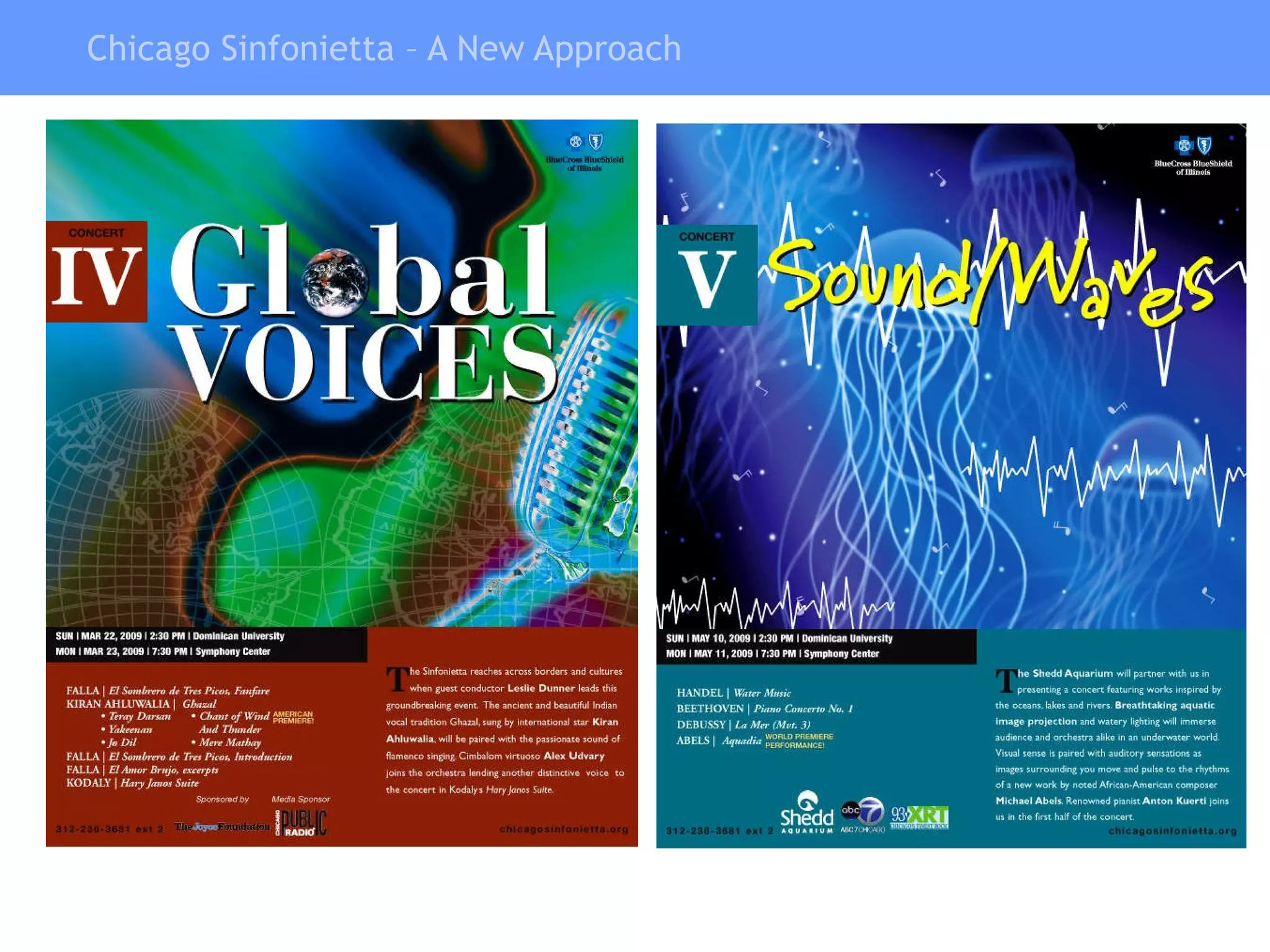
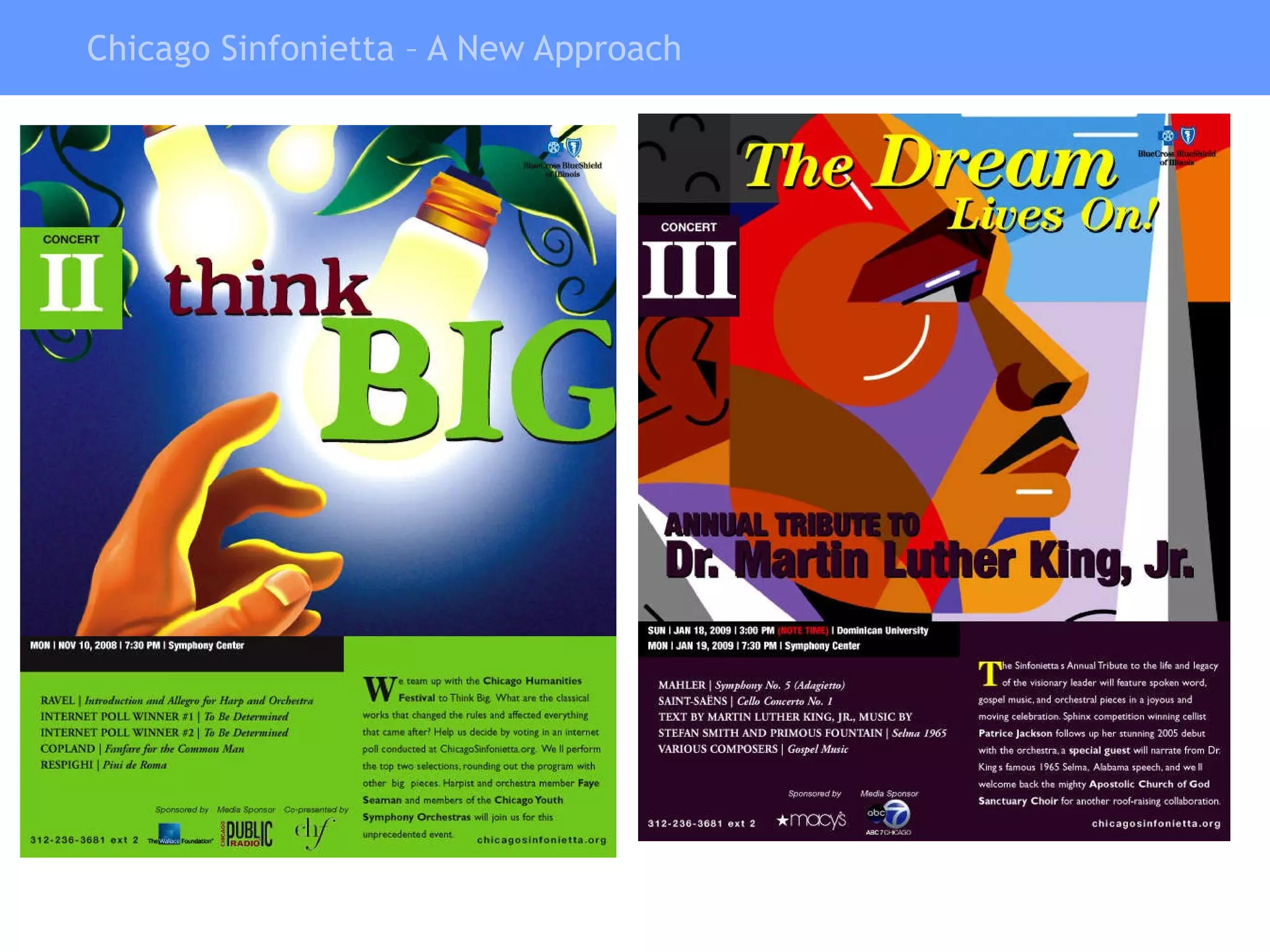
Chicago Sinfonietta –A New Approach Emerges Focus shifts from Paul Freeman to marketing the experience Graphic approach seeks to reinforce Innovative programming Diversity/inclusion message is used to differentiate the organization with funders and to help attract minority audience members Programs are selected based on the goal of creating one-of-a-kind symphonic performances Brand evolves towards an alternative classical music experience (NOT your parent’s orchestra) designed to appeal to a more inclusive audience