What is a brand?
Brand
is
a
name, term, sign, symbol, design
or
a
combination
of
them, intended to identify the
goods or services of one seller or
group of sellers and to differentiate
them from those of competitors
………
• It is a promise/ a reputation
• It is a promise to deliver
differentiated benefits
• To position itself in your
consideration set and be the
chosen product from that set

Functional role of brands
• To identify the source or maker
of the product
• To assign responsibility for its
performance to a particular
manufacturer
• Greater loyalty
• More inelastic customer
response to price increase
• Increased marketing
communication effectiveness
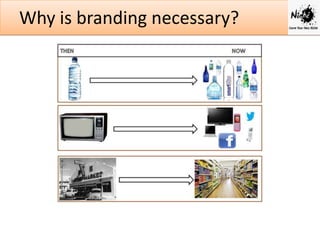
Why is branding necessary?
Made up of both performance and
emotional equities
Each initiative works to translate the
brand’s desired equity
Everything the consumers sees and
experiences should build equity

WHAT IT
DOES

WHAT IT IS

Brand equity
What a brand wants to stand for in the
hearts and minds of it’s consumers.
Creates more devoted consumers and
shoppers
Sets the brand apart from competition
Engages consumers on an emotional
level

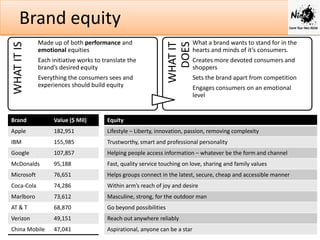
Brand

Value ($ Mil)

Equity

Apple

182,951

Lifestyle – Liberty, innovation, passion, removing complexity

IBM

155,985

Trustworthy, smart and professional personality

Google

107,857

Helping people access information – whatever be the form and channel

McDonalds

95,188

Fast, quality service touching on love, sharing and family values

Microsoft

76,651

Helps groups connect in the latest, secure, cheap and accessible manner

Coca-Cola

74,286

Within arm’s reach of joy and desire

Marlboro

73,612

Masculine, strong, for the outdoor man

AT & T

68,870

Go beyond possibilities

Verizon

49,151

Reach out anywhere reliably

China Mobile

47,041

Aspirational, anyone can be a star
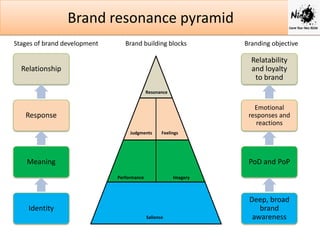
Brand resonance pyramid
Stages of brand development

Brand building blocks

Branding objective

Relatability
and loyalty
to brand

Relationship
Resonance

Emotional
responses and
reactions

Response
Judgments

Feelings

Meaning

PoD and PoP
Performance

Imagery

Identity
Salience

Deep, broad
brand
awareness
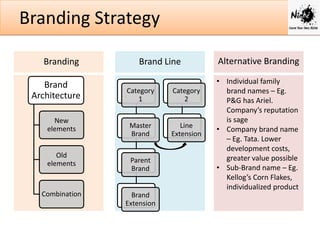
Branding Strategy
Branding
Brand
Architecture
New
elements
Old
elements

Combination

Brand Line
Category
1

Category
2

Master
Brand

Line
Extension

Parent
Brand

Brand
Extension

Alternative Branding
• Individual family
brand names – Eg.
P&G has Ariel.
Company’s reputation
is sage
• Company brand name
– Eg. Tata. Lower
development costs,
greater value possible
• Sub-Brand name – Eg.
Kellog’s Corn Flakes,
individualized product
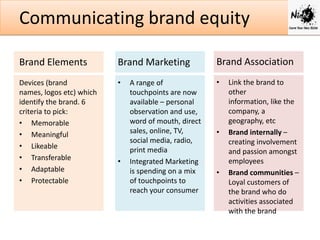
Communicating brand equity
Brand Elements

Brand Marketing

Brand Association

Devices (brand
names, logos etc) which
identify the brand. 6
criteria to pick:
• Memorable
• Meaningful
• Likeable
• Transferable
• Adaptable
• Protectable

•

•

•

A range of
touchpoints are now
available – personal
observation and use,
word of mouth, direct
sales, online, TV,
social media, radio,
print media
Integrated Marketing
is spending on a mix
of touchpoints to
reach your consumer

•

•

Link the brand to
other
information, like the
company, a
geography, etc
Brand internally –
creating involvement
and passion amongst
employees
Brand communities –
Loyal customers of
the brand who do
activities associated
with the brand
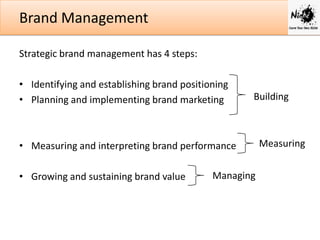
Brand Management
Strategic brand management has 4 steps:

• Identifying and establishing brand positioning
• Planning and implementing brand marketing

Building

• Measuring and interpreting brand performance
• Growing and sustaining brand value

Managing

Measuring
Brand Positioning
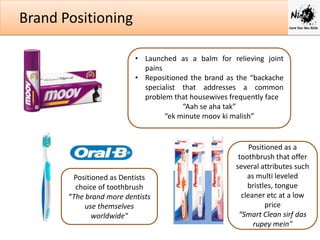
• Launched as a balm for relieving joint
pains
• Repositioned the brand as the “backache
specialist that addresses a common
problem that housewives frequently face
“Aah se aha tak”
“ek minute moov ki malish”

Positioned as Dentists
choice of toothbrush
“The brand more dentists
use themselves
worldwide"

Positioned as a
toothbrush that offer
several attributes such
as multi leveled
bristles, tongue
cleaner etc at a low
price
“Smart Clean sirf das
rupey mein"
Measuring and interpreting brand performance
Brand equity is the additional value that is endowed on the product by
its brand name as compared with the value that would accrue if the
same product did not have the brand name
Brand equity consists of knowledge, preference and financial
considerations
• Knowledge metrics: Awareness about the brand; functional and
emotional association of a brand
• Preference metrics: Brand’s competitive position, benchmark with
other brands, consumer loyalty
A strong brand will have the brand equity to build consumer loyalty
• Financial metrics: Market share, price premium, revenue
generation capability, lifetime value of brand, rate at which a brand
grows
Growing and sustaining a brand
• Brand Reinforcement
By marketing actions that consistently convey
–
–
–

•

core benefits and the needs satisfied
how the brand makes product superior
Unique brand associations

Brand Revitalization
–
–
–

Required due to changes in consumer tastes, emergence of new
competitors or technology, change in business environment
Positive positioning losing strength or negative positioning
Change the positioning or market the same with more vigour
Appendix: Benefits
Appendix: Benefits

Back
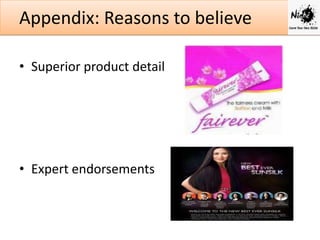
Appendix: Reasons to believe
• Superior product detail

• Expert endorsements
Appendix: Reasons to believe
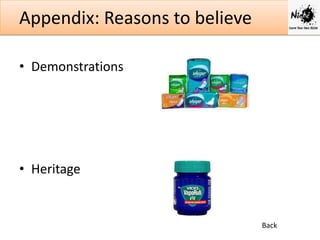
• Demonstrations

• Heritage

Back

Branding

  • 2.
    What is abrand? Brand is a name, term, sign, symbol, design or a combination of them, intended to identify the goods or services of one seller or group of sellers and to differentiate them from those of competitors ……… • It is a promise/ a reputation • It is a promise to deliver differentiated benefits • To position itself in your consideration set and be the chosen product from that set Functional role of brands • To identify the source or maker of the product • To assign responsibility for its performance to a particular manufacturer • Greater loyalty • More inelastic customer response to price increase • Increased marketing communication effectiveness
  • 3.
    Why is brandingnecessary?
  • 4.
    Made up ofboth performance and emotional equities Each initiative works to translate the brand’s desired equity Everything the consumers sees and experiences should build equity WHAT IT DOES WHAT IT IS Brand equity What a brand wants to stand for in the hearts and minds of it’s consumers. Creates more devoted consumers and shoppers Sets the brand apart from competition Engages consumers on an emotional level Brand Value ($ Mil) Equity Apple 182,951 Lifestyle – Liberty, innovation, passion, removing complexity IBM 155,985 Trustworthy, smart and professional personality Google 107,857 Helping people access information – whatever be the form and channel McDonalds 95,188 Fast, quality service touching on love, sharing and family values Microsoft 76,651 Helps groups connect in the latest, secure, cheap and accessible manner Coca-Cola 74,286 Within arm’s reach of joy and desire Marlboro 73,612 Masculine, strong, for the outdoor man AT & T 68,870 Go beyond possibilities Verizon 49,151 Reach out anywhere reliably China Mobile 47,041 Aspirational, anyone can be a star
  • 5.
    Brand resonance pyramid Stagesof brand development Brand building blocks Branding objective Relatability and loyalty to brand Relationship Resonance Emotional responses and reactions Response Judgments Feelings Meaning PoD and PoP Performance Imagery Identity Salience Deep, broad brand awareness
  • 6.
    Branding Strategy Branding Brand Architecture New elements Old elements Combination Brand Line Category 1 Category 2 Master Brand Line Extension Parent Brand Brand Extension AlternativeBranding • Individual family brand names – Eg. P&G has Ariel. Company’s reputation is sage • Company brand name – Eg. Tata. Lower development costs, greater value possible • Sub-Brand name – Eg. Kellog’s Corn Flakes, individualized product
  • 7.
    Communicating brand equity BrandElements Brand Marketing Brand Association Devices (brand names, logos etc) which identify the brand. 6 criteria to pick: • Memorable • Meaningful • Likeable • Transferable • Adaptable • Protectable • • • A range of touchpoints are now available – personal observation and use, word of mouth, direct sales, online, TV, social media, radio, print media Integrated Marketing is spending on a mix of touchpoints to reach your consumer • • Link the brand to other information, like the company, a geography, etc Brand internally – creating involvement and passion amongst employees Brand communities – Loyal customers of the brand who do activities associated with the brand
  • 8.
    Brand Management Strategic brandmanagement has 4 steps: • Identifying and establishing brand positioning • Planning and implementing brand marketing Building • Measuring and interpreting brand performance • Growing and sustaining brand value Managing Measuring
  • 9.
    Brand Positioning • Launchedas a balm for relieving joint pains • Repositioned the brand as the “backache specialist that addresses a common problem that housewives frequently face “Aah se aha tak” “ek minute moov ki malish” Positioned as Dentists choice of toothbrush “The brand more dentists use themselves worldwide" Positioned as a toothbrush that offer several attributes such as multi leveled bristles, tongue cleaner etc at a low price “Smart Clean sirf das rupey mein"
  • 10.
    Measuring and interpretingbrand performance Brand equity is the additional value that is endowed on the product by its brand name as compared with the value that would accrue if the same product did not have the brand name Brand equity consists of knowledge, preference and financial considerations • Knowledge metrics: Awareness about the brand; functional and emotional association of a brand • Preference metrics: Brand’s competitive position, benchmark with other brands, consumer loyalty A strong brand will have the brand equity to build consumer loyalty • Financial metrics: Market share, price premium, revenue generation capability, lifetime value of brand, rate at which a brand grows
  • 11.
    Growing and sustaininga brand • Brand Reinforcement By marketing actions that consistently convey – – – • core benefits and the needs satisfied how the brand makes product superior Unique brand associations Brand Revitalization – – – Required due to changes in consumer tastes, emergence of new competitors or technology, change in business environment Positive positioning losing strength or negative positioning Change the positioning or market the same with more vigour
  • 12.
  • 13.
  • 14.
    Appendix: Reasons tobelieve • Superior product detail • Expert endorsements
  • 15.
    Appendix: Reasons tobelieve • Demonstrations • Heritage Back