Brand Management
What is a brand?
A brand is a name, term, sign,
symbol, design or a combination
of the above to identify the
goods or service of a seller and
differentiate it from the rest of the
competitors
When you cannot do this
The product is a commodity
A brand comprises of
 Tangible attributes
 Intangible attributes
Tangibles
Eg.
 Product
 Packaging
 Labelling
 Attributes
 Functional benefits
Intangibles
Eg.
 Quality
 Emotional benefits
 Values
 Culture
 Image
Brand Identity
It is the marketer’s promise to
give a set of features, benefits
and services consistently
Brand Building
Involves all the activities that are
necessary to nurture a brand
into a healthy cash flow stream
after launch
What kind of activities?
Eg.
 Product development
 Packaging
 Advertising
 Promotion
 Sales and distribution
Brand Equity
When a commodity becomes a
brand, it is said to have equity
What is brand equity?
 The premium it can command in the
market
 Difference between the perceived value
and the intrinsic value
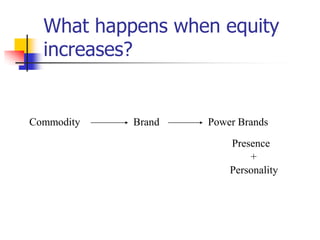
What happens when equity
increases?
Commodity Brand Power Brands
Presence
+
Personality
What happens when brands
have high equity?
 The company can have more leverage
with the trade
 The company can charge a premium on
their product
 The company can have more brand
extensions
 The company can have some defense
against price competition
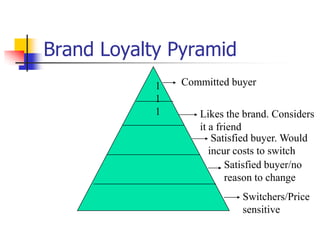
Brand Loyalty Pyramid
Committed buyer
Likes the brand. Considers
it a friend
Satisfied buyer. Would
incur costs to switch
Satisfied buyer/no
reason to change
Switchers/Price
sensitive
1
1
1
How does one build brands?
 Distinguishing it from others – value
proposition
 Brand promise must match brand
delivery
The value proposition
 Broad positioning
 Specific positioning
 Value positioning
Creating the brand
 Choosing a brand name
 Develop rich associations and promises
 Managing customer brand contact to
meet and exceed expectations
Considerations in choosing a
brand name
 What does the brand name mean?
 What associations / performance /
expectations does it evoke ?
 What degree of preference does it
create?
A brand name should indicate
 Product benefits
 Product quality
 Names easy to
remember,
recognise,
pronounce
 Product category
 Distinctiveness
 Should not indicate
poor meanings in
other markets or
languages
Brand Associations
 ‘owned word’
 Slogans
 Colours
 Symbols and logos
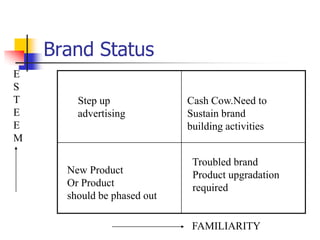
Brand Status
Step up
advertising
FAMILIARITY
E
S
T
E
E
M
New Product
Or Product
should be phased out
Cash Cow.Need to
Sustain brand
building activities
Troubled brand
Product upgradation
required
Brand ambassadors
 Giving a face and personality to the
brand that is expected to be rubbed off
from the brand ambassador
Brand Vitality
 Differentiation in consumer’s need
 Differentiation relevant to consumer’s
need
Brand Pitfalls
 Brand experience must match brand
image
 Calls for managing every brand contact

Brand management

  • 1.
  • 2.
    What is abrand? A brand is a name, term, sign, symbol, design or a combination of the above to identify the goods or service of a seller and differentiate it from the rest of the competitors
  • 3.
    When you cannotdo this The product is a commodity
  • 4.
    A brand comprisesof  Tangible attributes  Intangible attributes
  • 5.
    Tangibles Eg.  Product  Packaging Labelling  Attributes  Functional benefits
  • 6.
    Intangibles Eg.  Quality  Emotionalbenefits  Values  Culture  Image
  • 7.
    Brand Identity It isthe marketer’s promise to give a set of features, benefits and services consistently
  • 8.
    Brand Building Involves allthe activities that are necessary to nurture a brand into a healthy cash flow stream after launch
  • 9.
    What kind ofactivities? Eg.  Product development  Packaging  Advertising  Promotion  Sales and distribution
  • 10.
    Brand Equity When acommodity becomes a brand, it is said to have equity
  • 11.
    What is brandequity?  The premium it can command in the market  Difference between the perceived value and the intrinsic value
  • 12.
    What happens whenequity increases? Commodity Brand Power Brands Presence + Personality
  • 13.
    What happens whenbrands have high equity?  The company can have more leverage with the trade  The company can charge a premium on their product  The company can have more brand extensions  The company can have some defense against price competition
  • 14.
    Brand Loyalty Pyramid Committedbuyer Likes the brand. Considers it a friend Satisfied buyer. Would incur costs to switch Satisfied buyer/no reason to change Switchers/Price sensitive 1 1 1
  • 15.
    How does onebuild brands?  Distinguishing it from others – value proposition  Brand promise must match brand delivery
  • 16.
    The value proposition Broad positioning  Specific positioning  Value positioning
  • 17.
    Creating the brand Choosing a brand name  Develop rich associations and promises  Managing customer brand contact to meet and exceed expectations
  • 18.
    Considerations in choosinga brand name  What does the brand name mean?  What associations / performance / expectations does it evoke ?  What degree of preference does it create?
  • 19.
    A brand nameshould indicate  Product benefits  Product quality  Names easy to remember, recognise, pronounce  Product category  Distinctiveness  Should not indicate poor meanings in other markets or languages
  • 20.
    Brand Associations  ‘ownedword’  Slogans  Colours  Symbols and logos
  • 21.
    Brand Status Step up advertising FAMILIARITY E S T E E M NewProduct Or Product should be phased out Cash Cow.Need to Sustain brand building activities Troubled brand Product upgradation required
  • 22.
    Brand ambassadors  Givinga face and personality to the brand that is expected to be rubbed off from the brand ambassador
  • 23.
    Brand Vitality  Differentiationin consumer’s need  Differentiation relevant to consumer’s need
  • 24.
    Brand Pitfalls  Brandexperience must match brand image  Calls for managing every brand contact