Brand
•Abrandis not ranking
•It is about the approachand not about being excellent
•Abrandis about culture andmindset of the organisation
•Itis about identities, aspirations and differentiation
•According to American Marketing Association “Brand
is a name, term, sign, symbol, or design or a combination of them
which is intended to identify the goods or services of one seller or
a group of sellers & to differentiate them from those of
competitors.”
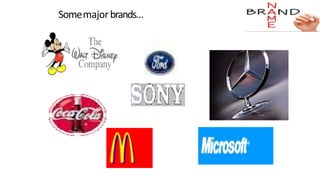
Somemajorbrands…
Brand Name
 Whenhe asked the questionShakespeare
obviouslydidn't have brand names in mind.
Brand Name
Brand name is the name given by the maker to a product or range of products,
especially a trademark.
Abrandnameisanidentitywhichputsaproductapartfromtheother.Abrandnamesummarizesall
thatabrandstandsfor.Brandnamecreatesassociationinthemindsofthecustomer
The first publicact of branding,is the brandname which has a unique role to play because
 Ultimately, Brandnameisthe onlyelementof thebrand thatwillendurethroughoutits lifecycle.
 While the variables of packaging, promotions and positioningareallsubjectto change,the brandnamewill
remain constant and therefore frequently acts as the focus for the brand
Characteristics of Good Brand Name
Distinctive
Simple
Meaningful
Universally valid
Have a Short Name
Compatible with Product
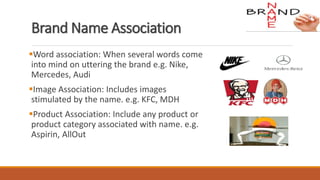
Brand Name Association
Word association: When several words come
into mind on uttering the brand e.g. Nike,
Mercedes, Audi
Image Association: Includes images
stimulated by the name. e.g. KFC, MDH
Product Association: Include any product or
product category associated with name. e.g.
Aspirin, AllOut
Types of Brand Name
Descriptive Brand Name: which describe the name
itself. e.g. Handiplast, General Elecrtic
Suggestive Brand Name: suggests the characteristics of
a brand. e.g. Fastrack, Classmate, Twitter
Freestanding or Empty Vessel Brand Name: which does
not have any relation to the product. e.g. Kodak,
Starbucks, Karvy
Naming the Brand
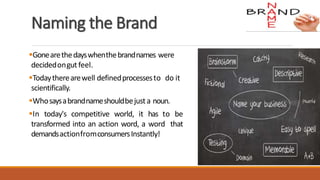
Gonearethedayswhenthebrandnames were
decidedongutfeel.
Todaytherearewell definedprocessesto do it
scientifically.
Whosaysabrandnameshouldbejusta noun.
In today's competitive world, it has to be
transformed into an action word, a word that
demandsactionfromconsumersInstantly!
Naming the Brand
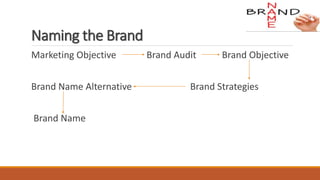
Marketing Objective Brand Audit Brand Objective
Brand Name Alternative Brand Strategies
Brand Name
Criteria for Choosing Brand Name
Help position the brand in the mind of the consumer.
Not be to generic but also not very limiting.
Be as short as possible
Have no negative connotations in any language
Be easy to pronounce.
Be available.
Common Brand Naming Mistakes
Treating Naming as an afterthought
Forgetting that Naming is as strategic as it is creative
Underestimating the importance of a good creative brief
Confusing the need for information with the need for
differentiation
Overlooking complex trademark issues
Ignoring Global Implications
Brand name

Brand name

  • 2.
    Brand •Abrandis not ranking •Itis about the approachand not about being excellent •Abrandis about culture andmindset of the organisation •Itis about identities, aspirations and differentiation •According to American Marketing Association “Brand is a name, term, sign, symbol, or design or a combination of them which is intended to identify the goods or services of one seller or a group of sellers & to differentiate them from those of competitors.”
  • 3.
  • 4.
    Brand Name  Whenheasked the questionShakespeare obviouslydidn't have brand names in mind.
  • 5.
    Brand Name Brand nameis the name given by the maker to a product or range of products, especially a trademark. Abrandnameisanidentitywhichputsaproductapartfromtheother.Abrandnamesummarizesall thatabrandstandsfor.Brandnamecreatesassociationinthemindsofthecustomer The first publicact of branding,is the brandname which has a unique role to play because  Ultimately, Brandnameisthe onlyelementof thebrand thatwillendurethroughoutits lifecycle.  While the variables of packaging, promotions and positioningareallsubjectto change,the brandnamewill remain constant and therefore frequently acts as the focus for the brand
  • 6.
    Characteristics of GoodBrand Name Distinctive Simple Meaningful Universally valid Have a Short Name Compatible with Product
  • 7.
    Brand Name Association Wordassociation: When several words come into mind on uttering the brand e.g. Nike, Mercedes, Audi Image Association: Includes images stimulated by the name. e.g. KFC, MDH Product Association: Include any product or product category associated with name. e.g. Aspirin, AllOut
  • 8.
    Types of BrandName Descriptive Brand Name: which describe the name itself. e.g. Handiplast, General Elecrtic Suggestive Brand Name: suggests the characteristics of a brand. e.g. Fastrack, Classmate, Twitter Freestanding or Empty Vessel Brand Name: which does not have any relation to the product. e.g. Kodak, Starbucks, Karvy
  • 9.
    Naming the Brand Gonearethedayswhenthebrandnameswere decidedongutfeel. Todaytherearewell definedprocessesto do it scientifically. Whosaysabrandnameshouldbejusta noun. In today's competitive world, it has to be transformed into an action word, a word that demandsactionfromconsumersInstantly!
  • 10.
    Naming the Brand MarketingObjective Brand Audit Brand Objective Brand Name Alternative Brand Strategies Brand Name
  • 11.
    Criteria for ChoosingBrand Name Help position the brand in the mind of the consumer. Not be to generic but also not very limiting. Be as short as possible Have no negative connotations in any language Be easy to pronounce. Be available.
  • 12.
    Common Brand NamingMistakes Treating Naming as an afterthought Forgetting that Naming is as strategic as it is creative Underestimating the importance of a good creative brief Confusing the need for information with the need for differentiation Overlooking complex trademark issues Ignoring Global Implications