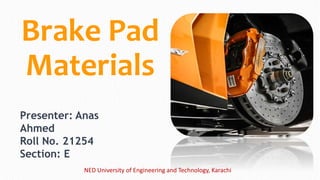
Brake Pad
Materials
Presenter: Anas
Ahmed
Roll No. 21254
Section: E
NED University of Engineering and Technology, Karachi
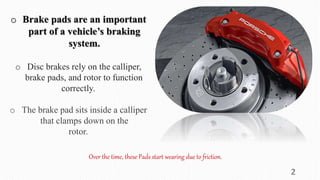
o Brake pads are an important
part of a vehicle’s braking
system.
o Disc brakes rely on the calliper,
brake pads, and rotor to function
correctly.
o The brake pad sits inside a calliper
that clamps down on the
rotor.
2
Over the time, these Pads start wearing due to friction.
3
Being able to stop quickly is
much more important than
acceleration!
So picking the right brake pad is a vital part of any car’s modification process
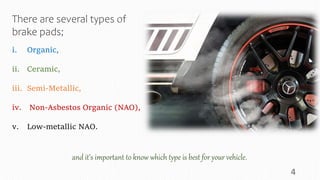
There are several types of
brake pads;
i. Organic,
ii. Ceramic,
iii. Semi-Metallic,
iv. Non-Asbestos Organic (NAO),
v. Low-metallic NAO.
and it’s important to know which type is best for your vehicle.
4
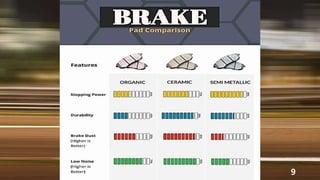
Brake pads are judged by
several factors;
 Performance (how well they stop),
 Durability (how long they last),
 Brake dust,
 Noise.
5
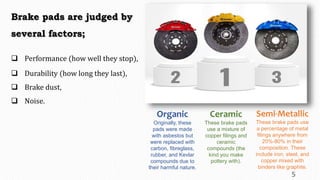
Organic
Originally, these
pads were made
with asbestos but
were replaced with
carbon, fibreglass,
rubber, and Kevlar
compounds due to
their harmful nature.
Ceramic
These brake pads
use a mixture of
copper filings and
ceramic
compounds (the
kind you make
pottery with).
Semi-Metallic
These brake pads use
a percentage of metal
filings anywhere from
20%-80% in their
composition. These
include iron, steel, and
copper mixed with
binders like graphite.
6
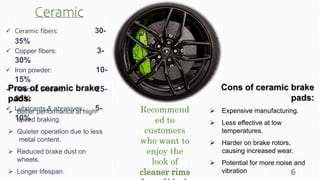
Ceramic
 Ceramic fibers: 30-
35%
 Copper fibers: 3-
30%
 Iron powder: 10-
15%
 Fillers & binders: 25-
35%
 Lubricants & abrasives: 5-
10%
Pros of ceramic brake
pads:
 Better performance at high-
speed braking.
 Quieter operation due to less
metal content.
 Reduced brake dust on
wheels.
 Longer lifespan.
Cons of ceramic brake
pads:
 Expensive manufacturing.
 Less effective at low
temperatures.
 Harder on brake rotors,
causing increased wear.
 Potential for more noise and
vibration
Recommend
ed to
customers
who want to
enjoy the
look of
cleaner rims
7
Organic
 Organic fibers: 20-
60%
 Rubber:
10-30%
 Filler materials (e.g., carbon, Kevlar): 10-
30%
 Resins and adhesives: 5-
10%
.
Experience superior stopping
power and
reliability with MTB organic
MTB Organic Pads:
 Superior stopping power and durability.
 Quieter ride.
 Ideal for safety and performance.
 Consistent braking in all conditions.
 Compatible with many mountain bikes
and braking systems
8
Semi-Metallic
 Metal fibers: 30-65%
 Non-metallic materials: 20-40%
 Fillers and binders: 5-30%
Cons :
 Produces more brake
dust.
 Can be noisier.
 Can wear down brake
rotors faster.
 Not suitable for all
vehicles or driving
conditions.
Pros:
 Better stopping power.
 More durable than organic
brake pads.
 Performs well in heavy-load
conditions.
 More affordable than
ceramic brake pads.
9

Brake Pad Materials.pptx

  • 1.
    Brake Pad Materials Presenter: Anas Ahmed RollNo. 21254 Section: E NED University of Engineering and Technology, Karachi
  • 2.
    o Brake padsare an important part of a vehicle’s braking system. o Disc brakes rely on the calliper, brake pads, and rotor to function correctly. o The brake pad sits inside a calliper that clamps down on the rotor. 2 Over the time, these Pads start wearing due to friction.
  • 3.
    3 Being able tostop quickly is much more important than acceleration! So picking the right brake pad is a vital part of any car’s modification process
  • 4.
    There are severaltypes of brake pads; i. Organic, ii. Ceramic, iii. Semi-Metallic, iv. Non-Asbestos Organic (NAO), v. Low-metallic NAO. and it’s important to know which type is best for your vehicle. 4
  • 5.
    Brake pads arejudged by several factors;  Performance (how well they stop),  Durability (how long they last),  Brake dust,  Noise. 5 Organic Originally, these pads were made with asbestos but were replaced with carbon, fibreglass, rubber, and Kevlar compounds due to their harmful nature. Ceramic These brake pads use a mixture of copper filings and ceramic compounds (the kind you make pottery with). Semi-Metallic These brake pads use a percentage of metal filings anywhere from 20%-80% in their composition. These include iron, steel, and copper mixed with binders like graphite.
  • 6.
    6 Ceramic  Ceramic fibers:30- 35%  Copper fibers: 3- 30%  Iron powder: 10- 15%  Fillers & binders: 25- 35%  Lubricants & abrasives: 5- 10% Pros of ceramic brake pads:  Better performance at high- speed braking.  Quieter operation due to less metal content.  Reduced brake dust on wheels.  Longer lifespan. Cons of ceramic brake pads:  Expensive manufacturing.  Less effective at low temperatures.  Harder on brake rotors, causing increased wear.  Potential for more noise and vibration Recommend ed to customers who want to enjoy the look of cleaner rims
  • 7.
    7 Organic  Organic fibers:20- 60%  Rubber: 10-30%  Filler materials (e.g., carbon, Kevlar): 10- 30%  Resins and adhesives: 5- 10% . Experience superior stopping power and reliability with MTB organic MTB Organic Pads:  Superior stopping power and durability.  Quieter ride.  Ideal for safety and performance.  Consistent braking in all conditions.  Compatible with many mountain bikes and braking systems
  • 8.
    8 Semi-Metallic  Metal fibers:30-65%  Non-metallic materials: 20-40%  Fillers and binders: 5-30% Cons :  Produces more brake dust.  Can be noisier.  Can wear down brake rotors faster.  Not suitable for all vehicles or driving conditions. Pros:  Better stopping power.  More durable than organic brake pads.  Performs well in heavy-load conditions.  More affordable than ceramic brake pads.
  • 9.