
-DEEKSHANA
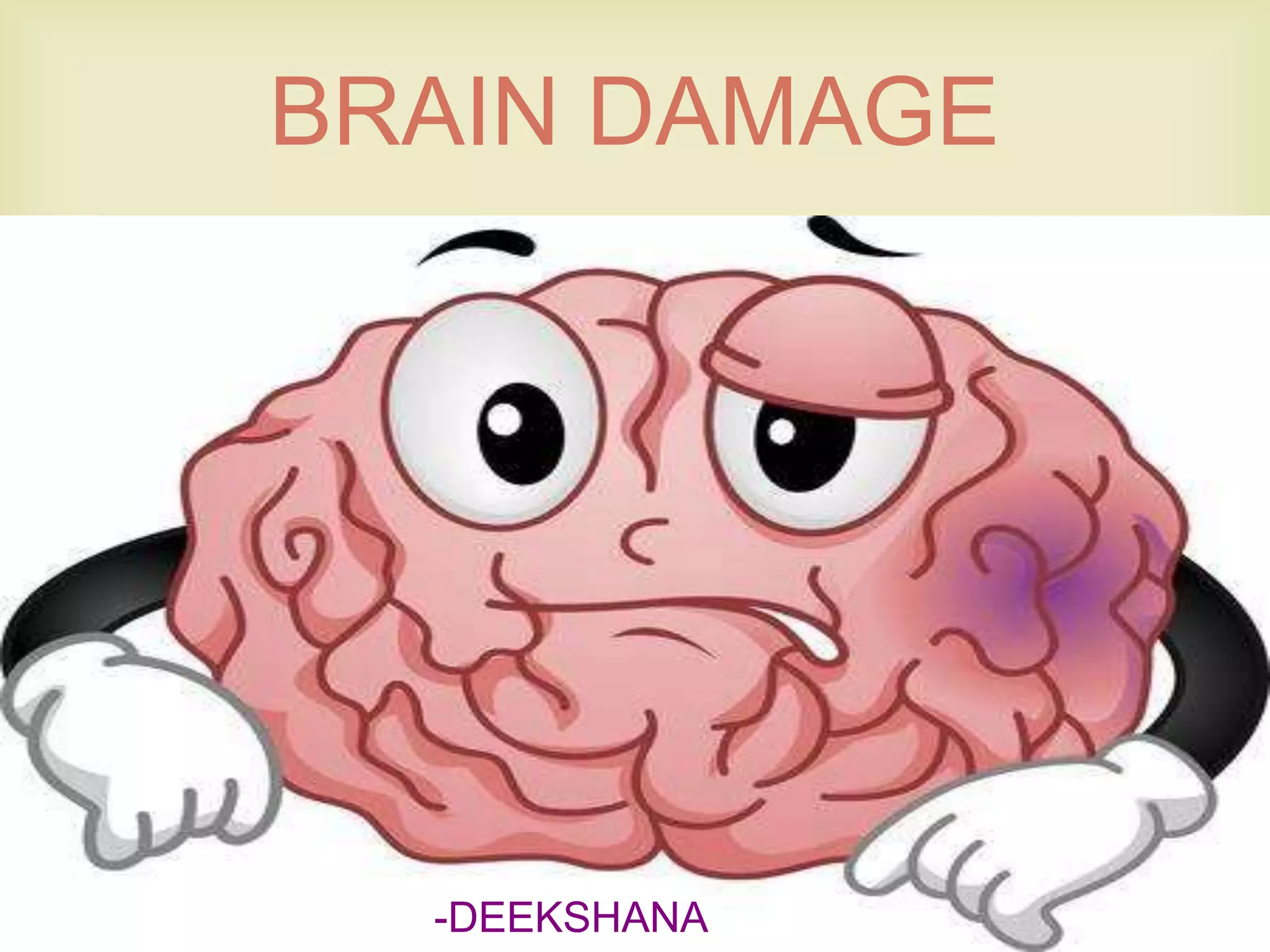
BRAIN DAMAGE

 Brain damage or brain injury is the destruction or
degeneration of brain cells.
 Possible causes - prolonged hypoxia, poisoning,
infection, and neurological illness.
 Common causes - physical trauma (traumatic brain
injury), stroke, aneurysm, or neurological illness.
BRAIN DAMAGE

 A brain tumor is an abnormal mass of tissue inside the
skull, which is caused by cells dividing at an increased
speed.
 Two types of brain tumor:
 Malignant/cancerous, tumors – invade surrounding
tissue & spread - other parts - through the blood
stream/lymphatic system
METASTASES
 Benign/non-cancerous, tumors – grow more slowly & do
not spread
BRAIN TUMOR

 Emergency condition - disruption of blood supply -
part of the brain, leading to brain injury.
Ischemic stroke: blood clot - blood vessel causes -
blockage of blood flow
Haemorrhagic stroke: weakened blood vessel bursts -
causing blood - leak into the brain.
STROKE

 Brain injuries produced by blows that do not penetrate
the skull are called closed-head injuries.
 Contusions are closed-head injuries that involve damage
to the cerebral circulatory system.
contrecoup injuries
 Disturbance of consciousness - blow to the head & no
evidence of a contusion or other structural damage –
concussion
punch-drunk syndrome
CLOSED HEAD INJURIES

 Encephalitis is an inflammation of the brain, most
often caused by infections
 Common types of brain infections:
bacterial infections : SYPHILIS
viral infections : RABIES
INFECTIONS

 The nervous system can be damaged by exposure to
any one of a variety of toxic chemicals, which can
enter general circulation from the gastrointestinal
tract, from the lungs, or through the skin
 Tardive dyskinesia A condition affecting the nervous
system, often caused by long-term use of some
psychiatric drugs.
NEUROTOXINS

 Normal human cells – 23 pairs of chromosomes -
sometimes accidents of cell division occur &
fertilized egg ends up with an abnormal
chromosome/abnormal number of normal
chromosomes.
 DOWN SYNDROME A genetic chromosome 21
disorder causing developmental and intellectual
delays.
GENETIC FACTORS

 Necrosis - the damaged neuron swells and breaks
apart, beginning in the axons and dendrites and
ending in the cell body. This fragmentation leads to
inflammation.
 Apoptosis of a neuron proceeds gradually, starting
with shrinkage of the cell body.
PROGRAMMED CELL DEATH


BRAIN DAMAGE​

  • 1.
  • 2.
      Brain damageor brain injury is the destruction or degeneration of brain cells.  Possible causes - prolonged hypoxia, poisoning, infection, and neurological illness.  Common causes - physical trauma (traumatic brain injury), stroke, aneurysm, or neurological illness. BRAIN DAMAGE
  • 3.
      A braintumor is an abnormal mass of tissue inside the skull, which is caused by cells dividing at an increased speed.  Two types of brain tumor:  Malignant/cancerous, tumors – invade surrounding tissue & spread - other parts - through the blood stream/lymphatic system METASTASES  Benign/non-cancerous, tumors – grow more slowly & do not spread BRAIN TUMOR
  • 4.
      Emergency condition- disruption of blood supply - part of the brain, leading to brain injury. Ischemic stroke: blood clot - blood vessel causes - blockage of blood flow Haemorrhagic stroke: weakened blood vessel bursts - causing blood - leak into the brain. STROKE
  • 5.
      Brain injuriesproduced by blows that do not penetrate the skull are called closed-head injuries.  Contusions are closed-head injuries that involve damage to the cerebral circulatory system. contrecoup injuries  Disturbance of consciousness - blow to the head & no evidence of a contusion or other structural damage – concussion punch-drunk syndrome CLOSED HEAD INJURIES
  • 6.
      Encephalitis isan inflammation of the brain, most often caused by infections  Common types of brain infections: bacterial infections : SYPHILIS viral infections : RABIES INFECTIONS
  • 7.
      The nervoussystem can be damaged by exposure to any one of a variety of toxic chemicals, which can enter general circulation from the gastrointestinal tract, from the lungs, or through the skin  Tardive dyskinesia A condition affecting the nervous system, often caused by long-term use of some psychiatric drugs. NEUROTOXINS
  • 8.
      Normal humancells – 23 pairs of chromosomes - sometimes accidents of cell division occur & fertilized egg ends up with an abnormal chromosome/abnormal number of normal chromosomes.  DOWN SYNDROME A genetic chromosome 21 disorder causing developmental and intellectual delays. GENETIC FACTORS
  • 9.
      Necrosis -the damaged neuron swells and breaks apart, beginning in the axons and dendrites and ending in the cell body. This fragmentation leads to inflammation.  Apoptosis of a neuron proceeds gradually, starting with shrinkage of the cell body. PROGRAMMED CELL DEATH
  • 10.