Mechanical and Hand
Milking in relation to
Mastitis
Muhammad Azam
M Phil CMS
Standardized Milking Procedures
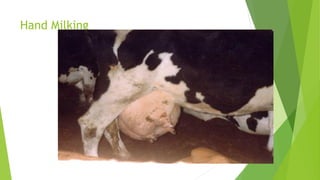
 Hand Milking
 Disinfect Your Hands
 Wipe off excess dry
manure, straw and bedding
 Never Use thumb milking
procedure
 Milking Parlor( Milking
Machines )
 Wear Gloves
 Wipe off excess dry
manure, straw and bedding
 Strip each teat into a
stripcup
 Dip teats with an approved
pre-dip Dip 3-4 cows
 Allow the pre-dip to react
for at least 30 sec.
Milking Machines
 An Introduction to
 what they are,
 how they work,
 and their parts
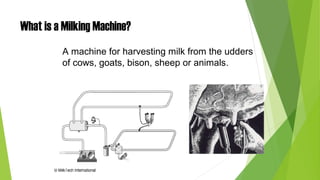
What is a Milking Machine?
© MilkTech International
A machine for harvesting milk from the udders
of cows, goats, bison, sheep or animals.
Milk Harvesting
 Milk harvesting is the process of
 extracting milk from animals
 Transporting the milk to a storage tank
 Storing the milk until it is picked up for processing.
 Milk is usually cooled during storage
 Milk harvest requires cooperative effort between :
 The animal and
 The operator
 And a properly functioning milking machine
© MilkTech International
Milking Machine Goals
 A properly designed, installed, maintained, and operated milking machine
will:
 Remove milk from the animal quickly and gently
 Not contribute to poor udder health
 Not degrade milk quality from the time of removal to delivery
 Be easy to clean and sanitize
© MilkTech International
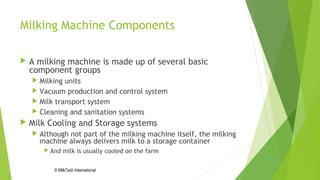
Milking Machine Components
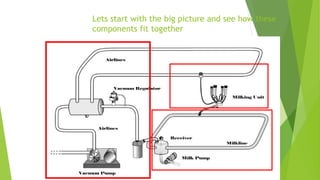
 A milking machine is made up of several basic
component groups
 Milking units
 Vacuum production and control system
 Milk transport system
 Cleaning and sanitation systems
 Milk Cooling and Storage systems
 Although not part of the milking machine itself, the milking
machine always delivers milk to a storage container
 And milk is usually cooled on the farm
© MilkTech International
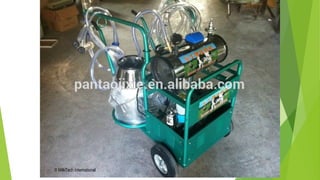
Lets start with the big picture and see how these
components fit together
© MilkTech International
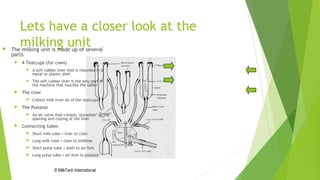
Lets have a closer look at the
milking unit
© MilkTech International
 The milking unit is made up of several
parts
 4 Teatcups (for cows)
 A soft rubber liner that is mounted in a
metal or plastic shell
 The soft rubber liner is the only part of
the machine that touches the udder
 The claw
 Collect milk from all of the teatcups
 The Pulsator
 An air valve that creates ‘pulsation’ or the
opening and closing of the liner
 Connecting tubes
 Short milk tube = liner to claw
 Long milk tube = claw to milkline
 Short pulse tube = shell to air fork
 Long pulse tube = air fork to pulsator
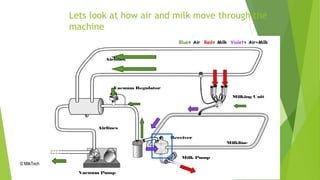
Lets look at how air and milk move through the
machine
© MilkTech International
Blue= Air Red= Milk Violet= Air+Milk
© MilkTech International
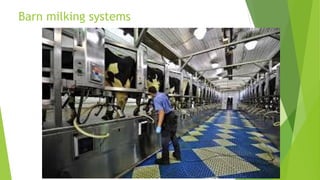
Barn milking systems 
© MilkTech International
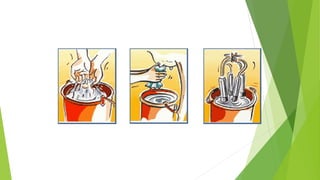
Washing of Milking Machines
step by step
 Rinsing milking Machine equipment's
100-110F water is used
 Removing milk Fat and protein
Chlorinated Alkaline solution used
 Acid rinsing(Phosphoric acid,nitric,Sulfuric acid )
It will neutralize alkaline solution
It is mineral soluble and remove the minerals
It will form a layer of acid which will protect further
growth of bacteria .
Machine Milking Effecting Mammary
Glands 6-20%
 It can be a source of transfer of
contagious organisms from cow to cow,
 It may reduce resistance of the streak canal
by traumatizing the tissue and creating teat end
lesions,
Machine Milking Effecting Mammary
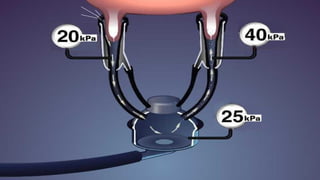
Glands The machine may produce differential
vacuum forces sufficient enough to propel
pathogen laden milk droplets through the streak canal into the teat cistern.
 The machine can provide the means for
transfer of infection from one quarter to another of the same cow (creating cross
infections), and
Transfer of contagious organisms
 Milk from infected cows coat the liners and milk residues collect in the
claw assembly. This provides a source of bacterial contamination to the
teats of subsequently milked cows.
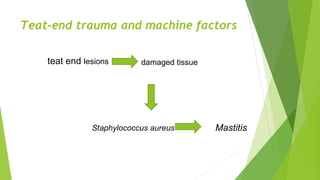
Teat-end trauma and machine factors
 High vacuum levels and improper use of the
milking machine have been associated with teat
orifice erosion and hyperkeratosis.
 Over-milking combined with other faults
including vacuum fluctuations or inadequate
pulsation can increase the incidence of
mastitis.
 Inadequate pulsation (insufficient or ineffective
teat end massage) will increase the new
infection rate.
Teat-end trauma and machine factors
teat end lesions damaged tissue
Staphylococcus aureus Mastitis
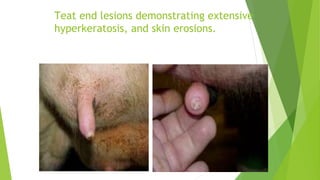
Teat orifice lesions show increasing
levels of hyperkeratosis.
Teat end lesions demonstrating extensive
hyperkeratosis, and skin erosions.
Liners and Mastitis
 Trauma produced to mucus membranes lining the teat sinus produced by
inappropriate liners (hard mouthpiece, excessive vacuum or high liner
mouthpiece vacuum) can contribute to bacterial infection and mastitis
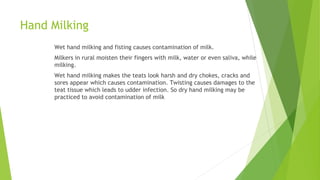
Hand Milking
Milking is done by hand
 Types of hand Milking  Full hand milking
 Strip milking
 Folded thumb milking
Hand Milking
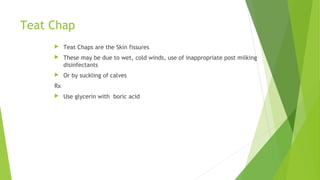
Wet hand milking and fisting causes contamination of milk.
Milkers in rural moisten their fingers with milk, water or even saliva, while
milking.
Wet hand milking makes the teats look harsh and dry chokes, cracks and
sores appear which causes contamination. Twisting causes damages to the
teat tissue which leads to udder infection. So dry hand milking may be
practiced to avoid contamination of milk
Teat Chap
 Teat Chaps are the Skin fissures
 These may be due to wet, cold winds, use of inappropriate post milking
disinfectants
 Or by suckling of calves
Rx
 Use glycerin with boric acid
© MilkTech International
Hand Milking
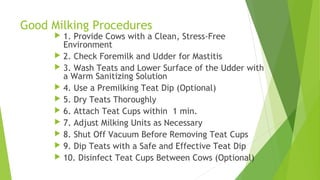
Good Milking Procedures
 1. Provide Cows with a Clean, Stress-Free
Environment
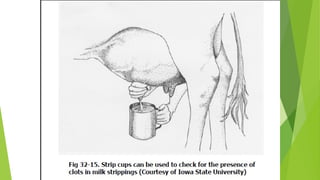
 2. Check Foremilk and Udder for Mastitis
 3. Wash Teats and Lower Surface of the Udder with
a Warm Sanitizing Solution
 4. Use a Premilking Teat Dip (Optional)
 5. Dry Teats Thoroughly
 6. Attach Teat Cups within 1 min.
 7. Adjust Milking Units as Necessary
 8. Shut Off Vacuum Before Removing Teat Cups
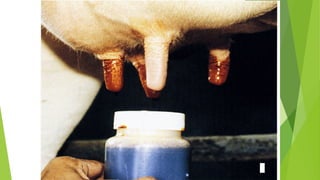
 9. Dip Teats with a Safe and Effective Teat Dip
 10. Disinfect Teat Cups Between Cows (Optional)
Bovine mastitis due to Milking machine

Bovine mastitis due to Milking machine

  • 1.
    Mechanical and Hand Milkingin relation to Mastitis Muhammad Azam M Phil CMS
  • 2.
    Standardized Milking Procedures Hand Milking  Disinfect Your Hands  Wipe off excess dry manure, straw and bedding  Never Use thumb milking procedure  Milking Parlor( Milking Machines )  Wear Gloves  Wipe off excess dry manure, straw and bedding  Strip each teat into a stripcup  Dip teats with an approved pre-dip Dip 3-4 cows  Allow the pre-dip to react for at least 30 sec.
  • 3.
    Milking Machines  AnIntroduction to  what they are,  how they work,  and their parts
  • 4.
    What is aMilking Machine? © MilkTech International A machine for harvesting milk from the udders of cows, goats, bison, sheep or animals.
  • 5.
    Milk Harvesting  Milkharvesting is the process of  extracting milk from animals  Transporting the milk to a storage tank  Storing the milk until it is picked up for processing.  Milk is usually cooled during storage  Milk harvest requires cooperative effort between :  The animal and  The operator  And a properly functioning milking machine © MilkTech International
  • 6.
    Milking Machine Goals A properly designed, installed, maintained, and operated milking machine will:  Remove milk from the animal quickly and gently  Not contribute to poor udder health  Not degrade milk quality from the time of removal to delivery  Be easy to clean and sanitize © MilkTech International
  • 7.
    Milking Machine Components A milking machine is made up of several basic component groups  Milking units  Vacuum production and control system  Milk transport system  Cleaning and sanitation systems  Milk Cooling and Storage systems  Although not part of the milking machine itself, the milking machine always delivers milk to a storage container  And milk is usually cooled on the farm © MilkTech International
  • 8.
    Lets start withthe big picture and see how these components fit together © MilkTech International
  • 9.
    Lets have acloser look at the milking unit © MilkTech International  The milking unit is made up of several parts  4 Teatcups (for cows)  A soft rubber liner that is mounted in a metal or plastic shell  The soft rubber liner is the only part of the machine that touches the udder  The claw  Collect milk from all of the teatcups  The Pulsator  An air valve that creates ‘pulsation’ or the opening and closing of the liner  Connecting tubes  Short milk tube = liner to claw  Long milk tube = claw to milkline  Short pulse tube = shell to air fork  Long pulse tube = air fork to pulsator
  • 10.
    Lets look athow air and milk move through the machine © MilkTech International Blue= Air Red= Milk Violet= Air+Milk
  • 11.
  • 12.
    Barn milking systems  ©MilkTech International
  • 13.
    Washing of MilkingMachines step by step  Rinsing milking Machine equipment's 100-110F water is used  Removing milk Fat and protein Chlorinated Alkaline solution used  Acid rinsing(Phosphoric acid,nitric,Sulfuric acid ) It will neutralize alkaline solution It is mineral soluble and remove the minerals It will form a layer of acid which will protect further growth of bacteria .
  • 14.
    Machine Milking EffectingMammary Glands 6-20%  It can be a source of transfer of contagious organisms from cow to cow,  It may reduce resistance of the streak canal by traumatizing the tissue and creating teat end lesions,
  • 15.
    Machine Milking EffectingMammary Glands The machine may produce differential vacuum forces sufficient enough to propel pathogen laden milk droplets through the streak canal into the teat cistern.  The machine can provide the means for transfer of infection from one quarter to another of the same cow (creating cross infections), and
  • 16.
    Transfer of contagiousorganisms  Milk from infected cows coat the liners and milk residues collect in the claw assembly. This provides a source of bacterial contamination to the teats of subsequently milked cows.
  • 17.
    Teat-end trauma andmachine factors  High vacuum levels and improper use of the milking machine have been associated with teat orifice erosion and hyperkeratosis.  Over-milking combined with other faults including vacuum fluctuations or inadequate pulsation can increase the incidence of mastitis.  Inadequate pulsation (insufficient or ineffective teat end massage) will increase the new infection rate.
  • 19.
    Teat-end trauma andmachine factors teat end lesions damaged tissue Staphylococcus aureus Mastitis
  • 20.
    Teat orifice lesionsshow increasing levels of hyperkeratosis.
  • 21.
    Teat end lesionsdemonstrating extensive hyperkeratosis, and skin erosions.
  • 22.
    Liners and Mastitis Trauma produced to mucus membranes lining the teat sinus produced by inappropriate liners (hard mouthpiece, excessive vacuum or high liner mouthpiece vacuum) can contribute to bacterial infection and mastitis
  • 23.
    Hand Milking Milking isdone by hand  Types of hand Milking  Full hand milking  Strip milking  Folded thumb milking
  • 24.
    Hand Milking Wet handmilking and fisting causes contamination of milk. Milkers in rural moisten their fingers with milk, water or even saliva, while milking. Wet hand milking makes the teats look harsh and dry chokes, cracks and sores appear which causes contamination. Twisting causes damages to the teat tissue which leads to udder infection. So dry hand milking may be practiced to avoid contamination of milk
  • 25.
    Teat Chap  TeatChaps are the Skin fissures  These may be due to wet, cold winds, use of inappropriate post milking disinfectants  Or by suckling of calves Rx  Use glycerin with boric acid
  • 26.
  • 27.
  • 28.
    Good Milking Procedures 1. Provide Cows with a Clean, Stress-Free Environment  2. Check Foremilk and Udder for Mastitis  3. Wash Teats and Lower Surface of the Udder with a Warm Sanitizing Solution  4. Use a Premilking Teat Dip (Optional)  5. Dry Teats Thoroughly  6. Attach Teat Cups within 1 min.  7. Adjust Milking Units as Necessary  8. Shut Off Vacuum Before Removing Teat Cups  9. Dip Teats with a Safe and Effective Teat Dip  10. Disinfect Teat Cups Between Cows (Optional)

Editor's Notes

  • #9 Not a good example for NZ or Australia. Better to have a typical herringbone.
  • #11 Too much info on one slide. Milk and Air flowing from the receiver into the sanitary trap presents a few problems! Need to mention variable speed vacuum pump drives as well as regulators.