BONE INJURIES
When fundaments fail…
https://www.youtube.com/watch?t=255
&v=OyK0oE5rwFY
BURSITIS
The bursa is a sac filled with lubricating fluid called hyaline
liquid, located between tissues such as bone, muscle, tendons,
and skin, that decreases rubbing, friction, and irritation.
Bursitis is the inflammation of the bursa. It is most often
caused by repetitive, minor impact on the area, or from a
sudden, more serious injury.
CARPAL TUNNEL SYNDROME
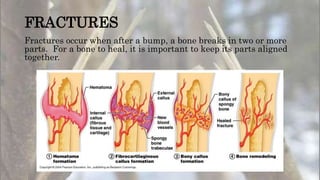
FRACTURES
Fractures occur when after a bump, a bone breaks in two or more
parts. For a bone to heal, it is important to keep its parts aligned
together.
TYPES OF FRACTURES
SPRAINS
Sprains occur when ligaments break because of overweight or
an incorrect movement.
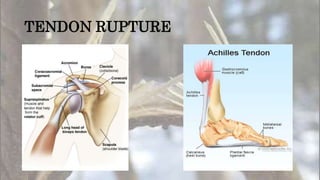
TENDON RUPTURE
FASCIITIS
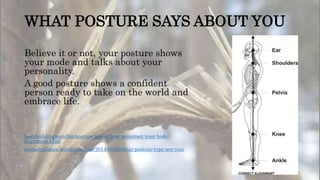
WHAT POSTURE SAYS ABOUT YOU
Believe it or not, your posture shows
your mode and talks about your
personality.
A good posture shows a confident
person ready to take on the world and
embrace life.
bodybuilding.com/fun/posture-power-how-to-correct-your-body-
alignment.html
embodypilates.wordpress.com/2014/05/29/what-posture-type-are-you/
It’s not only about “looking
good”, it’s about feeling good.
Welfare and self-esteem are
important to have a healthy
body, so each time you seem to
be with your head down,
hunched backs and
imbalanced hips, you’d better
look at what’s wrong with you.
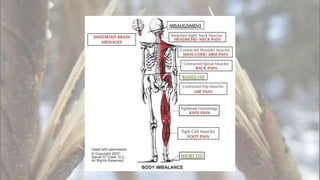
An improper posture can lead to:
• Chronic back, neck, and shoulder pain
• Foot, knee, hip, and back injuries
• Headaches
• Stiffness
• Fatigue
• Muscle atrophy and weakness
• Difficulty breathing
• Digestion issues
• Impingement and nerve compression
• Sciatica
• Carpal tunnel syndrome
BODY ALIGNMENT
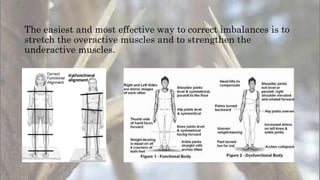
Most postural deviations occur because the muscles that work
to hold a joint in place are imbalanced. Generally speaking,
one muscle group will be too tight and the opposing muscle
group will be too loose or weak.
When imbalances like these occur, overactive muscles
compensate for underactive muscles, which causes tension,
fatigue, and discomfort.
The easiest and most effective way to correct imbalances is to
stretch the overactive muscles and to strengthen the
underactive muscles.
It is common in:
• Office workers
• Obese people
• Large breasted women
• Very tall people
It is common in:
• Dancers
• Pregnant women
• Obese people
• Gymnast
• Sports people exposed
to repeated lumbar
extension
It is common in:
• Teenagers
• People who is
standing for a
long time
It is common in:
• Boxers
• People with poor
core and back
stability
• People who
practice “sit-up”
exercises.
Military type posture is
often seen and is
characterized by the
chest being pushed
forward and an
increased lumbar curve,
resulting in short, tight
hip flexors and lower
back muscles, and weak,
lengthened hamstrings
and abdominal
muscles…
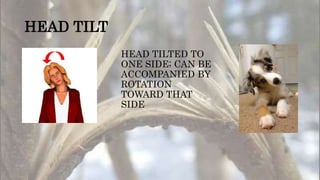
HEAD TILT
HEAD TILTED TO
ONE SIDE; CAN BE
ACCOMPANIED BY
ROTATION
TOWARD THAT
SIDE
UNEVEN SHOULDERS
ONE SHOULDER
SITS HIGHER
THAN THE
OTHER
UNEVEN HIPS
ONE HIP SITS
HIGHER, CAN
GIVE THE
PERCEPTION OF
LEG LENGTH
DISCREPANCY
FEET TURNED IN OR OUT
TOES ARE
TURNED IN
TOWARD THE
MIDLINE OF
THE BODY
TOES ARE
TURNED OUT
AWAY FROM
THE MIDLINE
OF THE BODY
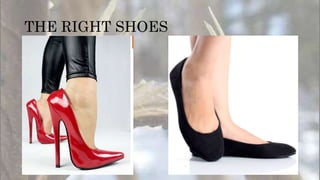
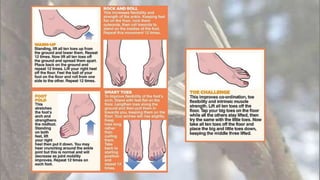
THE RIGHT SHOES
Heels are beautiful, but try not to use
them all time. If you have to, just
find a moment to stretch your feet
and legs in order to relax your bones
and muscles.
Even, some sports shoes can harm
your feet, so if you practice some
port, with special shoes, don’t forget
to stretch and relax.
Bone injuries

Bone injuries

  • 1.
  • 2.
  • 3.
    BURSITIS The bursa isa sac filled with lubricating fluid called hyaline liquid, located between tissues such as bone, muscle, tendons, and skin, that decreases rubbing, friction, and irritation. Bursitis is the inflammation of the bursa. It is most often caused by repetitive, minor impact on the area, or from a sudden, more serious injury.
  • 5.
  • 6.
    FRACTURES Fractures occur whenafter a bump, a bone breaks in two or more parts. For a bone to heal, it is important to keep its parts aligned together.
  • 7.
  • 8.
    SPRAINS Sprains occur whenligaments break because of overweight or an incorrect movement.
  • 9.
  • 10.
  • 11.
    WHAT POSTURE SAYSABOUT YOU Believe it or not, your posture shows your mode and talks about your personality. A good posture shows a confident person ready to take on the world and embrace life. bodybuilding.com/fun/posture-power-how-to-correct-your-body- alignment.html embodypilates.wordpress.com/2014/05/29/what-posture-type-are-you/
  • 12.
    It’s not onlyabout “looking good”, it’s about feeling good. Welfare and self-esteem are important to have a healthy body, so each time you seem to be with your head down, hunched backs and imbalanced hips, you’d better look at what’s wrong with you.
  • 13.
    An improper posturecan lead to: • Chronic back, neck, and shoulder pain • Foot, knee, hip, and back injuries • Headaches • Stiffness • Fatigue • Muscle atrophy and weakness • Difficulty breathing • Digestion issues • Impingement and nerve compression • Sciatica • Carpal tunnel syndrome
  • 14.
    BODY ALIGNMENT Most posturaldeviations occur because the muscles that work to hold a joint in place are imbalanced. Generally speaking, one muscle group will be too tight and the opposing muscle group will be too loose or weak. When imbalances like these occur, overactive muscles compensate for underactive muscles, which causes tension, fatigue, and discomfort.
  • 15.
    The easiest andmost effective way to correct imbalances is to stretch the overactive muscles and to strengthen the underactive muscles.
  • 17.
    It is commonin: • Office workers • Obese people • Large breasted women • Very tall people
  • 18.
    It is commonin: • Dancers • Pregnant women • Obese people • Gymnast • Sports people exposed to repeated lumbar extension
  • 19.
    It is commonin: • Teenagers • People who is standing for a long time
  • 20.
    It is commonin: • Boxers • People with poor core and back stability • People who practice “sit-up” exercises.
  • 21.
    Military type postureis often seen and is characterized by the chest being pushed forward and an increased lumbar curve, resulting in short, tight hip flexors and lower back muscles, and weak, lengthened hamstrings and abdominal muscles…
  • 22.
    HEAD TILT HEAD TILTEDTO ONE SIDE; CAN BE ACCOMPANIED BY ROTATION TOWARD THAT SIDE
  • 23.
  • 24.
    UNEVEN HIPS ONE HIPSITS HIGHER, CAN GIVE THE PERCEPTION OF LEG LENGTH DISCREPANCY
  • 25.
    FEET TURNED INOR OUT TOES ARE TURNED IN TOWARD THE MIDLINE OF THE BODY TOES ARE TURNED OUT AWAY FROM THE MIDLINE OF THE BODY
  • 27.
  • 29.
    Heels are beautiful,but try not to use them all time. If you have to, just find a moment to stretch your feet and legs in order to relax your bones and muscles. Even, some sports shoes can harm your feet, so if you practice some port, with special shoes, don’t forget to stretch and relax.