Alignment of body head, neck and shoulder.
position of a person's body when standing or sitting:
"good posture will protect your spine".
Latin word ponere which means to put or to place
Good posture
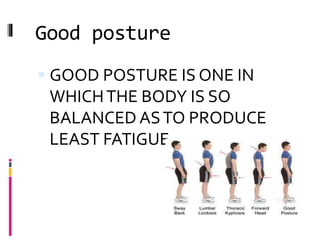
 GOOD POSTURE IS ONE IN
WHICHTHE BODY IS SO
BALANCED ASTO PRODUCE
LEAST FATIGUE.
Good posture
 posture can provide a significant amount of
important information on nonverbal
communication and emotional cues. Psychological
studies have shown the effects of body posture on
emotions. This research can be traced back to Charles
Darwin when he studied emotion and movement in
man and animals.[1]
ADVANTAGES OF CORRECT POSTURE
 COMFORT
 FUTURE HEALTH
 EMOTIONAL CONTROL
 PHYSICAL APPEARANCE
 GRACE AND EFFICIENCY OF MOVEMENT
 FITNESS
 SOCIALVALUES
 PREVENT DISORDERS & DISEASE
 BREATH BETTER
 RELIEVE PAIN
 RELAX YOUR MUSCELS
 CHANGE IN MENTAL ATTITUDE
 LESSENS THE FATIGUE
 IMPROVE SPEECH
COMMON POSTURAL DEFORMITIES
 Spinal Curvature
 a)Kyphosis
 b)Lordosis
 c)Scoliosis
 Flat foot
 Knock knees
 Bow legs
 Round shoulder
 It implies an increase or exaggeration of
backward or posterior curve or A decrease of
reversal of forward curve.
 It is also called ROUND UPPERBACK or
HUNCH BACK.
 Depression of chest is common in Kyphosis.
Malnutrition
Illness
Crowd
Deficiency of pure air
Insufficient exercises
Rickets
Carrying heavy load on shoulder
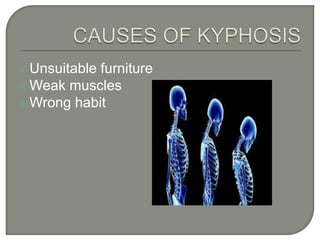
Unsuitable furniture
Weak muscles
Wrong habit
 Sit in a chair, your buttocks should touch the
back of chair. By looking upward, hold your
hands each other behind the back in such a
way that your shoulder may remain in stretch
backward. remain in the position.
 Always keep a pillow under your back while
sleeping.
 Bend your head backward
 in standing position.
 Perfom dhanurasana &
 bhujangasana regularly.
LORDOSIS
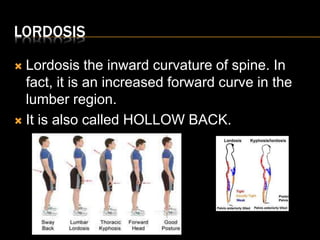
 Lordosis the inward curvature of spine. In
fact, it is an increased forward curve in the
lumber region.
 It is also called HOLLOW BACK.
CAUSES
 Imbalance diet
 Improper development of muscles.
 Obesity
 Disease
PRECAUTIONS & REMEDIES
 From standing position bend forward from hip
level. Repeat the exercise 10 times.
 Perform naukasana, paschimottanasana &
halasana
 Perform sit ups regularly & toe touch
 Lie down in supine position, raise your legs at
45 degree angle. remain in the same position
for some time.
 In sitting position touch your head to your
knees.
scoliosis
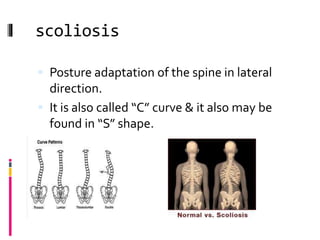
 Posture adaptation of the spine in lateral
direction.
 It is also called “C” curve & it also may be
found in “S” shape.
Cause
 Disease in joint of bone.
 Un developed legs
 Infantile paralysis
 Rickets
Remedies
 Bending exercise should be performed in
apposite side.
 Hold horizontal bar
with hands & let your
body hang some time.
 Swinging on
horizontal bar left & right.
 To swim by using
breast stroke.
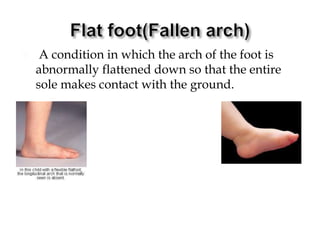
 A condition in which the arch of the foot is
abnormally flattened down so that the entire
sole makes contact with the ground.
 Weak muscles.
 Improper shoes
 Carrying heavy weight for a longer period.
 The shoes should be of proper shape & size.
 Should not walk bare feet for longer duration.
 Obesity should be avoided.
 Should not force the babies to walk at very
early stage.
 Carrying heavy weight in childhood should be
avoided.
 High heeled shoe should be avoided.
 Walking on heels.
 walking on inner &
outer side of feet.
 Walk on toes.
 To perform up & down heel.
 Jumping on toes for some time.
 Rope skipping.
 To perform vajrasana.
 In this position both knees touch or knock each other
in normal standing position
 The gap between ankles increase.
 Lack of Balance diet specially vitamin ‘d’ calcium &
phosphorus is the main cause.
 It may also be due to rickets.
 Chronic illness obesity, flat foot & carrying heavy
weight in early age .
 Precaution:
Balance diet should be taken.
Babies should not be
forced to walk at early age.
 Horse riding is the best exercise.
 Perform padmasana & gaumukhasana regularly.
 Use of Cod liver oil.
 Use of walking calipers may also be beneficial.
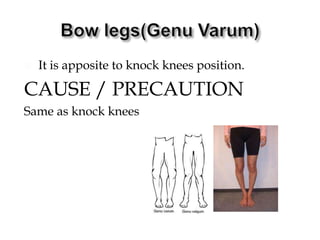
 It is apposite to knock knees position.
CAUSE / PRECAUTION
Same as knock knees
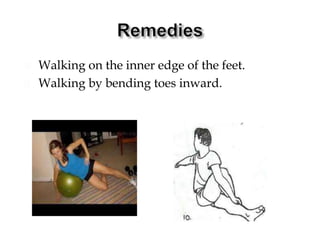
 Walking on the inner edge of the feet.
 Walking by bending toes inward.
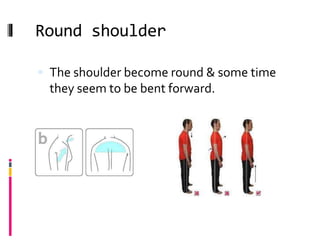
Round shoulder
 The shoulder become round & some time
they seem to be bent forward.
Cause & Precaution
 May be due to heredity.
 Improper posture.
 By wearing very tight clothes.
 Sitting on improper furniture.
 Lack of exercise.
 Precaution: do not sit walk or stand in bent
position.
 Avoid tight fitting clothes. Etc.
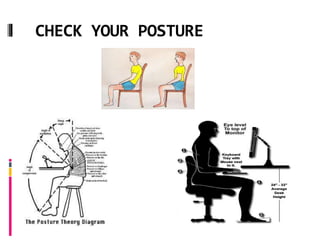
CHECH YOUR POSTURE
CHECK YOUR POSTURE

posture U-4 .pptx

  • 1.
    Alignment of bodyhead, neck and shoulder. position of a person's body when standing or sitting: "good posture will protect your spine". Latin word ponere which means to put or to place
  • 2.
    Good posture  GOODPOSTURE IS ONE IN WHICHTHE BODY IS SO BALANCED ASTO PRODUCE LEAST FATIGUE.
  • 3.
    Good posture  posturecan provide a significant amount of important information on nonverbal communication and emotional cues. Psychological studies have shown the effects of body posture on emotions. This research can be traced back to Charles Darwin when he studied emotion and movement in man and animals.[1]
  • 4.
    ADVANTAGES OF CORRECTPOSTURE  COMFORT  FUTURE HEALTH  EMOTIONAL CONTROL  PHYSICAL APPEARANCE  GRACE AND EFFICIENCY OF MOVEMENT  FITNESS  SOCIALVALUES
  • 5.
     PREVENT DISORDERS& DISEASE  BREATH BETTER  RELIEVE PAIN  RELAX YOUR MUSCELS  CHANGE IN MENTAL ATTITUDE  LESSENS THE FATIGUE  IMPROVE SPEECH
  • 6.
    COMMON POSTURAL DEFORMITIES Spinal Curvature  a)Kyphosis  b)Lordosis  c)Scoliosis  Flat foot  Knock knees  Bow legs  Round shoulder
  • 7.
     It impliesan increase or exaggeration of backward or posterior curve or A decrease of reversal of forward curve.  It is also called ROUND UPPERBACK or HUNCH BACK.  Depression of chest is common in Kyphosis.
  • 8.
    Malnutrition Illness Crowd Deficiency of pureair Insufficient exercises Rickets Carrying heavy load on shoulder
  • 9.
  • 10.
     Sit ina chair, your buttocks should touch the back of chair. By looking upward, hold your hands each other behind the back in such a way that your shoulder may remain in stretch backward. remain in the position.  Always keep a pillow under your back while sleeping.  Bend your head backward  in standing position.  Perfom dhanurasana &  bhujangasana regularly.
  • 11.
    LORDOSIS  Lordosis theinward curvature of spine. In fact, it is an increased forward curve in the lumber region.  It is also called HOLLOW BACK.
  • 12.
    CAUSES  Imbalance diet Improper development of muscles.  Obesity  Disease
  • 13.
    PRECAUTIONS & REMEDIES From standing position bend forward from hip level. Repeat the exercise 10 times.  Perform naukasana, paschimottanasana & halasana  Perform sit ups regularly & toe touch  Lie down in supine position, raise your legs at 45 degree angle. remain in the same position for some time.  In sitting position touch your head to your knees.
  • 14.
    scoliosis  Posture adaptationof the spine in lateral direction.  It is also called “C” curve & it also may be found in “S” shape.
  • 15.
    Cause  Disease injoint of bone.  Un developed legs  Infantile paralysis  Rickets
  • 16.
    Remedies  Bending exerciseshould be performed in apposite side.  Hold horizontal bar with hands & let your body hang some time.  Swinging on horizontal bar left & right.  To swim by using breast stroke.
  • 17.
     A conditionin which the arch of the foot is abnormally flattened down so that the entire sole makes contact with the ground.
  • 18.
     Weak muscles. Improper shoes  Carrying heavy weight for a longer period.
  • 19.
     The shoesshould be of proper shape & size.  Should not walk bare feet for longer duration.  Obesity should be avoided.  Should not force the babies to walk at very early stage.  Carrying heavy weight in childhood should be avoided.  High heeled shoe should be avoided.
  • 20.
     Walking onheels.  walking on inner & outer side of feet.  Walk on toes.  To perform up & down heel.  Jumping on toes for some time.  Rope skipping.  To perform vajrasana.
  • 21.
     In thisposition both knees touch or knock each other in normal standing position  The gap between ankles increase.
  • 22.
     Lack ofBalance diet specially vitamin ‘d’ calcium & phosphorus is the main cause.  It may also be due to rickets.  Chronic illness obesity, flat foot & carrying heavy weight in early age .  Precaution: Balance diet should be taken. Babies should not be forced to walk at early age.
  • 23.
     Horse ridingis the best exercise.  Perform padmasana & gaumukhasana regularly.  Use of Cod liver oil.  Use of walking calipers may also be beneficial.
  • 24.
     It isapposite to knock knees position. CAUSE / PRECAUTION Same as knock knees
  • 25.
     Walking onthe inner edge of the feet.  Walking by bending toes inward.
  • 26.
    Round shoulder  Theshoulder become round & some time they seem to be bent forward.
  • 27.
    Cause & Precaution May be due to heredity.  Improper posture.  By wearing very tight clothes.  Sitting on improper furniture.  Lack of exercise.  Precaution: do not sit walk or stand in bent position.  Avoid tight fitting clothes. Etc.
  • 28.
  • 29.