AGENDA
 GROOMING
 BODY LANGUAGE
 PROFESSIONAL ETIQUETTE
Grooming and Its Importance
 It is the process of making yourself look neat
and attractive.
 The things which you do to make yourself and
your appearance tidy and pleasant.
 Grooming is important for a positive self-image
and to encourage and assist the resident to
maintain a pleasing and attractive appearance.
Personal Grooming Fundamentals
 Hair clean and styled appropriately
 Clean nails, skin and teeth
 Many professionals wear make-up
(depends on field)
 Check fragrance and clothing care
People Perceptions from Groomed
appearance of Professionals
 Professionalism
 Level of sophistication
 Intelligence
 Credibility or Reliability
 Respect
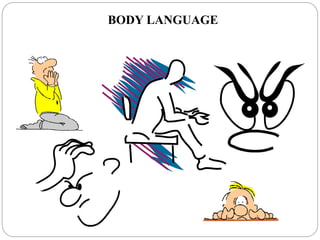
BODY LANGUAGE
Avoid Gossip
 Distance yourself from office gossip and
participating in ‘the grapevine’
 Be able to identify rumors and gossip
 Be certain to have the facts before sharing
information with others
 When someone tries to share gossip with you
 Walk away
 Change the subject
 Say, "I'm not comfortable talking about that”
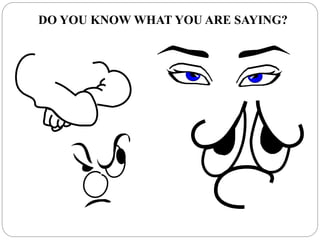
DO YOU KNOW WHAT YOU ARE SAYING?
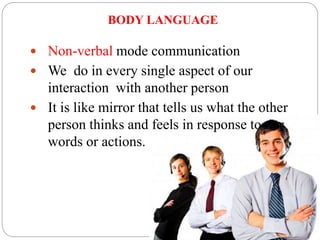
 Non-verbal mode communication
 We do in every single aspect of our
interaction with another person
 It is like mirror that tells us what the other
person thinks and feels in response to our
words or actions.
BODY LANGUAGE
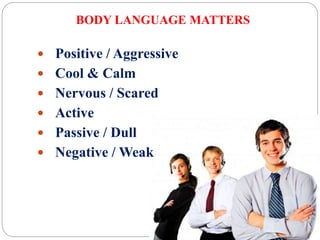
 Positive / Aggressive
 Cool & Calm
 Nervous / Scared
 Active
 Passive / Dull
 Negative / Weak
BODY LANGUAGE MATTERS
Importance of Nonverbal
Communication
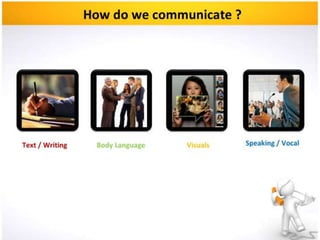
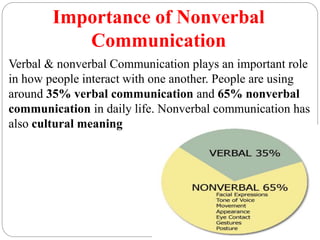
Verbal & nonverbal Communication plays an important role
in how people interact with one another. People are using
around 35% verbal communication and 65% nonverbal
communication in daily life. Nonverbal communication has
also cultural meaning
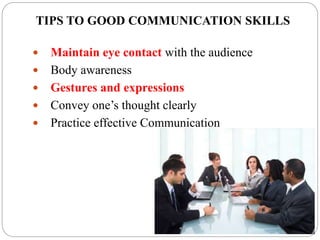
 Maintain eye contact with the audience
 Body awareness
 Gestures and expressions
 Convey one’s thought clearly
 Practice effective Communication
TIPS TO GOOD COMMUNICATION SKILLS
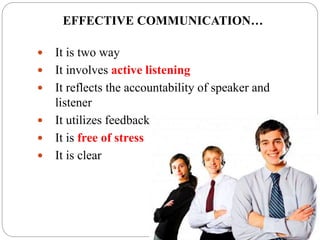
 It is two way
 It involves active listening
 It reflects the accountability of speaker and
listener
 It utilizes feedback
 It is free of stress
 It is clear
EFFECTIVE COMMUNICATION…
Etiquette Basics
Creating a positive image
 Behavior:
• Exhibit a positive attitude and pleasant demeanor
• Use a firm handshake
• Maintain good eye contact
• Appropriate introductions – introduce someone by
their title and last name (Ms. Mrs. Mr. Dr. Smith),
unless otherwise specified
• Rise when you are introducing someone or you are
being introduced
• Nonverbal communication is important
• Show common respect and consideration for others
Professional Appearance
 Grooming is fundamental
• Hair clean and styled appropriately
• Clean nails, skin and teeth
• Many professionals wear make-up
(depends on field)
• Check fragrance and clothing care
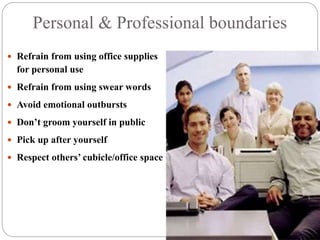
Personal & Professional boundaries
 Refrain from using office supplies
for personal use
 Refrain from using swear words
 Avoid emotional outbursts
 Don’t groom yourself in public
 Pick up after yourself
 Respect others’ cubicle/office space

Body language

  • 1.
    AGENDA  GROOMING  BODYLANGUAGE  PROFESSIONAL ETIQUETTE
  • 2.
    Grooming and ItsImportance  It is the process of making yourself look neat and attractive.  The things which you do to make yourself and your appearance tidy and pleasant.  Grooming is important for a positive self-image and to encourage and assist the resident to maintain a pleasing and attractive appearance.
  • 3.
    Personal Grooming Fundamentals Hair clean and styled appropriately  Clean nails, skin and teeth  Many professionals wear make-up (depends on field)  Check fragrance and clothing care
  • 4.
    People Perceptions fromGroomed appearance of Professionals  Professionalism  Level of sophistication  Intelligence  Credibility or Reliability  Respect
  • 5.
  • 7.
    Avoid Gossip  Distanceyourself from office gossip and participating in ‘the grapevine’  Be able to identify rumors and gossip  Be certain to have the facts before sharing information with others  When someone tries to share gossip with you  Walk away  Change the subject  Say, "I'm not comfortable talking about that”
  • 8.
    DO YOU KNOWWHAT YOU ARE SAYING?
  • 9.
     Non-verbal modecommunication  We do in every single aspect of our interaction with another person  It is like mirror that tells us what the other person thinks and feels in response to our words or actions. BODY LANGUAGE
  • 10.
     Positive /Aggressive  Cool & Calm  Nervous / Scared  Active  Passive / Dull  Negative / Weak BODY LANGUAGE MATTERS
  • 11.
    Importance of Nonverbal Communication Verbal& nonverbal Communication plays an important role in how people interact with one another. People are using around 35% verbal communication and 65% nonverbal communication in daily life. Nonverbal communication has also cultural meaning
  • 12.
     Maintain eyecontact with the audience  Body awareness  Gestures and expressions  Convey one’s thought clearly  Practice effective Communication TIPS TO GOOD COMMUNICATION SKILLS
  • 13.
     It istwo way  It involves active listening  It reflects the accountability of speaker and listener  It utilizes feedback  It is free of stress  It is clear EFFECTIVE COMMUNICATION…
  • 14.
    Etiquette Basics Creating apositive image  Behavior: • Exhibit a positive attitude and pleasant demeanor • Use a firm handshake • Maintain good eye contact • Appropriate introductions – introduce someone by their title and last name (Ms. Mrs. Mr. Dr. Smith), unless otherwise specified • Rise when you are introducing someone or you are being introduced • Nonverbal communication is important • Show common respect and consideration for others
  • 15.
    Professional Appearance  Groomingis fundamental • Hair clean and styled appropriately • Clean nails, skin and teeth • Many professionals wear make-up (depends on field) • Check fragrance and clothing care
  • 16.
    Personal & Professionalboundaries  Refrain from using office supplies for personal use  Refrain from using swear words  Avoid emotional outbursts  Don’t groom yourself in public  Pick up after yourself  Respect others’ cubicle/office space