GROOMING
AGENDA
► GROOMING
► BODY LANGUAGE
► PROFESSIONAL ETIQUETTE
Elegance is reflected in your
actions,
confidence in your posture, and
respect in your demeanor.
GROOMING
Personal Hygiene
⚬Daily shower and use of deodorant.
⚬Clean, trimmed nails.
⚬Oral hygiene (brushing teeth, fresh breath).
⚬Neatly groomed hair (style appropriate for work).
Appropriate Dressing
⚬Formal wear (e.g., suits, blazers) for corporate
settings.
⚬Business casual attire for less formal environments.
⚬Avoid flashy colors or patterns; stick to neutrals.
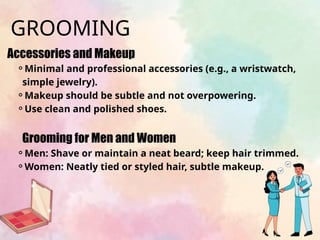
Accessories and Makeup
⚬Minimal and professional accessories (e.g., a wristwatch,
simple jewelry).
⚬Makeup should be subtle and not overpowering.
⚬Use clean and polished shoes.
Grooming for Men and Women
⚬Men: Shave or maintain a neat beard; keep hair trimmed.
⚬Women: Neatly tied or styled hair, subtle makeup.
GROOMING
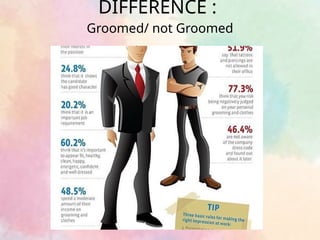
DIFFERENCE :
Groomed/ not Groomed
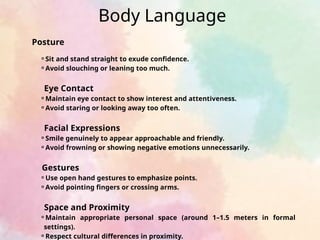
Body Language
Posture
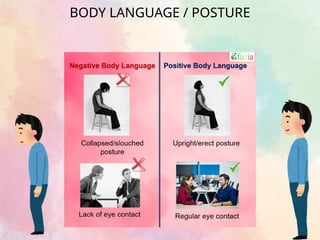
⚬Sit and stand straight to exude confidence.
⚬Avoid slouching or leaning too much.
Eye Contact
⚬Maintain eye contact to show interest and attentiveness.
⚬Avoid staring or looking away too often.
Facial Expressions
⚬Smile genuinely to appear approachable and friendly.
⚬Avoid frowning or showing negative emotions unnecessarily.
Gestures
⚬Use open hand gestures to emphasize points.
⚬Avoid pointing fingers or crossing arms.
Space and Proximity
⚬Maintain appropriate personal space (around 1–1.5 meters in formal
settings).
⚬Respect cultural differences in proximity.
BODY LANGUAGE / POSTURE
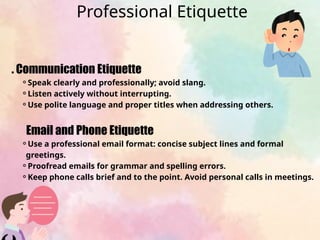
. Communication Etiquette
⚬Speak clearly and professionally; avoid slang.
⚬Listen actively without interrupting.
⚬Use polite language and proper titles when addressing others.
Email and Phone Etiquette
⚬Use a professional email format: concise subject lines and formal
greetings.
⚬Proofread emails for grammar and spelling errors.
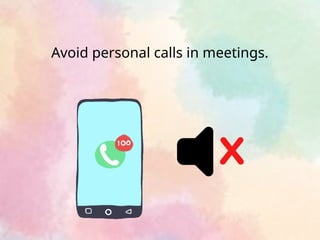
⚬Keep phone calls brief and to the point. Avoid personal calls in meetings.
Professional Etiquette
Avoid personal calls in meetings.
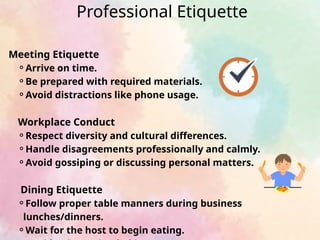
Meeting Etiquette
⚬Arrive on time.
⚬Be prepared with required materials.
⚬Avoid distractions like phone usage.
Workplace Conduct
⚬Respect diversity and cultural differences.
⚬Handle disagreements professionally and calmly.
⚬Avoid gossiping or discussing personal matters.
Dining Etiquette
⚬Follow proper table manners during business
lunches/dinners.
⚬Wait for the host to begin eating.
Professional Etiquette
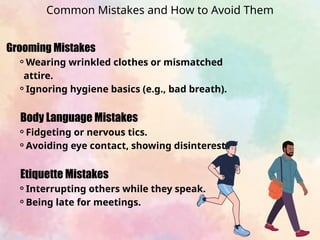
Grooming Mistakes
⚬Wearing wrinkled clothes or mismatched
attire.
⚬Ignoring hygiene basics (e.g., bad breath).
Body Language Mistakes
⚬Fidgeting or nervous tics.
⚬Avoiding eye contact, showing disinterest.
Etiquette Mistakes
⚬Interrupting others while they speak.
⚬Being late for meetings.
Common Mistakes and How to Avoid Them
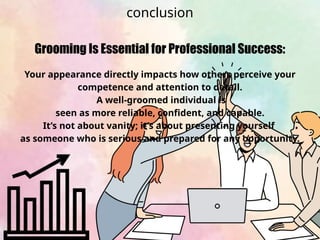
Grooming Is Essential for Professional Success:
Your appearance directly impacts how others perceive your
competence and attention to detail.
A well-groomed individual is
seen as more reliable, confident, and capable.
It’s not about vanity; it’s about presenting yourself
as someone who is serious and prepared for any opportunity.
conclusion
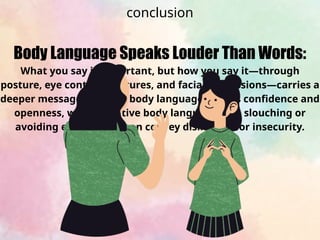
Body Language Speaks Louder Than Words:
What you say is important, but how you say it—through
posture, eye contact, gestures, and facial expressions—carries a
deeper message. Positive body language signals confidence and
openness, while negative body language (like slouching or
avoiding eye contact) can convey disinterest or insecurity.
conclusion
conclusion
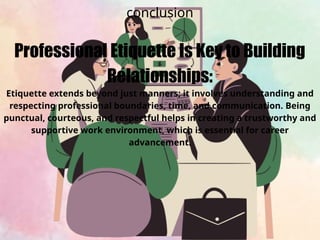
Professional Etiquette Is Key to Building
Relationships:
Etiquette extends beyond just manners; it involves understanding and
respecting professional boundaries, time, and communication. Being
punctual, courteous, and respectful helps in creating a trustworthy and
supportive work environment, which is essential for career
advancement.
"You never get a second chance to make a first
impression. Grooming, body language, and
etiquette make that first impression count."
PRESENTED BY:
⚬Monika Dubey
⚬Om Narayan
Patel
⚬Omson Mehra

Hotel management, grooming, dressing, behaviour

  • 1.
  • 2.
    AGENDA ► GROOMING ► BODYLANGUAGE ► PROFESSIONAL ETIQUETTE
  • 3.
    Elegance is reflectedin your actions, confidence in your posture, and respect in your demeanor.
  • 4.
    GROOMING Personal Hygiene ⚬Daily showerand use of deodorant. ⚬Clean, trimmed nails. ⚬Oral hygiene (brushing teeth, fresh breath). ⚬Neatly groomed hair (style appropriate for work). Appropriate Dressing ⚬Formal wear (e.g., suits, blazers) for corporate settings. ⚬Business casual attire for less formal environments. ⚬Avoid flashy colors or patterns; stick to neutrals.
  • 5.
    Accessories and Makeup ⚬Minimaland professional accessories (e.g., a wristwatch, simple jewelry). ⚬Makeup should be subtle and not overpowering. ⚬Use clean and polished shoes. Grooming for Men and Women ⚬Men: Shave or maintain a neat beard; keep hair trimmed. ⚬Women: Neatly tied or styled hair, subtle makeup. GROOMING
  • 6.
  • 7.
    Body Language Posture ⚬Sit andstand straight to exude confidence. ⚬Avoid slouching or leaning too much. Eye Contact ⚬Maintain eye contact to show interest and attentiveness. ⚬Avoid staring or looking away too often. Facial Expressions ⚬Smile genuinely to appear approachable and friendly. ⚬Avoid frowning or showing negative emotions unnecessarily. Gestures ⚬Use open hand gestures to emphasize points. ⚬Avoid pointing fingers or crossing arms. Space and Proximity ⚬Maintain appropriate personal space (around 1–1.5 meters in formal settings). ⚬Respect cultural differences in proximity.
  • 8.
  • 9.
    . Communication Etiquette ⚬Speakclearly and professionally; avoid slang. ⚬Listen actively without interrupting. ⚬Use polite language and proper titles when addressing others. Email and Phone Etiquette ⚬Use a professional email format: concise subject lines and formal greetings. ⚬Proofread emails for grammar and spelling errors. ⚬Keep phone calls brief and to the point. Avoid personal calls in meetings. Professional Etiquette
  • 10.
  • 11.
    Meeting Etiquette ⚬Arrive ontime. ⚬Be prepared with required materials. ⚬Avoid distractions like phone usage. Workplace Conduct ⚬Respect diversity and cultural differences. ⚬Handle disagreements professionally and calmly. ⚬Avoid gossiping or discussing personal matters. Dining Etiquette ⚬Follow proper table manners during business lunches/dinners. ⚬Wait for the host to begin eating. Professional Etiquette
  • 12.
    Grooming Mistakes ⚬Wearing wrinkledclothes or mismatched attire. ⚬Ignoring hygiene basics (e.g., bad breath). Body Language Mistakes ⚬Fidgeting or nervous tics. ⚬Avoiding eye contact, showing disinterest. Etiquette Mistakes ⚬Interrupting others while they speak. ⚬Being late for meetings. Common Mistakes and How to Avoid Them
  • 13.
    Grooming Is Essentialfor Professional Success: Your appearance directly impacts how others perceive your competence and attention to detail. A well-groomed individual is seen as more reliable, confident, and capable. It’s not about vanity; it’s about presenting yourself as someone who is serious and prepared for any opportunity. conclusion
  • 14.
    Body Language SpeaksLouder Than Words: What you say is important, but how you say it—through posture, eye contact, gestures, and facial expressions—carries a deeper message. Positive body language signals confidence and openness, while negative body language (like slouching or avoiding eye contact) can convey disinterest or insecurity. conclusion
  • 15.
    conclusion Professional Etiquette IsKey to Building Relationships: Etiquette extends beyond just manners; it involves understanding and respecting professional boundaries, time, and communication. Being punctual, courteous, and respectful helps in creating a trustworthy and supportive work environment, which is essential for career advancement.
  • 16.
    "You never geta second chance to make a first impression. Grooming, body language, and etiquette make that first impression count."
  • 17.
    PRESENTED BY: ⚬Monika Dubey ⚬OmNarayan Patel ⚬Omson Mehra