Blue biotechnology
Deepali Rahi
CPBMB
KAU
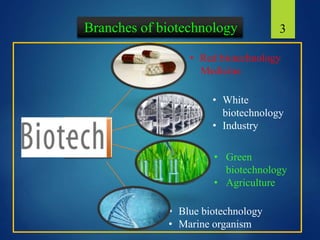
3Branches of biotechnology
• Blue biotechnology
• Marine organism
• White
biotechnology
• Industry
• Red biotechnology
Medicine
• Green
biotechnology
• Agriculture
Outline
 Introduction
 Role of blue biotechnology
 Applications
 Transgenic fishes
 Summary
 Future line of work
4
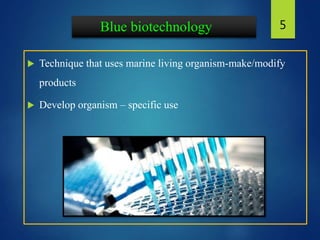
Blue biotechnology
 Technique that uses marine living organism-make/modify
products
 Develop organism – specific use
5
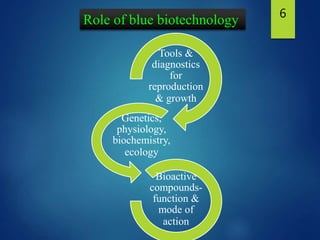
6
Tools &
diagnostics
for
reproduction
& growth
Genetics,
physiology,
biochemistry,
ecology
Bioactive
compounds-
function &
mode of
action
Role of blue biotechnology
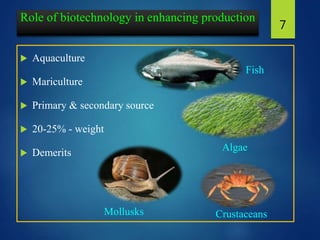
Role of biotechnology in enhancing production
 Aquaculture
 Mariculture
 Primary & secondary source
 20-25% - weight
 Demerits
7
Fish
Algae
CrustaceansMollusks
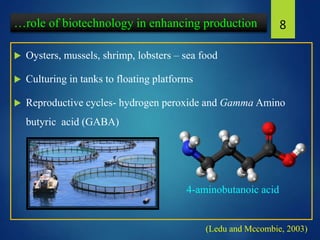
 Oysters, mussels, shrimp, lobsters – sea food
 Culturing in tanks to floating platforms
 Reproductive cycles- hydrogen peroxide and Gamma Amino
butyric acid (GABA)
8…role of biotechnology in enhancing production
(Ledu and Mccombie, 2003)
4-aminobutanoic acid
8
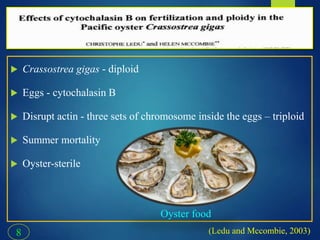
 Crassostrea gigas - diploid
 Eggs - cytochalasin B
 Disrupt actin - three sets of chromosome inside the eggs – triploid
 Summer mortality
 Oyster-sterile
9
(Ledu and Mccombie, 2003)8
Oyster food
Applications of blue biotechnology
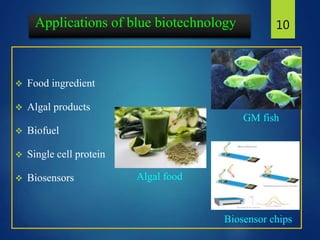
 Food ingredient
 Algal products
 Biofuel
 Single cell protein
 Biosensors
10
GM fish
Algal food
Biosensor chips
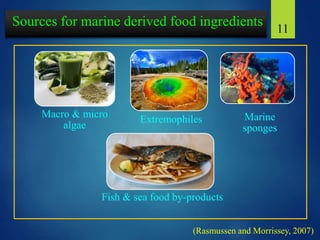
Sources for marine derived food ingredients
Macro & micro
algae
Extremophiles Marine
sponges
Fish & sea food by-products
11
(Rasmussen and Morrissey, 2007)
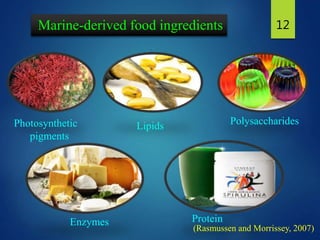
Marine-derived food ingredients 12
Photosynthetic
pigments
Protein
Lipids Polysaccharides
Enzymes
(Rasmussen and Morrissey, 2007)
13
Algal
products
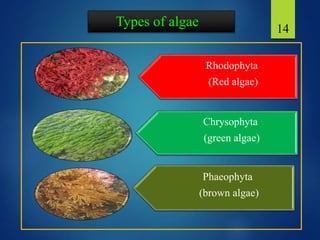
Types of algae
Rhodophyta
(Red algae)
Chrysophyta
(green algae)
Phaeophyta
(brown algae)
14
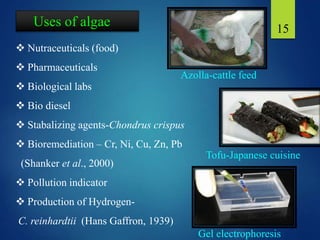
15
 Nutraceuticals (food)
 Pharmaceuticals
 Biological labs
 Bio diesel
 Stabalizing agents-Chondrus crispus
 Bioremediation – Cr, Ni, Cu, Zn, Pb
(Shanker et al., 2000)
 Pollution indicator
 Production of Hydrogen-
C. reinhardtii (Hans Gaffron, 1939)
Uses of algae
Azolla-cattle feed
Tofu-Japanese cuisine
Gel electrophoresis
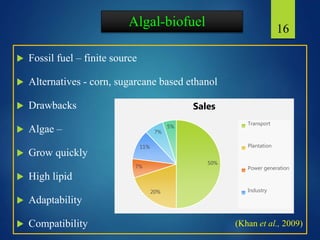
Algal-biofuel
 Fossil fuel – finite source
 Alternatives - corn, sugarcane based ethanol
 Drawbacks
 Algae –
 Grow quickly
 High lipid
 Adaptability
 Compatibility
16
(Khan et al., 2009)
50%
20%
7%
11%
7%
5%
Sales
Transport
Plantation
Power generation
Industry
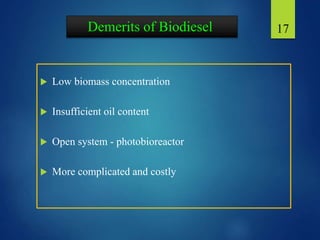
Demerits of Biodiesel
 Low biomass concentration
 Insufficient oil content
 Open system - photobioreactor
 More complicated and costly
17
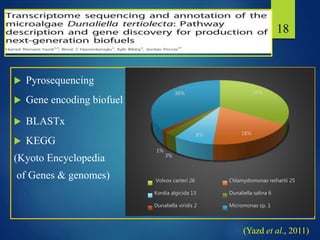
 Pyrosequencing
 Gene encoding biofuel
 BLASTx
 KEGG
(Kyoto Encyclopedia
of Genes & genomes)
18
(Yazd et al., 2011)
34%
18%8%
3%
1%
36%
Volvox carteri 26 Chlamydomonas reihartii 25
Kordia algicida 13 Dunaliella salina 6
Dunaliella viridis 2 Micromonas sp. 1
19
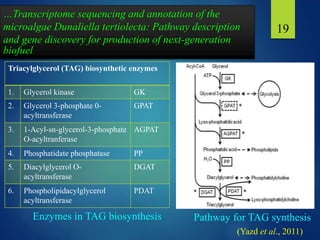
…Transcriptome sequencing and annotation of the
microalgae Dunaliella tertiolecta: Pathway description
and gene discovery for production of next-generation
biofuel
Enzymes in TAG biosynthesis Pathway for TAG synthesis
(Yazd et al., 2011)
Triacylglycerol (TAG) biosynthetic enzymes
1. Glycerol kinase GK
2. Glycerol 3-phosphate 0-
acyltransferase
GPAT
3. 1-Acyl-sn-glycerol-3-phosphate
O-acyltranferase
AGPAT
4. Phosphatidate phosphatase PP
5. Diacylglycerol O-
acyltransferase
DGAT
6. Phospholipidacylglycerol
acyltransferase
PDAT
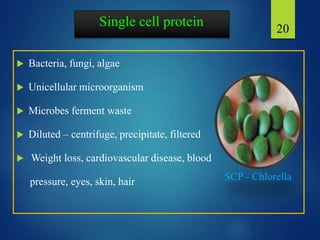
Single cell protein
 Bacteria, fungi, algae
 Unicellular microorganism
 Microbes ferment waste
 Diluted – centrifuge, precipitate, filtered
 Weight loss, cardiovascular disease, blood
pressure, eyes, skin, hair
20
SCP - Chlorella
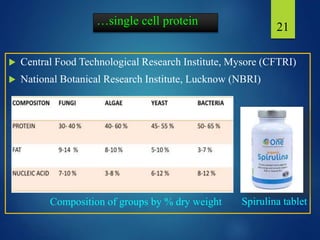
…single cell protein
 Central Food Technological Research Institute, Mysore (CFTRI)
 National Botanical Research Institute, Lucknow (NBRI)
21
Composition of groups by % dry weight Spirulina tablet
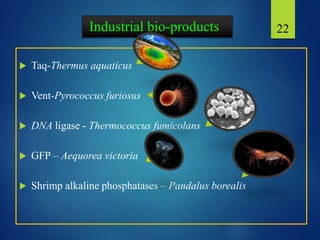
Industrial bio-products
 Taq-Thermus aquaticus
 Vent-Pyrococcus furiosus
 DNA ligase - Thermococcus fumicolans
 GFP – Aequorea victoria
 Shrimp alkaline phosphatases – Pandalus borealis
22
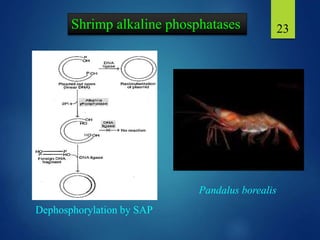
Shrimp alkaline phosphatases 23
Pandalus borealis
Dephosphorylation by SAP
24
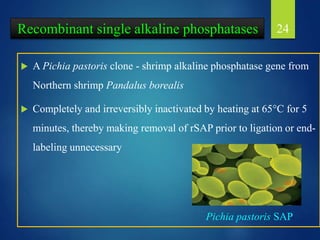
 A Pichia pastoris clone - shrimp alkaline phosphatase gene from
Northern shrimp Pandalus borealis
 Completely and irreversibly inactivated by heating at 65°C for 5
minutes, thereby making removal of rSAP prior to ligation or end-
labeling unnecessary
Pichia pastoris SAP
Recombinant single alkaline phosphatases
25
Biosensors
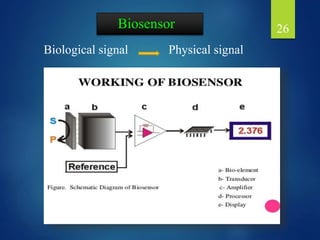
Biosensor
Biological signal Physical signal
26
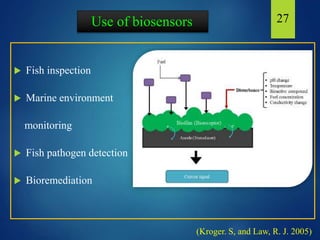
Use of biosensors
 Fish inspection
 Marine environment
monitoring
 Fish pathogen detection
 Bioremediation
27
(Kroger. S, and Law, R. J. 2005)
28
Medical
applications
29
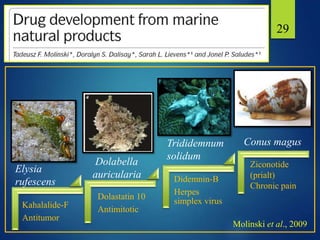
Kahalalide-F
Antitumor
Dolastatin 10
Antimitotic
Didemnin-B
Herpes
simplex virus
Conus magus
Ziconotide
(prialt)
Chronic pain
Trididemnum
solidum
Dolabella
auricularia
Elysia
rufescens
Molinski et al., 2009
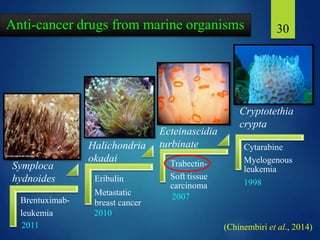
30Anti-cancer drugs from marine organisms
Brentuximab-
leukemia
Eribulin
Metastatic
breast cancer
Trabectin-
Soft tissue
carcinoma
Cytarabine
Myelogenous
leukemia
(Chinembiri et al., 2014)
Cryptotethia
crypta
Ecteinascidia
turbinateHalichondria
okadai
Symploca
hydnoides 1998
2007
2010
2011
31
32
Transgenic fish
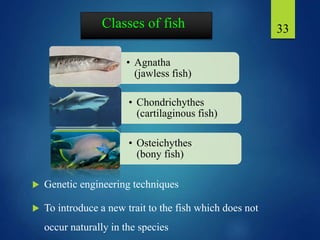
Classes of fish
 Genetic engineering techniques
 To introduce a new trait to the fish which does not
occur naturally in the species
33
• Agnatha
(jawless fish)
• Chondrichythes
(cartilaginous fish)
• Osteichythes
(bony fish)
Why GM Fish?
 FAO – 2025 - seven-fold more aquaculture products
 Blue Revolution - technology from the biological sciences and
engineering
 Low cost production independent of proximity to the oceans
 Species - Less invasive to the environment
 Increased growth rates
 Enhanced resistance to disease
 Alteration of breeding cycles
34
(Taylor and Francis, 2009)
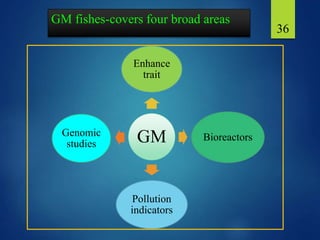
GM fishes-covers four broad areas
GM
Enhance
trait
Bioreactors
Pollution
indicators
Genomic
studies
36
36
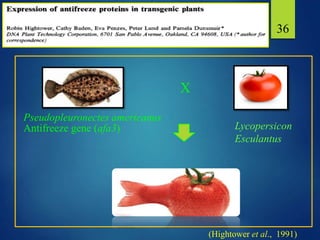
X
Pseudopleuronectes americanus
Antifreeze gene (afa3)
(Hightower et al., 1991)
Lycopersicon
Esculantus
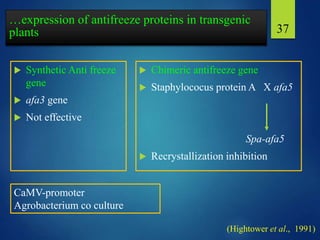
…expression of antifreeze proteins in transgenic
plants
 Synthetic Anti freeze
gene
 afa3 gene
 Not effective
 Chimeric antifreeze gene
 Staphylococus protein A X afa5
Spa-afa5
 Recrystallization inhibition
37
CaMV-promoter
Agrobacterium co culture
(Hightower et al., 1991)
 AquAdvantage salmon
 AquaBounty Technologies
 US FDA - production, sale and consumption
 First genetically modified animal to be approved for
human consumption
38Transgenic Salmon
39
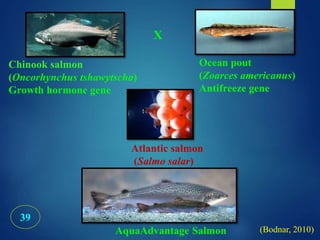
Atlantic salmon
(Salmo salar)
Ocean pout
(Zoarces americanus)
Antifreeze gene
Chinook salmon
(Oncorhynchus tshawytscha)
Growth hormone gene
X
AquaAdvantage Salmon
39
(Bodnar, 2010)
39
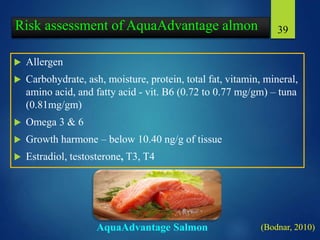
 Allergen
 Carbohydrate, ash, moisture, protein, total fat, vitamin, mineral,
amino acid, and fatty acid - vit. B6 (0.72 to 0.77 mg/gm) – tuna
(0.81mg/gm)
 Omega 3 & 6
 Growth harmone – below 10.40 ng/g of tissue
 Estradiol, testosterone, T3, T4
AquaAdvantage Salmon (Bodnar, 2010)
Risk assessment of AquaAdvantage almon
GloFish
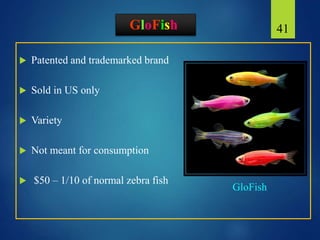
 Patented and trademarked brand
 Sold in US only
 Variety
 Not meant for consumption
 $50 – 1/10 of normal zebra fish
41
GloFish
42
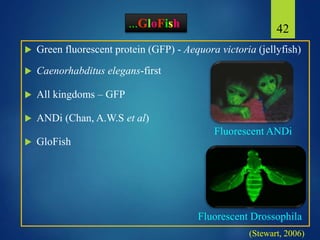
 Green fluorescent protein (GFP) - Aequora victoria (jellyfish)
 Caenorhabditus elegans-first
 All kingdoms – GFP
 ANDi (Chan, A.W.S et al)
 GloFish
Fluorescent Drossophila
Fluorescent ANDi
(Stewart, 2006)
...GloFish
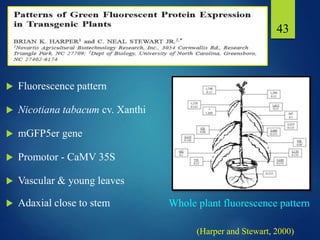
 Fluorescence pattern
 Nicotiana tabacum cv. Xanthi
 mGFP5er gene
 Promotor - CaMV 35S
 Vascular & young leaves
 Adaxial close to stem
43
(Harper and Stewart, 2000)
Whole plant fluorescence pattern
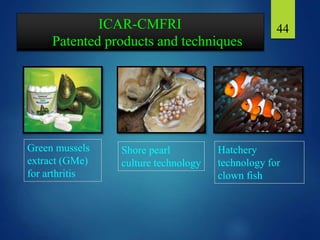
ICAR-CMFRI
Patented products and techniques
44
Shore pearl
culture technology
Green mussels
extract (GMe)
for arthritis
Hatchery
technology for
clown fish
Summary
 Blue biotechnology – novel or modified products – by
growing/manipulating organisms
 Raising population
 Food, algal products, single cell protein, cancer applications,
biosensors
 Transgenic fishes
 Role of GFP
45
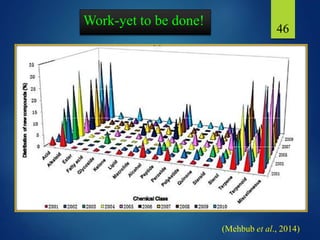
Work-yet to be done!
46
(Mehbub et al., 2014)
…work-yet to be done!
 Large supply-challenging
 Advanced technology
 GM-borderline on ethics
47
48
Biotechnology and its products have created some
amazing possibility but also has raised fears. Hence,
we should utilize biotechnology wisely & for a good
cause
THANK YOU 49
Thank You

Blue Biotechnology

  • 2.
  • 3.
    3Branches of biotechnology •Blue biotechnology • Marine organism • White biotechnology • Industry • Red biotechnology Medicine • Green biotechnology • Agriculture
  • 4.
    Outline  Introduction  Roleof blue biotechnology  Applications  Transgenic fishes  Summary  Future line of work 4
  • 5.
    Blue biotechnology  Techniquethat uses marine living organism-make/modify products  Develop organism – specific use 5
  • 6.
  • 7.
    Role of biotechnologyin enhancing production  Aquaculture  Mariculture  Primary & secondary source  20-25% - weight  Demerits 7 Fish Algae CrustaceansMollusks
  • 8.
     Oysters, mussels,shrimp, lobsters – sea food  Culturing in tanks to floating platforms  Reproductive cycles- hydrogen peroxide and Gamma Amino butyric acid (GABA) 8…role of biotechnology in enhancing production (Ledu and Mccombie, 2003) 4-aminobutanoic acid
  • 9.
    8  Crassostrea gigas- diploid  Eggs - cytochalasin B  Disrupt actin - three sets of chromosome inside the eggs – triploid  Summer mortality  Oyster-sterile 9 (Ledu and Mccombie, 2003)8 Oyster food
  • 10.
    Applications of bluebiotechnology  Food ingredient  Algal products  Biofuel  Single cell protein  Biosensors 10 GM fish Algal food Biosensor chips
  • 11.
    Sources for marinederived food ingredients Macro & micro algae Extremophiles Marine sponges Fish & sea food by-products 11 (Rasmussen and Morrissey, 2007)
  • 12.
    Marine-derived food ingredients12 Photosynthetic pigments Protein Lipids Polysaccharides Enzymes (Rasmussen and Morrissey, 2007)
  • 13.
  • 14.
    Types of algae Rhodophyta (Redalgae) Chrysophyta (green algae) Phaeophyta (brown algae) 14
  • 15.
    15  Nutraceuticals (food) Pharmaceuticals  Biological labs  Bio diesel  Stabalizing agents-Chondrus crispus  Bioremediation – Cr, Ni, Cu, Zn, Pb (Shanker et al., 2000)  Pollution indicator  Production of Hydrogen- C. reinhardtii (Hans Gaffron, 1939) Uses of algae Azolla-cattle feed Tofu-Japanese cuisine Gel electrophoresis
  • 16.
    Algal-biofuel  Fossil fuel– finite source  Alternatives - corn, sugarcane based ethanol  Drawbacks  Algae –  Grow quickly  High lipid  Adaptability  Compatibility 16 (Khan et al., 2009) 50% 20% 7% 11% 7% 5% Sales Transport Plantation Power generation Industry
  • 17.
    Demerits of Biodiesel Low biomass concentration  Insufficient oil content  Open system - photobioreactor  More complicated and costly 17
  • 18.
     Pyrosequencing  Geneencoding biofuel  BLASTx  KEGG (Kyoto Encyclopedia of Genes & genomes) 18 (Yazd et al., 2011) 34% 18%8% 3% 1% 36% Volvox carteri 26 Chlamydomonas reihartii 25 Kordia algicida 13 Dunaliella salina 6 Dunaliella viridis 2 Micromonas sp. 1
  • 19.
    19 …Transcriptome sequencing andannotation of the microalgae Dunaliella tertiolecta: Pathway description and gene discovery for production of next-generation biofuel Enzymes in TAG biosynthesis Pathway for TAG synthesis (Yazd et al., 2011) Triacylglycerol (TAG) biosynthetic enzymes 1. Glycerol kinase GK 2. Glycerol 3-phosphate 0- acyltransferase GPAT 3. 1-Acyl-sn-glycerol-3-phosphate O-acyltranferase AGPAT 4. Phosphatidate phosphatase PP 5. Diacylglycerol O- acyltransferase DGAT 6. Phospholipidacylglycerol acyltransferase PDAT
  • 20.
    Single cell protein Bacteria, fungi, algae  Unicellular microorganism  Microbes ferment waste  Diluted – centrifuge, precipitate, filtered  Weight loss, cardiovascular disease, blood pressure, eyes, skin, hair 20 SCP - Chlorella
  • 21.
    …single cell protein Central Food Technological Research Institute, Mysore (CFTRI)  National Botanical Research Institute, Lucknow (NBRI) 21 Composition of groups by % dry weight Spirulina tablet
  • 22.
    Industrial bio-products  Taq-Thermusaquaticus  Vent-Pyrococcus furiosus  DNA ligase - Thermococcus fumicolans  GFP – Aequorea victoria  Shrimp alkaline phosphatases – Pandalus borealis 22
  • 23.
    Shrimp alkaline phosphatases23 Pandalus borealis Dephosphorylation by SAP
  • 24.
    24  A Pichiapastoris clone - shrimp alkaline phosphatase gene from Northern shrimp Pandalus borealis  Completely and irreversibly inactivated by heating at 65°C for 5 minutes, thereby making removal of rSAP prior to ligation or end- labeling unnecessary Pichia pastoris SAP Recombinant single alkaline phosphatases
  • 25.
  • 26.
  • 27.
    Use of biosensors Fish inspection  Marine environment monitoring  Fish pathogen detection  Bioremediation 27 (Kroger. S, and Law, R. J. 2005)
  • 28.
  • 29.
    29 Kahalalide-F Antitumor Dolastatin 10 Antimitotic Didemnin-B Herpes simplex virus Conusmagus Ziconotide (prialt) Chronic pain Trididemnum solidum Dolabella auricularia Elysia rufescens Molinski et al., 2009
  • 30.
    30Anti-cancer drugs frommarine organisms Brentuximab- leukemia Eribulin Metastatic breast cancer Trabectin- Soft tissue carcinoma Cytarabine Myelogenous leukemia (Chinembiri et al., 2014) Cryptotethia crypta Ecteinascidia turbinateHalichondria okadai Symploca hydnoides 1998 2007 2010 2011
  • 31.
  • 32.
  • 33.
    Classes of fish Genetic engineering techniques  To introduce a new trait to the fish which does not occur naturally in the species 33 • Agnatha (jawless fish) • Chondrichythes (cartilaginous fish) • Osteichythes (bony fish)
  • 34.
    Why GM Fish? FAO – 2025 - seven-fold more aquaculture products  Blue Revolution - technology from the biological sciences and engineering  Low cost production independent of proximity to the oceans  Species - Less invasive to the environment  Increased growth rates  Enhanced resistance to disease  Alteration of breeding cycles 34 (Taylor and Francis, 2009)
  • 35.
    GM fishes-covers fourbroad areas GM Enhance trait Bioreactors Pollution indicators Genomic studies 36
  • 36.
    36 X Pseudopleuronectes americanus Antifreeze gene(afa3) (Hightower et al., 1991) Lycopersicon Esculantus
  • 37.
    …expression of antifreezeproteins in transgenic plants  Synthetic Anti freeze gene  afa3 gene  Not effective  Chimeric antifreeze gene  Staphylococus protein A X afa5 Spa-afa5  Recrystallization inhibition 37 CaMV-promoter Agrobacterium co culture (Hightower et al., 1991)
  • 38.
     AquAdvantage salmon AquaBounty Technologies  US FDA - production, sale and consumption  First genetically modified animal to be approved for human consumption 38Transgenic Salmon
  • 39.
    39 Atlantic salmon (Salmo salar) Oceanpout (Zoarces americanus) Antifreeze gene Chinook salmon (Oncorhynchus tshawytscha) Growth hormone gene X AquaAdvantage Salmon 39 (Bodnar, 2010)
  • 40.
    39  Allergen  Carbohydrate,ash, moisture, protein, total fat, vitamin, mineral, amino acid, and fatty acid - vit. B6 (0.72 to 0.77 mg/gm) – tuna (0.81mg/gm)  Omega 3 & 6  Growth harmone – below 10.40 ng/g of tissue  Estradiol, testosterone, T3, T4 AquaAdvantage Salmon (Bodnar, 2010) Risk assessment of AquaAdvantage almon
  • 41.
    GloFish  Patented andtrademarked brand  Sold in US only  Variety  Not meant for consumption  $50 – 1/10 of normal zebra fish 41 GloFish
  • 42.
    42  Green fluorescentprotein (GFP) - Aequora victoria (jellyfish)  Caenorhabditus elegans-first  All kingdoms – GFP  ANDi (Chan, A.W.S et al)  GloFish Fluorescent Drossophila Fluorescent ANDi (Stewart, 2006) ...GloFish
  • 43.
     Fluorescence pattern Nicotiana tabacum cv. Xanthi  mGFP5er gene  Promotor - CaMV 35S  Vascular & young leaves  Adaxial close to stem 43 (Harper and Stewart, 2000) Whole plant fluorescence pattern
  • 44.
    ICAR-CMFRI Patented products andtechniques 44 Shore pearl culture technology Green mussels extract (GMe) for arthritis Hatchery technology for clown fish
  • 45.
    Summary  Blue biotechnology– novel or modified products – by growing/manipulating organisms  Raising population  Food, algal products, single cell protein, cancer applications, biosensors  Transgenic fishes  Role of GFP 45
  • 46.
    Work-yet to bedone! 46 (Mehbub et al., 2014)
  • 47.
    …work-yet to bedone!  Large supply-challenging  Advanced technology  GM-borderline on ethics 47
  • 48.
    48 Biotechnology and itsproducts have created some amazing possibility but also has raised fears. Hence, we should utilize biotechnology wisely & for a good cause
  • 49.

Editor's Notes

  • #2 Sea food & health supplements Cancer, neural diseases, skin diseases
  • #4 Red-medical applications, to produce drugs, antibiotics from marine natural products white/industrial biotechnology- in markets-food and feed, detergents, paper and pulp, textiles and bioenergy (such as biofuels or biogas)
  • #12 Spirullina, dunaliella, chlorella, laminaria, porphyra-nutraceuticals, vit A, antioxidant property Extremophiles, bacteria, cyanobacteria, algae, yeast-enzymes Sponges-high lipid content-fatty acids, sterols, and unsaponifiable compunds as compare to higher animals. natural abioactive compounds - therapeutics By-product, PUFA-protamines-act as antibacterial in food industry Prawn waste and shellfish waste-single cell protein by marine algae of candida sp.
  • #13 Carotenoids –phycobilin, phycocyanin, b carotene-maicroalgae chlorella -precursor of vit. A Lipid – omega 3 -sardine, salmon, tuna-cardiovascular Polysachhardide-Algine from laminaria brown, carrageenan-red algae-stabalizers Enzyme-gastric protease, lipase, phenol oxidase from crustaceans– numerous benefits-cardiovascular Collagen, gelatiin, albumin, protamine – fish spermatozoa-natural preservative
  • #16 Red algae-Porphyra (nori)-food source in Japan for 400 years. Vit. A, C, E, B1,B2, B6, B12. microalgal oil food supplemets in baby food Can remove Cu, Cr, Ni, Zn. Lead from 1-1000ppm
  • #21 World population-9 billion-2050
  • #22 Body weight, lowers blood pressure, healthy eyes and skin. B carotene- anti cancer agents
  • #42 Electric Green", "Sunburst Orange", "Moonrise Pink", "Starfire Red", "Cosmic Blue", and "Galactic Purple"
  • #45 CENTRAL MARINE FISHERIES RESEARCH INSTITUTE