
T hiagarajar Colle ge of
Engineering,
Madurai-15

Blood Safety
&
Blood Donor
Motivation
Red Letter Day in your premises
Blood Donation Camp at
 Date : 23th March, 2011 (Wednesday)
 Time: 9.30 AM – 4.30 PM
 Venue: M1 and M2 Halls
Did You Know?
 450ml of blood can save as many as three lives.
 Every two seconds, someone in India needs blood.
 One out of every three of us will need blood in our
life time.
 Even with all of today’s technology, there is no
substitute for blood.

Someone has to give blood
in order for someone to receive blood.
Fact Sheet -1
 Hospitals predict that the need for blood will

increase 5% each year.
 Approximately only 5% of the eligible

population in India donates blood.

 75% of donors donate only ONCE per year.

If they donated just two times per year there would
never be any shortages.
Fact sheet -2
 A person has 5 - 6 litres of blood in their

body.

 A person can donate blood every 90 days

(3 months).

 Body recovers the Blood very quickly:
 Blood plasma volume– within 24 - 48 hours
 Red Blood Cells – in about 3 weeks
 Platelets & White Blood Cells – within minutes
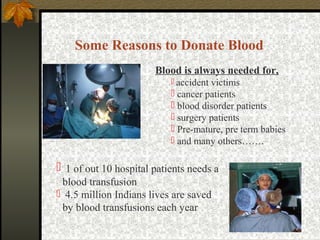
Some Reasons to Donate Blood
Blood is always needed for,
 accident

victims
 cancer patients
 blood disorder patients
 surgery patients
 Pre-mature, pre term babies
 and many others…….

 1 of out 10 hospital patients needs a
blood transfusion
 4.5 million Indians lives are saved
by blood transfusions each year
Pre-Donation information
• Blood is taken ONLY from Voluntary Donors
• Using sterile, disposable blood bags &
instruments
• Donated Blood is tested and separated into
components benefiting 3-4 patients
• It is safe to donate every 3 months
• It is quick and safe.
• It doesn’t hurt.
• It saves 3 to 4 lives.
Donor Eligibility Criteria
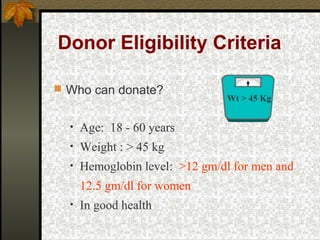
 Who can donate?

Wt > 45 Kg

•

Age: 18 - 60 years

•

Weight : > 45 kg

•

Hemoglobin level: >12 gm/dl for men and
12.5 gm/dl for women

•

In good health
Who CANNOT donate?
Life long
х
х

Abnormal bleeding disorder

х
х
х
х

Thyroid disorder

х

Cancer

х
х

Insulin dependent diabetics
Uncontrolled High BP

1 year

Heart, Kidney, Liver
Disorder

Epilepsy, Mental disorders
Tuberculosis, Leprosy,
Asthma

o Surgery

6 Months
o Tattooing or body
piercing

o Typhoid
o Dental extraction
o Dog bite
o Unexplained
weight loss

o Root canal
treatment
o Malaria

o Continuous
low grade fever

o Vaccination
Female donors cannot donate blood……
 During pregnancy
 After delivery for one year
 When lactating
 During menstrual period and for 7 days
thereafter
Male donors cannot donate blood……
 If consumed Alcohol in the previous 24
hours
Medical Examination at camp
 Blood test for:
 Blood grouping
 Hemoglobin
 Blood pressure
 Pulse
 General physical examination
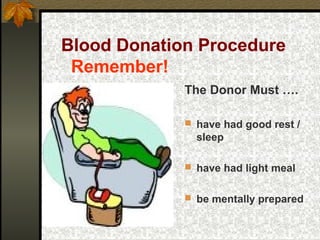
Blood Donation Procedure
Remember!
The Donor Must ….
 have had good rest /

sleep
 have had light meal
 be mentally prepared
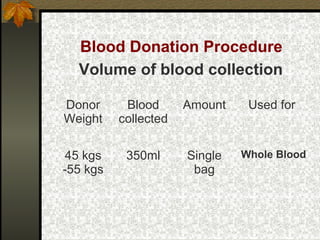
Blood Donation Procedure
Volume of blood collection
Donor
Weight

Blood
collected

Amount

Used for

45 kgs
-55 kgs

350ml

Single
bag

Whole Blood
Post Donation Advice
 Drink lot of fluids for next 24 hours
 Avoid smoking for one hour & alcohol till after a meal
 Don’t use elevator to go up immediately after donation as it

will make blood rush to your feet & make you dizzy!
 Avoid highly strenuous exercises & games for a day
 If you feel dizzy, lie down & put your feet up. You will be
alright in 10-20 minutes.
 Remove band-aid after 4 hours. If it bleeds, apply pressure
& reapply band-aid. If bruised and painful, apply cold-pack 4
to 5 times for 5 minutes each. The bruise is due to blood
seeping into the surrounding tissue. It will take a few days to
get reabsorbed.
Blood Products / Components
& their uses
Blood collected is screened for TTIs (infections) & IF SAFE, is
separated into components & stored for issue to patients.


Whole blood


For Exchange Transfusion in Babies
 Accident Victims
 Complicated Delivery cases
 Some specific surgeries


Blood Components






Red Cells (for anemia)
Fresh Frozen Plasma (for clotting disorders, burns)
Platelets/Platelet rich plasma (for cancer, dengue)
Cryoprecipitate (for clotting disorders)
Cryo Poor Plasma (for burns)
What can YOU do?
 Make Blood Donation a HABIT
 Donate regularly – every 3 months

to commemorate special days like
birthdays, anniversaries ….
 Motivate others to donate
 Refer your friends and relatives
Benefits to Donor of blood
donation
Health benefits:
Regular donation (2-3 times a year….)




Lowers cholesterol
Lowers lipid levels
Decreases incidence of heart attacks, strokes

Donor is also eligible to receive one FREE unit
of blood if needed for




Self
Spouse/ Child/ Parents, and
Even friends
Volunteer’s role
 Most people who have

never donated have

never been asked.
 Posters don’t recruit

donors…people do
Thank you

Blooddonationfacts tce-110321134109-phpapp01

  • 1.
    T hiagarajar College of Engineering, Madurai-15 Blood Safety & Blood Donor Motivation
  • 2.
    Red Letter Dayin your premises Blood Donation Camp at  Date : 23th March, 2011 (Wednesday)  Time: 9.30 AM – 4.30 PM  Venue: M1 and M2 Halls
  • 3.
    Did You Know? 450ml of blood can save as many as three lives.  Every two seconds, someone in India needs blood.  One out of every three of us will need blood in our life time.  Even with all of today’s technology, there is no substitute for blood. Someone has to give blood in order for someone to receive blood.
  • 4.
    Fact Sheet -1 Hospitals predict that the need for blood will increase 5% each year.  Approximately only 5% of the eligible population in India donates blood.  75% of donors donate only ONCE per year. If they donated just two times per year there would never be any shortages.
  • 5.
    Fact sheet -2 A person has 5 - 6 litres of blood in their body.  A person can donate blood every 90 days (3 months).  Body recovers the Blood very quickly:  Blood plasma volume– within 24 - 48 hours  Red Blood Cells – in about 3 weeks  Platelets & White Blood Cells – within minutes
  • 6.
    Some Reasons toDonate Blood Blood is always needed for,  accident victims  cancer patients  blood disorder patients  surgery patients  Pre-mature, pre term babies  and many others…….  1 of out 10 hospital patients needs a blood transfusion  4.5 million Indians lives are saved by blood transfusions each year
  • 7.
    Pre-Donation information • Bloodis taken ONLY from Voluntary Donors • Using sterile, disposable blood bags & instruments • Donated Blood is tested and separated into components benefiting 3-4 patients • It is safe to donate every 3 months • It is quick and safe. • It doesn’t hurt. • It saves 3 to 4 lives.
  • 8.
    Donor Eligibility Criteria Who can donate? Wt > 45 Kg • Age: 18 - 60 years • Weight : > 45 kg • Hemoglobin level: >12 gm/dl for men and 12.5 gm/dl for women • In good health
  • 9.
    Who CANNOT donate? Lifelong х х Abnormal bleeding disorder х х х х Thyroid disorder х Cancer х х Insulin dependent diabetics Uncontrolled High BP 1 year Heart, Kidney, Liver Disorder Epilepsy, Mental disorders Tuberculosis, Leprosy, Asthma o Surgery 6 Months o Tattooing or body piercing o Typhoid o Dental extraction o Dog bite o Unexplained weight loss o Root canal treatment o Malaria o Continuous low grade fever o Vaccination
  • 10.
    Female donors cannotdonate blood……  During pregnancy  After delivery for one year  When lactating  During menstrual period and for 7 days thereafter Male donors cannot donate blood……  If consumed Alcohol in the previous 24 hours
  • 11.
    Medical Examination atcamp  Blood test for:  Blood grouping  Hemoglobin  Blood pressure  Pulse  General physical examination
  • 12.
    Blood Donation Procedure Remember! TheDonor Must ….  have had good rest / sleep  have had light meal  be mentally prepared
  • 13.
    Blood Donation Procedure Volumeof blood collection Donor Weight Blood collected Amount Used for 45 kgs -55 kgs 350ml Single bag Whole Blood
  • 14.
    Post Donation Advice Drink lot of fluids for next 24 hours  Avoid smoking for one hour & alcohol till after a meal  Don’t use elevator to go up immediately after donation as it will make blood rush to your feet & make you dizzy!  Avoid highly strenuous exercises & games for a day  If you feel dizzy, lie down & put your feet up. You will be alright in 10-20 minutes.  Remove band-aid after 4 hours. If it bleeds, apply pressure & reapply band-aid. If bruised and painful, apply cold-pack 4 to 5 times for 5 minutes each. The bruise is due to blood seeping into the surrounding tissue. It will take a few days to get reabsorbed.
  • 15.
    Blood Products /Components & their uses Blood collected is screened for TTIs (infections) & IF SAFE, is separated into components & stored for issue to patients.  Whole blood  For Exchange Transfusion in Babies  Accident Victims  Complicated Delivery cases  Some specific surgeries  Blood Components      Red Cells (for anemia) Fresh Frozen Plasma (for clotting disorders, burns) Platelets/Platelet rich plasma (for cancer, dengue) Cryoprecipitate (for clotting disorders) Cryo Poor Plasma (for burns)
  • 16.
    What can YOUdo?  Make Blood Donation a HABIT  Donate regularly – every 3 months to commemorate special days like birthdays, anniversaries ….  Motivate others to donate  Refer your friends and relatives
  • 17.
    Benefits to Donorof blood donation Health benefits: Regular donation (2-3 times a year….)    Lowers cholesterol Lowers lipid levels Decreases incidence of heart attacks, strokes Donor is also eligible to receive one FREE unit of blood if needed for    Self Spouse/ Child/ Parents, and Even friends
  • 18.
    Volunteer’s role  Mostpeople who have never donated have never been asked.  Posters don’t recruit donors…people do
  • 19.