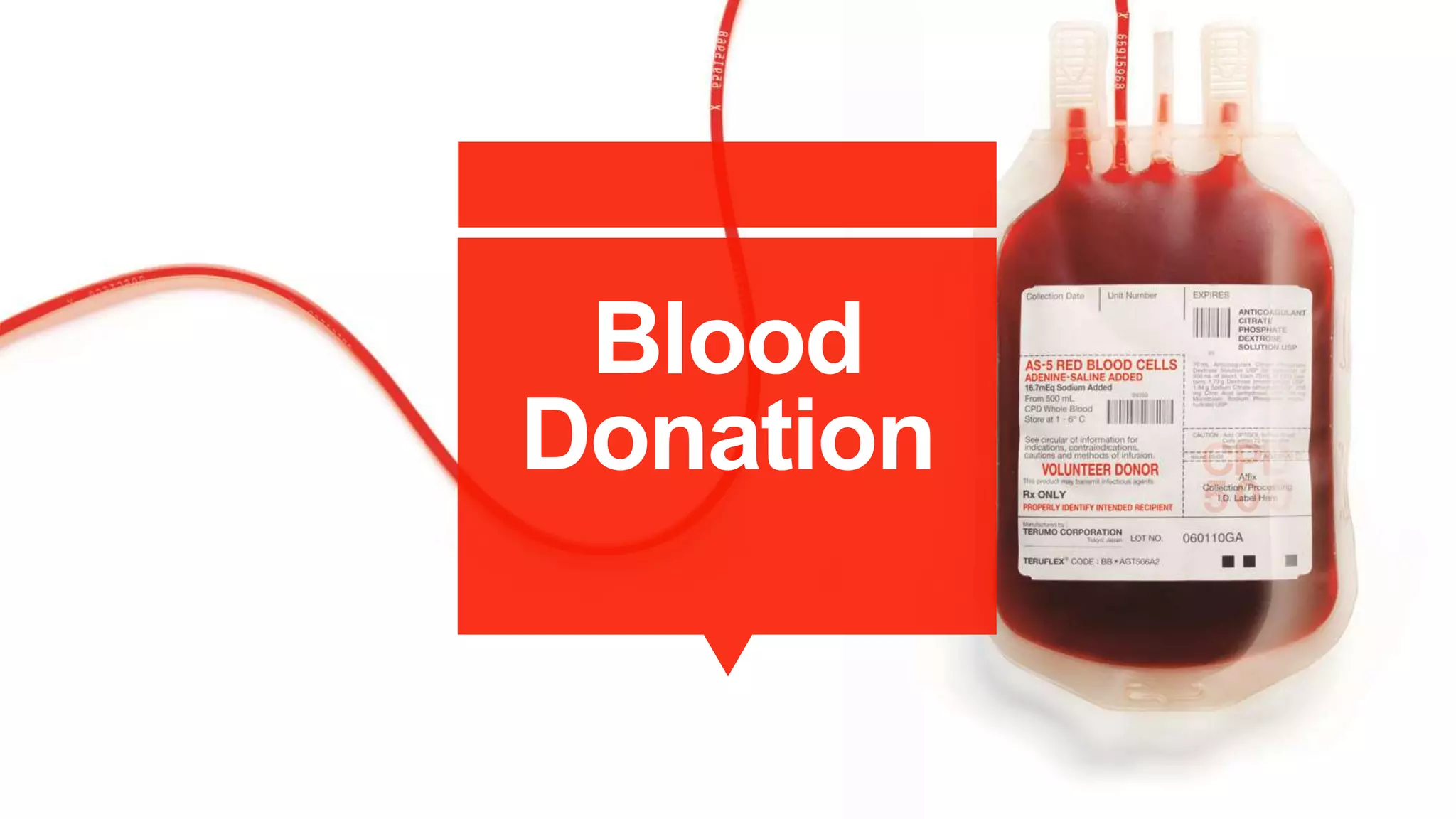
Blood
Donation
Most people can give blood.
You can give blood if you:
• are fit and healthy
• weigh between 50kg and 160kg
• are aged between 17 and 66
WHO CAN DONATE BLOOD?
Common questions
of
possible Donors
Whether or not you can donate will depend on
the medication you are receiving as well as the
condition for which you are being treated
Can I give blood if I am
receiving medical treatment or
taking medication?
You must be completely healed or recovered from any
infection for at least 14 days before you give blood. If
you are taking antibiotics you may need to wait a
period of time after your last tablet
Can I donate blood if I am
taking antibiotics or have an infection?
Consult a doctor about donating
blood
if you have anemia,
are taking antibiotics,
have a cold or the flu,
or received a blood transfusion
within the past year.
Yes.
Menstruating doesn’t affect your ability to donate.You
can give blood while menstruating if you pass the
Haemoglobin screening test and you are not in
discomfort or pain.
Enjoy your relaxing time on the donation couch and a
guilt-free snack afterwards!
-Australian Red Cross
-Irish blood transfusion service
MENSTRUATION –
I am having my period.Can I donate?
Women can give blood every 16 weeks.
How often can I give blood
Does Blood Donation affect
the donor's Health?
• Blood donation is safe.
• A person can't get an infection or disease from giving blood.
• New, sterile disposable equipment is used for each donor, so there's no risk
of contracting a bloodborne infection by donating blood.
• If you're a healthy adult, you can usually donate a pint of blood without
endangering your health.
• Within 24 hours of a blood donation, your body replaces the lost fluids. And
after several weeks, your body replaces the lost red blood cells.
• The donor's body usually replaces the liquid part of blood (plasma) within
72 hours after giving blood. It generally takes about 4–8 weeks to
regenerate the red blood cells lost during a blood donation.
• An iron-fortified diet can help rebuild a donor's red
blood supply.
• Bruising around site of needle insertion
• Bleeding at site of needle insertion
• Dizziness, lightheadedness, and nausea for few min.
Eating, drinking, and resting are known to alleviate pain
• Physical weakness in the arm so rest for about 5 hrs after
donation
• Fainting is generally the worst problem encountered.
YOU UNDERSTAND HOW NOT SERIOUS ARE THESE!
SIDE EFFECTS
• Eat well and drink lot of fluids
PRECAUTIONS
ADVANTAGES
•Blood donation may lower the risk of heart disease,heart attack and stroke.
This is because it reduces the blood’s viscosity.
•A 2013 study found that regular blood donation significantly lowered the mean
total cholesterol and low-density lipoprotein cholesterol, protecting against
cardiovascular disease.
•By donating blood on a regular basis, which eliminates the iron that may
possibly oxidize in your blood. An increase in oxidative stress can be damaging to
your cardiovascular system.
•In a study published in the Journal of the American Medical
Association (JAMA), researchers found that participants ages 43 to 61 had fewer heart
attacks and strokes when they donated blood every six months.
•In a study published by the American Journal of Epidemiology, researchers found in a
sample size of 2,682 men in Finland, those who donated blood a minimum of once a
year had an 88 percent lower risk of heart attacks than those who did not donate.
Lower risk of heart disease
People burn approximately 650 calories per donation of one pint of blood, according to
the University of California, San Diego. A donor who regularly donates blood can lose a
significant amount of weight.
But it should not be thought of as a weight loss plan!
Burns Calories
REMEMBER BLOOD
CANNOT BE MADE
IT CAN ONLY BE
DONATED BY
THOUGHTFUL
Why should you
donate blood?
Because it is an
inexpenisve way to
Save lives.

Blood donation

  • 1.
  • 2.
    Most people cangive blood. You can give blood if you: • are fit and healthy • weigh between 50kg and 160kg • are aged between 17 and 66 WHO CAN DONATE BLOOD?
  • 3.
  • 4.
    Whether or notyou can donate will depend on the medication you are receiving as well as the condition for which you are being treated Can I give blood if I am receiving medical treatment or taking medication?
  • 5.
    You must becompletely healed or recovered from any infection for at least 14 days before you give blood. If you are taking antibiotics you may need to wait a period of time after your last tablet Can I donate blood if I am taking antibiotics or have an infection?
  • 6.
    Consult a doctorabout donating blood if you have anemia, are taking antibiotics, have a cold or the flu, or received a blood transfusion within the past year.
  • 7.
    Yes. Menstruating doesn’t affectyour ability to donate.You can give blood while menstruating if you pass the Haemoglobin screening test and you are not in discomfort or pain. Enjoy your relaxing time on the donation couch and a guilt-free snack afterwards! -Australian Red Cross -Irish blood transfusion service MENSTRUATION – I am having my period.Can I donate?
  • 8.
    Women can giveblood every 16 weeks. How often can I give blood
  • 9.
    Does Blood Donationaffect the donor's Health?
  • 10.
    • Blood donationis safe. • A person can't get an infection or disease from giving blood. • New, sterile disposable equipment is used for each donor, so there's no risk of contracting a bloodborne infection by donating blood. • If you're a healthy adult, you can usually donate a pint of blood without endangering your health. • Within 24 hours of a blood donation, your body replaces the lost fluids. And after several weeks, your body replaces the lost red blood cells. • The donor's body usually replaces the liquid part of blood (plasma) within 72 hours after giving blood. It generally takes about 4–8 weeks to regenerate the red blood cells lost during a blood donation.
  • 11.
    • An iron-fortifieddiet can help rebuild a donor's red blood supply.
  • 12.
    • Bruising aroundsite of needle insertion • Bleeding at site of needle insertion • Dizziness, lightheadedness, and nausea for few min. Eating, drinking, and resting are known to alleviate pain • Physical weakness in the arm so rest for about 5 hrs after donation • Fainting is generally the worst problem encountered. YOU UNDERSTAND HOW NOT SERIOUS ARE THESE! SIDE EFFECTS
  • 13.
    • Eat welland drink lot of fluids PRECAUTIONS
  • 14.
  • 15.
    •Blood donation maylower the risk of heart disease,heart attack and stroke. This is because it reduces the blood’s viscosity. •A 2013 study found that regular blood donation significantly lowered the mean total cholesterol and low-density lipoprotein cholesterol, protecting against cardiovascular disease. •By donating blood on a regular basis, which eliminates the iron that may possibly oxidize in your blood. An increase in oxidative stress can be damaging to your cardiovascular system. •In a study published in the Journal of the American Medical Association (JAMA), researchers found that participants ages 43 to 61 had fewer heart attacks and strokes when they donated blood every six months. •In a study published by the American Journal of Epidemiology, researchers found in a sample size of 2,682 men in Finland, those who donated blood a minimum of once a year had an 88 percent lower risk of heart attacks than those who did not donate. Lower risk of heart disease
  • 16.
    People burn approximately650 calories per donation of one pint of blood, according to the University of California, San Diego. A donor who regularly donates blood can lose a significant amount of weight. But it should not be thought of as a weight loss plan! Burns Calories
  • 17.
    REMEMBER BLOOD CANNOT BEMADE IT CAN ONLY BE DONATED BY THOUGHTFUL
  • 18.
    Why should you donateblood? Because it is an inexpenisve way to Save lives.