 To save the precious
life of a person.
 You can gift a person
a life by blood
donation.
 The “blood donor" is
a god for the receiver
for giving him a life.
 One pint of blood
can save up to 3 lives.
 Blood transfusion is very
common.
 Those who undergo
surgery
 Those who meet severe
injuries due to accident.
 Those who have have
liver disorder,anaemia
and
haemophilia(bleeding
disorder)
 It reduces the sticky and
thickness of blood and
reduces cardiovascular
diseases.
 Reduces risk of heart
attack.
 Reduces iron oxidants and
thus reduces the risk of
cancer.
 Burning calories.
 provide free blood test
analysis.
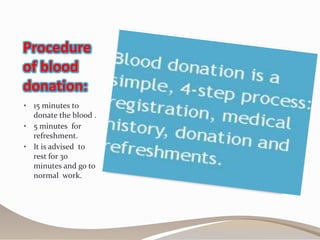
• 15 minutes to
donate the blood .
• 5 minutes for
refreshment.
• It is advised to
rest for 30
minutes and go to
normal work.
Before donation: Before transfusion:
• The donor is checked for age
and weight qualification.
 Weighing Hb estimation.
 Measuring of blood pressure.
 Checking
heartbeat,condition of liver,
spleen and lung.
 The blood is stored in
CPDA(citrate,phospate,dextr
ose,adenine) solution bag.
 The blood undergoes
jaundice,malaria,HIV,STD
related diseases.
 The blood is sterilized.
 The blood is cross matched
with the recipient blood.
 The leading blood donors
in the world are U.K,
Canada, Germany.
 In India
maharashtra,tamilnadu,
westBengal,gujarat,
Chandigarh and himachal
Pradesh contains more
donors.
• It is said that nine million
units of blood are collected
in India annually.
• Still there is a shortage of
blood of three million units.
• The shortage can be fulfilled
if additional 2% population
volunteer to give Blood.
• The awareness should be
created among the common
people and acknowledging
the students who are regular
donors.
Blood donation full

Blood donation full

  • 2.
     To savethe precious life of a person.  You can gift a person a life by blood donation.  The “blood donor" is a god for the receiver for giving him a life.  One pint of blood can save up to 3 lives.
  • 3.
     Blood transfusionis very common.  Those who undergo surgery  Those who meet severe injuries due to accident.  Those who have have liver disorder,anaemia and haemophilia(bleeding disorder)
  • 5.
     It reducesthe sticky and thickness of blood and reduces cardiovascular diseases.  Reduces risk of heart attack.  Reduces iron oxidants and thus reduces the risk of cancer.  Burning calories.  provide free blood test analysis.
  • 6.
    • 15 minutesto donate the blood . • 5 minutes for refreshment. • It is advised to rest for 30 minutes and go to normal work.
  • 7.
    Before donation: Beforetransfusion: • The donor is checked for age and weight qualification.  Weighing Hb estimation.  Measuring of blood pressure.  Checking heartbeat,condition of liver, spleen and lung.  The blood is stored in CPDA(citrate,phospate,dextr ose,adenine) solution bag.  The blood undergoes jaundice,malaria,HIV,STD related diseases.  The blood is sterilized.  The blood is cross matched with the recipient blood.
  • 9.
     The leadingblood donors in the world are U.K, Canada, Germany.  In India maharashtra,tamilnadu, westBengal,gujarat, Chandigarh and himachal Pradesh contains more donors. • It is said that nine million units of blood are collected in India annually. • Still there is a shortage of blood of three million units. • The shortage can be fulfilled if additional 2% population volunteer to give Blood. • The awareness should be created among the common people and acknowledging the students who are regular donors.