Monday Morning Safety Meeting Bloodborne Pathogens Updated 9/4/10 EGI
WHY ARE WE HERE? OSHA BB Pathogen standard anyone whose job requires exposure to BB pathogens is required to complete training There is a probability during construction projects here at Middlesex Hospital of being exosed The more you know, the better you will perform in real situations!
What is a BB Pathogen? Microorganisms that are carried in the blood that can cause disease in humans
Common BB Pathogen Diseases Malaria Brucellosis Syphilis Hepatitis B(HBV) Hepatitis C(HCV) Human Immunodeficiency Virus (HIV)
HIV is the virus that leads to AIDS HIV depletes the immune system HIV does not survive well outside the body No threat on contracting HIV through casual contact Human Immunodeficiency Virus (HIV)
Hepatitis B (HBV) 1—1.25 million Americans are chronically infected Symptoms include: jaundice, fatigue, abdominal pain, loss of appetite, intermittent nausea, vomiting May lead to chronic liver disease, liver cancer, and death Vaccination available since 1982 HBV can survive for at least one week in  dried blood Symptoms can occurr 1-9 months after exposure
Hepatitis C (HCV)  Hepatitis C is the most common chronic bloodborne infection in the United States Symptoms include:  jaundice, fatigue,  abdominal pain, loss of appetite, intermittent nausea, vomiting May lead to chronic liver disease and death
Potentially Infectious Bodily Fluids Blood Saliva Vomit Urine Semen or vaginal secretions Skin tissue, cell cultures Chewing tobacco juice Any other bodily fluid
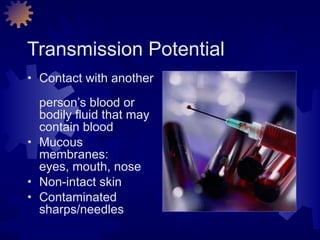
Transmission Potential Contact with another  person’s blood or  bodily fluid that may  contain blood Mucous membranes:  eyes, mouth, nose Non-intact skin Contaminated  sharps/needles
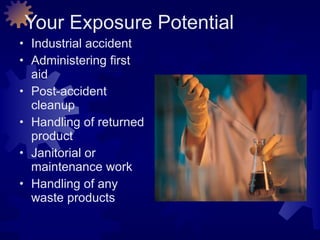
Your Exposure Potential Industrial accident Administering first aid Post-accident cleanup Handling of returned product Janitorial or maintenance work Handling of any waste products
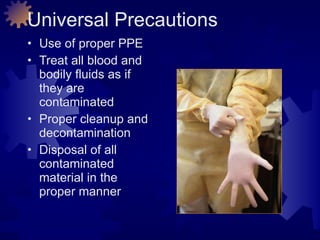
Universal Precautions Use of proper PPE Treat all blood and  bodily fluids as if  they are contaminated Proper cleanup and decontamination Disposal of all contaminated material in the proper manner
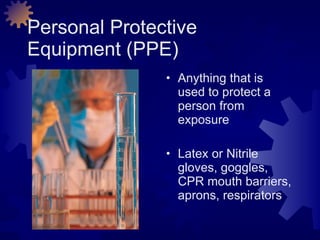
Personal Protective Equipment (PPE) Anything that is used to protect a person from exposure Latex or Nitrile gloves, goggles, CPR mouth barriers, aprons, respirators
PPE Rules to Remember Always check PPE for defects or tears before using If PPE becomes torn or defective remove and get new Remove PPE before leaving a contaminated area Do not reuse disposable equipment
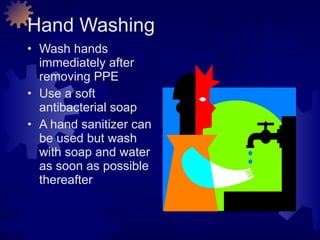
Hand Washing Wash hands immediately after removing PPE Use a soft antibacterial soap A hand sanitizer can be used but wash with soap and water as soon as possible thereafter
Regulated Medical Waste Liquid or semi-liquid blood or other potentially infectious material(OPIM) Contaminated items that would release blood or OPIM when compressed Contaminated sharps Pathological and microbiological waste containing blood or OPIM
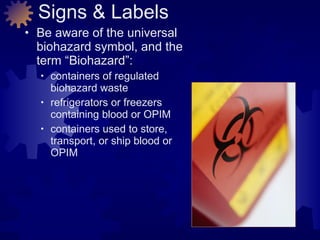
Signs & Labels Be aware of the universal biohazard symbol, and the term “Biohazard”: containers of regulated  biohazard waste refrigerators or freezers  containing blood or OPIM containers used to store,  transport, or ship blood or OPIM
Exposure Incident A specific incident of contact with potentially infectious bodily fluid If there are no infiltrations of mucous membranes  or open skin surfaces, it is not considered an occupational exposure  Report all accidents involving blood or bodily fluids Post-exposure medical evaluations are offered
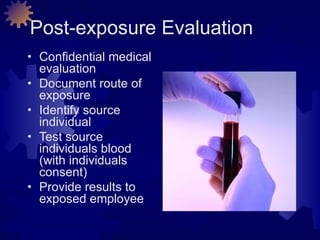
Post-exposure Evaluation Confidential medical evaluation Document route of exposure Identify source individual Test source individuals blood (with individuals consent) Provide results to exposed employee
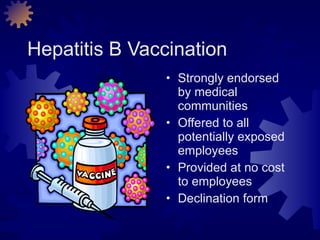
Hepatitis B Vaccination Strongly endorsed by medical communities Offered to all potentially exposed employees Provided at no cost to employees Declination form
Recordkeeping Medical records include: Hepatitis B vaccination status Post-exposure evaluation and follow-up results Training records include: Training dates Contents of the training
In Conclusion BB pathogen rules are in place for your health and safety. Failure to follow them is a risk that does not need to be taken.
Questions?

Bloodborne pathogens

  • 1.
    Monday Morning SafetyMeeting Bloodborne Pathogens Updated 9/4/10 EGI
  • 2.
    WHY ARE WEHERE? OSHA BB Pathogen standard anyone whose job requires exposure to BB pathogens is required to complete training There is a probability during construction projects here at Middlesex Hospital of being exosed The more you know, the better you will perform in real situations!
  • 3.
    What is aBB Pathogen? Microorganisms that are carried in the blood that can cause disease in humans
  • 4.
    Common BB PathogenDiseases Malaria Brucellosis Syphilis Hepatitis B(HBV) Hepatitis C(HCV) Human Immunodeficiency Virus (HIV)
  • 5.
    HIV is thevirus that leads to AIDS HIV depletes the immune system HIV does not survive well outside the body No threat on contracting HIV through casual contact Human Immunodeficiency Virus (HIV)
  • 6.
    Hepatitis B (HBV)1—1.25 million Americans are chronically infected Symptoms include: jaundice, fatigue, abdominal pain, loss of appetite, intermittent nausea, vomiting May lead to chronic liver disease, liver cancer, and death Vaccination available since 1982 HBV can survive for at least one week in dried blood Symptoms can occurr 1-9 months after exposure
  • 7.
    Hepatitis C (HCV) Hepatitis C is the most common chronic bloodborne infection in the United States Symptoms include: jaundice, fatigue, abdominal pain, loss of appetite, intermittent nausea, vomiting May lead to chronic liver disease and death
  • 8.
    Potentially Infectious BodilyFluids Blood Saliva Vomit Urine Semen or vaginal secretions Skin tissue, cell cultures Chewing tobacco juice Any other bodily fluid
  • 9.
    Transmission Potential Contactwith another person’s blood or bodily fluid that may contain blood Mucous membranes: eyes, mouth, nose Non-intact skin Contaminated sharps/needles
  • 10.
    Your Exposure PotentialIndustrial accident Administering first aid Post-accident cleanup Handling of returned product Janitorial or maintenance work Handling of any waste products
  • 11.
    Universal Precautions Useof proper PPE Treat all blood and bodily fluids as if they are contaminated Proper cleanup and decontamination Disposal of all contaminated material in the proper manner
  • 12.
    Personal Protective Equipment(PPE) Anything that is used to protect a person from exposure Latex or Nitrile gloves, goggles, CPR mouth barriers, aprons, respirators
  • 13.
    PPE Rules toRemember Always check PPE for defects or tears before using If PPE becomes torn or defective remove and get new Remove PPE before leaving a contaminated area Do not reuse disposable equipment
  • 14.
    Hand Washing Washhands immediately after removing PPE Use a soft antibacterial soap A hand sanitizer can be used but wash with soap and water as soon as possible thereafter
  • 15.
    Regulated Medical WasteLiquid or semi-liquid blood or other potentially infectious material(OPIM) Contaminated items that would release blood or OPIM when compressed Contaminated sharps Pathological and microbiological waste containing blood or OPIM
  • 16.
    Signs & LabelsBe aware of the universal biohazard symbol, and the term “Biohazard”: containers of regulated biohazard waste refrigerators or freezers containing blood or OPIM containers used to store, transport, or ship blood or OPIM
  • 17.
    Exposure Incident Aspecific incident of contact with potentially infectious bodily fluid If there are no infiltrations of mucous membranes or open skin surfaces, it is not considered an occupational exposure Report all accidents involving blood or bodily fluids Post-exposure medical evaluations are offered
  • 18.
    Post-exposure Evaluation Confidentialmedical evaluation Document route of exposure Identify source individual Test source individuals blood (with individuals consent) Provide results to exposed employee
  • 19.
    Hepatitis B VaccinationStrongly endorsed by medical communities Offered to all potentially exposed employees Provided at no cost to employees Declination form
  • 20.
    Recordkeeping Medical recordsinclude: Hepatitis B vaccination status Post-exposure evaluation and follow-up results Training records include: Training dates Contents of the training
  • 21.
    In Conclusion BBpathogen rules are in place for your health and safety. Failure to follow them is a risk that does not need to be taken.
  • 22.