Bloodborne Pathogens
Oscar Anell
EH & Safety Manager
Millennium Products Inc.
Definition
•Pathogenic microorganisms that are present
in human blood or other potentially
infectious material and can cause disease in
humans
•Pathogens include but are not limited to:
*Hepatitis B and C
* HIV
* Ebola
OSHA Standard
• 29CFR 1910.1030 Occupational
Exposure to Bloodborne
Pathogens
• Published December 1991
• Effective July 1992
• Scope: All occupational
exposure to blood and other
potentially infectious material
(OPIM)
OSHA Standard
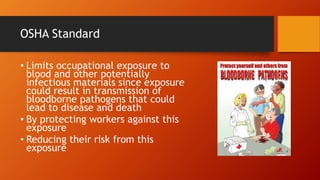
• Limits occupational exposure to
blood and other potentially
infectious materials since exposure
could result in transmission of
bloodborne pathogens that could
lead to disease and death
• By protecting workers against this
exposure
• Reducing their risk from this
exposure
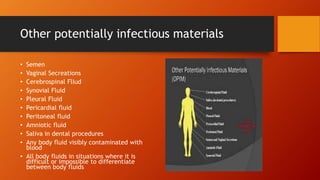
Other potentially infectious materials
• Semen
• Vaginal Secreations
• Cerebrospinal Fliud
• Synovial Fluid
• Pleural Fluid
• Pericardial fluid
• Peritoneal fluid
• Amniotic fluid
• Saliva in dental procedures
• Any body fluid visibly contaminated with
blood
• All body fluids in situations where it is
difficult or impossible to differentiate
between body fluids
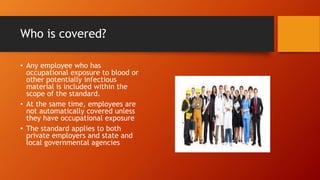
Who is covered?
• Any employee who has
occupational exposure to blood or
other potentially infectious
material is included within the
scope of the standard.
• At the same time, employees are
not automatically covered unless
they have occupational exposure
• The standard applies to both
private employers and state and
local governmental agencies
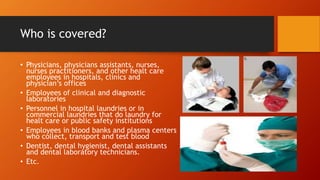
Who is covered?
• Physicians, physicians assistants, nurses,
nurses practitioners, and other healt care
employees in hospitals, clinics and
physician’s offices
• Employees of clinical and diagnostic
laboratories
• Personnel in hospital laundries or in
commercial laundries that do laundry for
healt care or public safety institutions
• Employees in blood banks and plasma centers
who collect, transport and test blood
• Dentist, dental hygienist, dental assistants
and dental laboratory technicians.
• Etc.
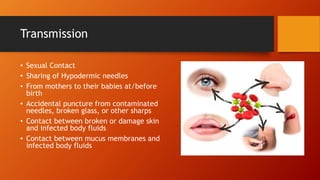
Transmission
• Sexual Contact
• Sharing of Hypodermic needles
• From mothers to their babies at/before
birth
• Accidental puncture from contaminated
needles, broken glass, or other sharps
• Contact between broken or damage skin
and infected body fluids
• Contact between mucus membranes and
infected body fluids
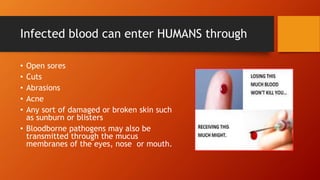
Infected blood can enter HUMANS through
• Open sores
• Cuts
• Abrasions
• Acne
• Any sort of damaged or broken skin such
as sunburn or blisters
• Bloodborne pathogens may also be
transmitted through the mucus
membranes of the eyes, nose or mouth.
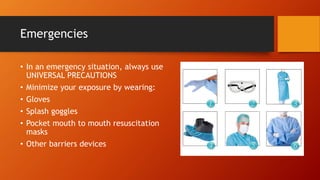
Emergencies
• In an emergency situation, always use
UNIVERSAL PRECAUTIONS
• Minimize your exposure by wearing:
• Gloves
• Splash goggles
• Pocket mouth to mouth resuscitation
masks
• Other barriers devices
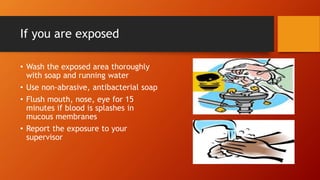
If you are exposed
• Wash the exposed area thoroughly
with soap and running water
• Use non-abrasive, antibacterial soap
• Flush mouth, nose, eye for 15
minutes if blood is splashes in
mucous membranes
• Report the exposure to your
supervisor
Rules to follow
• Treat all blood or potentially infectious body fluids as if they have
are contaminated
• Always wear personal protective equipment in exposure situations
• Replace PPE that is torn or punctured
• Remove PPE before leaving the work area
• Properly disinfect or dispose of used PPE
• Wash hands immediately after removing PPE
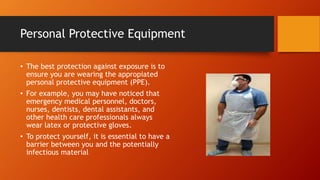
Personal Protective Equipment
• The best protection against exposure is to
ensure you are wearing the appropiated
personal protective equipment (PPE).
• For example, you may have noticed that
emergency medical personnel, doctors,
nurses, dentists, dental assistants, and
other health care professionals always
wear latex or protective gloves.
• To protect yourself, it is essential to have a
barrier between you and the potentially
infectious material
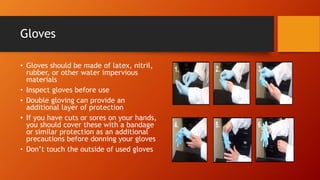
Gloves
• Gloves should be made of latex, nitril,
rubber, or other water impervious
materials
• Inspect gloves before use
• Double gloving can provide an
additional layer of protection
• If you have cuts or sores on your hands,
you should cover these with a bandage
or similar protection as an additional
precautions before donning your gloves
• Don’t touch the outside of used gloves
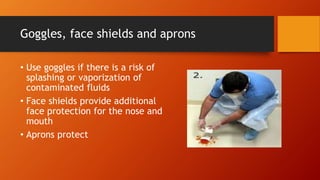
Goggles, face shields and aprons
• Use goggles if there is a risk of
splashing or vaporization of
contaminated fluids
• Face shields provide additional
face protection for the nose and
mouth
• Aprons protect
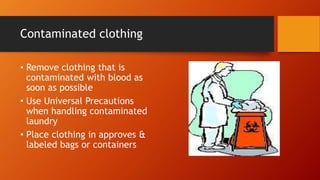
Contaminated clothing
• Remove clothing that is
contaminated with blood as
soon as possible
• Use Universal Precautions
when handling contaminated
laundry
• Place clothing in approves &
labeled bags or containers
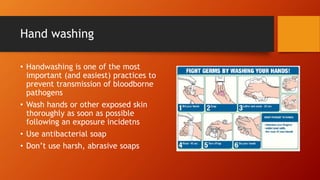
Hand washing
• Handwashing is one of the most
important (and easiest) practices to
prevent transmission of bloodborne
pathogens
• Wash hands or other exposed skin
thoroughly as soon as possible
following an exposure incidetns
• Use antibacterial soap
• Don’t use harsh, abrasive soaps
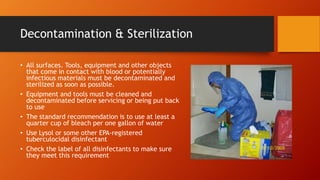
Decontamination & Sterilization
• All surfaces. Tools, equipment and other objects
that come in contact with blood or potentially
infectious materials must be decontaminated and
sterilized as soon as possible.
• Equipment and tools must be cleaned and
decontaminated before servicing or being put back
to use
• The standard recommendation is to use at least a
quarter cup of bleach per one gallon of water
• Use Lysol or some other EPA-registered
tuberculocidal disinfectant
• Check the label of all disinfectants to make sure
they meet this requirement
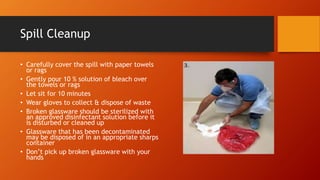
Spill Cleanup
• Carefully cover the spill with paper towels
or rags
• Gently pour 10 % solution of bleach over
the towels or rags
• Let sit for 10 minutes
• Wear gloves to collect & dispose of waste
• Broken glassware should be sterilized with
an approved disinfectant solution before it
is disturbed or cleaned up
• Glassware that has been decontaminated
may be disposed of in an appropriate sharps
container
• Don’t pick up broken glassware with your
hands
Summery
• Always know what you are working with
• Use proper PPE in situations with Bloodborne Pathogens
• Report all suspected exposures
• Don’t handle sharps or broken glass with your hands
• Properly dispose of pathogens waste, PPE and Sharps

Bloodborne pathogens training

  • 1.
    Bloodborne Pathogens Oscar Anell EH& Safety Manager Millennium Products Inc.
  • 2.
    Definition •Pathogenic microorganisms thatare present in human blood or other potentially infectious material and can cause disease in humans •Pathogens include but are not limited to: *Hepatitis B and C * HIV * Ebola
  • 3.
    OSHA Standard • 29CFR1910.1030 Occupational Exposure to Bloodborne Pathogens • Published December 1991 • Effective July 1992 • Scope: All occupational exposure to blood and other potentially infectious material (OPIM)
  • 4.
    OSHA Standard • Limitsoccupational exposure to blood and other potentially infectious materials since exposure could result in transmission of bloodborne pathogens that could lead to disease and death • By protecting workers against this exposure • Reducing their risk from this exposure
  • 5.
    Other potentially infectiousmaterials • Semen • Vaginal Secreations • Cerebrospinal Fliud • Synovial Fluid • Pleural Fluid • Pericardial fluid • Peritoneal fluid • Amniotic fluid • Saliva in dental procedures • Any body fluid visibly contaminated with blood • All body fluids in situations where it is difficult or impossible to differentiate between body fluids
  • 6.
    Who is covered? •Any employee who has occupational exposure to blood or other potentially infectious material is included within the scope of the standard. • At the same time, employees are not automatically covered unless they have occupational exposure • The standard applies to both private employers and state and local governmental agencies
  • 7.
    Who is covered? •Physicians, physicians assistants, nurses, nurses practitioners, and other healt care employees in hospitals, clinics and physician’s offices • Employees of clinical and diagnostic laboratories • Personnel in hospital laundries or in commercial laundries that do laundry for healt care or public safety institutions • Employees in blood banks and plasma centers who collect, transport and test blood • Dentist, dental hygienist, dental assistants and dental laboratory technicians. • Etc.
  • 8.
    Transmission • Sexual Contact •Sharing of Hypodermic needles • From mothers to their babies at/before birth • Accidental puncture from contaminated needles, broken glass, or other sharps • Contact between broken or damage skin and infected body fluids • Contact between mucus membranes and infected body fluids
  • 9.
    Infected blood canenter HUMANS through • Open sores • Cuts • Abrasions • Acne • Any sort of damaged or broken skin such as sunburn or blisters • Bloodborne pathogens may also be transmitted through the mucus membranes of the eyes, nose or mouth.
  • 10.
    Emergencies • In anemergency situation, always use UNIVERSAL PRECAUTIONS • Minimize your exposure by wearing: • Gloves • Splash goggles • Pocket mouth to mouth resuscitation masks • Other barriers devices
  • 11.
    If you areexposed • Wash the exposed area thoroughly with soap and running water • Use non-abrasive, antibacterial soap • Flush mouth, nose, eye for 15 minutes if blood is splashes in mucous membranes • Report the exposure to your supervisor
  • 12.
    Rules to follow •Treat all blood or potentially infectious body fluids as if they have are contaminated • Always wear personal protective equipment in exposure situations • Replace PPE that is torn or punctured • Remove PPE before leaving the work area • Properly disinfect or dispose of used PPE • Wash hands immediately after removing PPE
  • 13.
    Personal Protective Equipment •The best protection against exposure is to ensure you are wearing the appropiated personal protective equipment (PPE). • For example, you may have noticed that emergency medical personnel, doctors, nurses, dentists, dental assistants, and other health care professionals always wear latex or protective gloves. • To protect yourself, it is essential to have a barrier between you and the potentially infectious material
  • 14.
    Gloves • Gloves shouldbe made of latex, nitril, rubber, or other water impervious materials • Inspect gloves before use • Double gloving can provide an additional layer of protection • If you have cuts or sores on your hands, you should cover these with a bandage or similar protection as an additional precautions before donning your gloves • Don’t touch the outside of used gloves
  • 15.
    Goggles, face shieldsand aprons • Use goggles if there is a risk of splashing or vaporization of contaminated fluids • Face shields provide additional face protection for the nose and mouth • Aprons protect
  • 16.
    Contaminated clothing • Removeclothing that is contaminated with blood as soon as possible • Use Universal Precautions when handling contaminated laundry • Place clothing in approves & labeled bags or containers
  • 17.
    Hand washing • Handwashingis one of the most important (and easiest) practices to prevent transmission of bloodborne pathogens • Wash hands or other exposed skin thoroughly as soon as possible following an exposure incidetns • Use antibacterial soap • Don’t use harsh, abrasive soaps
  • 18.
    Decontamination & Sterilization •All surfaces. Tools, equipment and other objects that come in contact with blood or potentially infectious materials must be decontaminated and sterilized as soon as possible. • Equipment and tools must be cleaned and decontaminated before servicing or being put back to use • The standard recommendation is to use at least a quarter cup of bleach per one gallon of water • Use Lysol or some other EPA-registered tuberculocidal disinfectant • Check the label of all disinfectants to make sure they meet this requirement
  • 19.
    Spill Cleanup • Carefullycover the spill with paper towels or rags • Gently pour 10 % solution of bleach over the towels or rags • Let sit for 10 minutes • Wear gloves to collect & dispose of waste • Broken glassware should be sterilized with an approved disinfectant solution before it is disturbed or cleaned up • Glassware that has been decontaminated may be disposed of in an appropriate sharps container • Don’t pick up broken glassware with your hands
  • 20.
    Summery • Always knowwhat you are working with • Use proper PPE in situations with Bloodborne Pathogens • Report all suspected exposures • Don’t handle sharps or broken glass with your hands • Properly dispose of pathogens waste, PPE and Sharps