
BLOOD
DISORDERS
MANAGEMENT
 Blood is the life-maintaining fluid that
circulates through the body's heart, arteries,
veins, and capillaries.
 Carries away waste matter and carbon dioxide,
and brings nourishment, electrolytes, hormones,
vitamins, antibodies, heat, and oxygen to the
tissues.
 Functions of blood are many and complex –
many disorders that require clinical care
 Conditions include benign (non-cancerous)
disorders / cancers that occur in blood.
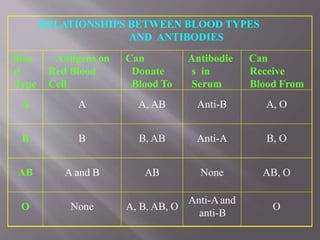
RELATIONSHIPS BETWEEN BLOOD TYPES
AND ANTIBODIES
Bloo
d
Type
Antigens on
Red Blood
Cell
Can
Donate
Blood To
Antibodie
s in
Serum
Can
Receive
Blood From
A A A, AB Anti-B A, O
B B B, AB Anti-A B, O
AB A and B AB None AB, O
O None A, B, AB, O
Anti-Aand
anti-B
O
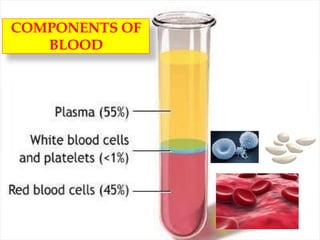
COMPONENTS OF
BLOOD
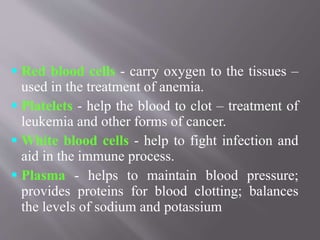
 Red blood cells - carry oxygen to the tissues –
used in the treatment of anemia.
 Platelets - help the blood to clot – treatment of
leukemia and other forms of cancer.
 White blood cells - help to fight infection and
aid in the immune process.
 Plasma - helps to maintain blood pressure;
provides proteins for blood clotting; balances
the levels of sodium and potassium
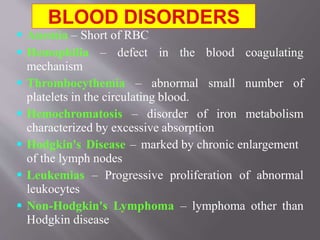
 Anemia – Short of RBC
 Hemophilia – defect in the blood coagulating
mechanism
 Thrombocythemia – abnormal small number of
platelets in the circulating blood.
 Hemochromatosis – disorder of iron metabolism
characterized by excessive absorption
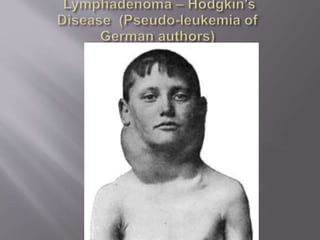
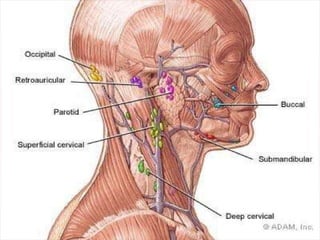
 Hodgkin's Disease – marked by chronic enlargement
of the lymph nodes
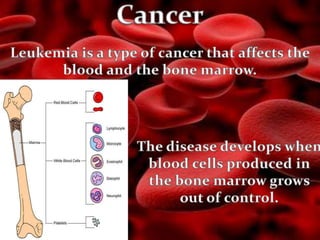
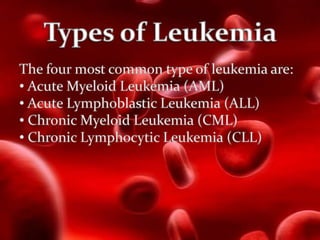
 Leukemias – Progressive proliferation of abnormal
leukocytes
 Non-Hodgkin's Lymphoma – lymphoma other than
Hodgkin disease
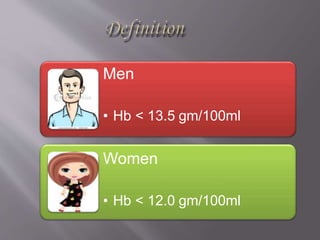
Men
• Hb < 13.5 gm/100ml
Women
• Hb < 12.0 gm/100ml
 Macrocytic anemia: Megaloblastic anemia and
non-megaloblastic macrocyctic anemia. Primary
cause of this sort of anemia is collapse of DNA
synthesis with kept RNA synthesis that occurs
due to the division of the divisional cells.
 Microcytic anemia: Sort of anemia occurs due to
hemoglobin synthesis shortage or collapse.
 Normcytic anemia: Occurs when Hb levels
decreases overall. Size of RBC is often normal.
 Iron-deficiency anemia – hypochromic
microcytic anemia characterized by low serum
iron, increased serum iron-binding capacity and
decreased marrow iron stores.
 Megaloblastic (pernicious) anemia –It is a
condition in which the bone marrow produces
unusually large, structurally abnormal,
immature red blood cells (megaloblasts).
 Hemolytic anemia – increased rate of
erythrocyte destruction.
 Sickle cell anemia – autosomal recessive
anemia characterized by sickle shaped
erythrocytes due to substitution of a single
amino acid - chromosome 11
 Aplastic anemia – greatly decreased formation
of erythrocytes and hemoglobin, usually
associated with pronounced granulocytopenia
and thrombocytopenia
 Chronic anemia
 Anemia of folate deficiency
 Cooley's anemia (Thalassemia) – Thalassemia
is a blood disorder passed down through
families (inherited) in which the body makes an
abnormal form or inadequate amount of
hemoglobin. Hemoglobin is the protein in red
blood cells that carries oxygen. The disorder
results in large numbers of red blood cells being
destroyed, which leads to anemia.
 Accurate blood loss
 Anemia of chronic disease
 Bone marrow failure and
 Plastic anemia.
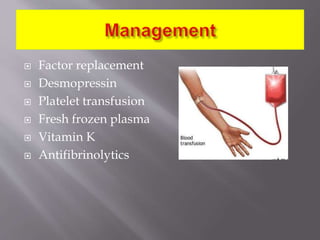
 Factor replacement
 Desmopressin
 Platelet transfusion
 Fresh frozen plasma
 Vitamin K
 Antifibrinolytics
 Blood disorder characterized by an abnormal
decrease in the number of blood platelets, which
results in internal bleeding.
 Acute thrombocytopenic purpura – Most
common in young children, the symptoms may
follow a virus infection and disappears within a
year - usually disorder does not recur.
 Chronic thrombocytopenic purpura – Onset of
the disorder can happen at any age, and symptoms
can last six months or longer.
 Medications - including over-the-counter
 Infection
 Pregnancy
 Immune disorders
 Internal bleeding, which may cause: ecchymosis
- bruising , petechiae - tiny red dots on skin or
mucous membranes
 Occasionally, bleeding from the nose, gums,
digestive tract, urinary tract
 Rarely, bleeding within the brain
 Symptoms may resemble other blood disorders
or medical problems.
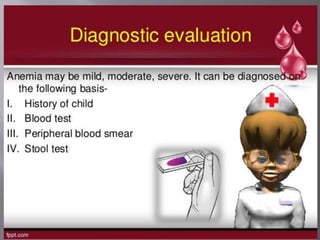
 Complete medical history and physical
examination
 Additional blood and urine tests
 Careful review of patient's medications
 Bone marrow examination
 Treatment of the causative disease
 Discontinuation of causative drugs
 Treatment with corticosteroids
 Treatment with medications
 Lifestyle changes
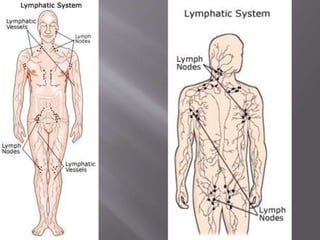
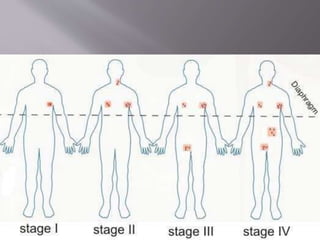
 Type of lymphoma, a cancer in the lymphatic
system.
 Rare disease usually occurs most often in
people between the ages of 15 and 34, and in
people over age 55.
 Hodgkin's
lymphatic
disease causes the cells in the
system to abnormally reproduce,
eventually making the body less able to fight
infection.
 Hodgkin's disease cells can also spread to other
organs.
neck, Painless swelling of lymph nodes in
underarm, and groin
 Fever
 Night sweats
 Fatigue
 Weight loss
 Itching of the skin
 It may resemble other blood disorders or
medical problems, such as influenza or other
infections.
 Past infection with infectious mononucleosis
 History of infectious mononucleosis (caused by
an infection with the Epstein-Barr virus)
 Acquired immunodeficiency syndrome (AIDS)
DIAGNOSIS
 Additional blood tests
 X-rays of the chest, bones, liver, and spleen
 Biopsy of the lymph nodes
 Radiation therapy
 Chemotherapy
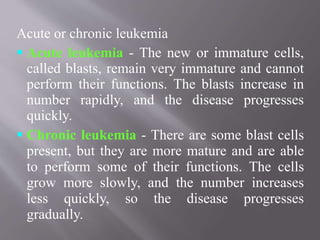
Acute or chronic leukemia
 Acute leukemia - The new or immature cells,
called blasts, remain very immature and cannot
perform their functions. The blasts increase in
number rapidly, and the disease progresses
quickly.
 Chronic leukemia - There are some blast cells
present, but they are more mature and are able
to perform some of their functions. The cells
grow more slowly, and the number increases
less quickly, so the disease progresses
gradually.
 Anemia
 Bleeding
 Bruising
 Fever
 Persistent weakness
 Fatigue
 Aches in bones and joints
 Swollen lymph nodes
 History and physical examination
 Blood tests and other Bone marrow aspiration
and biopsy
 Spinal tap/lumbar puncture - A small amount of
cerebral spinal fluid (CSF) removed. CSF is the
fluid that bathes the brain and spinal cord.
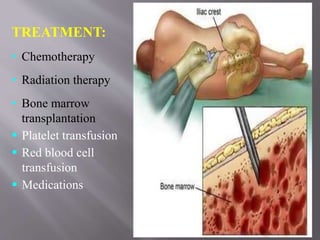
TREATMENT:
• Chemotherapy
• Radiation therapy
• Bone marrow
transplantation
 Platelet transfusion
 Red blood cell
transfusion
 Medications
 Type of lymphoma, which is a cancer in the
lymphatic system.
 Non-Hodgkin's disease causes the cells in the
lymphatic system to abnormally reproduce
eventually causing tumors to grow and can also
spread to other organs.
 Etiology is idiopathic
nodes in neck, Painless swelling of lymph
underarm, and groin
 Fever
 Night sweats
 Fatigue
 Weight loss
 Itching of the skin
 Recurring infections
 Genetic disease of the
immune system
 Unprotected exposure to
strong sunlight
 Smoking
 Excessive alcohol
consumption
 Environmental factors –
radiation, chemicals, and
infections
 Organ transplantation
 Infections with HIV
 Infections with
malaria
 Helicobacter pylori
bacterium – stomach
ulcers
 Blood tests
 X-rays of the chest, bones, liver, and spleen
 Biopsy of the lymph nodes, bone marrow, and
other sites
 Lymphangiograms - lymphatic system x-rays
 CT scan
 Ultrasonography scan
TREATMENT
 Radiation therapy
 Chemotherapy
 It is a myeloproliferative blood disorder.
 It is characterized by the production of too
many platelets in the bone marrow.
 Too many platelets make normal clotting of
blood difficult
 Etiology is idiopathic
 Increased blood clots in arteries and veins
 Bleeding
 Bruising easily
 Bleeding from the nose, gums, gastrointestinal
tract
 Bloody stools
 Hemorrhaging after injury or surgery
 Weakness
 Enlarged lymph nodes
 Complete medical history and physical examination
 Blood counts and elevated platelet levels
 Bone-marrow biopsy
TREATMENT
 Chemotherapy
 Plateletpheresis -aprocedure to remove
extra platelets from the blood
 BMT is a special therapy for patients with
cancer or other diseases which affect the bone
marrow.
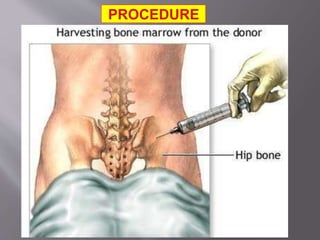
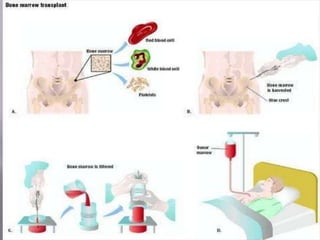
 A bone marrow transplant involves taking cells
that are normally found in the bone marrow
(stem cells), filtering those cells, and giving
them back either to the patient or to another
person.
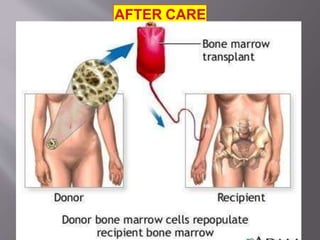
 The goal of BMT is to transfuse healthy bone
marrow cells into a person after their own
unhealthy bone marrow has been eliminated.
 Bone marrow transplantation is not yet a
standard treatment therapy, but has been used
successfully to treat diseases such as leukemias,
lymphomas, aplastic anemia, immune
deficiency disorders, and some solid tumor
cancers since 1968.
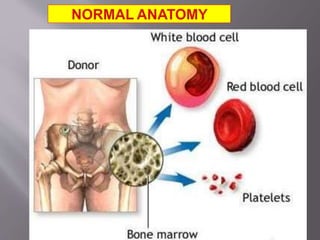
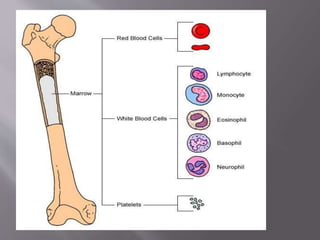
 Bone marrow is the soft, spongy tissue found inside bones.
 It is the medium for development and storage of about 95
percent of the body's blood cells.
 Blood cells that produce other blood cells are called stem
cells.
 The most primitive of the stem cells is called the
pluripotent stem cell, which is different than other blood
cells
 Renewal - able to reproduce another cell identical to
itself.
 Differentiation - able to generate one or more subsets
of more mature cells.
 It is the stem cells that are needed in bone marrow
transplantation.
 Cure many diseases and types of cancer.
 When a person's bone marrow has been
damaged or destroyed due to a disease or
intense treatments of radiation or chemotherapy
for cancer, a marrow transplant may be needed.
A bone marrow transplant can be used to:
 Replace diseased, non-functioning bone marrow
with healthy functioning bone marrow
 Replace the bone marrow and restore its normal
function after high doses of chemotherapy or
radiation are given to treat a malignancy –
process called "rescue".
 Replace bone marrow with genetically healthy
functioning bone marrow to prevent further
damage from a genetic disease process (such as
Hurler's syndrome, and adrenoleukodystrophy).
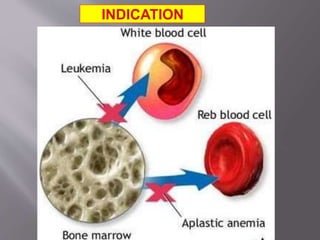
 Leukemias
 Severe aplastic anemia
 Lymphomas
 Multiple myeloma
 Immune deficiency disorders
 Solid-tumor cancers – like breast or ovarian
Blood disorders management

Blood disorders management

  • 1.
  • 2.
     Blood isthe life-maintaining fluid that circulates through the body's heart, arteries, veins, and capillaries.  Carries away waste matter and carbon dioxide, and brings nourishment, electrolytes, hormones, vitamins, antibodies, heat, and oxygen to the tissues.  Functions of blood are many and complex – many disorders that require clinical care  Conditions include benign (non-cancerous) disorders / cancers that occur in blood.
  • 3.
    RELATIONSHIPS BETWEEN BLOODTYPES AND ANTIBODIES Bloo d Type Antigens on Red Blood Cell Can Donate Blood To Antibodie s in Serum Can Receive Blood From A A A, AB Anti-B A, O B B B, AB Anti-A B, O AB A and B AB None AB, O O None A, B, AB, O Anti-Aand anti-B O
  • 4.
  • 5.
     Red bloodcells - carry oxygen to the tissues – used in the treatment of anemia.  Platelets - help the blood to clot – treatment of leukemia and other forms of cancer.  White blood cells - help to fight infection and aid in the immune process.  Plasma - helps to maintain blood pressure; provides proteins for blood clotting; balances the levels of sodium and potassium
  • 7.
     Anemia –Short of RBC  Hemophilia – defect in the blood coagulating mechanism  Thrombocythemia – abnormal small number of platelets in the circulating blood.  Hemochromatosis – disorder of iron metabolism characterized by excessive absorption  Hodgkin's Disease – marked by chronic enlargement of the lymph nodes  Leukemias – Progressive proliferation of abnormal leukocytes  Non-Hodgkin's Lymphoma – lymphoma other than Hodgkin disease
  • 8.
    Men • Hb <13.5 gm/100ml Women • Hb < 12.0 gm/100ml
  • 10.
     Macrocytic anemia:Megaloblastic anemia and non-megaloblastic macrocyctic anemia. Primary cause of this sort of anemia is collapse of DNA synthesis with kept RNA synthesis that occurs due to the division of the divisional cells.  Microcytic anemia: Sort of anemia occurs due to hemoglobin synthesis shortage or collapse.  Normcytic anemia: Occurs when Hb levels decreases overall. Size of RBC is often normal.
  • 11.
     Iron-deficiency anemia– hypochromic microcytic anemia characterized by low serum iron, increased serum iron-binding capacity and decreased marrow iron stores.  Megaloblastic (pernicious) anemia –It is a condition in which the bone marrow produces unusually large, structurally abnormal, immature red blood cells (megaloblasts).  Hemolytic anemia – increased rate of erythrocyte destruction.
  • 12.
     Sickle cellanemia – autosomal recessive anemia characterized by sickle shaped erythrocytes due to substitution of a single amino acid - chromosome 11  Aplastic anemia – greatly decreased formation of erythrocytes and hemoglobin, usually associated with pronounced granulocytopenia and thrombocytopenia  Chronic anemia  Anemia of folate deficiency
  • 13.
     Cooley's anemia(Thalassemia) – Thalassemia is a blood disorder passed down through families (inherited) in which the body makes an abnormal form or inadequate amount of hemoglobin. Hemoglobin is the protein in red blood cells that carries oxygen. The disorder results in large numbers of red blood cells being destroyed, which leads to anemia.
  • 14.
     Accurate bloodloss  Anemia of chronic disease  Bone marrow failure and  Plastic anemia.
  • 26.
     Factor replacement Desmopressin  Platelet transfusion  Fresh frozen plasma  Vitamin K  Antifibrinolytics
  • 28.
     Blood disordercharacterized by an abnormal decrease in the number of blood platelets, which results in internal bleeding.  Acute thrombocytopenic purpura – Most common in young children, the symptoms may follow a virus infection and disappears within a year - usually disorder does not recur.  Chronic thrombocytopenic purpura – Onset of the disorder can happen at any age, and symptoms can last six months or longer.
  • 29.
     Medications -including over-the-counter  Infection  Pregnancy  Immune disorders
  • 30.
     Internal bleeding,which may cause: ecchymosis - bruising , petechiae - tiny red dots on skin or mucous membranes  Occasionally, bleeding from the nose, gums, digestive tract, urinary tract  Rarely, bleeding within the brain  Symptoms may resemble other blood disorders or medical problems.
  • 31.
     Complete medicalhistory and physical examination  Additional blood and urine tests  Careful review of patient's medications  Bone marrow examination
  • 32.
     Treatment ofthe causative disease  Discontinuation of causative drugs  Treatment with corticosteroids  Treatment with medications  Lifestyle changes
  • 33.
     Type oflymphoma, a cancer in the lymphatic system.  Rare disease usually occurs most often in people between the ages of 15 and 34, and in people over age 55.  Hodgkin's lymphatic disease causes the cells in the system to abnormally reproduce, eventually making the body less able to fight infection.  Hodgkin's disease cells can also spread to other organs.
  • 37.
    neck, Painless swellingof lymph nodes in underarm, and groin  Fever  Night sweats  Fatigue  Weight loss  Itching of the skin  It may resemble other blood disorders or medical problems, such as influenza or other infections.
  • 38.
     Past infectionwith infectious mononucleosis  History of infectious mononucleosis (caused by an infection with the Epstein-Barr virus)  Acquired immunodeficiency syndrome (AIDS) DIAGNOSIS  Additional blood tests  X-rays of the chest, bones, liver, and spleen  Biopsy of the lymph nodes
  • 39.
  • 41.
    Acute or chronicleukemia  Acute leukemia - The new or immature cells, called blasts, remain very immature and cannot perform their functions. The blasts increase in number rapidly, and the disease progresses quickly.  Chronic leukemia - There are some blast cells present, but they are more mature and are able to perform some of their functions. The cells grow more slowly, and the number increases less quickly, so the disease progresses gradually.
  • 44.
     Anemia  Bleeding Bruising  Fever  Persistent weakness  Fatigue  Aches in bones and joints  Swollen lymph nodes
  • 45.
     History andphysical examination  Blood tests and other Bone marrow aspiration and biopsy  Spinal tap/lumbar puncture - A small amount of cerebral spinal fluid (CSF) removed. CSF is the fluid that bathes the brain and spinal cord.
  • 46.
    TREATMENT: • Chemotherapy • Radiationtherapy • Bone marrow transplantation  Platelet transfusion  Red blood cell transfusion  Medications
  • 47.
     Type oflymphoma, which is a cancer in the lymphatic system.  Non-Hodgkin's disease causes the cells in the lymphatic system to abnormally reproduce eventually causing tumors to grow and can also spread to other organs.  Etiology is idiopathic
  • 49.
    nodes in neck,Painless swelling of lymph underarm, and groin  Fever  Night sweats  Fatigue  Weight loss  Itching of the skin  Recurring infections
  • 50.
     Genetic diseaseof the immune system  Unprotected exposure to strong sunlight  Smoking  Excessive alcohol consumption  Environmental factors – radiation, chemicals, and infections  Organ transplantation  Infections with HIV  Infections with malaria  Helicobacter pylori bacterium – stomach ulcers
  • 51.
     Blood tests X-rays of the chest, bones, liver, and spleen  Biopsy of the lymph nodes, bone marrow, and other sites  Lymphangiograms - lymphatic system x-rays  CT scan  Ultrasonography scan TREATMENT  Radiation therapy  Chemotherapy
  • 52.
     It isa myeloproliferative blood disorder.  It is characterized by the production of too many platelets in the bone marrow.  Too many platelets make normal clotting of blood difficult  Etiology is idiopathic
  • 53.
     Increased bloodclots in arteries and veins  Bleeding  Bruising easily  Bleeding from the nose, gums, gastrointestinal tract  Bloody stools  Hemorrhaging after injury or surgery  Weakness  Enlarged lymph nodes
  • 54.
     Complete medicalhistory and physical examination  Blood counts and elevated platelet levels  Bone-marrow biopsy TREATMENT  Chemotherapy  Plateletpheresis -aprocedure to remove extra platelets from the blood
  • 55.
     BMT isa special therapy for patients with cancer or other diseases which affect the bone marrow.  A bone marrow transplant involves taking cells that are normally found in the bone marrow (stem cells), filtering those cells, and giving them back either to the patient or to another person.  The goal of BMT is to transfuse healthy bone marrow cells into a person after their own unhealthy bone marrow has been eliminated.
  • 56.
     Bone marrowtransplantation is not yet a standard treatment therapy, but has been used successfully to treat diseases such as leukemias, lymphomas, aplastic anemia, immune deficiency disorders, and some solid tumor cancers since 1968.
  • 57.
     Bone marrowis the soft, spongy tissue found inside bones.  It is the medium for development and storage of about 95 percent of the body's blood cells.  Blood cells that produce other blood cells are called stem cells.  The most primitive of the stem cells is called the pluripotent stem cell, which is different than other blood cells  Renewal - able to reproduce another cell identical to itself.  Differentiation - able to generate one or more subsets of more mature cells.  It is the stem cells that are needed in bone marrow transplantation.
  • 64.
     Cure manydiseases and types of cancer.  When a person's bone marrow has been damaged or destroyed due to a disease or intense treatments of radiation or chemotherapy for cancer, a marrow transplant may be needed.
  • 65.
    A bone marrowtransplant can be used to:  Replace diseased, non-functioning bone marrow with healthy functioning bone marrow  Replace the bone marrow and restore its normal function after high doses of chemotherapy or radiation are given to treat a malignancy – process called "rescue".  Replace bone marrow with genetically healthy functioning bone marrow to prevent further damage from a genetic disease process (such as Hurler's syndrome, and adrenoleukodystrophy).
  • 66.
     Leukemias  Severeaplastic anemia  Lymphomas  Multiple myeloma  Immune deficiency disorders  Solid-tumor cancers – like breast or ovarian