
BLOCKING
J. DAVIS
JOSE RIZAL UNIVERSITY
Definitions:
 The choreography of the play established by the director and
actors. (Wainstein)
 The movement of the actors through the setting. (Patterson)
 The director is an image-maker…Blocking is the process of
stimulating actors to image-making through ground plan,
composition, gesture, improvisation with properties, picturization
and movement. (Hodge)
BODY
POSITIOINS
BODY POSITION
REVIEW
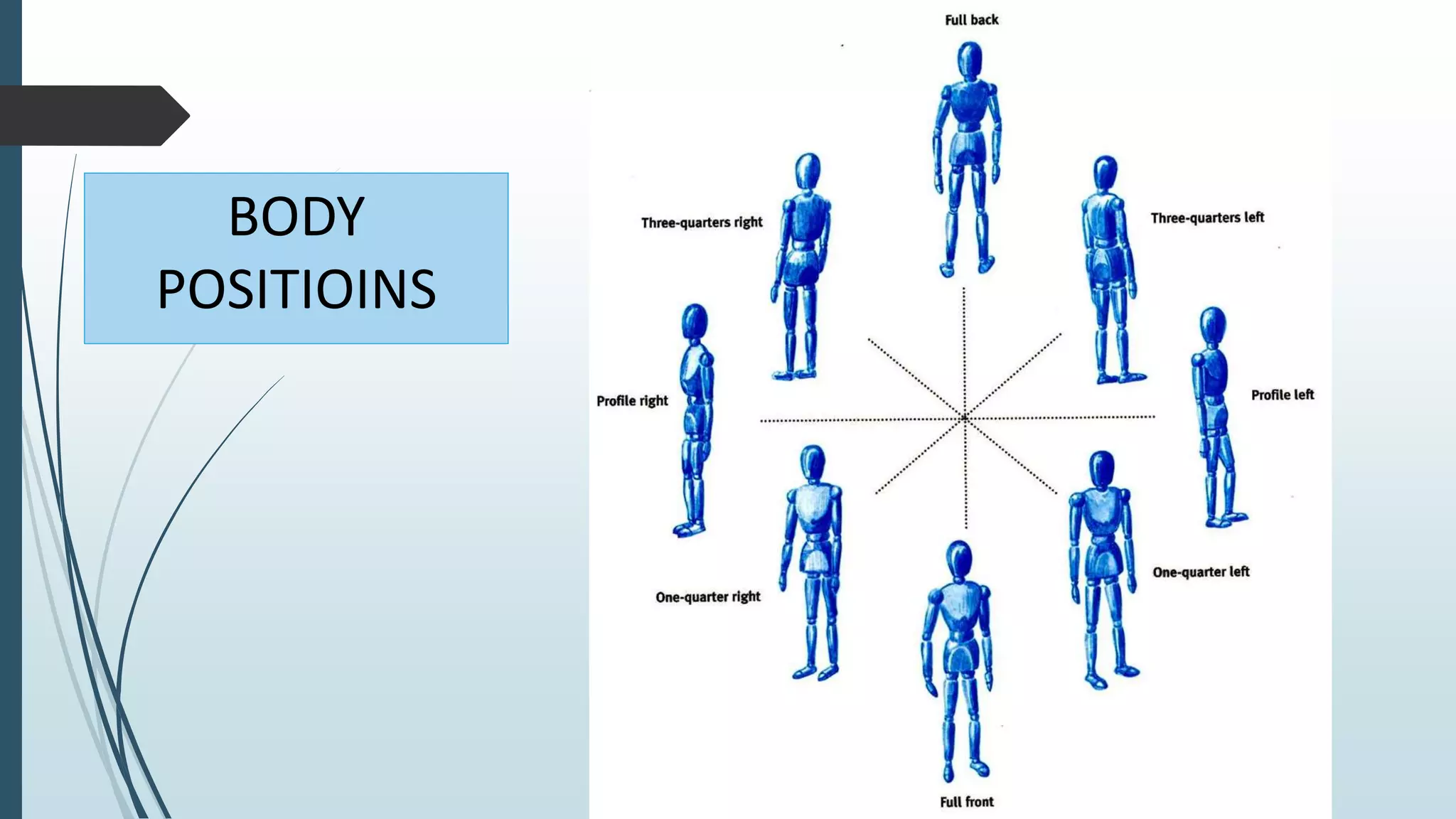
 Full Front - the actor faces the audience and is considered
to be the strongest of the body positions.
 Full Back position has the actor standing with his back to
the audience, usually for a brief period. This body position
is usually used for dramatic effect.
 One-quarter front position the body is turned a quarter
away from the camera or audience either facing slightly left
or right.
 Profile position - When the actor stands or sits facing either
to the left or to the right allowing the audience to see only
one side of the face and body.
 Three-Quarter Back Position the actor turns his body nearly
full back to the camera or audience, either left or right so
only one side of the head and shoulder is visible. It is the
weakest of the five positions.
 Blocking positions are the positions of the characters relative to one another and to
the audience.
 Each position has a strong or weak value and affords opportunities to emphasize
certain dramatic elements of the characters, their relationships, and the story.
 When more characters are added to the scene, blocking positions are usually
determined by one’s relationship to the character dominating the thrust of the story at
that moment.
Blocking Notation
 Once a scene has been blocked, the actors must execute the same movements during
rehearsals and performances. Thus, actors must memorize their blocking as well as their lines.
 During blocking rehearsals, most actors use a pencil to note their blocking in their scripts –
pencil, not pen, so that if the blocking changes, the pencil marks can be erased and the new
blocking noted.
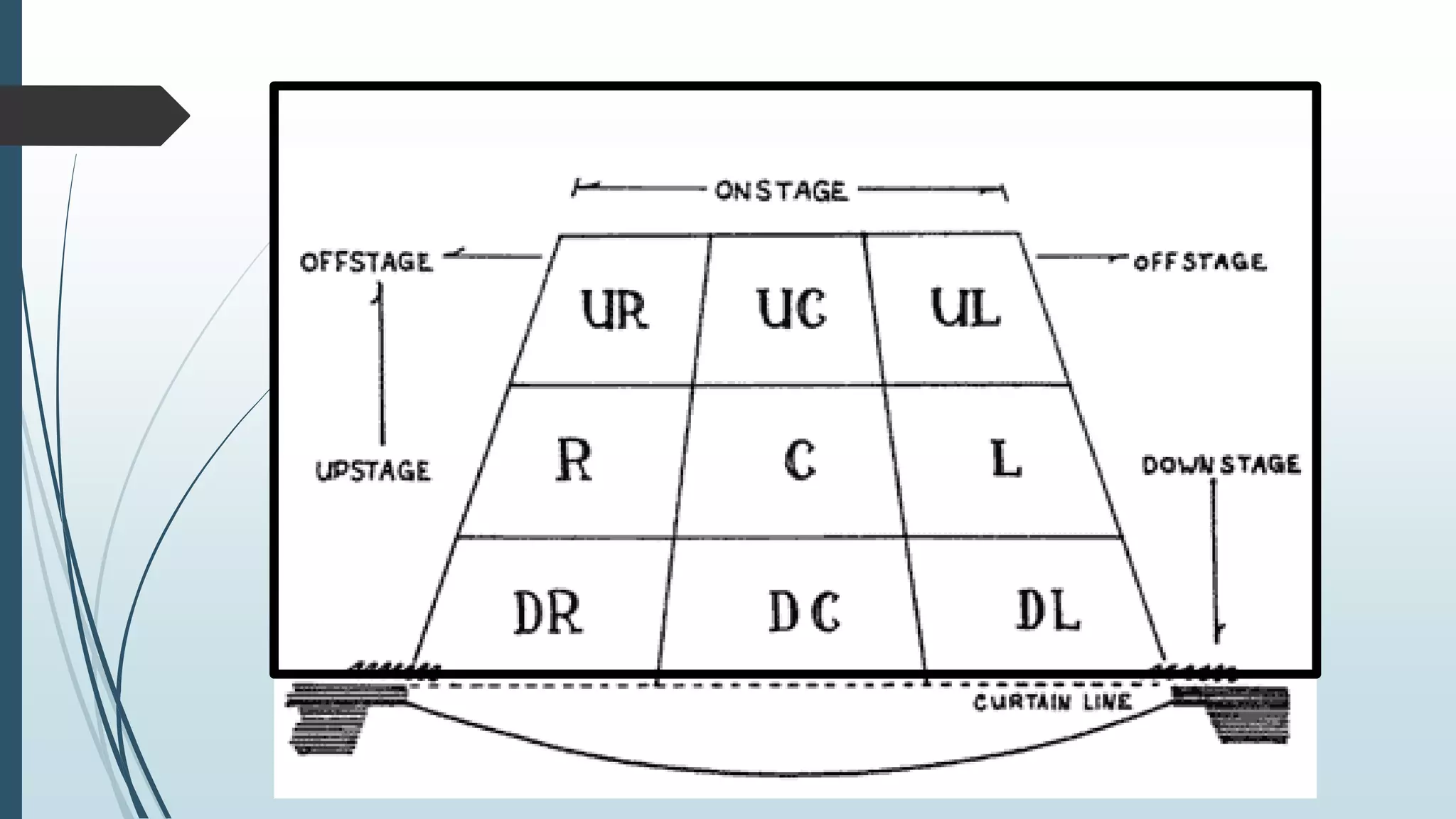
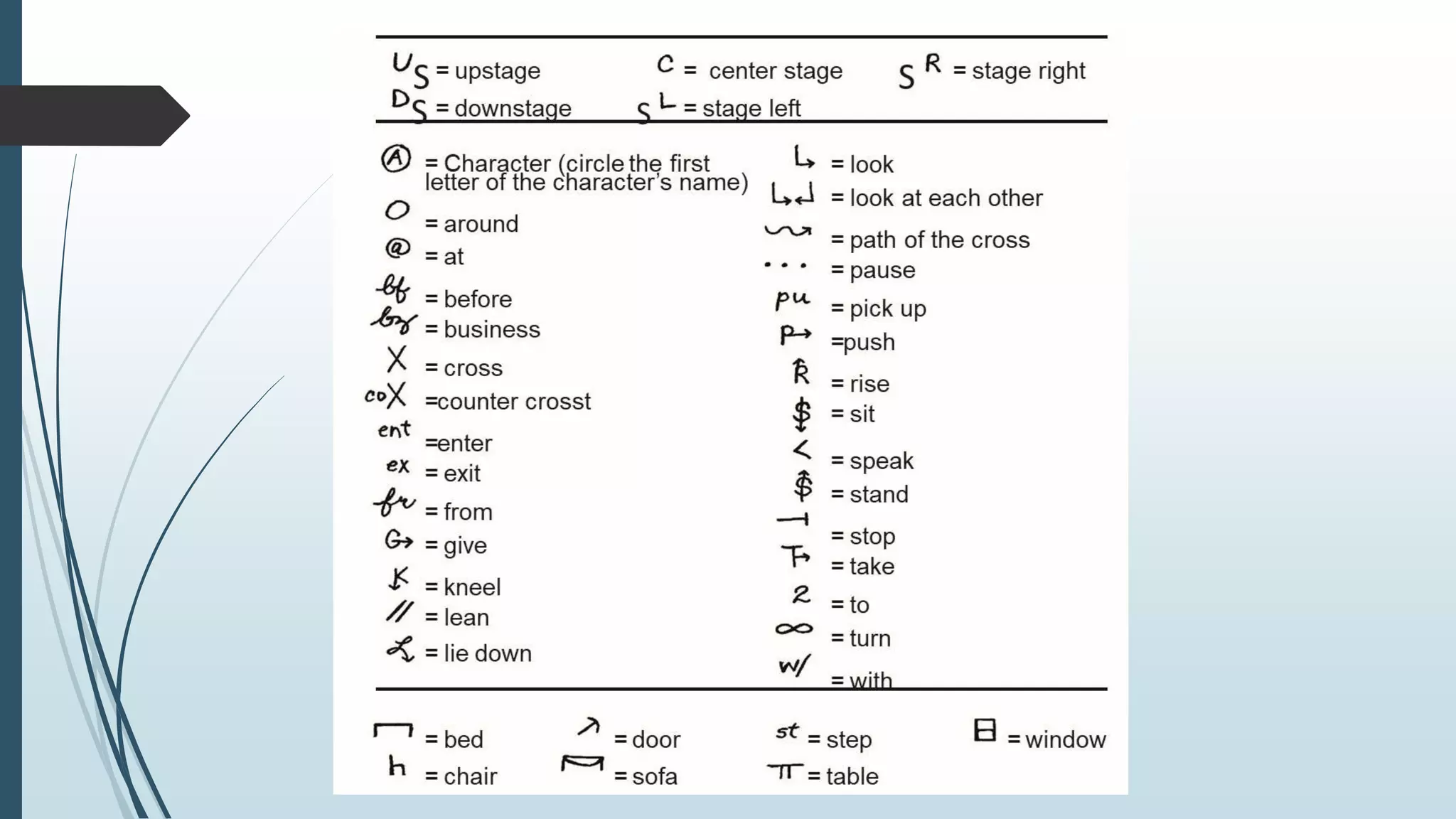
 Actors and directors use a sort of “shorthand” for blocking notation. Rather than write out “Walk
downstage right and stand behind the sofa,” however, an actor would make notes using
abbreviations. Any stage movement from one area of the stage to another is called a “cross,”
and a quick way to indicate cross is the use of an “X.” So, an actor’s blocking note to self for the
above blocking could look like this: “XDR to US of sofa.”
Upstaging
 When an actor makes himself the focus by moving upstage forcing
his acting partner to turn away from the audience.
Diagonal: When 2 actors are at opposite
ends of the stage
Levels: The Height difference that tells
us who to watch.
LINE:
Ideally, blocking should enhance the story on the stage by:
 Reflecting the authentic behavior of the characters – a character’s movements can reveal
just as much and sometimes more than his or her words do.
 Reflecting the relationships between and among characters.
 Giving the focus to certain characters at appropriate moments (helping the audience
know where to look).
 Allowing the audience to see what they are supposed to see and not what is meant to be
hidden – either as part of the play or an accidental peek backstage.
 Creating effective stage pictures – strong, pleasing, horrific – that convey the meanings
and moods of the play.
 Making effective use of the set.
The end.

Blocking

  • 1.
  • 2.
    Definitions:  The choreographyof the play established by the director and actors. (Wainstein)  The movement of the actors through the setting. (Patterson)  The director is an image-maker…Blocking is the process of stimulating actors to image-making through ground plan, composition, gesture, improvisation with properties, picturization and movement. (Hodge)
  • 5.
  • 9.
    BODY POSITION REVIEW  FullFront - the actor faces the audience and is considered to be the strongest of the body positions.  Full Back position has the actor standing with his back to the audience, usually for a brief period. This body position is usually used for dramatic effect.  One-quarter front position the body is turned a quarter away from the camera or audience either facing slightly left or right.  Profile position - When the actor stands or sits facing either to the left or to the right allowing the audience to see only one side of the face and body.  Three-Quarter Back Position the actor turns his body nearly full back to the camera or audience, either left or right so only one side of the head and shoulder is visible. It is the weakest of the five positions.
  • 10.
     Blocking positionsare the positions of the characters relative to one another and to the audience.  Each position has a strong or weak value and affords opportunities to emphasize certain dramatic elements of the characters, their relationships, and the story.  When more characters are added to the scene, blocking positions are usually determined by one’s relationship to the character dominating the thrust of the story at that moment.
  • 13.
    Blocking Notation  Oncea scene has been blocked, the actors must execute the same movements during rehearsals and performances. Thus, actors must memorize their blocking as well as their lines.  During blocking rehearsals, most actors use a pencil to note their blocking in their scripts – pencil, not pen, so that if the blocking changes, the pencil marks can be erased and the new blocking noted.  Actors and directors use a sort of “shorthand” for blocking notation. Rather than write out “Walk downstage right and stand behind the sofa,” however, an actor would make notes using abbreviations. Any stage movement from one area of the stage to another is called a “cross,” and a quick way to indicate cross is the use of an “X.” So, an actor’s blocking note to self for the above blocking could look like this: “XDR to US of sofa.”
  • 16.
    Upstaging  When anactor makes himself the focus by moving upstage forcing his acting partner to turn away from the audience.
  • 17.
    Diagonal: When 2actors are at opposite ends of the stage Levels: The Height difference that tells us who to watch. LINE:
  • 18.
    Ideally, blocking shouldenhance the story on the stage by:  Reflecting the authentic behavior of the characters – a character’s movements can reveal just as much and sometimes more than his or her words do.  Reflecting the relationships between and among characters.  Giving the focus to certain characters at appropriate moments (helping the audience know where to look).  Allowing the audience to see what they are supposed to see and not what is meant to be hidden – either as part of the play or an accidental peek backstage.  Creating effective stage pictures – strong, pleasing, horrific – that convey the meanings and moods of the play.  Making effective use of the set.
  • 19.