Singapore Math in Rotterdam 2Opleiding Singapore rekenspecialistReview of Day 1What are some features of Singapore Math and its theoretical underpinnings.On Day 2, we look at the focus on visualization and the model method.
Review of Day 1Yeap Ban Har, Ph.D.Marshall Cavendish InstituteSingaporebanhar@sg.marshallcavendish.com
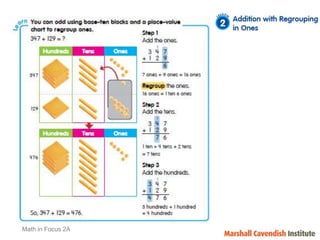
VariationsTasks are varied in a systematic way to ensure that average and struggling learners can learn well.
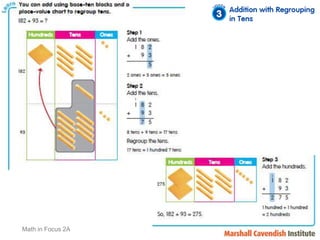
Math in Focus 2A
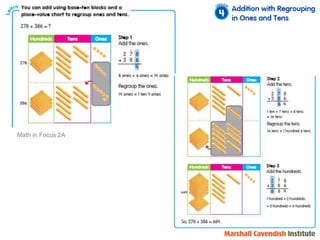
Math in Focus 2A
Math in Focus 2A
ZoltanDienesThe three lessons include mathematical variations within the same grade. This is referred to as a spiral approach.
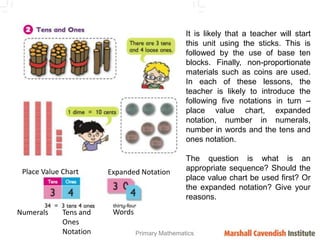
It is likely that a teacher will start this unit using the sticks. This is followed by the use of base ten blocks. Finally, non-proportionate materials such as coins are used. In each of these lessons, the teacher is likely to introduce the following five notations in turn – place value chart, expanded notation, number in numerals, number in words and the tens and ones notation.The question is what is an appropriate sequence? Should the place value chart be used first? Or the expanded notation? Give your reasons.Place Value ChartExpanded NotationWordsNumeralsTens and Ones NotationPrimary Mathematics
ZoltanDienesThis lesson include perceptual variations. This is Dienes’ idea of multiple embodiment. The mathematical concept is constant while the materials used to embody it are varied.
Jerome BrunerBruner advised teachers to use the CPA Approach in teaching mathematics.
Richard SkempSkemp distinguished between instrumental understanding from relational understanding to encourage teachers to teach for conceptual understanding.
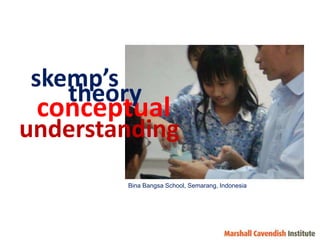
skemp’stheoryconceptualunderstandingBinaBangsa School, Semarang, Indonesia
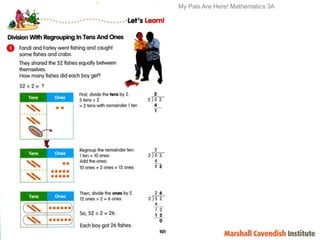
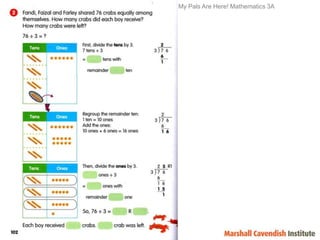
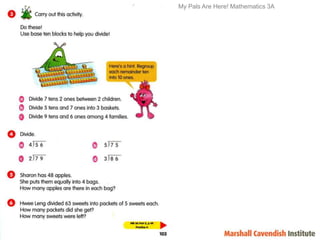
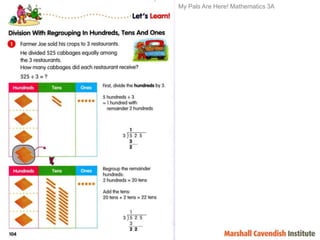
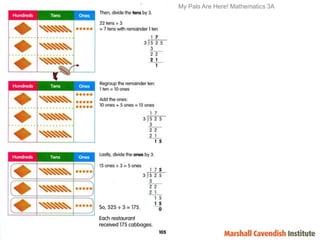
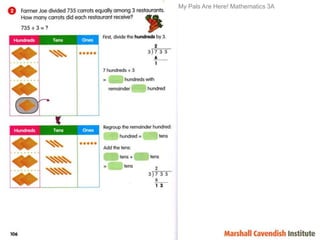
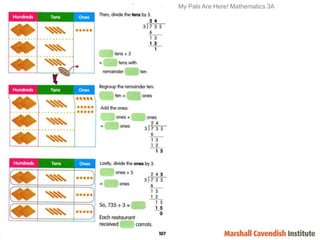
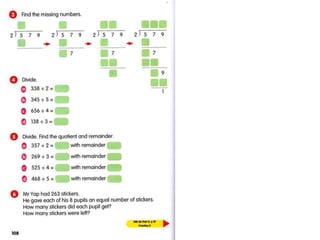
Example 2Division in Other Grade Levels
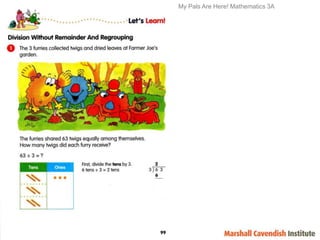
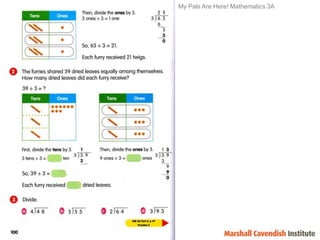
My Pals Are Here! Mathematics 3A
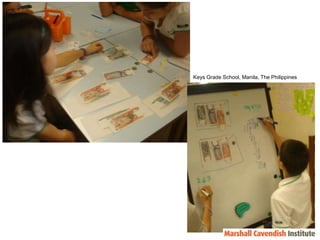
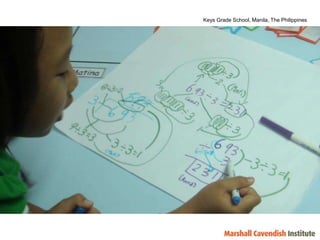
Keys Grade School, Manila, The Philippines
The Bar Model Methodde strookmodelYeap Ban Har, Ph.D.Marshall Cavendish InstituteSingaporebanhar@sg.marshallcavendish.com
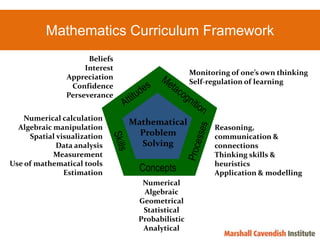
BeliefsInterestAppreciationConfidencePerseveranceMonitoring of one’s own thinkingSelf-regulation of learningAttitudesMetacognitionNumerical calculationAlgebraic manipulationSpatial visualizationData analysisMeasurementUse of mathematical toolsEstimationMathematical Problem SolvingReasoning, communication & connectionsThinking skills & heuristicsApplication & modellingSkillsProcessesConceptsNumericalAlgebraicGeometricalStatisticalProbabilisticAnalyticalMathematics Curriculum Framework
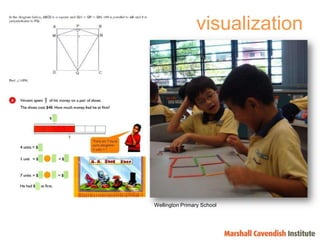
visualizationWellington Primary School
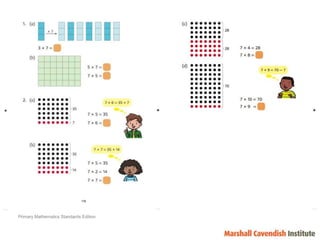
Primary Mathematics Standards Edition
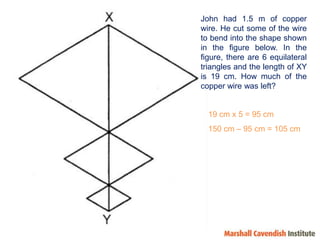
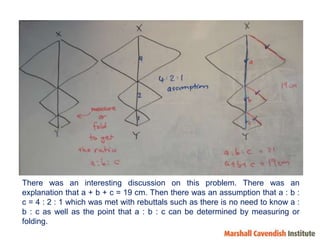
John had 1.5 m of copper wire. He cut some of the wire to bend into the shape shown in the figure below. In the figure, there are 6 equilateral triangles and the length of XY is 19 cm. How much of the copper wire was left? 19 cm x 5 = 95 cm150 cm – 95 cm = 105 cm
There was an interesting discussion on this problem. There was an explanation that a + b + c = 19 cm. Then there was an assumption that a : b : c = 4 : 2 : 1 which was met with rebuttals such as there is no need to know a : b : c as well as the point that a : b : c can be determined by measuring or folding.  
The Bar Model Methodde strookmodelYeap Ban Har, Ph.D.Marshall Cavendish InstituteSingaporebanhar@sg.marshallcavendish.com
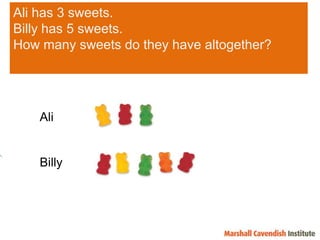
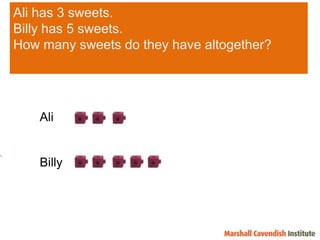
Ali has 3 sweets. Billy has 5 sweets.How many sweets do they have altogether?AliBilly
IntroductionThe focus is on the bar model method.
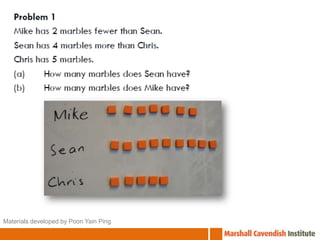
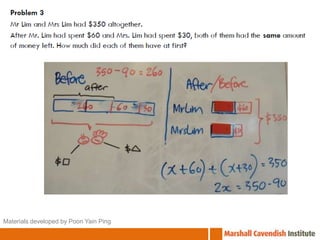
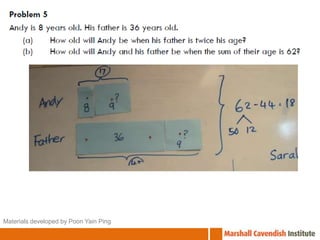
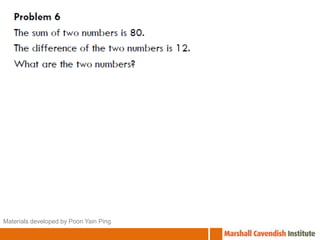
Materials developed by Poon Yain Ping
SummaryThe three basic situations are part-whole, comparison and before-after situations.
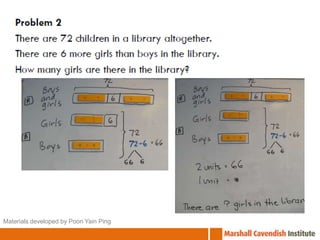
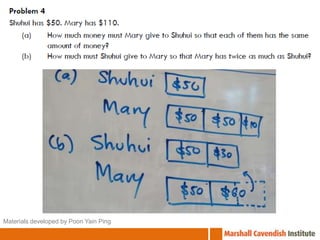
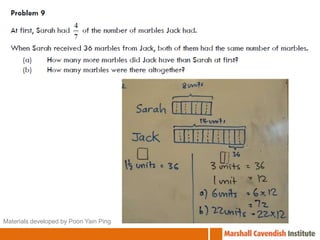
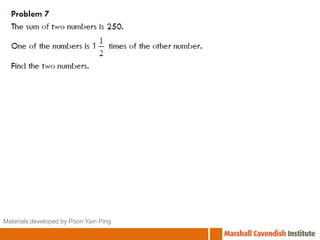
Materials developed by Poon Yain Ping
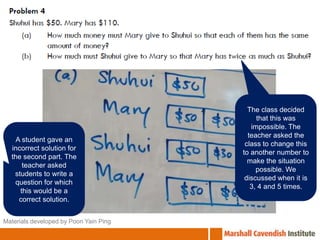
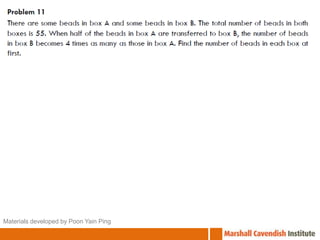
The class decided that this was impossible. The teacher asked the class to change this to another number to make the situation possible. We discussed when it is 3, 4 and 5 times.A student gave an incorrect solution for the second part. The teacher asked students to write a question for which this would be a correct solution.Materials developed by Poon Yain Ping
SummaryWe discussed how to use students’ responses to make the lesson focus on depth. We also saw how a problem can be modified to challenge learners.
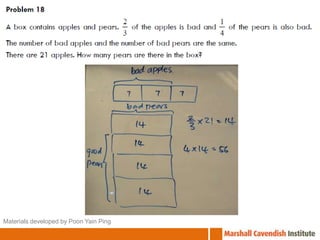
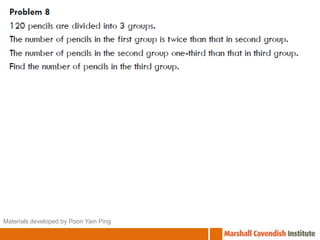
Materials developed by Poon Yain Ping
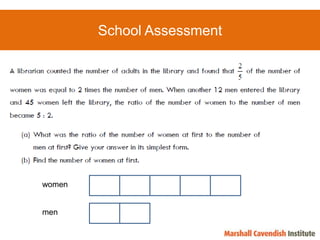
School Assessmentwomenmen
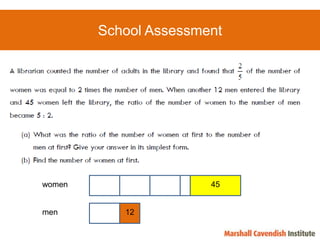
School Assessmentwomen45men12
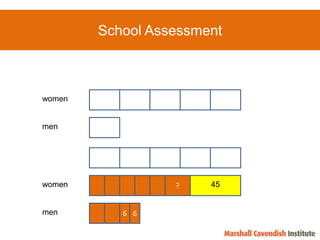
School Assessmentwomenmen?women4566men12
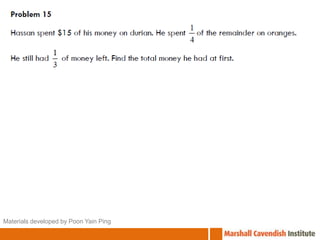
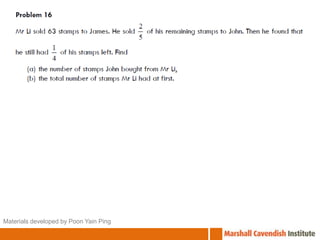
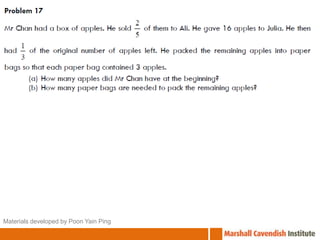
Further Practice for Model Method
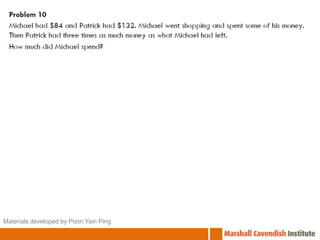
Materials developed by Poon Yain Ping

Rotterdam Day 2