By: Melissa Bogle
When choosing a form of birth
control
 You must look at:
 How well it works
 How much effort it
takes
 When you want to
become pregnant
 How much it cost
 Does it protect from
spread of infection
 Any history of
problems with a form
of birth control in the
past or health issues
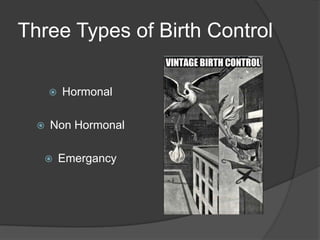
Three Types of Birth Control
 Hormonal
 Non Hormonal
 Emergancy
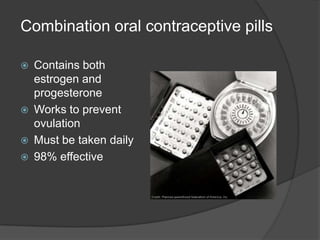
Combination oral contraceptive pills
 Contains both
estrogen and
progesterone
 Works to prevent
ovulation
 Must be taken daily
 98% effective
Depo-Provera
 Provides high does
of progesterone
 Works to prevent
ovulation
 Injection must be
given every twelve
to thirteen weeks
 99% effective
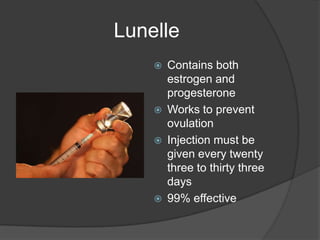
Lunelle
 Contains both
estrogen and
progesterone
 Works to prevent
ovulation
 Injection must be
given every twenty
three to thirty three
days
 99% effective
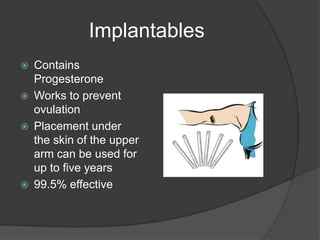
Implantables
 Contains
Progesterone
 Works to prevent
ovulation
 Placement under
the skin of the upper
arm can be used for
up to five years
 99.5% effective
Progestin Intrauterine Device
 Contains
Progesterone
 Works to thicken
cervical mucus and
decrease sperm
motility and function
 A T-shaped device is
placed in the cervix
it can stay in place
for up to five years
 99.9% effective
Intrauterine Device
 Copper works to
decrease sperm
motility and
lifespan, produces
changes in the
endometrium that
are hostile to sperm
 Can stay in for up to
10 years
 99.2% effective
Condom: Male and Female
 Prevents sperm form
entering the vagina
 One time use
 Protects against
sexually transmitted
diseases
 Effetiveness varies with
use and combination
with spermicidal.
 Male effectiveness is
about 85%
 Female effectiveness is
about 75%
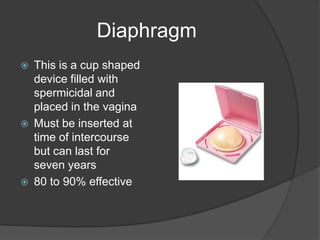
Diaphragm
 This is a cup shaped
device filled with
spermicidal and
placed in the vagina
 Must be inserted at
time of intercourse
but can last for
seven years
 80 to 90% effective
Withdrawal
 This requires
removal of the penis
before ejaculation
 About 75% effective
Natural Family Planning
 Dates can be
established to
determine safe dates
to have intercourse
based on the women’s
menstrual period and
the calendar, body
temperature and/or
cervical mucus
 Approximately 75%
effective
Female Sterilization
 Surgical
interventions
requiring the
fallopian tubes to be
tied, cut, burned, ba
nded with rings or
blocked with clips
 Over 99% effective
Male Sterilization
 Surgical Intervention
to tie of the
spermatic cord to
prevent the sperm
from entering the
semen upon
ejaculation
 99.9% effective

Birth control informative speech powerpoint

  • 1.
  • 2.
    When choosing aform of birth control  You must look at:  How well it works  How much effort it takes  When you want to become pregnant  How much it cost  Does it protect from spread of infection  Any history of problems with a form of birth control in the past or health issues
  • 3.
    Three Types ofBirth Control  Hormonal  Non Hormonal  Emergancy
  • 4.
    Combination oral contraceptivepills  Contains both estrogen and progesterone  Works to prevent ovulation  Must be taken daily  98% effective
  • 5.
    Depo-Provera  Provides highdoes of progesterone  Works to prevent ovulation  Injection must be given every twelve to thirteen weeks  99% effective
  • 6.
    Lunelle  Contains both estrogenand progesterone  Works to prevent ovulation  Injection must be given every twenty three to thirty three days  99% effective
  • 7.
    Implantables  Contains Progesterone  Worksto prevent ovulation  Placement under the skin of the upper arm can be used for up to five years  99.5% effective
  • 8.
    Progestin Intrauterine Device Contains Progesterone  Works to thicken cervical mucus and decrease sperm motility and function  A T-shaped device is placed in the cervix it can stay in place for up to five years  99.9% effective
  • 9.
    Intrauterine Device  Copperworks to decrease sperm motility and lifespan, produces changes in the endometrium that are hostile to sperm  Can stay in for up to 10 years  99.2% effective
  • 10.
    Condom: Male andFemale  Prevents sperm form entering the vagina  One time use  Protects against sexually transmitted diseases  Effetiveness varies with use and combination with spermicidal.  Male effectiveness is about 85%  Female effectiveness is about 75%
  • 11.
    Diaphragm  This isa cup shaped device filled with spermicidal and placed in the vagina  Must be inserted at time of intercourse but can last for seven years  80 to 90% effective
  • 12.
    Withdrawal  This requires removalof the penis before ejaculation  About 75% effective
  • 13.
    Natural Family Planning Dates can be established to determine safe dates to have intercourse based on the women’s menstrual period and the calendar, body temperature and/or cervical mucus  Approximately 75% effective
  • 14.
    Female Sterilization  Surgical interventions requiringthe fallopian tubes to be tied, cut, burned, ba nded with rings or blocked with clips  Over 99% effective
  • 15.
    Male Sterilization  SurgicalIntervention to tie of the spermatic cord to prevent the sperm from entering the semen upon ejaculation  99.9% effective