BIOTOXICITY
Aliya S
AAH-2023-22-01
What are Biotoxins?
Biotoxins are substances which are both toxic and have a biological
origin. They come in many forms and can be produced by nearly
every type of living organism: there are mycotoxins (made by
fungi), zootoxins (made by animals) and phytotoxins (made by
plants). Whilst some appear to have no advantage for the organism
making them (they might be a waste product, for example), most are
produced to help in two main activities – predation and defense
against predation by other species, and so have very important roles
in the life cycle of the organism. As we can see, biotoxins are varied
in both function/mechanism and form: they can be used for a variety
of activities or even none at all and can be anything from large
complex molecules right down to fairly simple proteins. They can also
be administered in lots of ways, including orally ingesting them, being
injected as venom or being released into the environment via a type
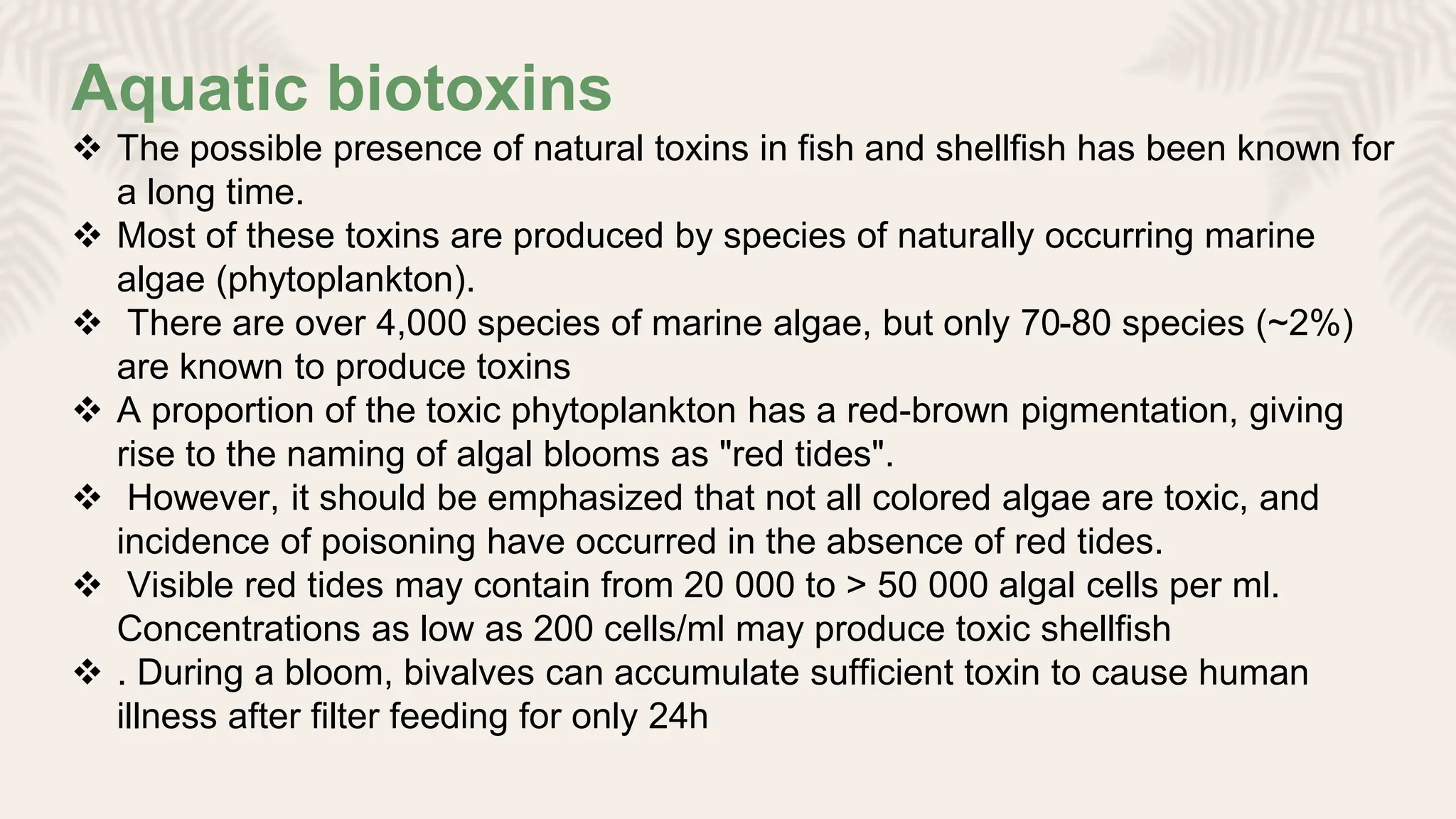
Many biotoxins can be further classified into what kind of
effects they have on the body. Some of these groups
include the following:
• necrotoxins, substances that cause tissue destruction via cell
death and
are carried in the bloodstream.
• neurotoxins, substances that affect the nervous system.
• haemotoxins, substances that are carried in the bloodstream and
target red blood cells.
• cyanotoxins, produced by cyanobacteria.
• cytotoxins substances toxic at the level of the cell (kills individual
cells).
• mycotoxins, produced by fungi.
• apitoxin, honey bee venom, injected via the sting.
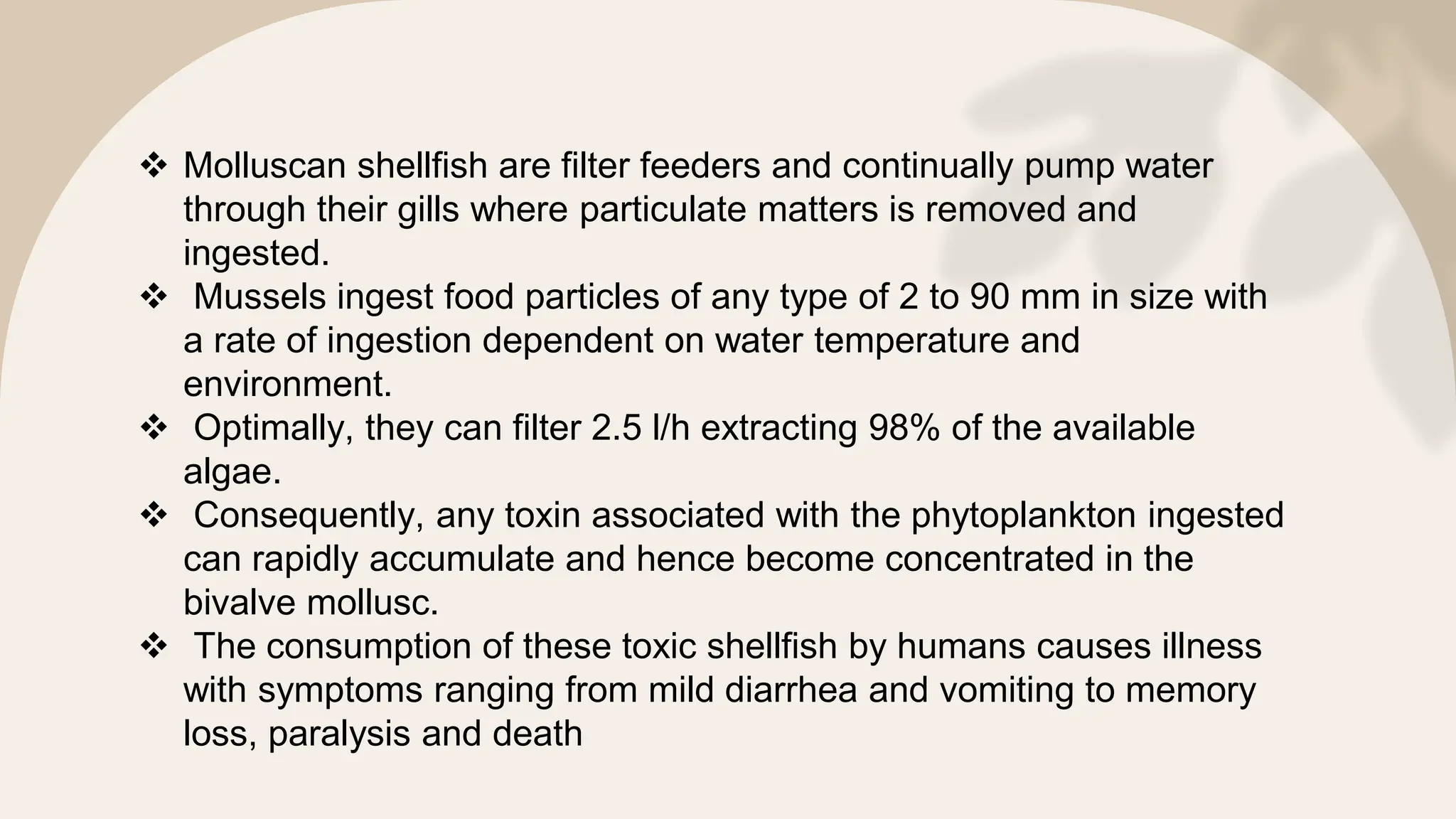
Aquatic biotoxins
 The possible presence of natural toxins in fish and shellfish has been known for
a long time.
 Most of these toxins are produced by species of naturally occurring marine
algae (phytoplankton).
 There are over 4,000 species of marine algae, but only 70-80 species (~2%)
are known to produce toxins
 A proportion of the toxic phytoplankton has a red-brown pigmentation, giving
rise to the naming of algal blooms as "red tides".
 However, it should be emphasized that not all colored algae are toxic, and
incidence of poisoning have occurred in the absence of red tides.
 Visible red tides may contain from 20 000 to > 50 000 algal cells per ml.
Concentrations as low as 200 cells/ml may produce toxic shellfish
 . During a bloom, bivalves can accumulate sufficient toxin to cause human
illness after filter feeding for only 24h
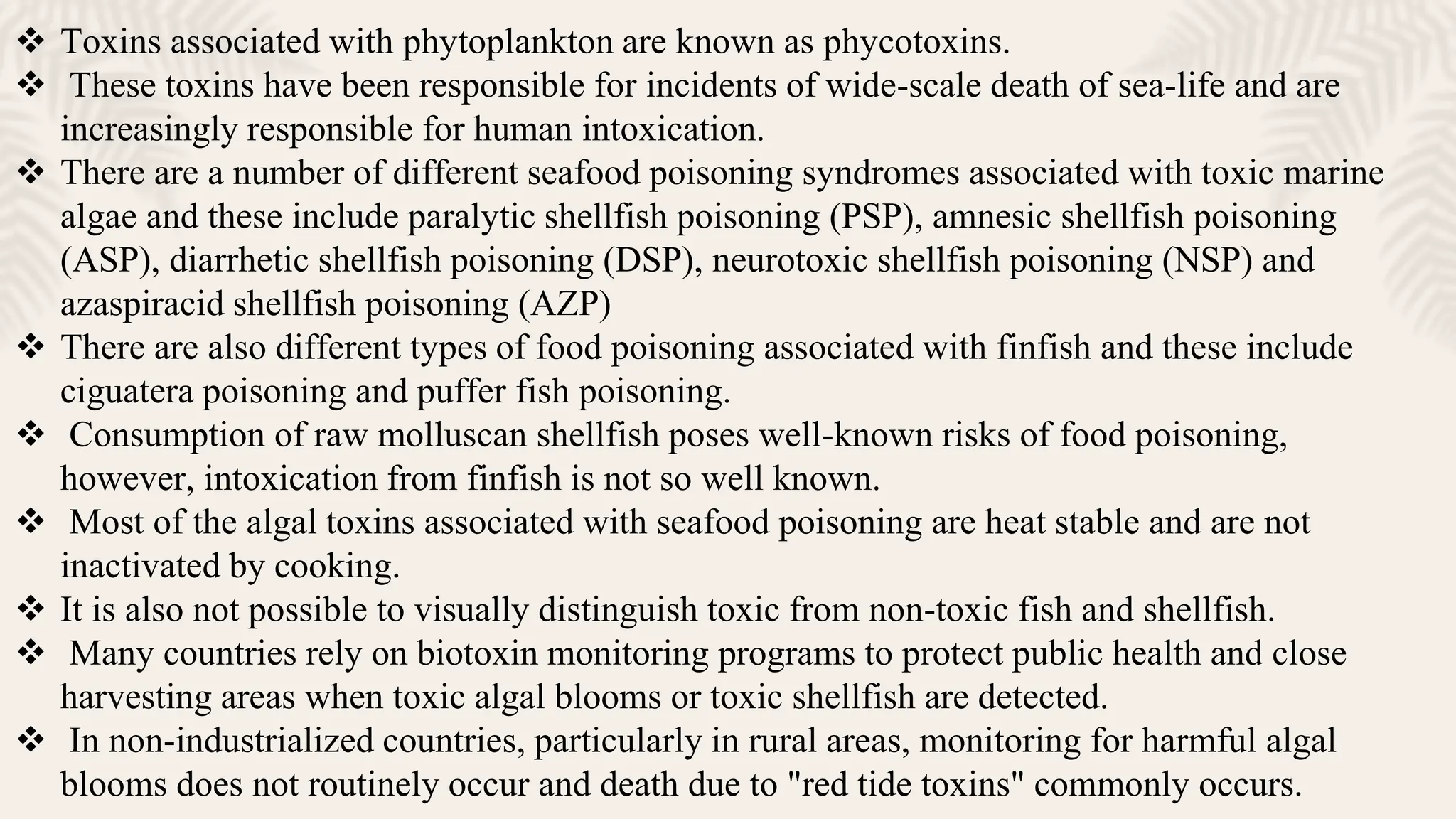
 Molluscan shellfish are filter feeders and continually pump water
through their gills where particulate matters is removed and
ingested.
 Mussels ingest food particles of any type of 2 to 90 mm in size with
a rate of ingestion dependent on water temperature and
environment.
 Optimally, they can filter 2.5 l/h extracting 98% of the available
algae.
 Consequently, any toxin associated with the phytoplankton ingested
can rapidly accumulate and hence become concentrated in the
bivalve mollusc.
 The consumption of these toxic shellfish by humans causes illness
with symptoms ranging from mild diarrhea and vomiting to memory
loss, paralysis and death
 Toxins associated with phytoplankton are known as phycotoxins.
 These toxins have been responsible for incidents of wide-scale death of sea-life and are
increasingly responsible for human intoxication.
 There are a number of different seafood poisoning syndromes associated with toxic marine
algae and these include paralytic shellfish poisoning (PSP), amnesic shellfish poisoning
(ASP), diarrhetic shellfish poisoning (DSP), neurotoxic shellfish poisoning (NSP) and
azaspiracid shellfish poisoning (AZP)
 There are also different types of food poisoning associated with finfish and these include
ciguatera poisoning and puffer fish poisoning.
 Consumption of raw molluscan shellfish poses well-known risks of food poisoning,
however, intoxication from finfish is not so well known.
 Most of the algal toxins associated with seafood poisoning are heat stable and are not
inactivated by cooking.
 It is also not possible to visually distinguish toxic from non-toxic fish and shellfish.
 Many countries rely on biotoxin monitoring programs to protect public health and close
harvesting areas when toxic algal blooms or toxic shellfish are detected.
 In non-industrialized countries, particularly in rural areas, monitoring for harmful algal
blooms does not routinely occur and death due to "red tide toxins" commonly occurs.
Generalized pathways of human intoxication with molluscan
shellfish toxins via filter feeding bivalves and carnivorous and
scavenging gastropods
Marine biotoxins and the associated poisonings.
The disease Toxins Occurrence
PSP-Paralytic shellfish
poisoning
Saxitoxin Worldwide
DSP-Diarrheic shellfish
poisoning
Okadaic acid dinophysis
toxin
Worldwide
NSP-Neurotoxic shellfish
poisoning
Brevetoxins USA, Caribbean, New
Zealand
ASP-Amnesic shellfish
poisoning
Domoic acid North America
Ciguatera fish poisoning Ciguatoxin (CTX) Tropical, subtropical
Puffer fish (tetrodotoxin)
poisoning
Tetrodotoxin (TTX) Japan, South Pacific
Paralytic shellfish poisoning (PSP)
 Intoxication after consumption of shellfish is a syndrome that has been
known for centuries, the most common being PSP.
 It is caused by a group of toxins (saxitoxins and derivates) produced by
dinoflagellates of genera Alexandrium, Gymnodium and Pyrodinium.
 Symptoms of PSP initially involve numbness and a burning or tingling
sensation of the lips and tongue that spread to the face and fingertips.
 This leads to a general lack of muscle coordination in the arms, legs and
neck.
 Severe cases of PSP have resulted in respiratory paralysis and death.
 There are an estimated 1 600 annual cases of PSP world-wide,
approximately 300 of these will be fatal
Diarrheic shellfish poisoning (DSP)
 Thousands of cases of gastrointestinal disorders caused by DSP have been
reported in Europe, Japan, South East Asia, North- and South-America .
 The causative dinoflagellates, which produce the toxins are within the
genera Dinophysis and Prorocentrum.
 These dinoflagellates are widespread, which means that this illness could also
occur in any other parts of the world.
 A great number of toxins has been identified including okadaic acid (OA) and
associated toxins (DTX 1-4).
 Onset of disease is within half an hour to a few hours following consumption of
shellfish, which have been feeding on toxic algae.
 Symptoms are gastrointestinal disorder (diarrhoea, vomiting, abdominal pain)
and victims recover within 3-4 days with or without treatment. No fatalities have
ever been observed.
 The toxins are heat stable and survive normal cooking.
Neurotoxic shellfish poisoning (NSP)
 The occurrence of NSP has historically been limited to the west coast of Florida,
where blooms of the dinoflagellate Gymnodinium breve occurs regularly
offshore and is carried inshore by wind and current conditions.
 However, also shellfish harvested on the southern Atlantic coast may be toxic
and there have been reports of outbreaks of NSP in New Zealand.
 The responsible toxins are a family of brevetoxins.
 The toxins are extraordinarily stable (survive heat up to 300°C) and the oral
LD50 value in rats being in the order of 520-6 600 µg/kg (Llewellyn 2001).
 Pathogenic dose for human is in the order of 42-72 mouse units (MU).
 Typical symptoms of NSP are tingling in the face, throat and digits, dizziness,
fever, chills, muscle pains, abdominal pains, nausea, vomiting, headache and
reduced heart rate.
 There have been no recorded human deaths from NSP, but the toxin is fatal to
fish and can cause massive fish kill.
Amnesic shellfish poisoning (ASP)
 ASP is the only shellfish poison produced by a diatom.
 Disease was first identified in Canada in 1987, where more than 100 people
became ill often consuming contaminated shellfish
 The disease was named after one of the more curious symptoms, which was
loss of short-term memory.
 Other symptoms include nausea, vomiting, diarrhoea, headache and
neurological effects including dizziness, disorientation and confusion.
 In severe cases seizures followed by coma and death may occur.
 The short-term memory loss seems to be permanent in surviving victims.
 Outbreaks have so far been confined to Canada and the USA, although the
responsible algae has been found in many other areas.
 The causative agent is domoic acid. In the Canadian 1987 outbreak, human
toxicity occurred at 1-5 mg/kg
Ciguatera fish poisoning (CFP)
 CFP is one of the most common food-borne illnesses related to finfish consumption
 Its true incidence is not known, but it has been estimated that 10 000-50 000 people a
year suffer from this disease.
 It is caused by consumption of fish that have become toxic by feeding on toxic
dinoflagellates or toxic herbivore fish.
 The principal source is the benthic dinoflagellates Gambierdicus toxicus, which is found
primarily in the tropics where it lives in association with macro algae, usually attached to
dead corals.
 More than 400 species of fish are known to be vectors of ciguatoxins.
 Toxins can be detected in the gut, liver and muscle tissue by means of mouse assay.
 Clinical symptoms vary widely but are characterized by gastrointestinal, neurological
and cardiovascular disturbances often within 10 min but also up to 24 h after ingestion of
toxic fish. The initial gastrointestinal symptoms are similar to any other food poisoning
(abdominal pain, nausea, vomiting, diarrhea).
Puffer fish (Tetrodotoxin) poisoning (PFP)
 Tetrodotoxin (TTX) is one of the most potent non-proteinaceous toxins known and
responsible for numerous fish poisonings.
 The toxin is named after the order Tetraodontidae (common names: puffer fish,
balloon fish, globe fish, fugu, toad fish, blow fish), since many of these fish often
carry the toxin.
 Apart from Tetraodontidae toxin has been found in goby, blue-ringed octopus,
various gastropods, newts and horseshoe crab.
 Nausea and vomiting may or may not occur, but the most common symptoms are
tingling or pricking sensation and dizziness.
 Disease may progress to muscle and respiratory paralysis.
 Where death occurs it is usually within 6 h and sometimes as rapidly as 20 min
following toxin ingestion
 The distribution of the toxin in the fish is mainly in the ovaries
(eggs), liver and skin.
 The muscle tissue is normally free of toxin
 It is now assumed that TTX in fish comes directly from its feed.
 The toxin is produced by bacteria, absorbed on or precipitated
with plankton, transmitted to TTX-bearing animals such as small
gastropods, starfish, flatworks etc. and from here transmitted to
fish and large gastropods.
 Fish, except those processing tetrodotoxin such as puffers and
tropical goby, do not accumulate tetrodotoxin even where toxin-
containing diets are fed to them at sub-lethal doses
Monitoring of biotoxins
Toxin Toxicity Regulatory
tolerance
Method of analysis
PSP PD1: 0.1-2 mg;
LD2: (0.3-12 mg
80 µg/100 g tissue Mouse assay
DSP 35-40 µg 0-60 µg/100 g Mouse assay
NSP PD: 42-72 MU 0.8 ppm (20
MU/100g)
Mouse assay
ASP PD: 1-5 mg/kg 20 ppm domoic acid HPLC
CFP PD: 23-230 µg must not be detected Mouse assay
PFP LD50: 2 mg; PD: 0.2
mg
HPLC
1. PD = Pathogenic dose for humans
2. LD = Lethal dose for humans.
PREVENTIVE MEASURE
 The primary preventive tool for intoxications with natural toxins is the monitoring of
toxin levels in algae in the harvesting areas .
 a requirement that containers of in-shell molluscan shellfish bear a tag that
identifies the type and quality of shellfish, harvester, harvest location and date of
harvest
 a requirement that molluscan shellfish harvesters be licensed
 a requirement that processes that chuck molluscan shellfish or ship, repack the
chucked product be certified
 a requirement that containers of chucked shellfish bear a label with the
processor's name, address and certification number.
Depuration and ozonation are not effective and are not used in reducing toxins in
shellfish
THANK
YOU

biotoxins are toxin produced by organisms

  • 1.
  • 2.
    What are Biotoxins? Biotoxinsare substances which are both toxic and have a biological origin. They come in many forms and can be produced by nearly every type of living organism: there are mycotoxins (made by fungi), zootoxins (made by animals) and phytotoxins (made by plants). Whilst some appear to have no advantage for the organism making them (they might be a waste product, for example), most are produced to help in two main activities – predation and defense against predation by other species, and so have very important roles in the life cycle of the organism. As we can see, biotoxins are varied in both function/mechanism and form: they can be used for a variety of activities or even none at all and can be anything from large complex molecules right down to fairly simple proteins. They can also be administered in lots of ways, including orally ingesting them, being injected as venom or being released into the environment via a type
  • 3.
    Many biotoxins canbe further classified into what kind of effects they have on the body. Some of these groups include the following: • necrotoxins, substances that cause tissue destruction via cell death and are carried in the bloodstream. • neurotoxins, substances that affect the nervous system. • haemotoxins, substances that are carried in the bloodstream and target red blood cells. • cyanotoxins, produced by cyanobacteria. • cytotoxins substances toxic at the level of the cell (kills individual cells). • mycotoxins, produced by fungi. • apitoxin, honey bee venom, injected via the sting.
  • 4.
    Aquatic biotoxins  Thepossible presence of natural toxins in fish and shellfish has been known for a long time.  Most of these toxins are produced by species of naturally occurring marine algae (phytoplankton).  There are over 4,000 species of marine algae, but only 70-80 species (~2%) are known to produce toxins  A proportion of the toxic phytoplankton has a red-brown pigmentation, giving rise to the naming of algal blooms as "red tides".  However, it should be emphasized that not all colored algae are toxic, and incidence of poisoning have occurred in the absence of red tides.  Visible red tides may contain from 20 000 to > 50 000 algal cells per ml. Concentrations as low as 200 cells/ml may produce toxic shellfish  . During a bloom, bivalves can accumulate sufficient toxin to cause human illness after filter feeding for only 24h
  • 5.
     Molluscan shellfishare filter feeders and continually pump water through their gills where particulate matters is removed and ingested.  Mussels ingest food particles of any type of 2 to 90 mm in size with a rate of ingestion dependent on water temperature and environment.  Optimally, they can filter 2.5 l/h extracting 98% of the available algae.  Consequently, any toxin associated with the phytoplankton ingested can rapidly accumulate and hence become concentrated in the bivalve mollusc.  The consumption of these toxic shellfish by humans causes illness with symptoms ranging from mild diarrhea and vomiting to memory loss, paralysis and death
  • 6.
     Toxins associatedwith phytoplankton are known as phycotoxins.  These toxins have been responsible for incidents of wide-scale death of sea-life and are increasingly responsible for human intoxication.  There are a number of different seafood poisoning syndromes associated with toxic marine algae and these include paralytic shellfish poisoning (PSP), amnesic shellfish poisoning (ASP), diarrhetic shellfish poisoning (DSP), neurotoxic shellfish poisoning (NSP) and azaspiracid shellfish poisoning (AZP)  There are also different types of food poisoning associated with finfish and these include ciguatera poisoning and puffer fish poisoning.  Consumption of raw molluscan shellfish poses well-known risks of food poisoning, however, intoxication from finfish is not so well known.  Most of the algal toxins associated with seafood poisoning are heat stable and are not inactivated by cooking.  It is also not possible to visually distinguish toxic from non-toxic fish and shellfish.  Many countries rely on biotoxin monitoring programs to protect public health and close harvesting areas when toxic algal blooms or toxic shellfish are detected.  In non-industrialized countries, particularly in rural areas, monitoring for harmful algal blooms does not routinely occur and death due to "red tide toxins" commonly occurs.
  • 7.
    Generalized pathways ofhuman intoxication with molluscan shellfish toxins via filter feeding bivalves and carnivorous and scavenging gastropods
  • 8.
    Marine biotoxins andthe associated poisonings. The disease Toxins Occurrence PSP-Paralytic shellfish poisoning Saxitoxin Worldwide DSP-Diarrheic shellfish poisoning Okadaic acid dinophysis toxin Worldwide NSP-Neurotoxic shellfish poisoning Brevetoxins USA, Caribbean, New Zealand ASP-Amnesic shellfish poisoning Domoic acid North America Ciguatera fish poisoning Ciguatoxin (CTX) Tropical, subtropical Puffer fish (tetrodotoxin) poisoning Tetrodotoxin (TTX) Japan, South Pacific
  • 9.
    Paralytic shellfish poisoning(PSP)  Intoxication after consumption of shellfish is a syndrome that has been known for centuries, the most common being PSP.  It is caused by a group of toxins (saxitoxins and derivates) produced by dinoflagellates of genera Alexandrium, Gymnodium and Pyrodinium.  Symptoms of PSP initially involve numbness and a burning or tingling sensation of the lips and tongue that spread to the face and fingertips.  This leads to a general lack of muscle coordination in the arms, legs and neck.  Severe cases of PSP have resulted in respiratory paralysis and death.  There are an estimated 1 600 annual cases of PSP world-wide, approximately 300 of these will be fatal
  • 10.
    Diarrheic shellfish poisoning(DSP)  Thousands of cases of gastrointestinal disorders caused by DSP have been reported in Europe, Japan, South East Asia, North- and South-America .  The causative dinoflagellates, which produce the toxins are within the genera Dinophysis and Prorocentrum.  These dinoflagellates are widespread, which means that this illness could also occur in any other parts of the world.  A great number of toxins has been identified including okadaic acid (OA) and associated toxins (DTX 1-4).  Onset of disease is within half an hour to a few hours following consumption of shellfish, which have been feeding on toxic algae.  Symptoms are gastrointestinal disorder (diarrhoea, vomiting, abdominal pain) and victims recover within 3-4 days with or without treatment. No fatalities have ever been observed.  The toxins are heat stable and survive normal cooking.
  • 11.
    Neurotoxic shellfish poisoning(NSP)  The occurrence of NSP has historically been limited to the west coast of Florida, where blooms of the dinoflagellate Gymnodinium breve occurs regularly offshore and is carried inshore by wind and current conditions.  However, also shellfish harvested on the southern Atlantic coast may be toxic and there have been reports of outbreaks of NSP in New Zealand.  The responsible toxins are a family of brevetoxins.  The toxins are extraordinarily stable (survive heat up to 300°C) and the oral LD50 value in rats being in the order of 520-6 600 µg/kg (Llewellyn 2001).  Pathogenic dose for human is in the order of 42-72 mouse units (MU).  Typical symptoms of NSP are tingling in the face, throat and digits, dizziness, fever, chills, muscle pains, abdominal pains, nausea, vomiting, headache and reduced heart rate.  There have been no recorded human deaths from NSP, but the toxin is fatal to fish and can cause massive fish kill.
  • 12.
    Amnesic shellfish poisoning(ASP)  ASP is the only shellfish poison produced by a diatom.  Disease was first identified in Canada in 1987, where more than 100 people became ill often consuming contaminated shellfish  The disease was named after one of the more curious symptoms, which was loss of short-term memory.  Other symptoms include nausea, vomiting, diarrhoea, headache and neurological effects including dizziness, disorientation and confusion.  In severe cases seizures followed by coma and death may occur.  The short-term memory loss seems to be permanent in surviving victims.  Outbreaks have so far been confined to Canada and the USA, although the responsible algae has been found in many other areas.  The causative agent is domoic acid. In the Canadian 1987 outbreak, human toxicity occurred at 1-5 mg/kg
  • 13.
    Ciguatera fish poisoning(CFP)  CFP is one of the most common food-borne illnesses related to finfish consumption  Its true incidence is not known, but it has been estimated that 10 000-50 000 people a year suffer from this disease.  It is caused by consumption of fish that have become toxic by feeding on toxic dinoflagellates or toxic herbivore fish.  The principal source is the benthic dinoflagellates Gambierdicus toxicus, which is found primarily in the tropics where it lives in association with macro algae, usually attached to dead corals.  More than 400 species of fish are known to be vectors of ciguatoxins.  Toxins can be detected in the gut, liver and muscle tissue by means of mouse assay.  Clinical symptoms vary widely but are characterized by gastrointestinal, neurological and cardiovascular disturbances often within 10 min but also up to 24 h after ingestion of toxic fish. The initial gastrointestinal symptoms are similar to any other food poisoning (abdominal pain, nausea, vomiting, diarrhea).
  • 14.
    Puffer fish (Tetrodotoxin)poisoning (PFP)  Tetrodotoxin (TTX) is one of the most potent non-proteinaceous toxins known and responsible for numerous fish poisonings.  The toxin is named after the order Tetraodontidae (common names: puffer fish, balloon fish, globe fish, fugu, toad fish, blow fish), since many of these fish often carry the toxin.  Apart from Tetraodontidae toxin has been found in goby, blue-ringed octopus, various gastropods, newts and horseshoe crab.  Nausea and vomiting may or may not occur, but the most common symptoms are tingling or pricking sensation and dizziness.  Disease may progress to muscle and respiratory paralysis.  Where death occurs it is usually within 6 h and sometimes as rapidly as 20 min following toxin ingestion
  • 15.
     The distributionof the toxin in the fish is mainly in the ovaries (eggs), liver and skin.  The muscle tissue is normally free of toxin  It is now assumed that TTX in fish comes directly from its feed.  The toxin is produced by bacteria, absorbed on or precipitated with plankton, transmitted to TTX-bearing animals such as small gastropods, starfish, flatworks etc. and from here transmitted to fish and large gastropods.  Fish, except those processing tetrodotoxin such as puffers and tropical goby, do not accumulate tetrodotoxin even where toxin- containing diets are fed to them at sub-lethal doses
  • 16.
    Monitoring of biotoxins ToxinToxicity Regulatory tolerance Method of analysis PSP PD1: 0.1-2 mg; LD2: (0.3-12 mg 80 µg/100 g tissue Mouse assay DSP 35-40 µg 0-60 µg/100 g Mouse assay NSP PD: 42-72 MU 0.8 ppm (20 MU/100g) Mouse assay ASP PD: 1-5 mg/kg 20 ppm domoic acid HPLC CFP PD: 23-230 µg must not be detected Mouse assay PFP LD50: 2 mg; PD: 0.2 mg HPLC 1. PD = Pathogenic dose for humans 2. LD = Lethal dose for humans.
  • 17.
    PREVENTIVE MEASURE  Theprimary preventive tool for intoxications with natural toxins is the monitoring of toxin levels in algae in the harvesting areas .  a requirement that containers of in-shell molluscan shellfish bear a tag that identifies the type and quality of shellfish, harvester, harvest location and date of harvest  a requirement that molluscan shellfish harvesters be licensed  a requirement that processes that chuck molluscan shellfish or ship, repack the chucked product be certified  a requirement that containers of chucked shellfish bear a label with the processor's name, address and certification number. Depuration and ozonation are not effective and are not used in reducing toxins in shellfish
  • 18.