INTRODUCTION TO BIOTECHNOLOGY
-Definition of biotechnology
- Overview of its significance in various fields
- Brief historical background
WHAT IS BIOTECHNOLOGY ?
• Biotechnology is the branch of science which deals with the
application of biological techniques for human welfare. It
involves the modification of genes by the enzymatic action
which leads to the production of some biological entity like
antibodies, vaccines etc which benefits the mankind.
USES OF BIOTECHNOLOGY
• Biotechnology commonly referred as biotech is an integral part of our
society from the production of cheap life saving medicines to
production of new variety of crops even mass production of daily
eatery everything is possible with the help of biotechnology
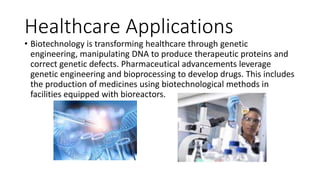
Healthcare Applications
• Biotechnology is transforming healthcare through genetic
engineering, manipulating DNA to produce therapeutic proteins and
correct genetic defects. Pharmaceutical advancements leverage
genetic engineering and bioprocessing to develop drugs. This includes
the production of medicines using biotechnological methods in
facilities equipped with bioreactors.
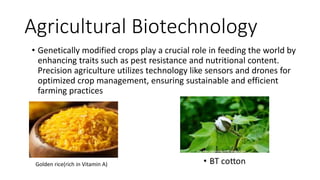
Agricultural Biotechnology
• Genetically modified crops play a crucial role in feeding the world by
enhancing traits such as pest resistance and nutritional content.
Precision agriculture utilizes technology like sensors and drones for
optimized crop management, ensuring sustainable and efficient
farming practices
• ………………………………
Golden rice(rich in Vitamin A)
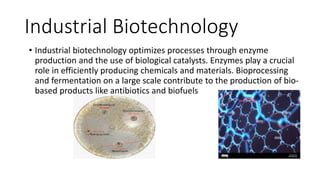
Industrial Biotechnology
• Industrial biotechnology optimizes processes through enzyme
production and the use of biological catalysts. Enzymes play a crucial
role in efficiently producing chemicals and materials. Bioprocessing
and fermentation on a large scale contribute to the production of bio-
based products like antibiotics and biofuels
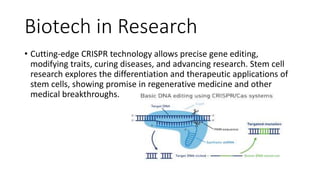
Biotech in Research
• Cutting-edge CRISPR technology allows precise gene editing,
modifying traits, curing diseases, and advancing research. Stem cell
research explores the differentiation and therapeutic applications of
stem cells, showing promise in regenerative medicine and other
medical breakthroughs.
Global Impact of Biotechnology
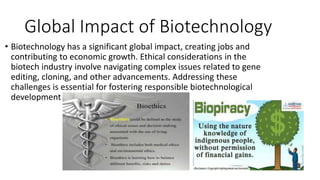
• Biotechnology has a significant global impact, creating jobs and
contributing to economic growth. Ethical considerations in the
biotech industry involve navigating complex issues related to gene
editing, cloning, and other advancements. Addressing these
challenges is essential for fostering responsible biotechnological
development
Challenges and Future Trends
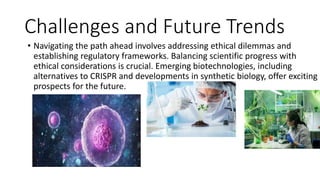
• Navigating the path ahead involves addressing ethical dilemmas and
establishing regulatory frameworks. Balancing scientific progress with
ethical considerations is crucial. Emerging biotechnologies, including
alternatives to CRISPR and developments in synthetic biology, offer exciting
prospects for the future.
Conclusion
• In conclusion, the transformative power of biotechnology is evident in
its diverse applications worldwide. As we navigate the future, it is
essential to consider ethical implications, regulatory frameworks, and
emerging technologies to ensure responsible and sustainable
biotechnological advancements. The global impact of biotechnology
on various industries underscores its role in shaping a better and
more innovative world

biotechnology and its application class 12 boards practical

  • 2.
    INTRODUCTION TO BIOTECHNOLOGY -Definitionof biotechnology - Overview of its significance in various fields - Brief historical background
  • 3.
    WHAT IS BIOTECHNOLOGY? • Biotechnology is the branch of science which deals with the application of biological techniques for human welfare. It involves the modification of genes by the enzymatic action which leads to the production of some biological entity like antibodies, vaccines etc which benefits the mankind.
  • 4.
    USES OF BIOTECHNOLOGY •Biotechnology commonly referred as biotech is an integral part of our society from the production of cheap life saving medicines to production of new variety of crops even mass production of daily eatery everything is possible with the help of biotechnology
  • 5.
    Healthcare Applications • Biotechnologyis transforming healthcare through genetic engineering, manipulating DNA to produce therapeutic proteins and correct genetic defects. Pharmaceutical advancements leverage genetic engineering and bioprocessing to develop drugs. This includes the production of medicines using biotechnological methods in facilities equipped with bioreactors.
  • 6.
    Agricultural Biotechnology • Geneticallymodified crops play a crucial role in feeding the world by enhancing traits such as pest resistance and nutritional content. Precision agriculture utilizes technology like sensors and drones for optimized crop management, ensuring sustainable and efficient farming practices • ……………………………… Golden rice(rich in Vitamin A)
  • 7.
    Industrial Biotechnology • Industrialbiotechnology optimizes processes through enzyme production and the use of biological catalysts. Enzymes play a crucial role in efficiently producing chemicals and materials. Bioprocessing and fermentation on a large scale contribute to the production of bio- based products like antibiotics and biofuels
  • 8.
    Biotech in Research •Cutting-edge CRISPR technology allows precise gene editing, modifying traits, curing diseases, and advancing research. Stem cell research explores the differentiation and therapeutic applications of stem cells, showing promise in regenerative medicine and other medical breakthroughs.
  • 9.
    Global Impact ofBiotechnology • Biotechnology has a significant global impact, creating jobs and contributing to economic growth. Ethical considerations in the biotech industry involve navigating complex issues related to gene editing, cloning, and other advancements. Addressing these challenges is essential for fostering responsible biotechnological development
  • 10.
    Challenges and FutureTrends • Navigating the path ahead involves addressing ethical dilemmas and establishing regulatory frameworks. Balancing scientific progress with ethical considerations is crucial. Emerging biotechnologies, including alternatives to CRISPR and developments in synthetic biology, offer exciting prospects for the future.
  • 11.
    Conclusion • In conclusion,the transformative power of biotechnology is evident in its diverse applications worldwide. As we navigate the future, it is essential to consider ethical implications, regulatory frameworks, and emerging technologies to ensure responsible and sustainable biotechnological advancements. The global impact of biotechnology on various industries underscores its role in shaping a better and more innovative world