1
Presented by,
Mr. Manmath Palaskar
M.Pharm (Pharmaceutics)
24MPH12
Guided by,
Mr. B S Hucche Sir
M.Pharm (PHD)
Department of Pharmaceutics
Biopharmaceutics Classification System and
Methods of Permeability
Channabasweshwar Pharmacy College (Degree), Latur
2
Contents
1) Introduction
2) Objectives of BCS
3) BCS Classification
4) Factors affecting BCS
5) Bio waivers
6) Limitations of BCS
7) Extensions to BCS
8) Applications of BCS
9) Methods of Permeability
a) In Vitro
b) In Situ
c) In Vivo
Channabasweshwar Pharmacy College (Degree), Latur.
3
Introduction :
The Biopharmaceutics Classification System (BCS) is a scientific framework
developed to classify drug substances based on their aqueous solubility and intestinal
permeability.
It was first introduced by Amidon et al. in 1995 and later adopted by regulatory
agencies such as the FDA and WHO to support biowaivers exemptions from in vivo
bioequivalence studies for certain drug products.
BCS plays a crucial role in drug development, formulation design, and regulatory
approval processes, especially for oral solid dosage forms.
It provides a systematic approach to predict the rate-limiting step in drug absorption,
which is essential for ensuring therapeutic efficacy and bioavailability.
Channabasweshwar Pharmacy College (Degree), Latur.
4
Objectives of BCS :
1. Classify drugs based on solubility and permeability.
2. Predict oral drug absorption and bioavailability.
3. Guide formulation and development strategies.
4. Support regulatory biowaivers (e.g., for bioequivalence).
5. Reduce the need for in vivo studies.
6. Improve efficiency in drug product development.
Channabasweshwar Pharmacy College (Degree), Latur.
5
The principle of BCS is based on the understanding that oral drug absorption
from the gastrointestinal tract is primarily governed by two fundamental
properties of the drug:
1. Aqueous Solubility : Refers to the drug’s ability to dissolve in
gastrointestinal fluids.
2. Intestinal Permeability : Refers to the ability of the drug to pass through
biological membranes (such as the intestinal wall).
These two factors determine whether a drug can dissolve in GI fluids and pass
through the intestinal membrane to reach systemic circulation.
Principle of Biopharmaceutics Classification System (BCS) :
Channabasweshwar Pharmacy College (Degree), Latur.
6
Channabasweshwar Pharmacy College (Degree), Latur.
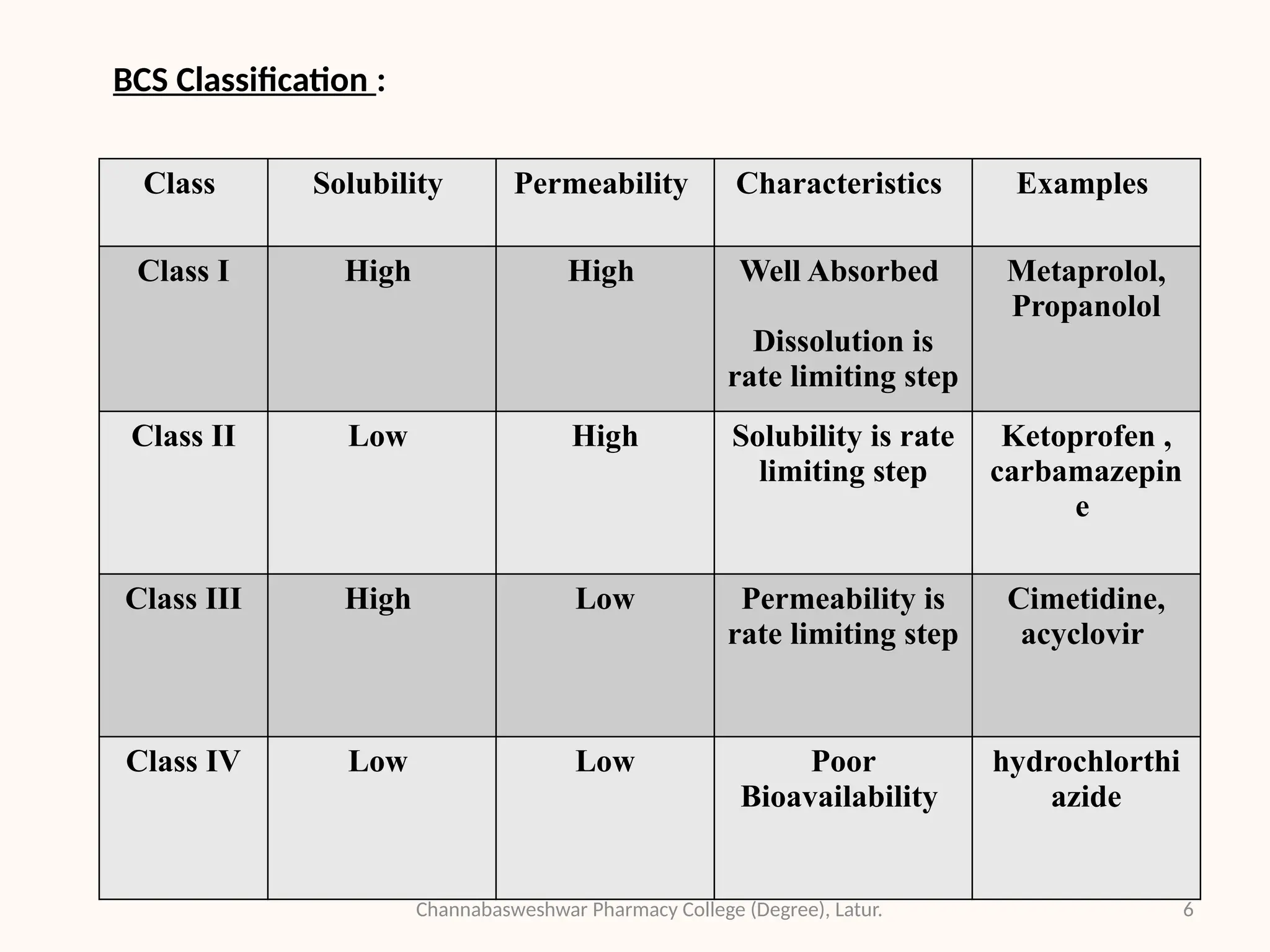
BCS Classification :
Class Solubility Permeability Characteristics Examples
Class I High High Well Absorbed
Dissolution is
rate limiting step
Metaprolol,
Propanolol
Class II Low High Solubility is rate
limiting step
Ketoprofen ,
carbamazepin
e
Class III High Low Permeability is
rate limiting step
Cimetidine,
acyclovir
Class IV Low Low Poor
Bioavailability
hydrochlorthi
azide
7
Factors affecting BCS
a) Solubility Factors:
1. Drug Particle Size
2. Polymorphism
3. pH of the Environment
4. Formulation Factors
5. Salt Form
b) Permeability Factors:
6. Molecular Size
7. Lipophilicity (LogP)
8. Transport Mechanisms
9. Presence of Efflux Pumps
Channabasweshwar Pharmacy College (Degree), Latur.
Channabasweshwar Pharmacy College (Deg
ree), Latur.
8
c) Physiological Factors:
1. Gastric pH
2. Gastric Emptying Rate
3. Gastrointestinal Motility
4. Blood Flow to the Absorption Site
9
Biowaivers :
A biowaiver is the regulatory approval to waive in vivo bioequivalence (BE) studies,
allowing approval based on in vitro data (such as dissolution testing) when certain
criteria are met.
Types of Biowaivers:
1. BCS-Based Biowaiver
2. Scale-Up and Post-Approval Changes (SUPAC)
3. WHO Biowaiver List
Requirements:
Rapid dissolution (≥85% in 30 minutes in 3 different pH media).
Stability in the gastrointestinal tract.
High solubility and permeability
Same dosage form and route of administration
No narrow therapeutic index. Channabasweshwar Pharmacy College (Degree), Latur.
10
Limitations of BCS :
1. Limited to IR oral forms – Not suitable for modified-release or non-oral routes.
2. Oversimplified GI conditions – Doesn’t reflect real GI variability (pH, food,
enzymes).
3. Static solubility/permeability data – Often based on in vitro tests, not always
predictive.
4. Ignores metabolism – Doesn’t account for first-pass or degradation effects.
5. Not for unstable drugs – In applicable to drugs degraded in the GI tract.
6. Inter-patient variation – Doesn’t consider differences in absorption across
individuals.
7. Unreliable for Class II & IV – Poor predictability for poorly soluble and poorly
permeable drugs.
8. Dose assumptions – Fixed 250 mL volume may not suit all dosing scenarios.
Channabasweshwar Pharmacy College (Degree), Latur.
11
Channabasweshwar Pharmacy College (Degree), Latur.
Extensions to the Biopharmaceutics Classification System (BCS) have been
proposed to overcome its limitations and improve prediction of in vivo drug
behavior.
Here are the main extensions:
1. Biopharmaceutics Drug Disposition Classification System (BDDCS)
• Proposed by Wu and Benet.
• Considers metabolism in addition to solubility and permeability.
• Helps predict drug-drug interactions, transporter effects, and elimination
route.
Classes are based on:
• Solubility
• Extent of metabolism (instead of permeability)
Extensions to the Biopharmaceutics Classification System (BCS) :
12
Channabasweshwar Pharmacy College (Degree), Latur.
2. Developability Classification System (DCS)
• Focuses on formulation challenges, especially for BCS Class II drugs.
• Developed by Butler and Dressman in 2010.
• Splits Class II into:
IIa. Dissolution-rate limited
Iib. Solubility-limited absorption
Helps in formulation strategy development.
3. Extended BCS (eBCS)
• Includes additional factors to BCS like dissolution kinetics, drug transporters,
metabolism, physiological factors like pH variation, GI transit time, and food
effect.
• More reflective of in vivo conditions.
13
Channabasweshwar Pharmacy College (Degree), Latur.
4. Computational and In Silico Tools
• PBPK modeling (Physiologically Based Pharmacokinetic models) and in silico
predictions integrate BCS parameters with GI physiology.
• Improve prediction of bioavailability and absorption kinetics.
5. Transporter-based Classifications
• Accounts for efflux/influx transporters (e.g., P-gp, OATP) not considered in
original BCS.
• Helps assess carrier-mediated absorption
Channabasweshwar Pharmacy College (Deg
ree), Latur.
14
Applications of BCS :
1. Biowaiver for Bioequivalence Studies
2. Guidance in Oral Drug Formulation Development
3. Prediction of Drug Absorption and Bioavailability
4. Reduction in Need for In Vivo Studies
5. regulatory Decision-Making (e.g., FDA, EMA)
6. Selection of Drug Candidates in Early Development
7. Optimization of Dissolution Testing Methods
8. Risk Assessment in Generic Drug Development
15
Channabasweshwar Pharmacy College (Degree), Latur.
Methods of Permeability :
Permeability refers to the ability of a drug to pass through a biological membrane,
such as the gastrointestinal lining or the skin.
Assessing drug permeability is critical in drug development to predict absorption
and bioavailability.
Methods of Permeability Assessment
1. In Vitro Methods
a. Caco-2 Cell Model
b. PAMPA (Parallel Artificial Membrane Permeability Assay)
c. Franz Diffusion Cell
2. In Situ Methods
a. Single-Pass Intestinal Perfusion (SPIP)
b. In Situ Intestinal Loop Technique (ISIL
3. In Vivo Methods
a. Blood/Plasma Drug Concentration Analysis
b. Urinary Excretion Method
16
Channabasweshwar Pharmacy College (Degree), Latur.
1. In Vitro Methods
These use artificial membranes or cultured cells to simulate biological barriers.
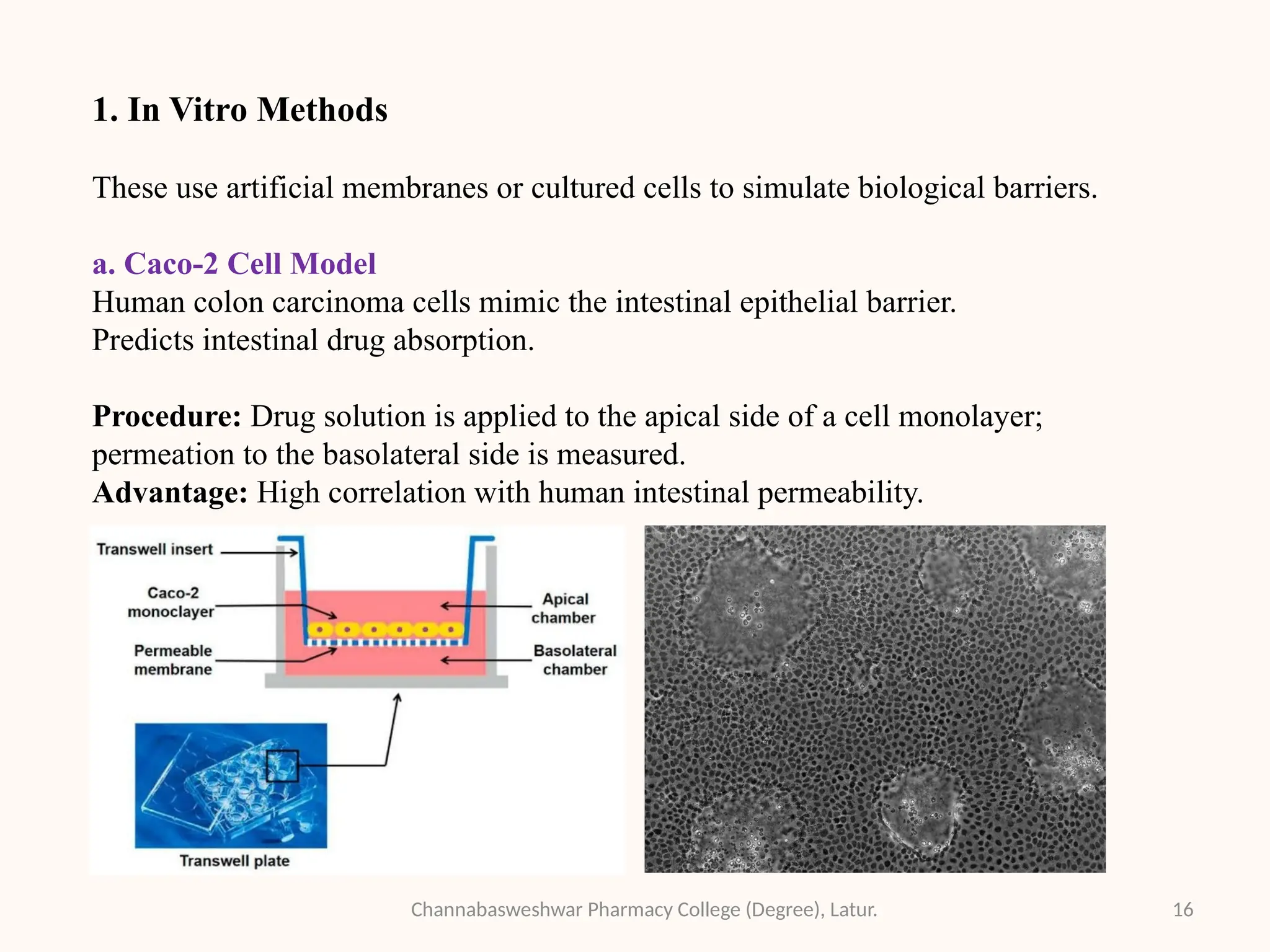
a. Caco-2 Cell Model
Human colon carcinoma cells mimic the intestinal epithelial barrier.
Predicts intestinal drug absorption.
Procedure: Drug solution is applied to the apical side of a cell monolayer;
permeation to the basolateral side is measured.
Advantage: High correlation with human intestinal permeability.
Channabasweshwar Pharmacy College (Deg
ree), Latur.
17
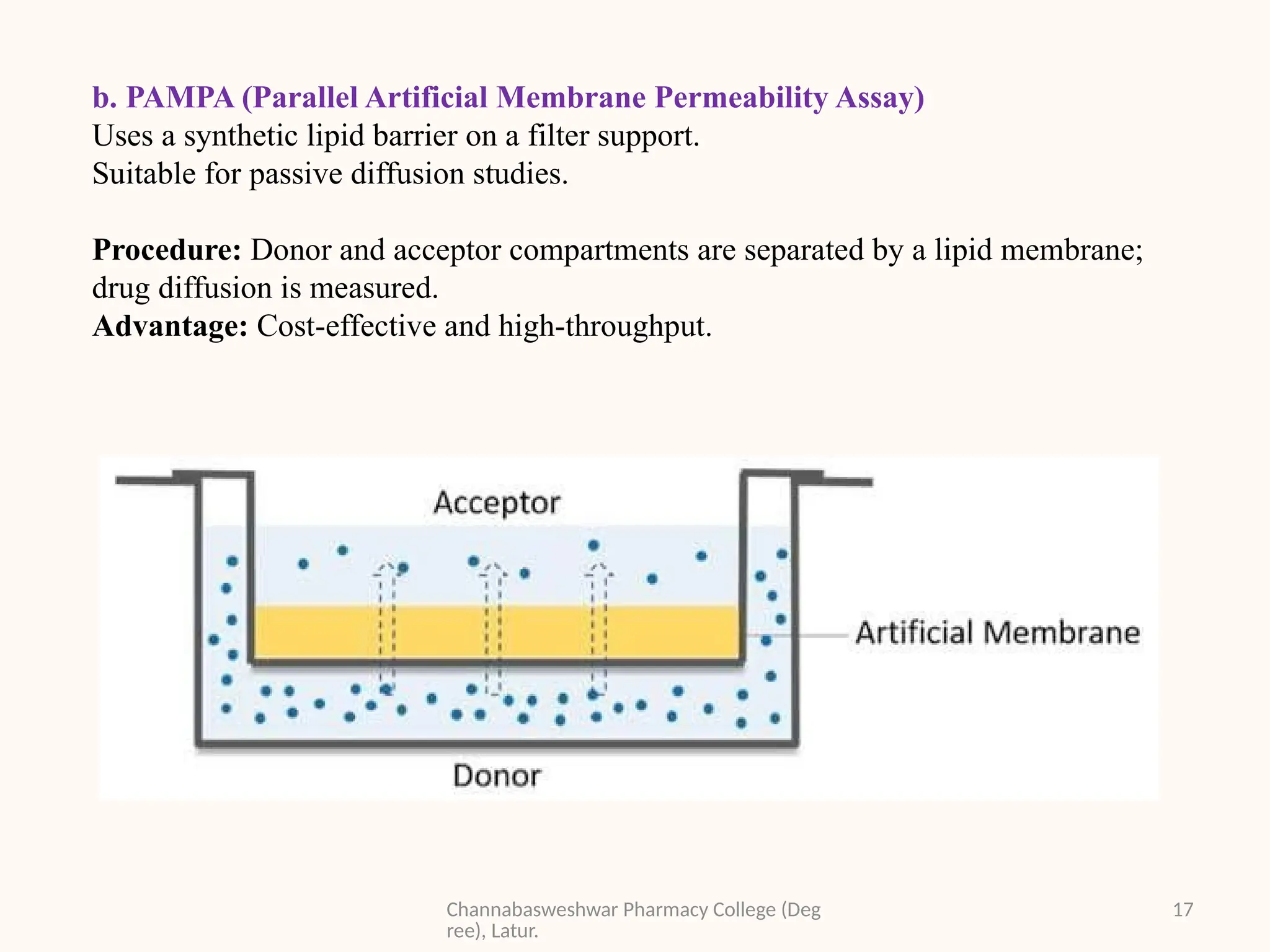
b. PAMPA (Parallel Artificial Membrane Permeability Assay)
Uses a synthetic lipid barrier on a filter support.
Suitable for passive diffusion studies.
Procedure: Donor and acceptor compartments are separated by a lipid membrane;
drug diffusion is measured.
Advantage: Cost-effective and high-throughput.
18
Channabasweshwar Pharmacy College (Degree), Latur.
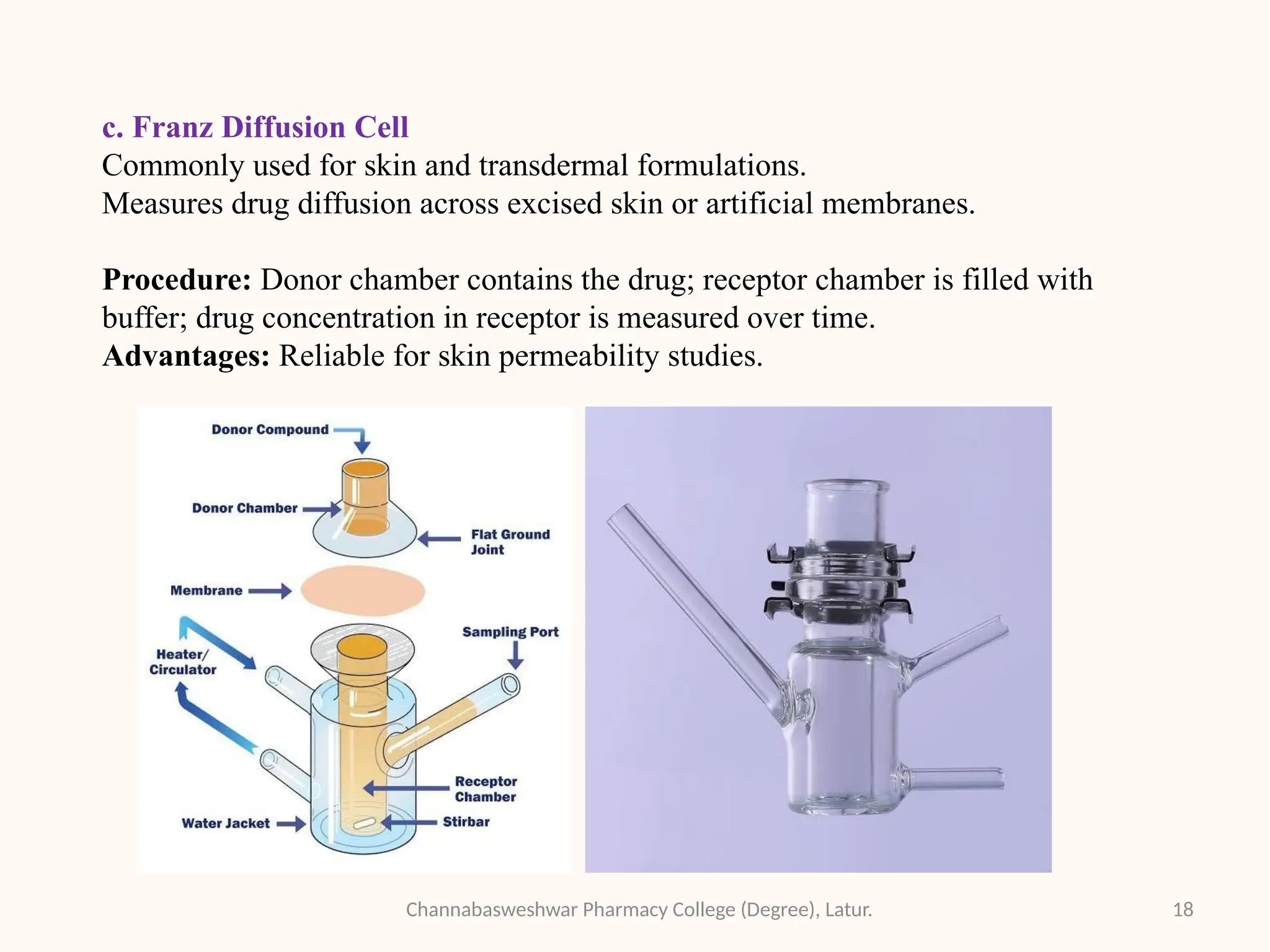
c. Franz Diffusion Cell
Commonly used for skin and transdermal formulations.
Measures drug diffusion across excised skin or artificial membranes.
Procedure: Donor chamber contains the drug; receptor chamber is filled with
buffer; drug concentration in receptor is measured over time.
Advantages: Reliable for skin permeability studies.
Channabasweshwar Pharmacy College (Deg
ree), Latur.
19
2. In Situ Methods
These involve a single organ in a live animal while maintaining blood flow.
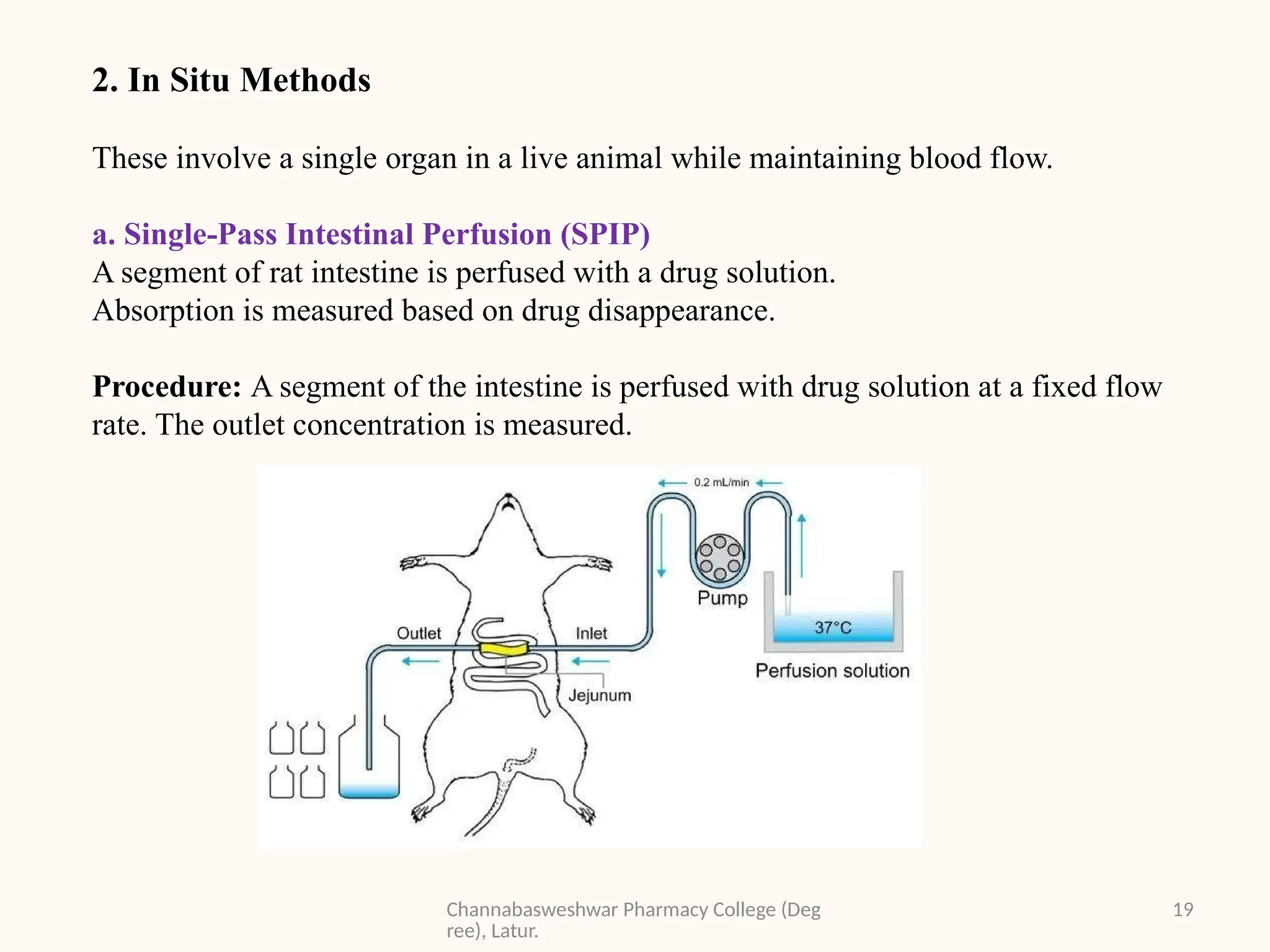
a. Single-Pass Intestinal Perfusion (SPIP)
A segment of rat intestine is perfused with a drug solution.
Absorption is measured based on drug disappearance.
Procedure: A segment of the intestine is perfused with drug solution at a fixed flow
rate. The outlet concentration is measured.
20
Channabasweshwar Pharmacy College (Degree), Latur.
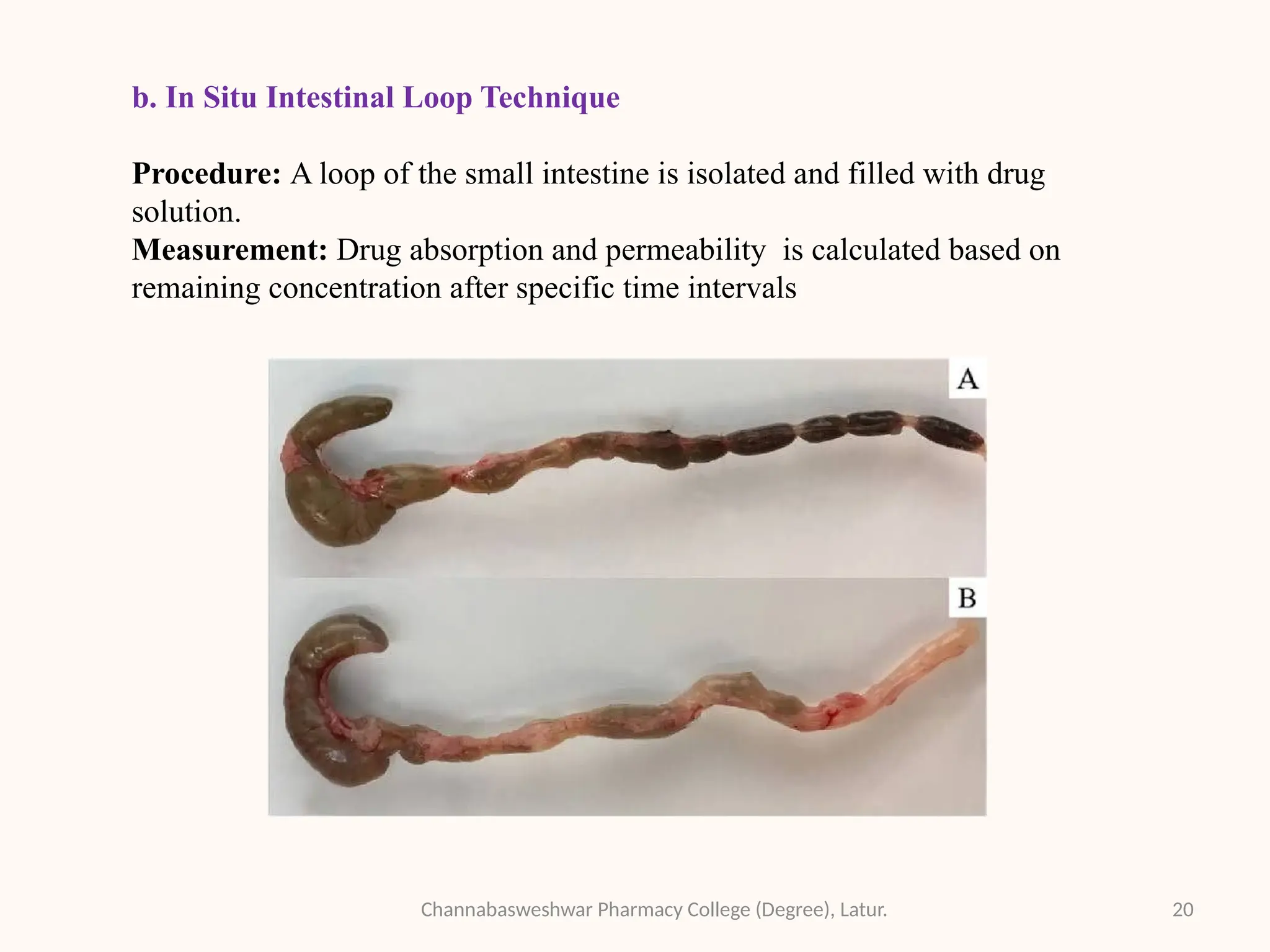
b. In Situ Intestinal Loop Technique
Procedure: A loop of the small intestine is isolated and filled with drug
solution.
Measurement: Drug absorption and permeability is calculated based on
remaining concentration after specific time intervals
21
3. In Vivo Methods
Measure actual drug absorption in living animals or humans.
a. Blood/Plasma Drug Concentration Analysis
Procedure: Drug is administered (oral or topical), and blood samples are collected
at regular intervals.
Drug levels indicate permeability and absorption.
Analysis: Plasma drug levels are analyzed using HPLC or LC-MS.
Advantages: Direct measure of bioavailability.
Channabasweshwar Pharmacy College (Deg
ree), Latur.
22
b. Urinary Excretion Method
Measures the amount of unchanged drug excreted in urine.
Suitable for drugs excreted renally without metabolism.
Procedure: Total unchanged drug excreted in urine is measured after
administration.
Assumption: Drug is not metabolized significantly.
Advantages: Non-invasive sampling.
23
References:
1. Brahmankar & Jaiswal – Biopharmaceutics and Pharmacokinetics
2. Shargel – Applied Biopharmaceutics & Pharmacokinetic
3. Y.W. Chien.
Channabasweshwar Pharmacy College (Degree), Latur.
24
Channabasweshwar Pharmacy College (Degree), Latur.
Thank You...

Biopharmaceutics Classification System and Methods of Permeability.pptx

  • 1.
    1 Presented by, Mr. ManmathPalaskar M.Pharm (Pharmaceutics) 24MPH12 Guided by, Mr. B S Hucche Sir M.Pharm (PHD) Department of Pharmaceutics Biopharmaceutics Classification System and Methods of Permeability Channabasweshwar Pharmacy College (Degree), Latur
  • 2.
    2 Contents 1) Introduction 2) Objectivesof BCS 3) BCS Classification 4) Factors affecting BCS 5) Bio waivers 6) Limitations of BCS 7) Extensions to BCS 8) Applications of BCS 9) Methods of Permeability a) In Vitro b) In Situ c) In Vivo Channabasweshwar Pharmacy College (Degree), Latur.
  • 3.
    3 Introduction : The BiopharmaceuticsClassification System (BCS) is a scientific framework developed to classify drug substances based on their aqueous solubility and intestinal permeability. It was first introduced by Amidon et al. in 1995 and later adopted by regulatory agencies such as the FDA and WHO to support biowaivers exemptions from in vivo bioequivalence studies for certain drug products. BCS plays a crucial role in drug development, formulation design, and regulatory approval processes, especially for oral solid dosage forms. It provides a systematic approach to predict the rate-limiting step in drug absorption, which is essential for ensuring therapeutic efficacy and bioavailability. Channabasweshwar Pharmacy College (Degree), Latur.
  • 4.
    4 Objectives of BCS: 1. Classify drugs based on solubility and permeability. 2. Predict oral drug absorption and bioavailability. 3. Guide formulation and development strategies. 4. Support regulatory biowaivers (e.g., for bioequivalence). 5. Reduce the need for in vivo studies. 6. Improve efficiency in drug product development. Channabasweshwar Pharmacy College (Degree), Latur.
  • 5.
    5 The principle ofBCS is based on the understanding that oral drug absorption from the gastrointestinal tract is primarily governed by two fundamental properties of the drug: 1. Aqueous Solubility : Refers to the drug’s ability to dissolve in gastrointestinal fluids. 2. Intestinal Permeability : Refers to the ability of the drug to pass through biological membranes (such as the intestinal wall). These two factors determine whether a drug can dissolve in GI fluids and pass through the intestinal membrane to reach systemic circulation. Principle of Biopharmaceutics Classification System (BCS) : Channabasweshwar Pharmacy College (Degree), Latur.
  • 6.
    6 Channabasweshwar Pharmacy College(Degree), Latur. BCS Classification : Class Solubility Permeability Characteristics Examples Class I High High Well Absorbed Dissolution is rate limiting step Metaprolol, Propanolol Class II Low High Solubility is rate limiting step Ketoprofen , carbamazepin e Class III High Low Permeability is rate limiting step Cimetidine, acyclovir Class IV Low Low Poor Bioavailability hydrochlorthi azide
  • 7.
    7 Factors affecting BCS a)Solubility Factors: 1. Drug Particle Size 2. Polymorphism 3. pH of the Environment 4. Formulation Factors 5. Salt Form b) Permeability Factors: 6. Molecular Size 7. Lipophilicity (LogP) 8. Transport Mechanisms 9. Presence of Efflux Pumps Channabasweshwar Pharmacy College (Degree), Latur.
  • 8.
    Channabasweshwar Pharmacy College(Deg ree), Latur. 8 c) Physiological Factors: 1. Gastric pH 2. Gastric Emptying Rate 3. Gastrointestinal Motility 4. Blood Flow to the Absorption Site
  • 9.
    9 Biowaivers : A biowaiveris the regulatory approval to waive in vivo bioequivalence (BE) studies, allowing approval based on in vitro data (such as dissolution testing) when certain criteria are met. Types of Biowaivers: 1. BCS-Based Biowaiver 2. Scale-Up and Post-Approval Changes (SUPAC) 3. WHO Biowaiver List Requirements: Rapid dissolution (≥85% in 30 minutes in 3 different pH media). Stability in the gastrointestinal tract. High solubility and permeability Same dosage form and route of administration No narrow therapeutic index. Channabasweshwar Pharmacy College (Degree), Latur.
  • 10.
    10 Limitations of BCS: 1. Limited to IR oral forms – Not suitable for modified-release or non-oral routes. 2. Oversimplified GI conditions – Doesn’t reflect real GI variability (pH, food, enzymes). 3. Static solubility/permeability data – Often based on in vitro tests, not always predictive. 4. Ignores metabolism – Doesn’t account for first-pass or degradation effects. 5. Not for unstable drugs – In applicable to drugs degraded in the GI tract. 6. Inter-patient variation – Doesn’t consider differences in absorption across individuals. 7. Unreliable for Class II & IV – Poor predictability for poorly soluble and poorly permeable drugs. 8. Dose assumptions – Fixed 250 mL volume may not suit all dosing scenarios. Channabasweshwar Pharmacy College (Degree), Latur.
  • 11.
    11 Channabasweshwar Pharmacy College(Degree), Latur. Extensions to the Biopharmaceutics Classification System (BCS) have been proposed to overcome its limitations and improve prediction of in vivo drug behavior. Here are the main extensions: 1. Biopharmaceutics Drug Disposition Classification System (BDDCS) • Proposed by Wu and Benet. • Considers metabolism in addition to solubility and permeability. • Helps predict drug-drug interactions, transporter effects, and elimination route. Classes are based on: • Solubility • Extent of metabolism (instead of permeability) Extensions to the Biopharmaceutics Classification System (BCS) :
  • 12.
    12 Channabasweshwar Pharmacy College(Degree), Latur. 2. Developability Classification System (DCS) • Focuses on formulation challenges, especially for BCS Class II drugs. • Developed by Butler and Dressman in 2010. • Splits Class II into: IIa. Dissolution-rate limited Iib. Solubility-limited absorption Helps in formulation strategy development. 3. Extended BCS (eBCS) • Includes additional factors to BCS like dissolution kinetics, drug transporters, metabolism, physiological factors like pH variation, GI transit time, and food effect. • More reflective of in vivo conditions.
  • 13.
    13 Channabasweshwar Pharmacy College(Degree), Latur. 4. Computational and In Silico Tools • PBPK modeling (Physiologically Based Pharmacokinetic models) and in silico predictions integrate BCS parameters with GI physiology. • Improve prediction of bioavailability and absorption kinetics. 5. Transporter-based Classifications • Accounts for efflux/influx transporters (e.g., P-gp, OATP) not considered in original BCS. • Helps assess carrier-mediated absorption
  • 14.
    Channabasweshwar Pharmacy College(Deg ree), Latur. 14 Applications of BCS : 1. Biowaiver for Bioequivalence Studies 2. Guidance in Oral Drug Formulation Development 3. Prediction of Drug Absorption and Bioavailability 4. Reduction in Need for In Vivo Studies 5. regulatory Decision-Making (e.g., FDA, EMA) 6. Selection of Drug Candidates in Early Development 7. Optimization of Dissolution Testing Methods 8. Risk Assessment in Generic Drug Development
  • 15.
    15 Channabasweshwar Pharmacy College(Degree), Latur. Methods of Permeability : Permeability refers to the ability of a drug to pass through a biological membrane, such as the gastrointestinal lining or the skin. Assessing drug permeability is critical in drug development to predict absorption and bioavailability. Methods of Permeability Assessment 1. In Vitro Methods a. Caco-2 Cell Model b. PAMPA (Parallel Artificial Membrane Permeability Assay) c. Franz Diffusion Cell 2. In Situ Methods a. Single-Pass Intestinal Perfusion (SPIP) b. In Situ Intestinal Loop Technique (ISIL 3. In Vivo Methods a. Blood/Plasma Drug Concentration Analysis b. Urinary Excretion Method
  • 16.
    16 Channabasweshwar Pharmacy College(Degree), Latur. 1. In Vitro Methods These use artificial membranes or cultured cells to simulate biological barriers. a. Caco-2 Cell Model Human colon carcinoma cells mimic the intestinal epithelial barrier. Predicts intestinal drug absorption. Procedure: Drug solution is applied to the apical side of a cell monolayer; permeation to the basolateral side is measured. Advantage: High correlation with human intestinal permeability.
  • 17.
    Channabasweshwar Pharmacy College(Deg ree), Latur. 17 b. PAMPA (Parallel Artificial Membrane Permeability Assay) Uses a synthetic lipid barrier on a filter support. Suitable for passive diffusion studies. Procedure: Donor and acceptor compartments are separated by a lipid membrane; drug diffusion is measured. Advantage: Cost-effective and high-throughput.
  • 18.
    18 Channabasweshwar Pharmacy College(Degree), Latur. c. Franz Diffusion Cell Commonly used for skin and transdermal formulations. Measures drug diffusion across excised skin or artificial membranes. Procedure: Donor chamber contains the drug; receptor chamber is filled with buffer; drug concentration in receptor is measured over time. Advantages: Reliable for skin permeability studies.
  • 19.
    Channabasweshwar Pharmacy College(Deg ree), Latur. 19 2. In Situ Methods These involve a single organ in a live animal while maintaining blood flow. a. Single-Pass Intestinal Perfusion (SPIP) A segment of rat intestine is perfused with a drug solution. Absorption is measured based on drug disappearance. Procedure: A segment of the intestine is perfused with drug solution at a fixed flow rate. The outlet concentration is measured.
  • 20.
    20 Channabasweshwar Pharmacy College(Degree), Latur. b. In Situ Intestinal Loop Technique Procedure: A loop of the small intestine is isolated and filled with drug solution. Measurement: Drug absorption and permeability is calculated based on remaining concentration after specific time intervals
  • 21.
    21 3. In VivoMethods Measure actual drug absorption in living animals or humans. a. Blood/Plasma Drug Concentration Analysis Procedure: Drug is administered (oral or topical), and blood samples are collected at regular intervals. Drug levels indicate permeability and absorption. Analysis: Plasma drug levels are analyzed using HPLC or LC-MS. Advantages: Direct measure of bioavailability.
  • 22.
    Channabasweshwar Pharmacy College(Deg ree), Latur. 22 b. Urinary Excretion Method Measures the amount of unchanged drug excreted in urine. Suitable for drugs excreted renally without metabolism. Procedure: Total unchanged drug excreted in urine is measured after administration. Assumption: Drug is not metabolized significantly. Advantages: Non-invasive sampling.
  • 23.
    23 References: 1. Brahmankar &Jaiswal – Biopharmaceutics and Pharmacokinetics 2. Shargel – Applied Biopharmaceutics & Pharmacokinetic 3. Y.W. Chien. Channabasweshwar Pharmacy College (Degree), Latur.
  • 24.
    24 Channabasweshwar Pharmacy College(Degree), Latur. Thank You...