BIOMOLECULES
What are the 4 biomolecules?
• Carbohydrates
• Lipids
• Nucleic Acids
• Proteins
WE TYPICALLY GET BIOMOLECULES FROM FOOD…
THIS IS WHY WE MUST EAT IN THE FIRST PLACE!
THE BIOMOLECULES SERVE TO KEEP ORGANISMS ALIVE.
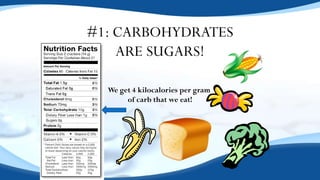
#1: CARBOHYDRATES
ARE SUGARS!
We get 4 kilocalories per gram
of carb that we eat!
What are Carbohydrates?
 Most common organic molecule
 Function: Primary energy source our body
needs
 Elements present: C, H, O (1:2:1 ratio)
 Monomer (building block):
Monosaccharides (Glucose is most common)
 Polymer: Polysaccharides (starch, Glycogen,
Cellulose, Chitin)
 Examples: Chocolate, Bread, Pasta, Fruits,
Vegetables (ALL FROM PLANTS!!!)
IMPORTANT!
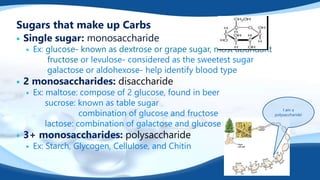
Sugars that make up Carbs
 Single sugar: monosaccharide
 Ex: glucose- known as dextrose or grape sugar, most abundant
fructose or levulose- considered as the sweetest sugar
galactose or aldohexose- help identify blood type
 2 monosaccharides: disaccharide
 Ex: maltose: compose of 2 glucose, found in beer
sucrose: known as table sugar
combination of glucose and fructose
lactose: combination of galactose and glucose
 3+ monosaccharides: polysaccharide
 Ex: Starch, Glycogen, Cellulose, and Chitin
I am a
polysaccharide!
Types of polysaccharides
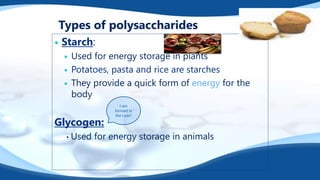
 Starch:
 Used for energy storage in plants
 Potatoes, pasta and rice are starches
 They provide a quick form of energy for the
body
Glycogen:
• Used for energy storage in animals
I am
formed in
the Liver!
More Polysaccharides
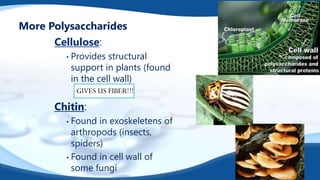
Cellulose:
• Provides structural
support in plants (found
in the cell wall)
Chitin:
• Found in exoskeletens of
arthropods (insects,
spiders)
• Found in cell wall of
some fungi
GIVES US FIBER!!!
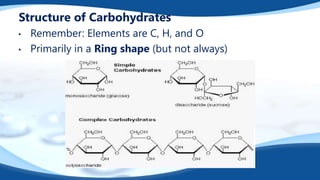
Structure of Carbohydrates
• Remember: Elements are C, H, and O
• Primarily in a Ring shape (but not always)
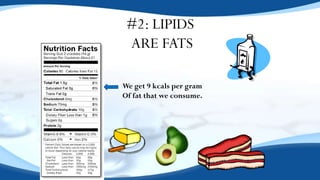
#2: LIPIDS
ARE FATS
We get 9 kcals per gram
Of fat that we consume.
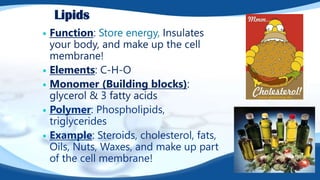
Lipids
 Function: Store energy, Insulates
your body, and make up the cell
membrane!
 Elements: C-H-O
 Monomer (Building blocks):
glycerol & 3 fatty acids
 Polymer: Phospholipids,
triglycerides
 Example: Steroids, cholesterol, fats,
Oils, Nuts, Waxes, and make up part
of the cell membrane!
Lipids
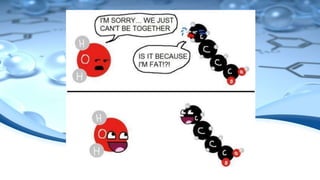
Lipids are Hydrophobic (water fearing) and do
not dissolve in water!
• Lipids can be:
• Saturated: The bonds between all the carbons
are single bonds.
•Solid at room temperature
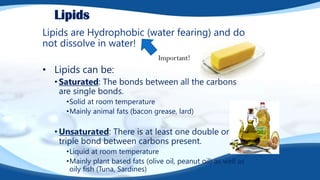
•Mainly animal fats (bacon grease, lard)
• Unsaturated: There is at least one double or
triple bond between carbons present.
•Liquid at room temperature
•Mainly plant based fats (olive oil, peanut oil) as well as
oily fish (Tuna, Sardines)
Important!
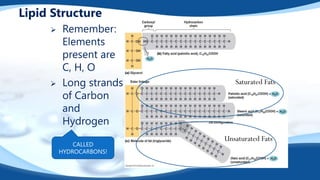
Lipid Structure
 Remember:
Elements
present are
C, H, O
 Long strands
of Carbon
and
Hydrogen
Unsaturated Fats
Saturated Fats
CALLED
HYDROCARBONS!
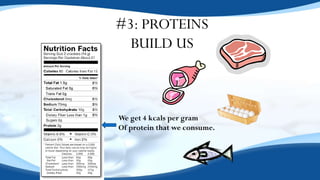
#3: PROTEINS
BUILD US
We get 4 kcals per gram
Of protein that we consume.
Proteins
• Function of proteins
• Transport molecules in and out of the cell
• Control the speed of chemical reactions
• Used for growth and repair
Proteins make up the structure of living things…
Hair, nails, skin, bones, muscle, etc are all built by protein!
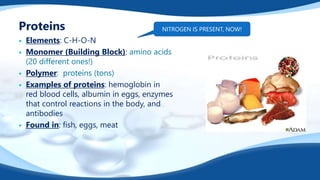
Proteins
 Elements: C-H-O-N
 Monomer (Building Block): amino acids
(20 different ones!)
 Polymer: proteins (tons)
 Examples of proteins: hemoglobin in
red blood cells, albumin in eggs, enzymes
that control reactions in the body, and
antibodies
 Found in: fish, eggs, meat
NITROGEN IS PRESENT, NOW!
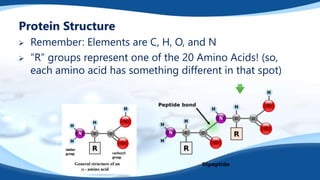
Protein Structure
 Remember: Elements are C, H, O, and N
 “R” groups represent one of the 20 Amino Acids! (so,
each amino acid has something different in that spot)
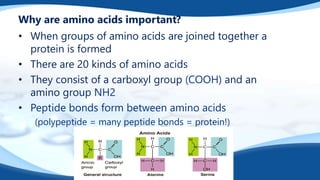
Why are amino acids important?
• When groups of amino acids are joined together a
protein is formed
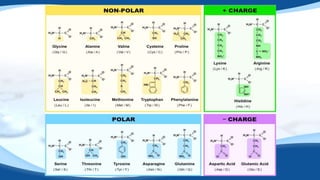
• There are 20 kinds of amino acids
• They consist of a carboxyl group (COOH) and an
amino group NH2
• Peptide bonds form between amino acids
(polypeptide = many peptide bonds = protein!)
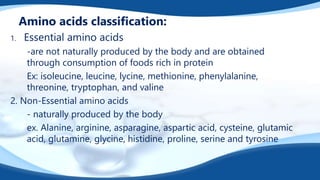
Amino acids classification:
1. Essential amino acids
-are not naturally produced by the body and are obtained
through consumption of foods rich in protein
Ex: isoleucine, leucine, lycine, methionine, phenylalanine,
threonine, tryptophan, and valine
2. Non-Essential amino acids
- naturally produced by the body
ex. Alanine, arginine, asparagine, aspartic acid, cysteine, glutamic
acid, glutamine, glycine, histidine, proline, serine and tyrosine
#4: NUCLEICACIDS
These biomolecules are not
necessarily from food
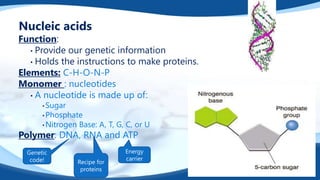
Nucleic acids
Function:
• Provide our genetic information
• Holds the instructions to make proteins.
Elements: C-H-O-N-P
Monomer : nucleotides
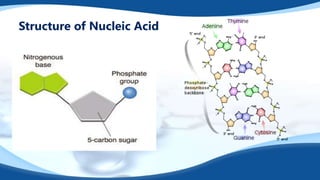
• A nucleotide is made up of:
• Sugar
• Phosphate
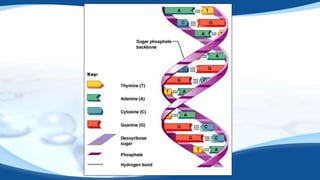
• Nitrogen Base: A, T, G, C, or U
Polymer: DNA, RNA and ATP
Genetic
code! Recipe for
proteins
Energy
carrier
Structure of Nucleic Acid
BIOMOLECULESedited.pptx

BIOMOLECULESedited.pptx

  • 1.
  • 2.
    What are the4 biomolecules? • Carbohydrates • Lipids • Nucleic Acids • Proteins WE TYPICALLY GET BIOMOLECULES FROM FOOD… THIS IS WHY WE MUST EAT IN THE FIRST PLACE! THE BIOMOLECULES SERVE TO KEEP ORGANISMS ALIVE.
  • 3.
    #1: CARBOHYDRATES ARE SUGARS! Weget 4 kilocalories per gram of carb that we eat!
  • 4.
    What are Carbohydrates? Most common organic molecule  Function: Primary energy source our body needs  Elements present: C, H, O (1:2:1 ratio)  Monomer (building block): Monosaccharides (Glucose is most common)  Polymer: Polysaccharides (starch, Glycogen, Cellulose, Chitin)  Examples: Chocolate, Bread, Pasta, Fruits, Vegetables (ALL FROM PLANTS!!!) IMPORTANT!
  • 5.
    Sugars that makeup Carbs  Single sugar: monosaccharide  Ex: glucose- known as dextrose or grape sugar, most abundant fructose or levulose- considered as the sweetest sugar galactose or aldohexose- help identify blood type  2 monosaccharides: disaccharide  Ex: maltose: compose of 2 glucose, found in beer sucrose: known as table sugar combination of glucose and fructose lactose: combination of galactose and glucose  3+ monosaccharides: polysaccharide  Ex: Starch, Glycogen, Cellulose, and Chitin I am a polysaccharide!
  • 6.
    Types of polysaccharides Starch:  Used for energy storage in plants  Potatoes, pasta and rice are starches  They provide a quick form of energy for the body Glycogen: • Used for energy storage in animals I am formed in the Liver!
  • 7.
    More Polysaccharides Cellulose: • Providesstructural support in plants (found in the cell wall) Chitin: • Found in exoskeletens of arthropods (insects, spiders) • Found in cell wall of some fungi GIVES US FIBER!!!
  • 8.
    Structure of Carbohydrates •Remember: Elements are C, H, and O • Primarily in a Ring shape (but not always)
  • 9.
    #2: LIPIDS ARE FATS Weget 9 kcals per gram Of fat that we consume.
  • 10.
    Lipids  Function: Storeenergy, Insulates your body, and make up the cell membrane!  Elements: C-H-O  Monomer (Building blocks): glycerol & 3 fatty acids  Polymer: Phospholipids, triglycerides  Example: Steroids, cholesterol, fats, Oils, Nuts, Waxes, and make up part of the cell membrane!
  • 11.
    Lipids Lipids are Hydrophobic(water fearing) and do not dissolve in water! • Lipids can be: • Saturated: The bonds between all the carbons are single bonds. •Solid at room temperature •Mainly animal fats (bacon grease, lard) • Unsaturated: There is at least one double or triple bond between carbons present. •Liquid at room temperature •Mainly plant based fats (olive oil, peanut oil) as well as oily fish (Tuna, Sardines) Important!
  • 13.
    Lipid Structure  Remember: Elements presentare C, H, O  Long strands of Carbon and Hydrogen Unsaturated Fats Saturated Fats CALLED HYDROCARBONS!
  • 14.
    #3: PROTEINS BUILD US Weget 4 kcals per gram Of protein that we consume.
  • 15.
    Proteins • Function ofproteins • Transport molecules in and out of the cell • Control the speed of chemical reactions • Used for growth and repair Proteins make up the structure of living things… Hair, nails, skin, bones, muscle, etc are all built by protein!
  • 16.
    Proteins  Elements: C-H-O-N Monomer (Building Block): amino acids (20 different ones!)  Polymer: proteins (tons)  Examples of proteins: hemoglobin in red blood cells, albumin in eggs, enzymes that control reactions in the body, and antibodies  Found in: fish, eggs, meat NITROGEN IS PRESENT, NOW!
  • 17.
    Protein Structure  Remember:Elements are C, H, O, and N  “R” groups represent one of the 20 Amino Acids! (so, each amino acid has something different in that spot)
  • 18.
    Why are aminoacids important? • When groups of amino acids are joined together a protein is formed • There are 20 kinds of amino acids • They consist of a carboxyl group (COOH) and an amino group NH2 • Peptide bonds form between amino acids (polypeptide = many peptide bonds = protein!)
  • 20.
    Amino acids classification: 1.Essential amino acids -are not naturally produced by the body and are obtained through consumption of foods rich in protein Ex: isoleucine, leucine, lycine, methionine, phenylalanine, threonine, tryptophan, and valine 2. Non-Essential amino acids - naturally produced by the body ex. Alanine, arginine, asparagine, aspartic acid, cysteine, glutamic acid, glutamine, glycine, histidine, proline, serine and tyrosine
  • 21.
    #4: NUCLEICACIDS These biomoleculesare not necessarily from food
  • 22.
    Nucleic acids Function: • Provideour genetic information • Holds the instructions to make proteins. Elements: C-H-O-N-P Monomer : nucleotides • A nucleotide is made up of: • Sugar • Phosphate • Nitrogen Base: A, T, G, C, or U Polymer: DNA, RNA and ATP Genetic code! Recipe for proteins Energy carrier
  • 23.