Biomimetics
         •Bionics

      •Biogenesis

      •Biomimicry
WHAT IS BIOMIMETICS?

    --BIOS=LIFE & MIMESIS=IMITATE


--BIOMIMETICS DEALS WITH THE DEVELOPMENT OF
INNOVATIONS ON THE BASIS OF INVESTIGATION OF
CHEMICAL/BIOLOGOCAL
STRUCTURES, FUNTIONS, METHODS,PROCESSES AND
SYSTEMS.


-- NATURE ACTS AS ‘THE MODEL’ IN OUR EFFORTS
TOWARDS ADDRESSING HUMAN NEEDS.
Term coined by Otto H.
    Schmitt in 1969.


"taking design ideas
    from nature"
MIMICKING CAN BE DONE BY USING
EITHER


Natural substitutes

    or

 Synthetic substitutes
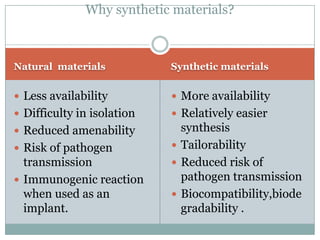
Why synthetic materials?


Natural materials           Synthetic materials


 Less availability          More availability
 Difficulty in isolation    Relatively easier
 Reduced amenability         synthesis
 Risk of pathogen           Tailorability
  transmission               Reduced risk of
 Immunogenic reaction        pathogen transmission
  when used as an            Biocompatibility,biode
  implant.                    gradability .
   Structural
   Functional
   Structural-functional
   Biological process mimicking.
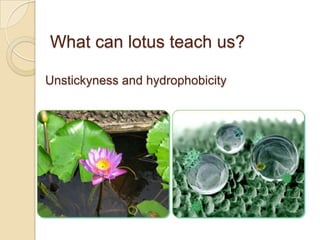
What can lotus teach us?

Unstickyness and hydrophobicity


    unsticky or water resistant technology.
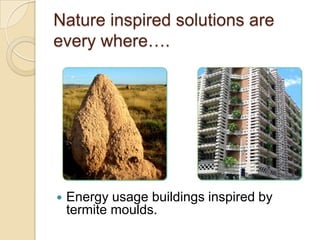
Nature inspired solutions are
every where….


   Energy usage buildings inspired by
    termite moulds.
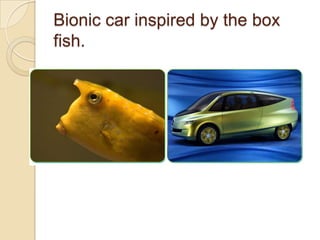
Bionic car inspired by the box
fish.
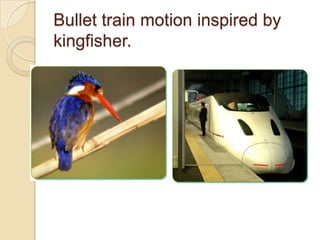
Bullet train motion inspired by
kingfisher.
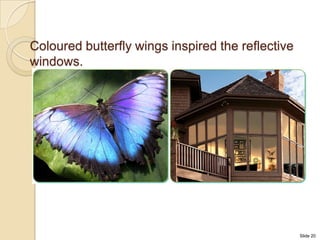
Coloured butterfly wings inspired the reflective
windows.


                                                   Slide 20
Biomimic approach : In tissue
engineering

Human tissue=
Cells+ECM+signalling molecules

ECM=collagen+proteoglycan.

ECM play important role.
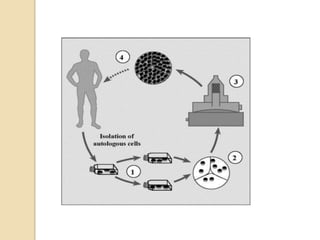
So artificial ECM can be made
for regenerating cells or tissues

Naturally by choosing collagen and
glucosaminoglycon from natural source.

                    Or
Synthetic mimics with similar structure or
function (ex:chitosan and gelatin hydrogel) are
used.
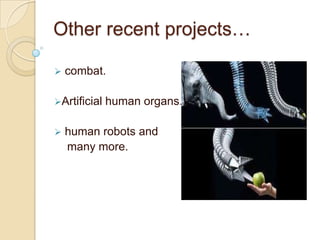
Other recent projects…

   combat.

Artificial   human organs.

   human robots and
    many more.
THANK YOU.

Biomimetics

  • 1.
    Biomimetics •Bionics •Biogenesis •Biomimicry
  • 2.
    WHAT IS BIOMIMETICS? --BIOS=LIFE & MIMESIS=IMITATE --BIOMIMETICS DEALS WITH THE DEVELOPMENT OF INNOVATIONS ON THE BASIS OF INVESTIGATION OF CHEMICAL/BIOLOGOCAL STRUCTURES, FUNTIONS, METHODS,PROCESSES AND SYSTEMS. -- NATURE ACTS AS ‘THE MODEL’ IN OUR EFFORTS TOWARDS ADDRESSING HUMAN NEEDS.
  • 3.
    Term coined byOtto H. Schmitt in 1969. "taking design ideas from nature"
  • 4.
    MIMICKING CAN BEDONE BY USING EITHER Natural substitutes or Synthetic substitutes
  • 5.
    Why synthetic materials? Naturalmaterials Synthetic materials  Less availability  More availability  Difficulty in isolation  Relatively easier  Reduced amenability synthesis  Risk of pathogen  Tailorability transmission  Reduced risk of  Immunogenic reaction pathogen transmission when used as an  Biocompatibility,biode implant. gradability .
  • 6.
    Structural  Functional  Structural-functional  Biological process mimicking.
  • 7.
    What can lotusteach us? Unstickyness and hydrophobicity unsticky or water resistant technology.
  • 8.
    Nature inspired solutionsare every where….  Energy usage buildings inspired by termite moulds.
  • 10.
    Bionic car inspiredby the box fish.
  • 12.
    Bullet train motioninspired by kingfisher.
  • 13.
    Coloured butterfly wingsinspired the reflective windows. Slide 20
  • 14.
    Biomimic approach :In tissue engineering Human tissue= Cells+ECM+signalling molecules ECM=collagen+proteoglycan. ECM play important role.
  • 16.
    So artificial ECMcan be made for regenerating cells or tissues Naturally by choosing collagen and glucosaminoglycon from natural source. Or Synthetic mimics with similar structure or function (ex:chitosan and gelatin hydrogel) are used.
  • 17.
    Other recent projects…  combat. Artificial human organs.  human robots and many more.
  • 18.