Lecture -1 (C)
Introduction to Biology
XI
Dr.Qurrat-ul-Ain
Lecturer Biology
AKUEB-MSB
3 Aug 2016
Objectives
• Compare deductive and inductive reasoning
• Recall hypothesis, theory and scientific law
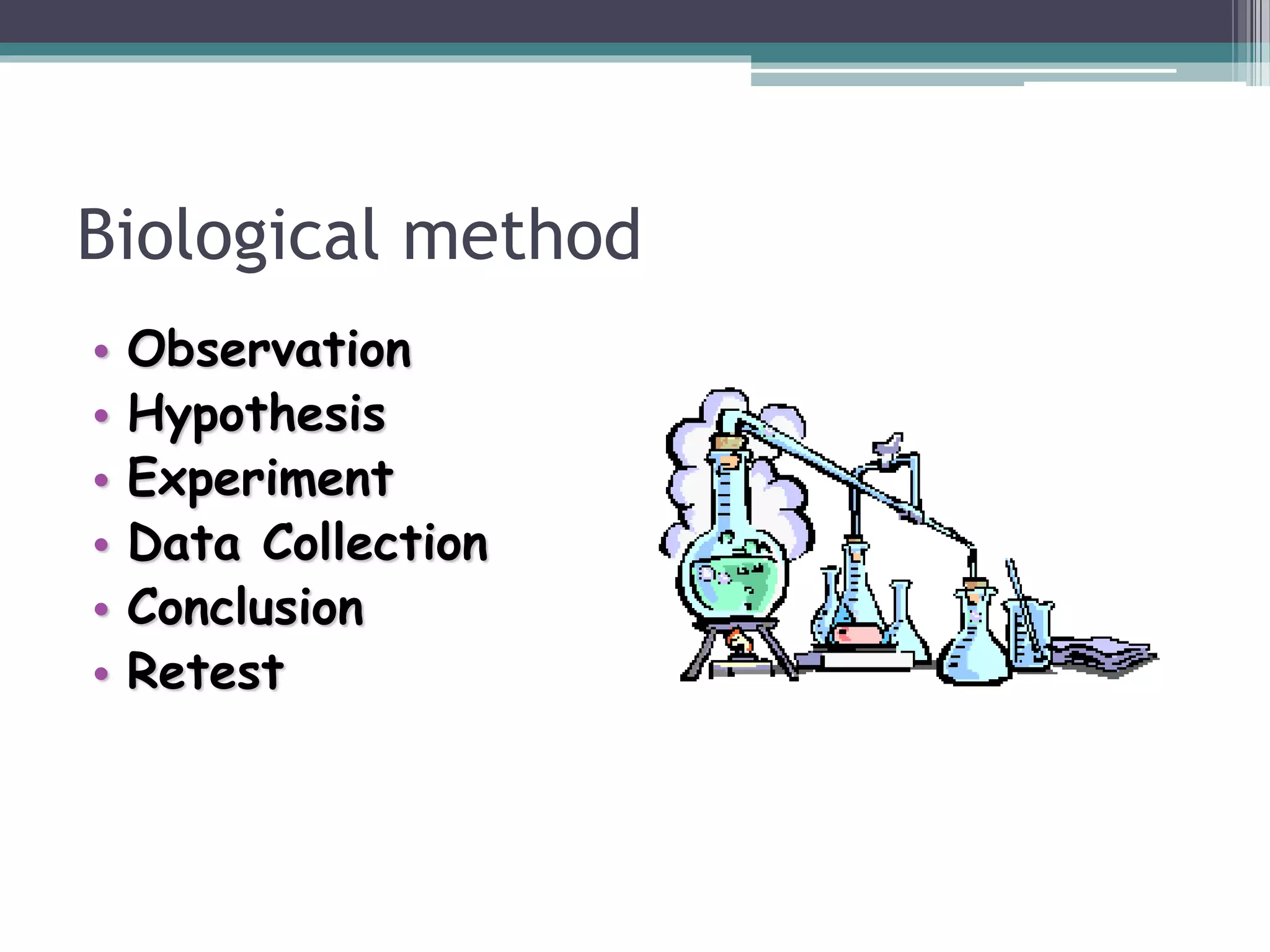
Biological method
• Observation
• Hypothesis
• Experiment
• Data Collection
• Conclusion
• Retest
Observations:
• The biologist recalls his/her previous
observations or makes new ones. Observations
are made with five senses of vision, hearing,
smell, taste and touch.
Observations
• An example of an
observation might be
noticing that people
living in villages are
more tough and
strong.
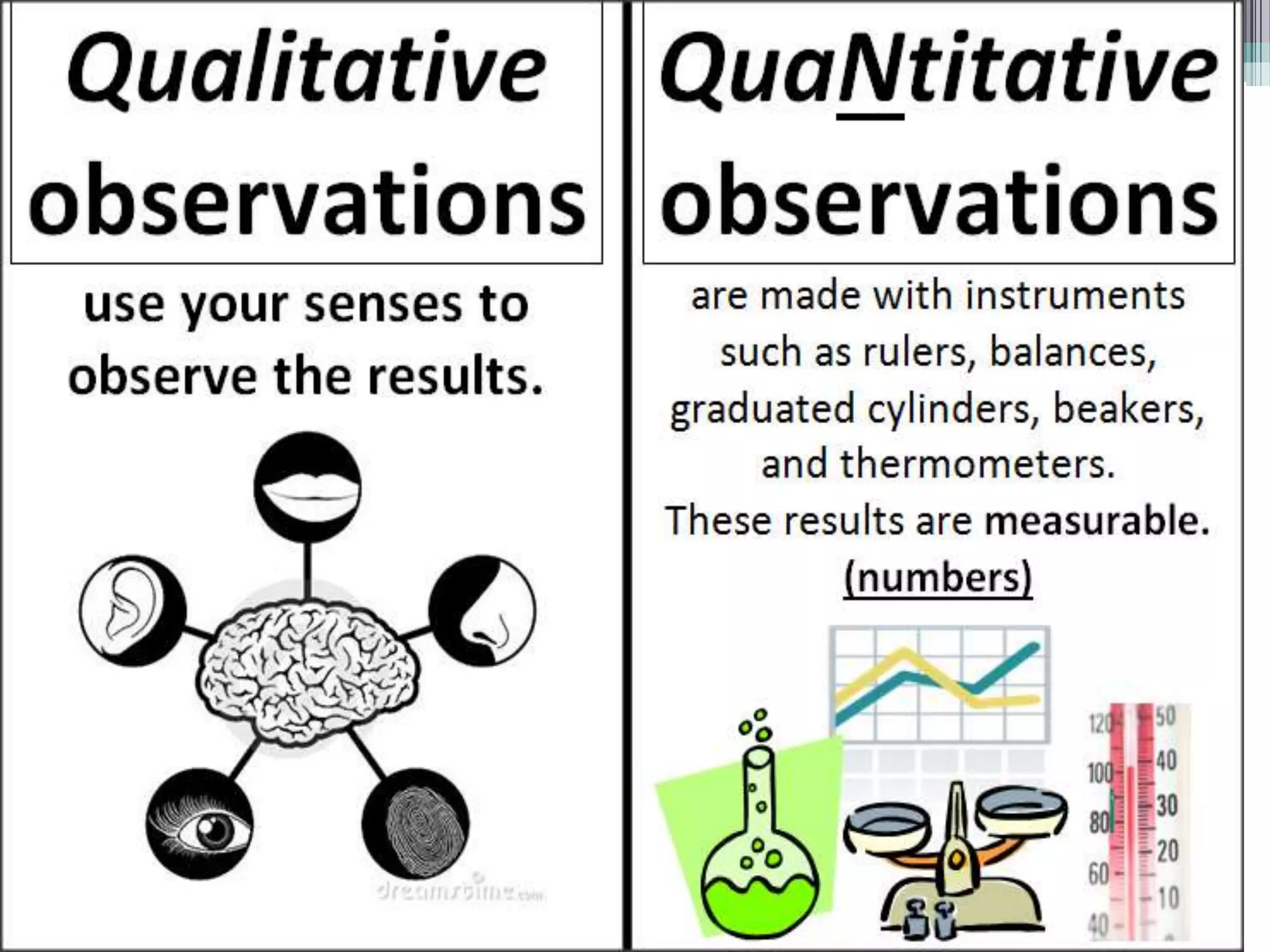
• Kinds of Observations: Observations may be
of two types:
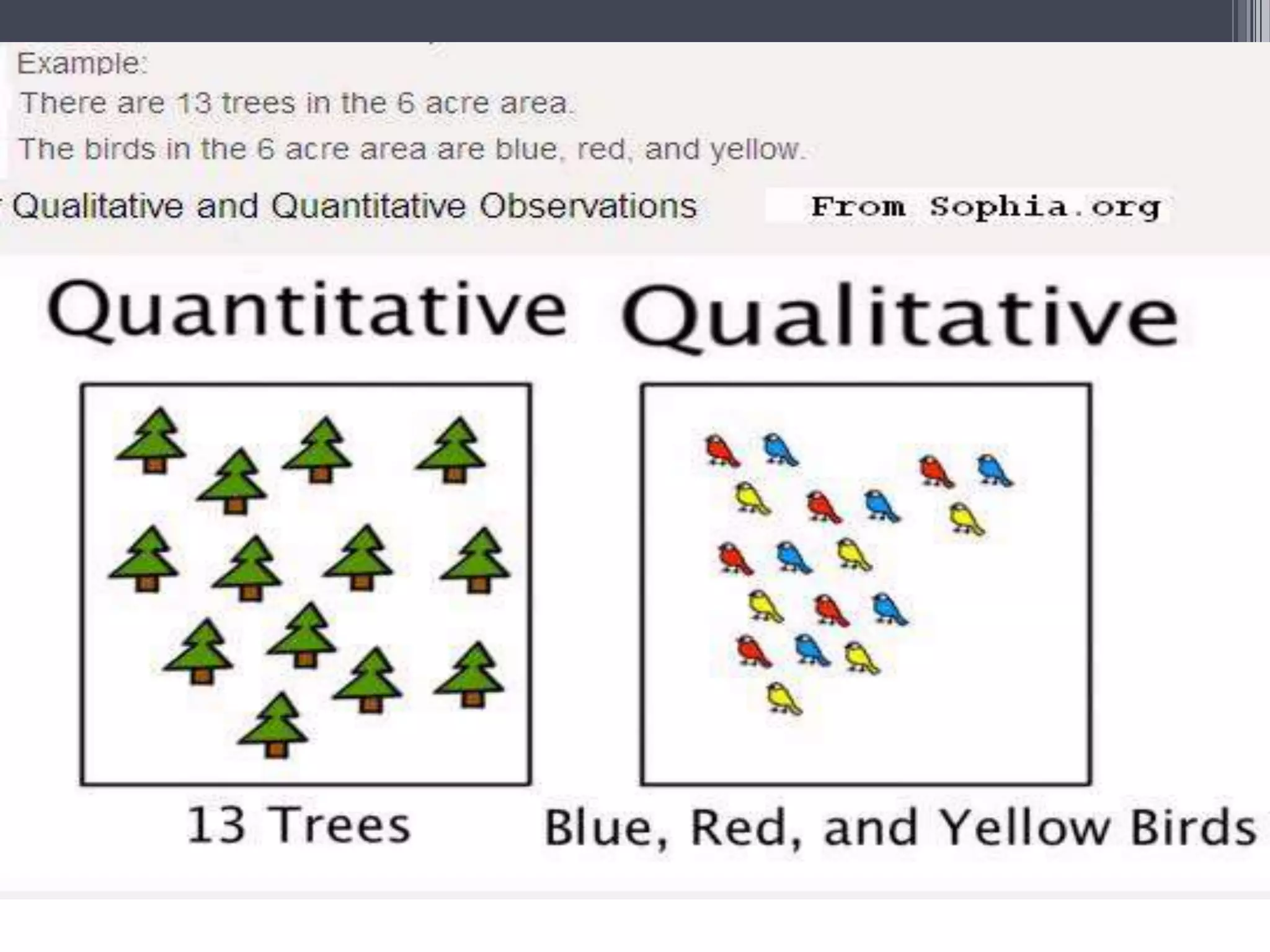
▫ Qualitative observations: Qualitative
observations are considered less accurate then
quantitative ones because the qualitative
observations are variable and non-measurable and
cannot be recorded in terms of number.
For example: The freezing point of water is colder
than the boiling. One liter of water is heavier than
one liter of ethanol.
• Quantitative observations: Quantitative
observations are considered more accurate then
qualitative ones because the quantitative
observations are invariable and measurable and can
be recorded in terms of number.
For example: The freezing point of water is 0°C and
the boiling point is 100°C.The mass of one litre
water is 1000 grams while the mass of one
litreethanol is 789 grams.
• An intelligent guess
• Biologist organizes
his/her and others
observations into data
form and constructs a
statement.
• This tentative
explanation of the
observations is called a
hypothesis.
.
Hypothesis
• An example of a
hypothesis might be
that the village
people are tough
because they do
more physical work.
Formulating a hypothesis
• Reasoning: A great deal of careful and creative
thinking is necessary for the construction of a
hypothesis. Biologists use reasoning to
formulate a hypothesis.
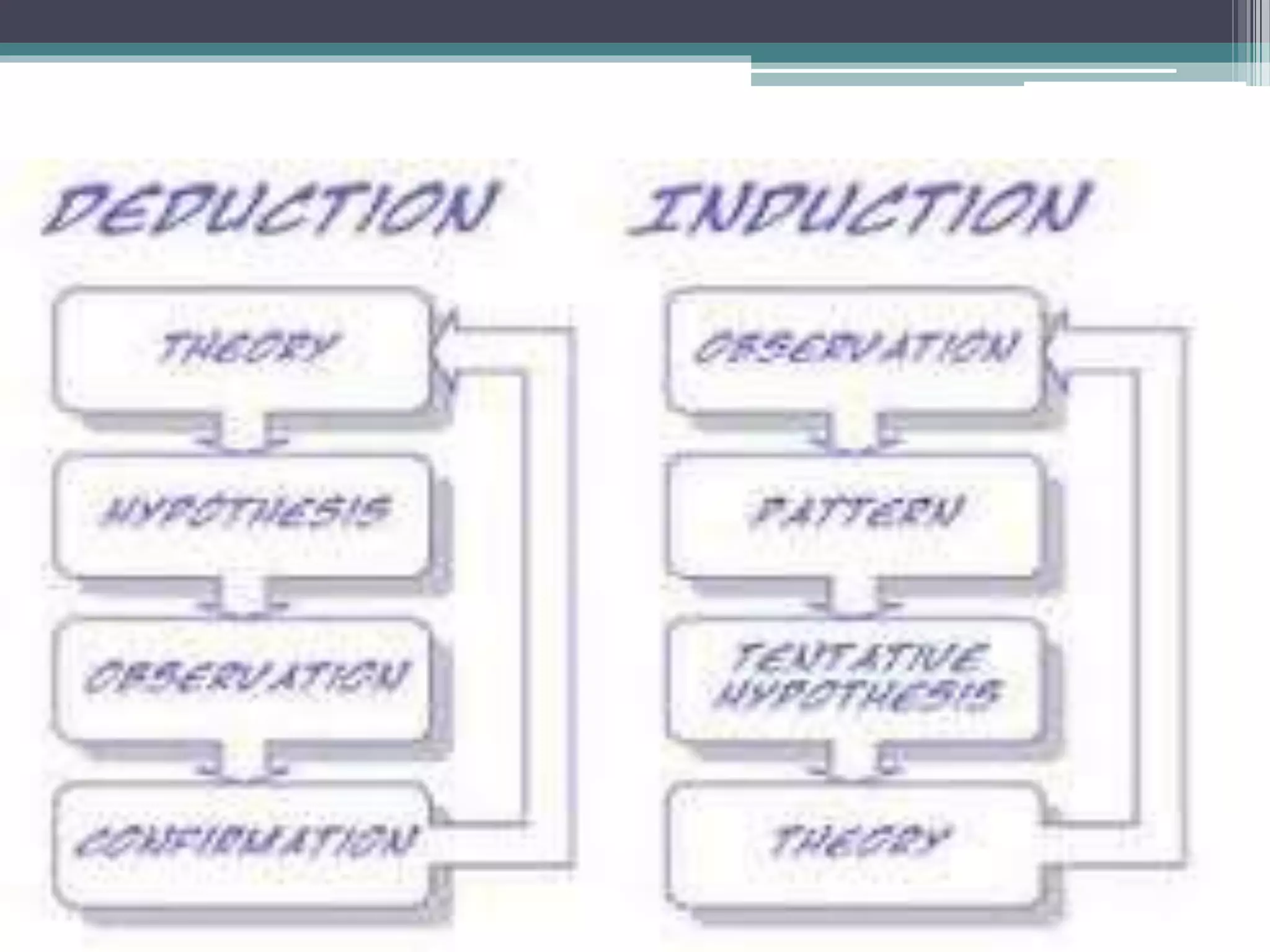
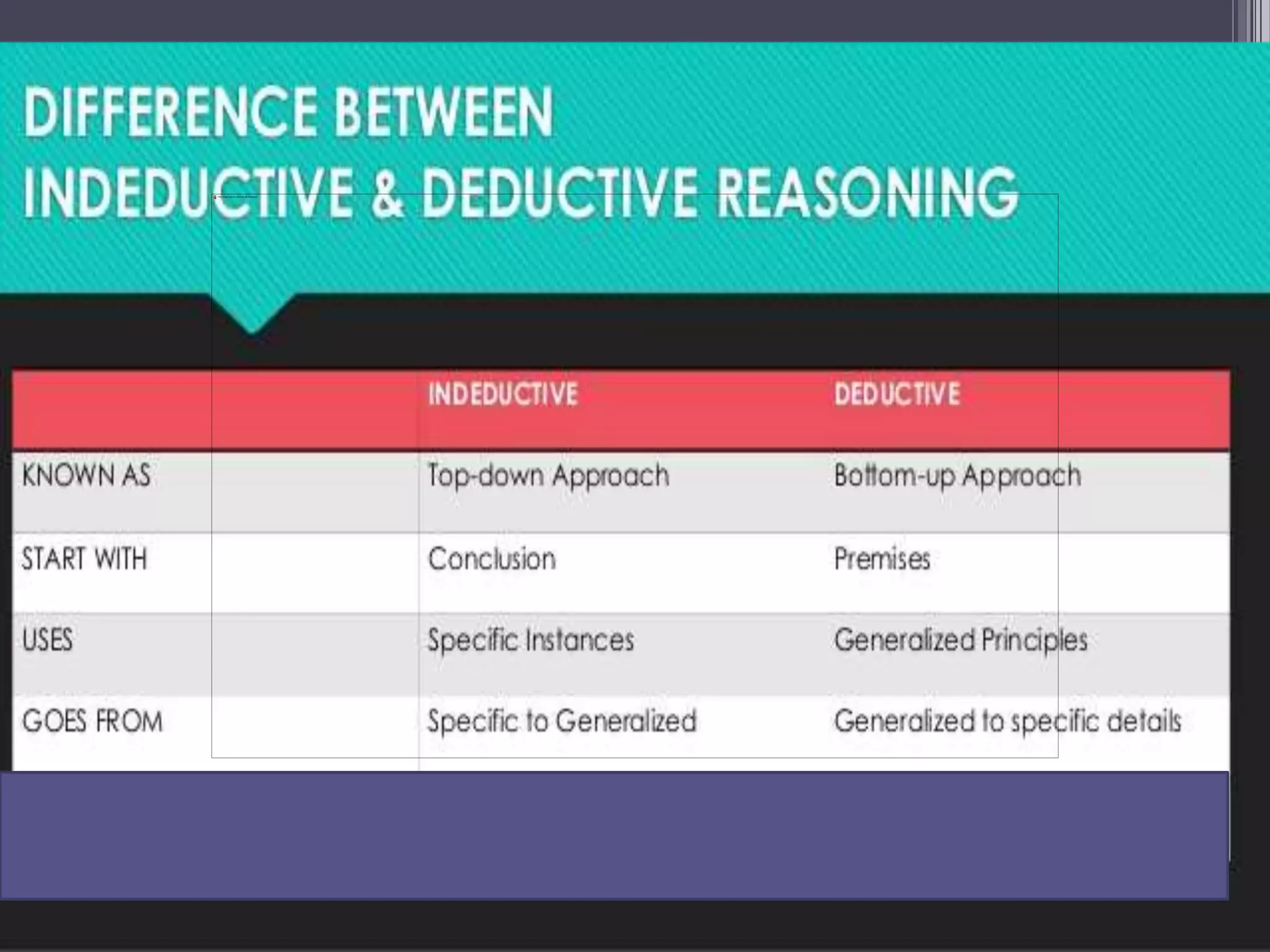
• Deductive reasoning
• Inductive reasoning
Deductive reasoning
• The biologist draws deduction from the
hypothesis.
• This involves the use of “if-then” logic.
• It moves from general to specific.
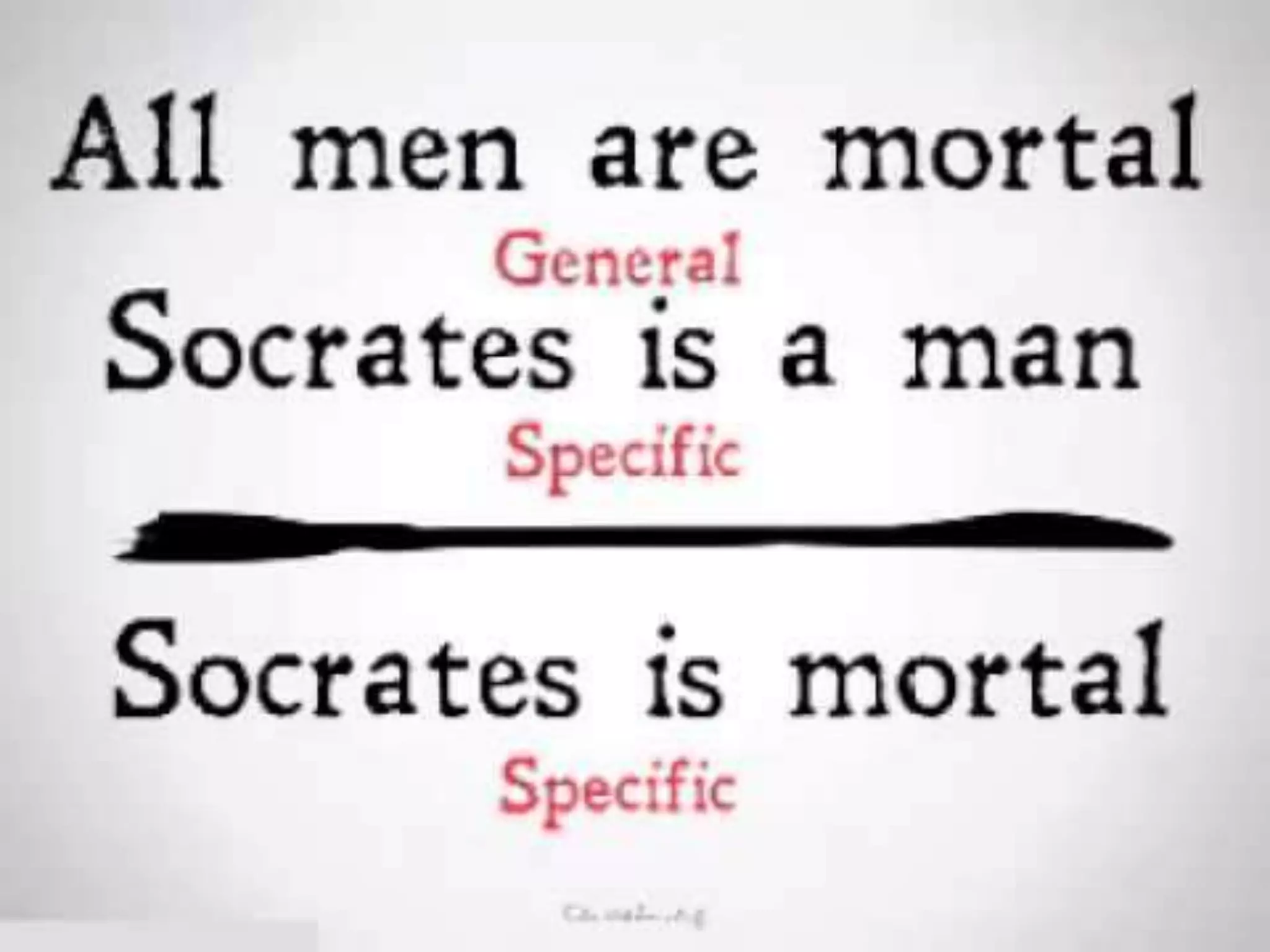
• The classic example
All men are mortal. (major premise)
Socrates is a man. (minor premise)
Therefore, Socrates is mortal. (conclusion)
Deductive Reasoning
Examples:
1. All students eat pizza.
Claire is a student at ASU.
Therefore, Claire eats pizza.
2. All athletes work out in the gym.
Barry Bonds is an athlete.
Therefore, Barry Bonds works out in the gym.
Inductive reasoning
• It moves from specific to general.
• Example:
• This marble from the bag is black. That marble
from the bag is black. A third marble from the
bag is black. Therefore all the marbles in the bag
black.
Other ways for hypothesis formulation
• Intuition or imagination
• Esthetic preferences
• Religious or philosophical idea
• Comparison and analogy
• Discovery
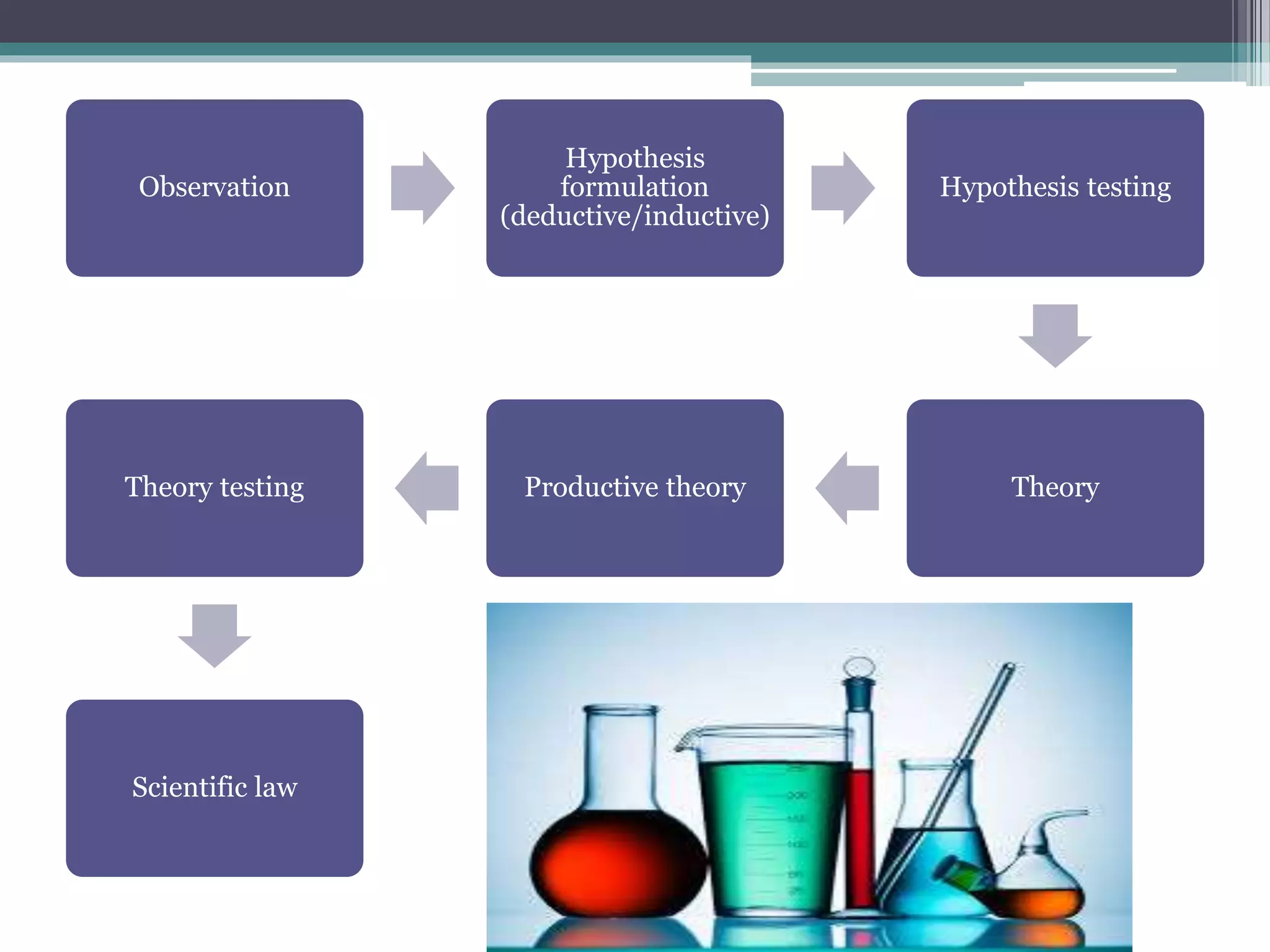
Observation
Hypothesis
formulation
(deductive/inductive)
Hypothesis testing
TheoryProductive theoryTheory testing
Scientific law
Theory and productive theory
• Theory : an hypothesis that is repeatedly tested
without ever being falsified.
• Productive theory: a theory that is predictive and
has explanatory power.
• Suggests new and different hypothesis.
Scientific law
• A scientific law is a uniform or constant fact of
nature, it is virtually an irrefutable theory.
Biology is short in laws due to elusive nature of
life
biological method

biological method

  • 1.
    Lecture -1 (C) Introductionto Biology XI Dr.Qurrat-ul-Ain Lecturer Biology AKUEB-MSB 3 Aug 2016
  • 2.
    Objectives • Compare deductiveand inductive reasoning • Recall hypothesis, theory and scientific law
  • 3.
    Biological method • Observation •Hypothesis • Experiment • Data Collection • Conclusion • Retest
  • 5.
    Observations: • The biologistrecalls his/her previous observations or makes new ones. Observations are made with five senses of vision, hearing, smell, taste and touch.
  • 6.
    Observations • An exampleof an observation might be noticing that people living in villages are more tough and strong.
  • 8.
    • Kinds ofObservations: Observations may be of two types: ▫ Qualitative observations: Qualitative observations are considered less accurate then quantitative ones because the qualitative observations are variable and non-measurable and cannot be recorded in terms of number. For example: The freezing point of water is colder than the boiling. One liter of water is heavier than one liter of ethanol.
  • 9.
    • Quantitative observations:Quantitative observations are considered more accurate then qualitative ones because the quantitative observations are invariable and measurable and can be recorded in terms of number. For example: The freezing point of water is 0°C and the boiling point is 100°C.The mass of one litre water is 1000 grams while the mass of one litreethanol is 789 grams.
  • 11.
  • 12.
    • Biologist organizes his/herand others observations into data form and constructs a statement. • This tentative explanation of the observations is called a hypothesis. .
  • 13.
    Hypothesis • An exampleof a hypothesis might be that the village people are tough because they do more physical work.
  • 14.
    Formulating a hypothesis •Reasoning: A great deal of careful and creative thinking is necessary for the construction of a hypothesis. Biologists use reasoning to formulate a hypothesis. • Deductive reasoning • Inductive reasoning
  • 15.
    Deductive reasoning • Thebiologist draws deduction from the hypothesis. • This involves the use of “if-then” logic. • It moves from general to specific.
  • 16.
    • The classicexample All men are mortal. (major premise) Socrates is a man. (minor premise) Therefore, Socrates is mortal. (conclusion)
  • 17.
    Deductive Reasoning Examples: 1. Allstudents eat pizza. Claire is a student at ASU. Therefore, Claire eats pizza. 2. All athletes work out in the gym. Barry Bonds is an athlete. Therefore, Barry Bonds works out in the gym.
  • 18.
    Inductive reasoning • Itmoves from specific to general. • Example: • This marble from the bag is black. That marble from the bag is black. A third marble from the bag is black. Therefore all the marbles in the bag black.
  • 21.
    Other ways forhypothesis formulation • Intuition or imagination • Esthetic preferences • Religious or philosophical idea • Comparison and analogy • Discovery
  • 23.
  • 24.
    Theory and productivetheory • Theory : an hypothesis that is repeatedly tested without ever being falsified. • Productive theory: a theory that is predictive and has explanatory power. • Suggests new and different hypothesis.
  • 25.
    Scientific law • Ascientific law is a uniform or constant fact of nature, it is virtually an irrefutable theory. Biology is short in laws due to elusive nature of life