
Bioinformatics
Dr/ Ahmed Abdellatif
Assistant Professor at Faculty of Pharmacy,
- Qassim University, Kingdom of Saudi Arabia.
- Al-Azhar University, Egypt.
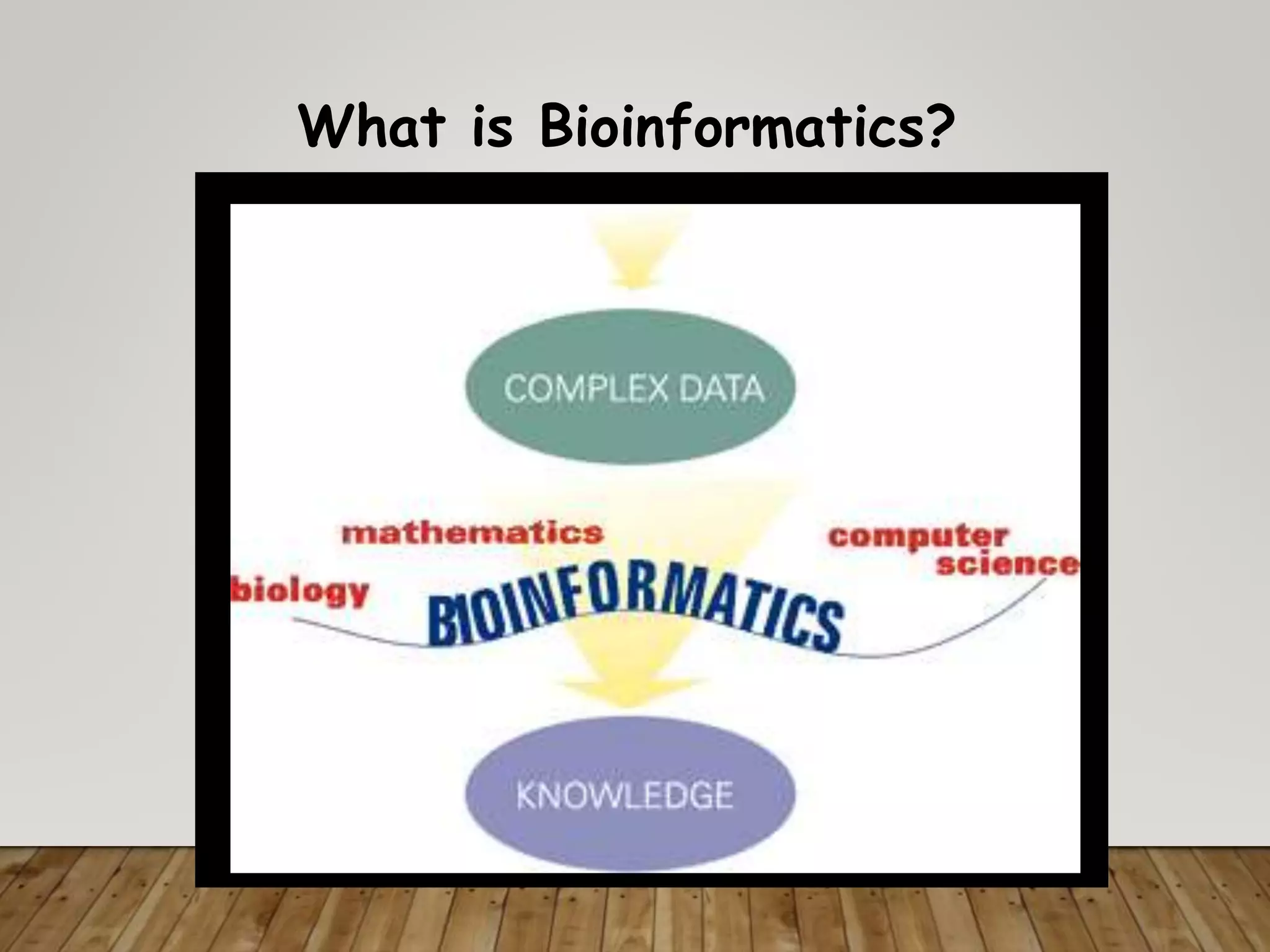
What is Bioinformatics?
Conceptualizing biology in terms of molecules and
then applying “informatics” techniques from math,
computer science, and statistics to understand and
organize the information associated with these
molecules on a large scale
Objectives:
• Identify appropriate search tools for your needs
• Perform searches using ‘unknown’ sequence data
• Analyze protein structure using Protein Explorer
Why do we use Bioinformatics?
• Store/retrieve biological information (databases)
• Retrieve/compare gene sequences
• Predict function of unknown genes/proteins
• Search for previously known functions of a gene
• Compare data with other researchers
• Compile/distribute data for other researchers
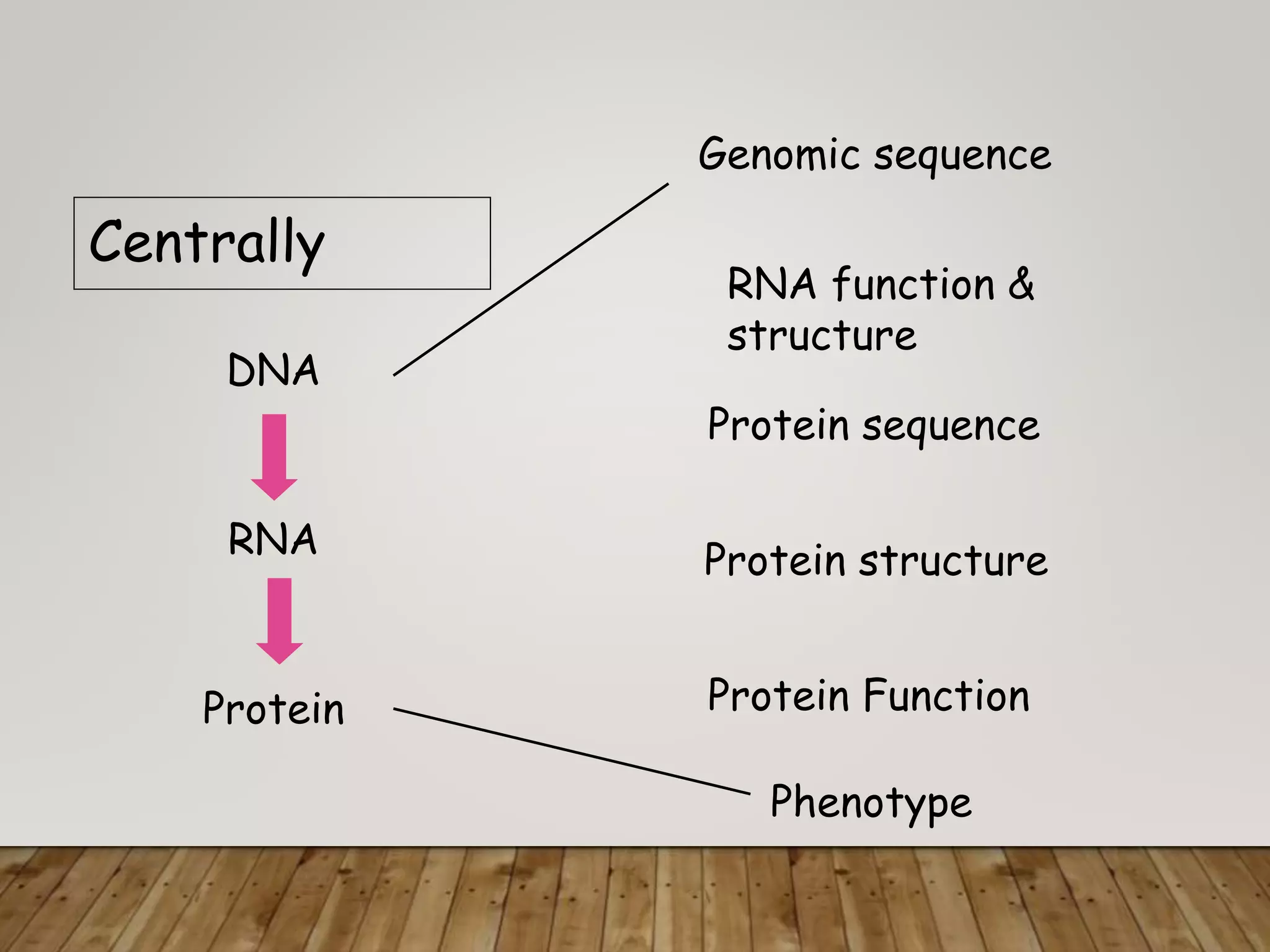
Centrally
DNA
RNA
Protein
Genomic sequence
RNA function &
structure
Protein sequence
Protein structure
Protein Function
Phenotype
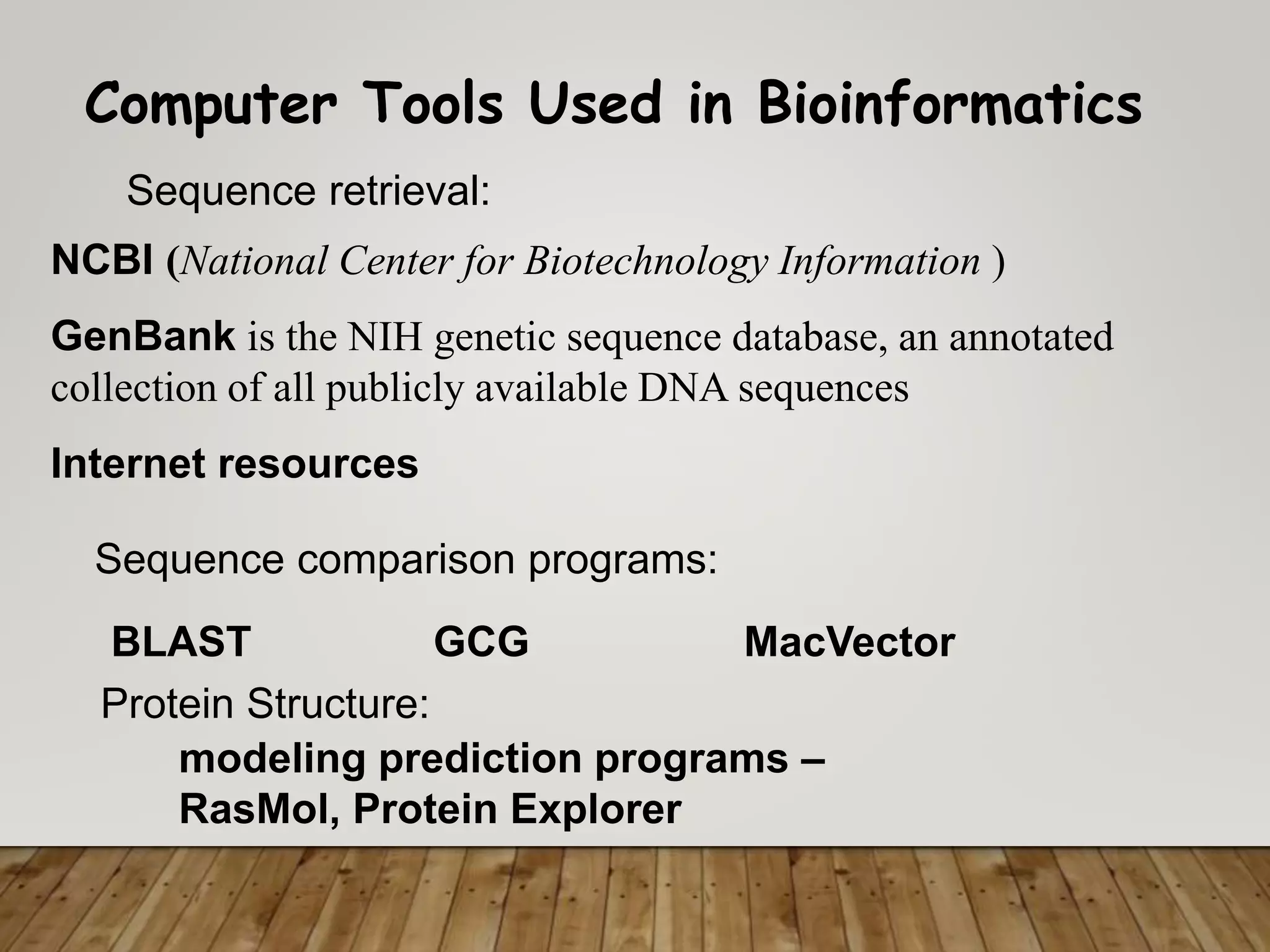
Computer Tools Used in Bioinformatics
Sequence retrieval:
Sequence comparison programs:
Protein Structure:
BLAST
modeling prediction programs –
RasMol, Protein Explorer
GCG MacVector
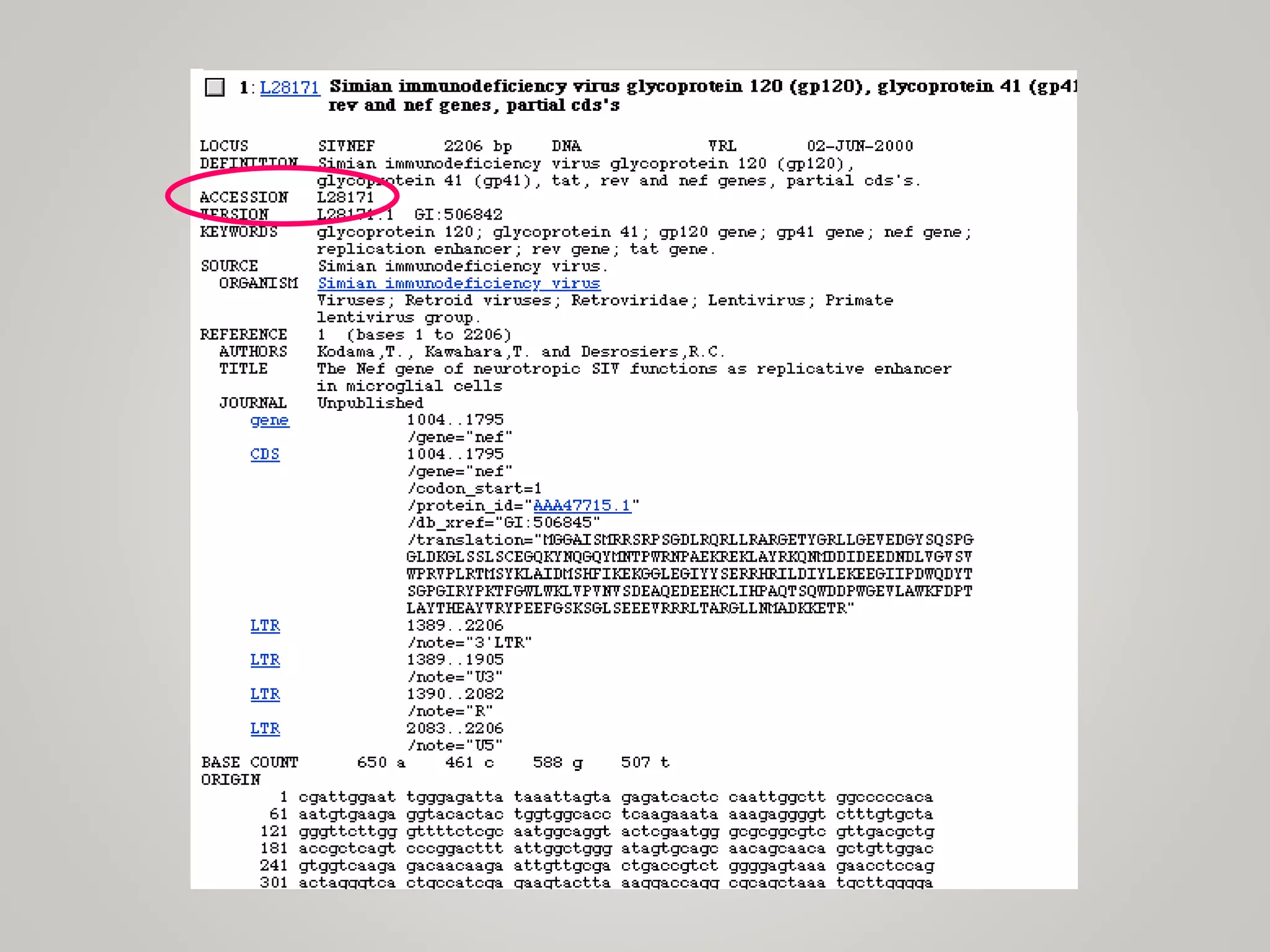
NCBI (National Center for Biotechnology Information )
GenBank is the NIH genetic sequence database, an annotated
collection of all publicly available DNA sequences
Internet resources
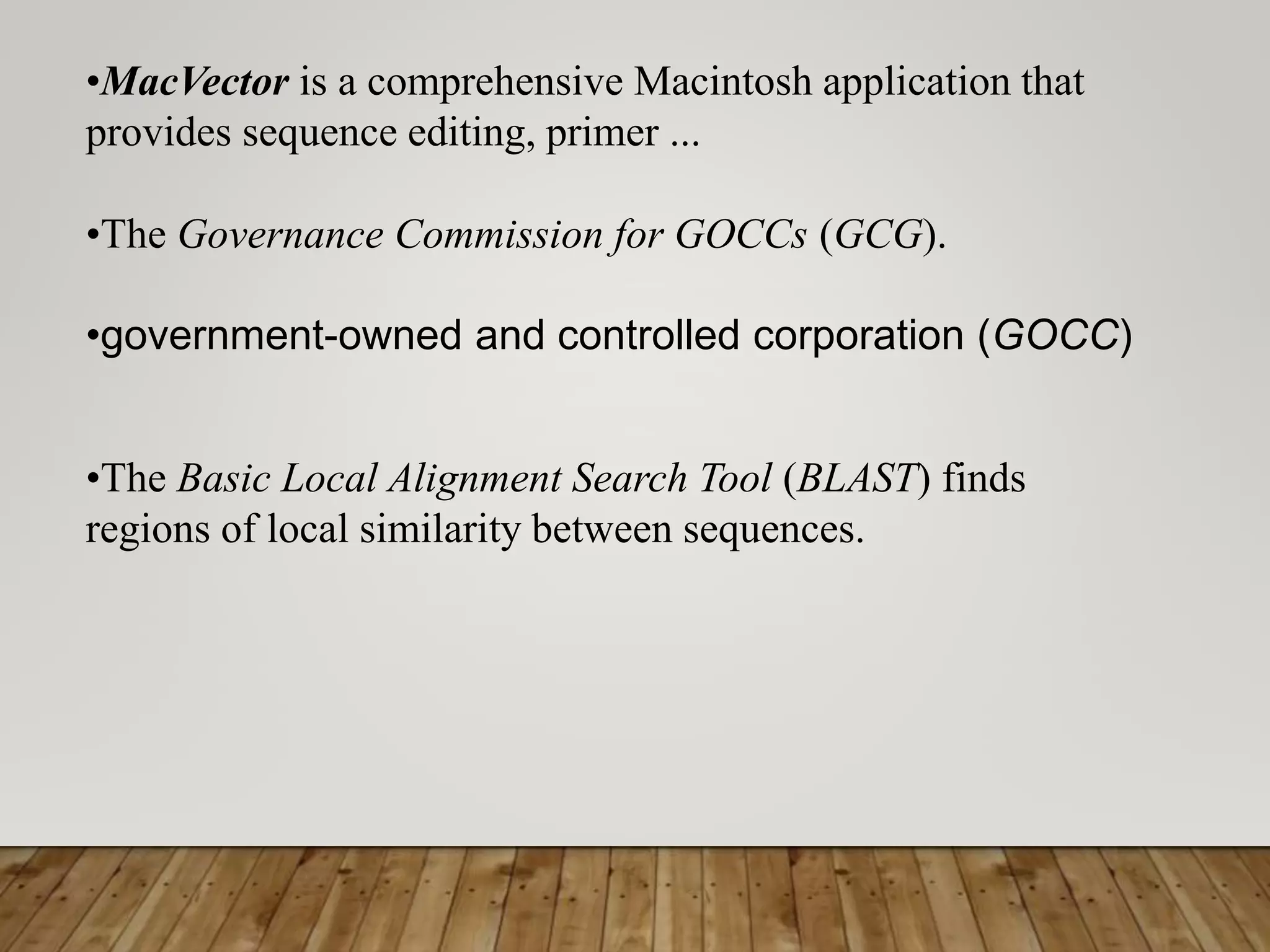
•MacVector is a comprehensive Macintosh application that
provides sequence editing, primer ...
•The Governance Commission for GOCCs (GCG).
•government-owned and controlled corporation (GOCC)
•The Basic Local Alignment Search Tool (BLAST) finds
regions of local similarity between sequences.
Similarity Searching:
A tool for searching gene or protein sequence
databases for related genes of interest
The structure, function, and evolution of a gene
may be determined by such comparisons
Alignments between the query sequence and
any given database sequence, allowing for
mismatches and gaps, indicate their degree of
similarity
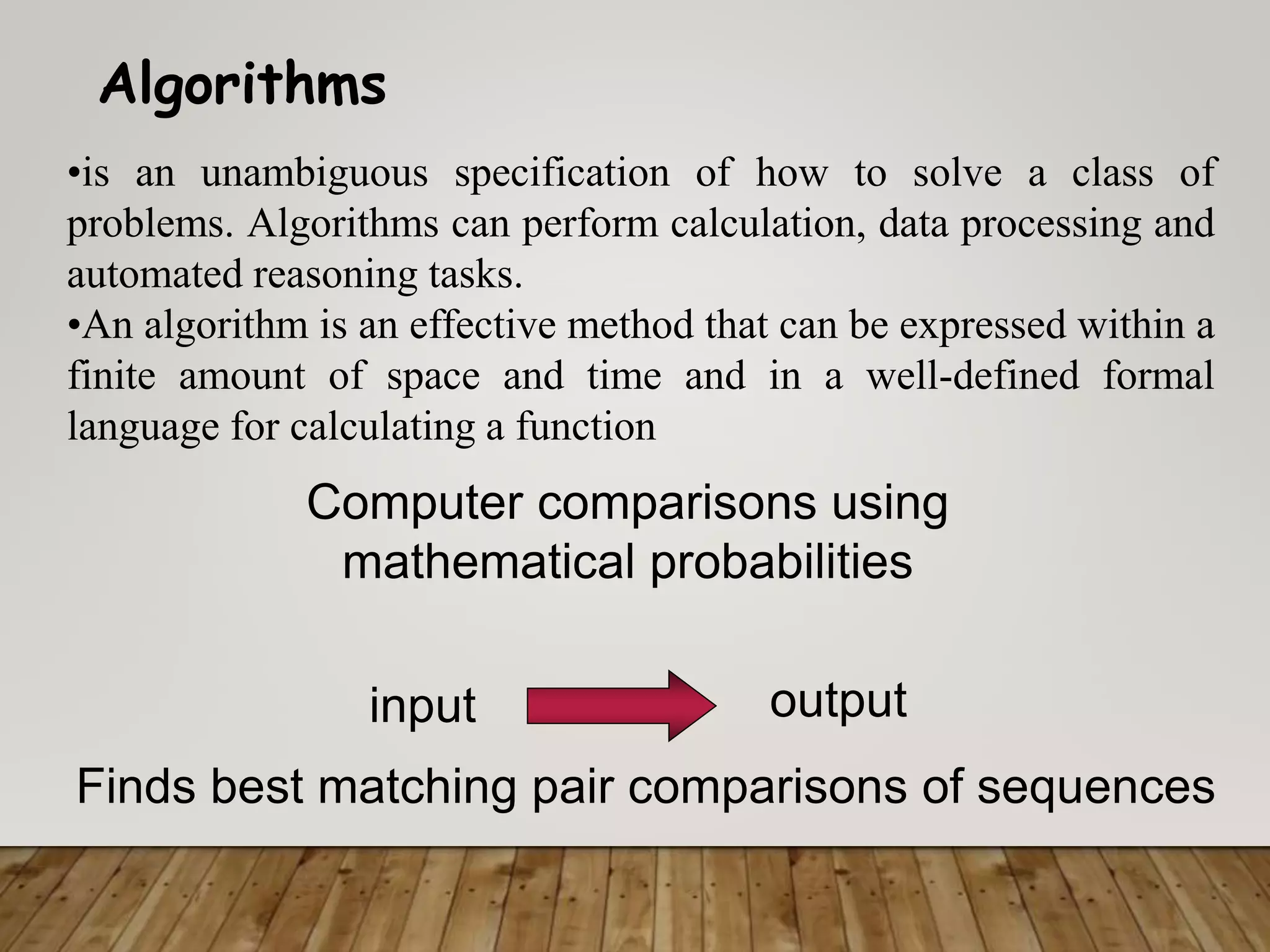
Algorithms
Finds best matching pair comparisons of sequences
input output
Computer comparisons using
mathematical probabilities
•is an unambiguous specification of how to solve a class of
problems. Algorithms can perform calculation, data processing and
automated reasoning tasks.
•An algorithm is an effective method that can be expressed within a
finite amount of space and time and in a well-defined formal
language for calculating a function
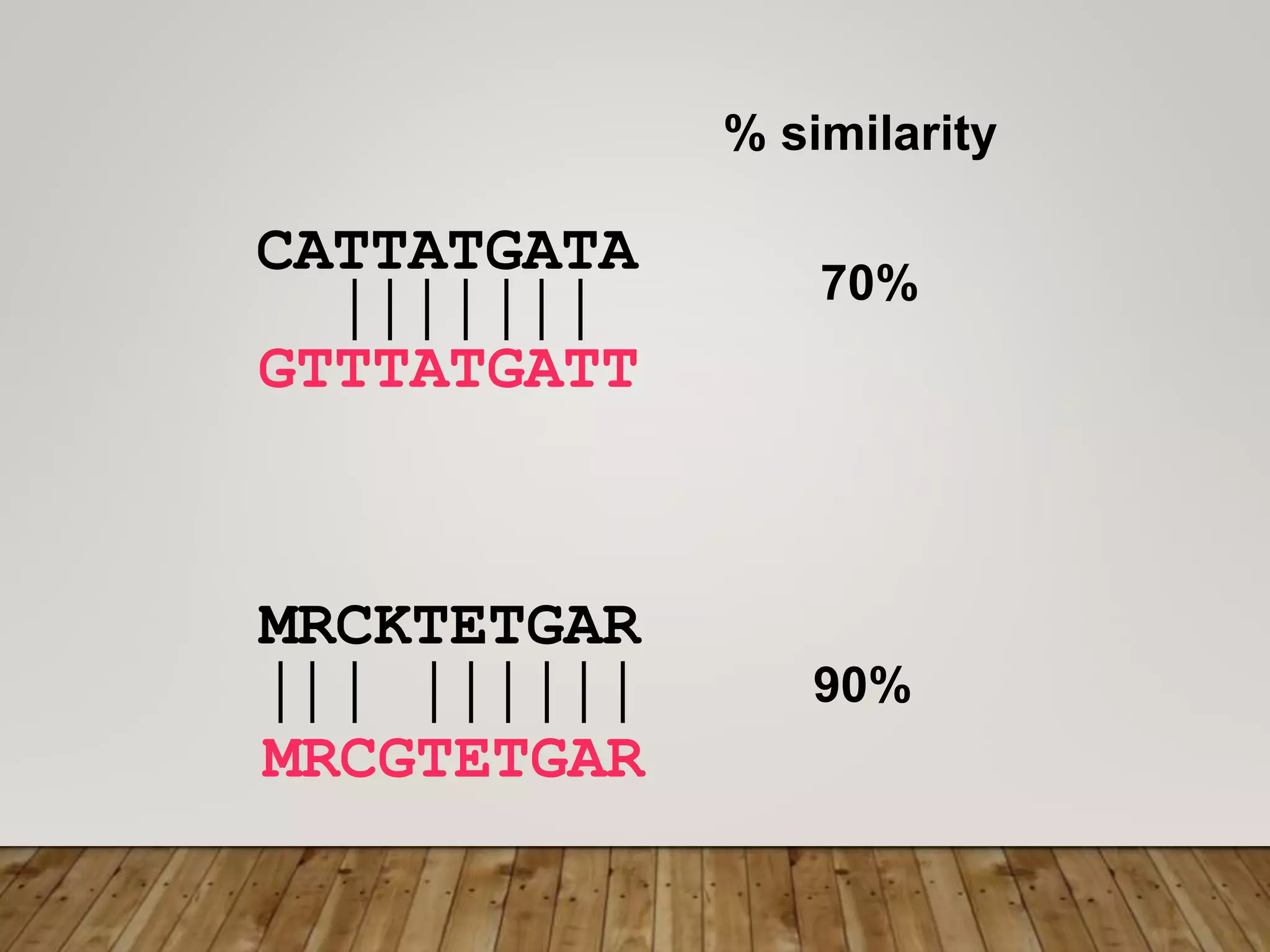
MRCKTETGAR
MRCGTETGAR
% similarity
90%
CATTATGATA
GTTTATGATT
70%
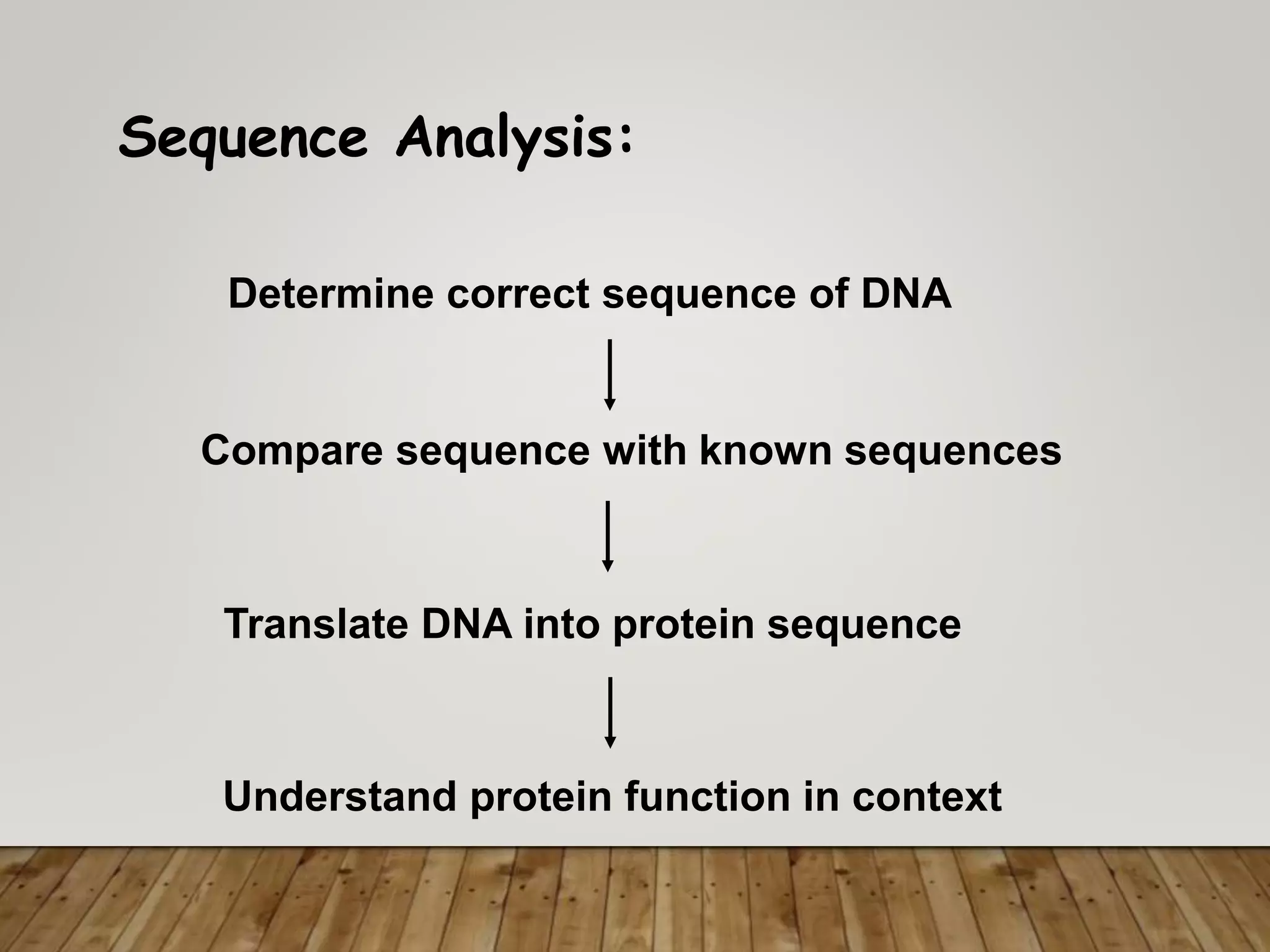
Sequence Analysis:
Determine correct sequence of DNA
Compare sequence with known sequences
Translate DNA into protein sequence
Understand protein function in context
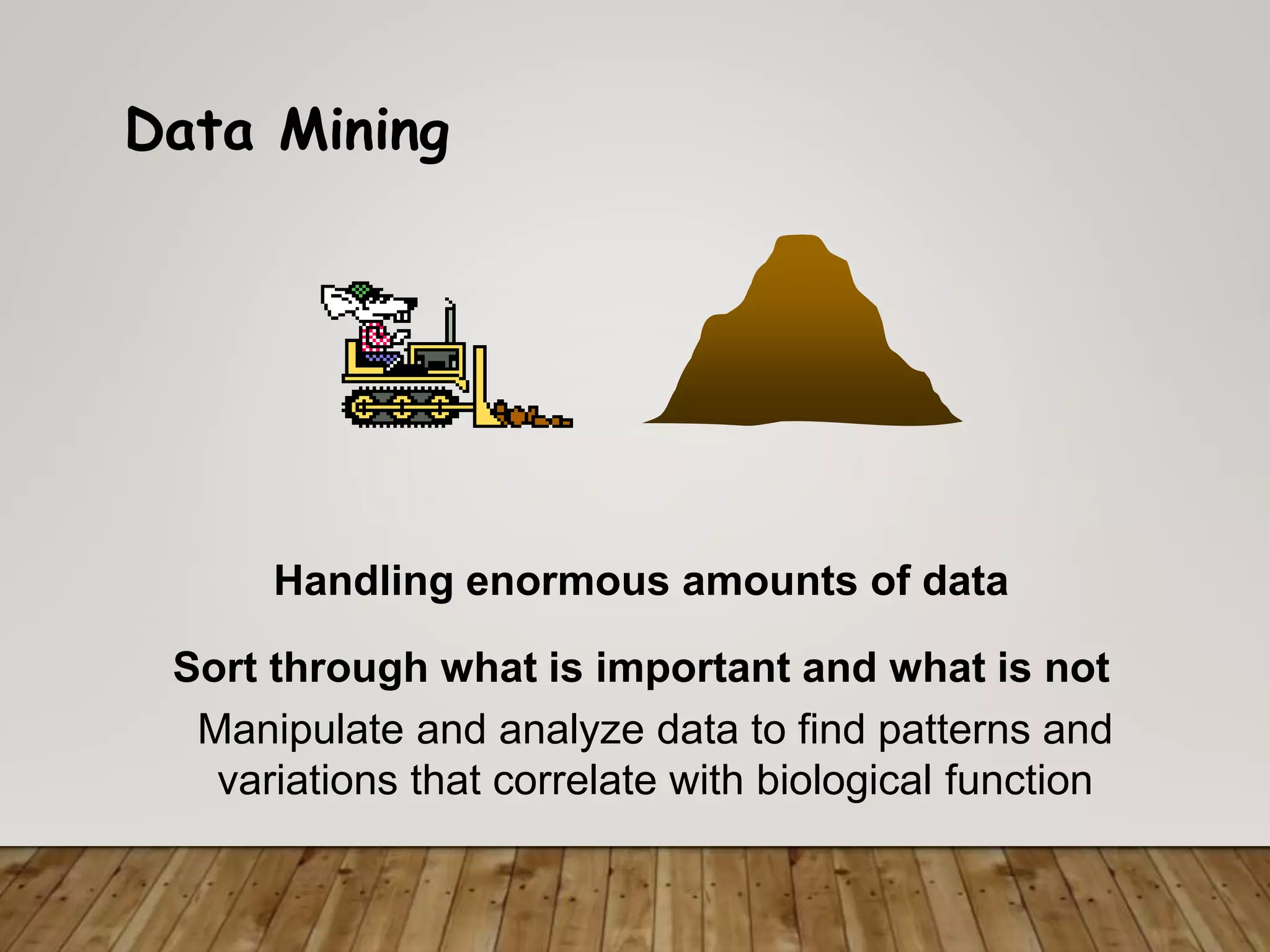
Data Mining
Handling enormous amounts of data
Sort through what is important and what is not
Manipulate and analyze data to find patterns and
variations that correlate with biological function
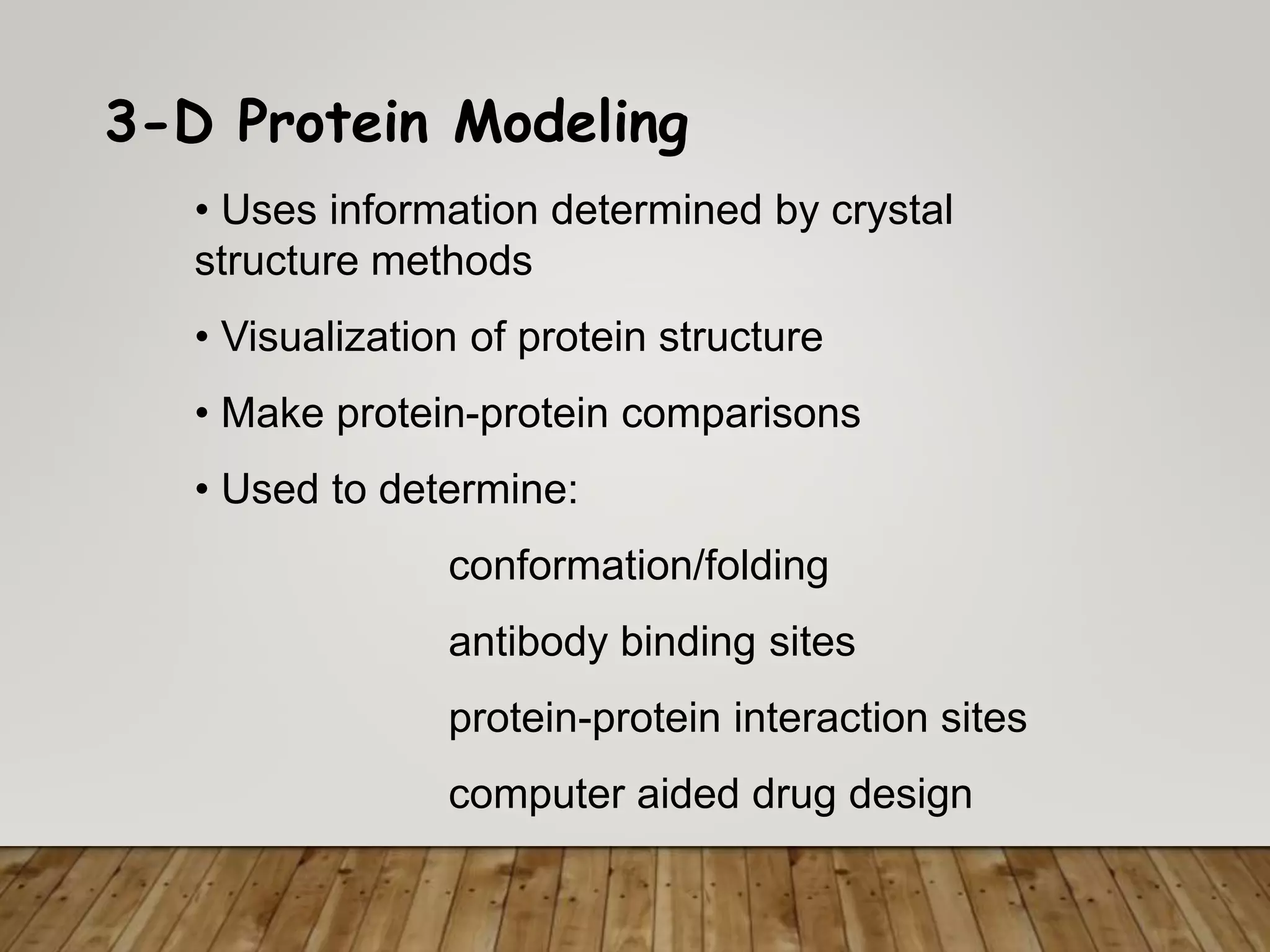
3-D Protein Modeling
• Uses information determined by crystal
structure methods
• Visualization of protein structure
• Make protein-protein comparisons
• Used to determine:
conformation/folding
antibody binding sites
protein-protein interaction sites
computer aided drug design
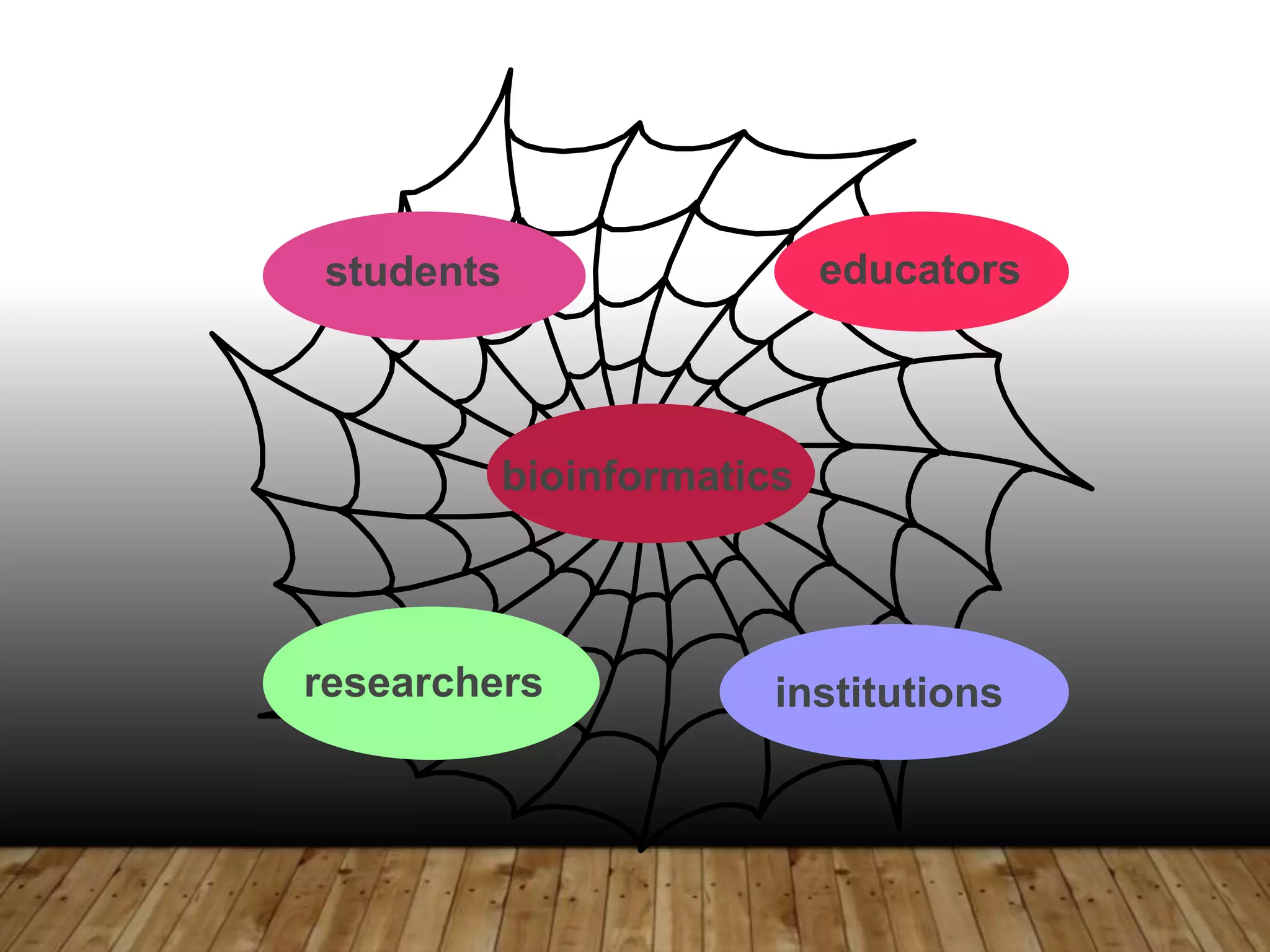
bioinformatics
students educators
researchers institutions
Many thanks

Bioinformatics

  • 1.
    Bioinformatics Dr/ Ahmed Abdellatif AssistantProfessor at Faculty of Pharmacy, - Qassim University, Kingdom of Saudi Arabia. - Al-Azhar University, Egypt.
  • 2.
  • 3.
    What is Bioinformatics? Conceptualizingbiology in terms of molecules and then applying “informatics” techniques from math, computer science, and statistics to understand and organize the information associated with these molecules on a large scale
  • 4.
    Objectives: • Identify appropriatesearch tools for your needs • Perform searches using ‘unknown’ sequence data • Analyze protein structure using Protein Explorer
  • 5.
    Why do weuse Bioinformatics? • Store/retrieve biological information (databases) • Retrieve/compare gene sequences • Predict function of unknown genes/proteins • Search for previously known functions of a gene • Compare data with other researchers • Compile/distribute data for other researchers
  • 6.
    Centrally DNA RNA Protein Genomic sequence RNA function& structure Protein sequence Protein structure Protein Function Phenotype
  • 7.
    Computer Tools Usedin Bioinformatics Sequence retrieval: Sequence comparison programs: Protein Structure: BLAST modeling prediction programs – RasMol, Protein Explorer GCG MacVector NCBI (National Center for Biotechnology Information ) GenBank is the NIH genetic sequence database, an annotated collection of all publicly available DNA sequences Internet resources
  • 8.
    •MacVector is acomprehensive Macintosh application that provides sequence editing, primer ... •The Governance Commission for GOCCs (GCG). •government-owned and controlled corporation (GOCC) •The Basic Local Alignment Search Tool (BLAST) finds regions of local similarity between sequences.
  • 10.
    Similarity Searching: A toolfor searching gene or protein sequence databases for related genes of interest The structure, function, and evolution of a gene may be determined by such comparisons Alignments between the query sequence and any given database sequence, allowing for mismatches and gaps, indicate their degree of similarity
  • 11.
    Algorithms Finds best matchingpair comparisons of sequences input output Computer comparisons using mathematical probabilities •is an unambiguous specification of how to solve a class of problems. Algorithms can perform calculation, data processing and automated reasoning tasks. •An algorithm is an effective method that can be expressed within a finite amount of space and time and in a well-defined formal language for calculating a function
  • 12.
  • 13.
    Sequence Analysis: Determine correctsequence of DNA Compare sequence with known sequences Translate DNA into protein sequence Understand protein function in context
  • 14.
    Data Mining Handling enormousamounts of data Sort through what is important and what is not Manipulate and analyze data to find patterns and variations that correlate with biological function
  • 15.
    3-D Protein Modeling •Uses information determined by crystal structure methods • Visualization of protein structure • Make protein-protein comparisons • Used to determine: conformation/folding antibody binding sites protein-protein interaction sites computer aided drug design
  • 16.
  • 17.