Biogeochemical
Cycles
What is a Biogeochemical Cycle?
• “Biogeochemical cycles mainly refer to the movement of
nutrients and other elements between biotic and abiotic
factors.”
• The term biogeochemical is derived
from “bio” meaning biosphere, “geo” meaning the geological
components and “chemical” meaning the elements that move through a
cycle.
• The earth obtains energy from the sun which is radiated back
as heat, rest all other elements are present in a closed system.
The major elements include:
• Carbon
• Hydrogen
• Nitrogen
• Oxygen
• Phosphorus
• Sulphur
Types of Biogeochemical Cycles
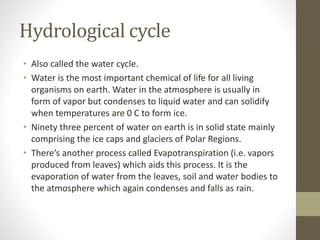
• Biogeochemical cycles are basically divided into two types:
• Gaseous cycles – Includes Carbon, Oxygen, Nitrogen, and the
Water cycle.
• Sedimentary cycles – Includes Sulphur, Phosphorus, Rock
cycle, etc.
Hydrological cycle
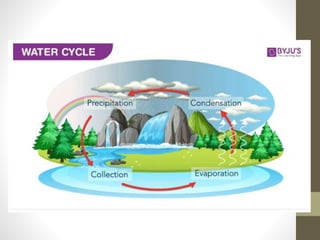
• Also called the water cycle.
• Water is the most important chemical of life for all living
organisms on earth. Water in the atmosphere is usually in
form of vapor but condenses to liquid water and can solidify
when temperatures are 0 C to form ice.
• Ninety three percent of water on earth is in solid state mainly
comprising the ice caps and glaciers of Polar Regions.
• There’s another process called Evapotranspiration (i.e. vapors
produced from leaves) which aids this process. It is the
evaporation of water from the leaves, soil and water bodies to
the atmosphere which again condenses and falls as rain.
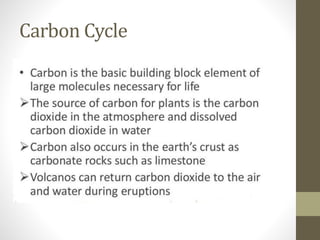
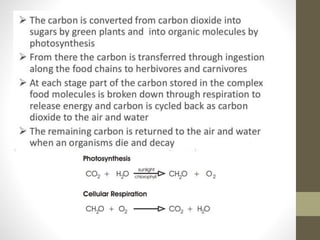
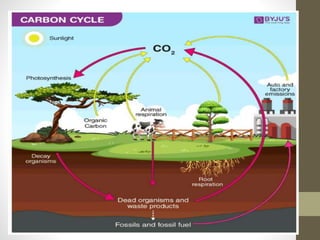
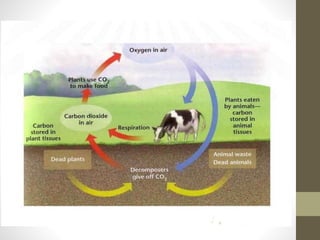
Carbon Cycle
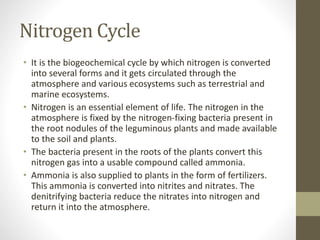
Nitrogen Cycle
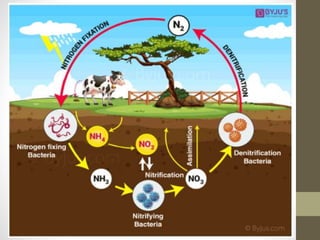
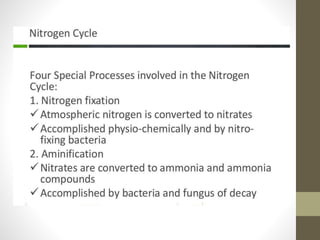
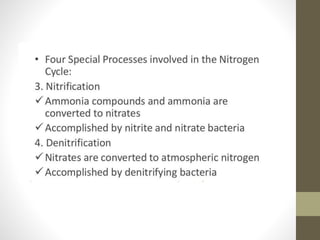
• It is the biogeochemical cycle by which nitrogen is converted
into several forms and it gets circulated through the
atmosphere and various ecosystems such as terrestrial and
marine ecosystems.
• Nitrogen is an essential element of life. The nitrogen in the
atmosphere is fixed by the nitrogen-fixing bacteria present in
the root nodules of the leguminous plants and made available
to the soil and plants.
• The bacteria present in the roots of the plants convert this
nitrogen gas into a usable compound called ammonia.
• Ammonia is also supplied to plants in the form of fertilizers.
This ammonia is converted into nitrites and nitrates. The
denitrifying bacteria reduce the nitrates into nitrogen and
return it into the atmosphere.
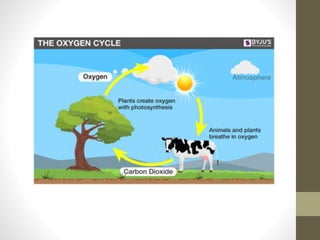
Oxygen Cycle
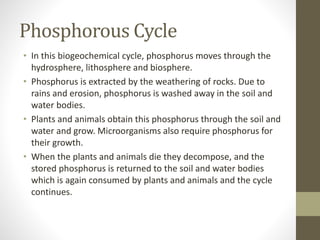
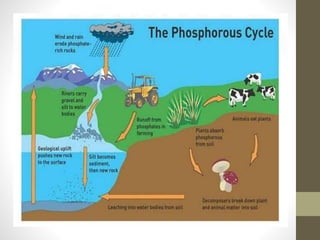
Phosphorous Cycle
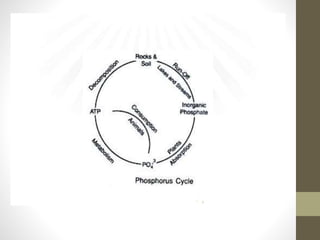
• In this biogeochemical cycle, phosphorus moves through the
hydrosphere, lithosphere and biosphere.
• Phosphorus is extracted by the weathering of rocks. Due to
rains and erosion, phosphorus is washed away in the soil and
water bodies.
• Plants and animals obtain this phosphorus through the soil and
water and grow. Microorganisms also require phosphorus for
their growth.
• When the plants and animals die they decompose, and the
stored phosphorus is returned to the soil and water bodies
which is again consumed by plants and animals and the cycle
continues.
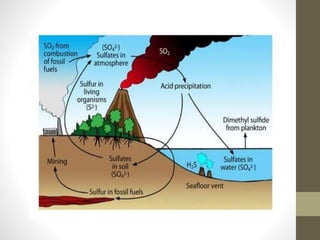
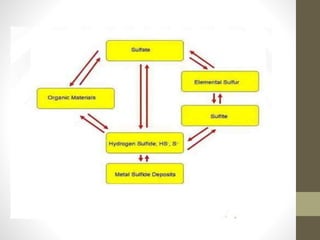
Sulphur Cycle
• This biogeochemical cycle moves through the rocks, water
bodies and living systems.
• Sulphur is released into the atmosphere by the weathering of
rocks and is converted into sulphates. These sulphates are
taken up by the microorganisms and plants and converted into
organic forms.
• Organic Sulphur is consumed by animals through food.
• When the animals die and decompose, sulphur is returned to
the soil, which is again obtained by the plants and microbes,
and the cycle continues.
Biogeochemical Cycles.pptx

Biogeochemical Cycles.pptx

  • 1.
  • 2.
    What is aBiogeochemical Cycle? • “Biogeochemical cycles mainly refer to the movement of nutrients and other elements between biotic and abiotic factors.” • The term biogeochemical is derived from “bio” meaning biosphere, “geo” meaning the geological components and “chemical” meaning the elements that move through a cycle.
  • 3.
    • The earthobtains energy from the sun which is radiated back as heat, rest all other elements are present in a closed system. The major elements include: • Carbon • Hydrogen • Nitrogen • Oxygen • Phosphorus • Sulphur
  • 4.
    Types of BiogeochemicalCycles • Biogeochemical cycles are basically divided into two types: • Gaseous cycles – Includes Carbon, Oxygen, Nitrogen, and the Water cycle. • Sedimentary cycles – Includes Sulphur, Phosphorus, Rock cycle, etc.
  • 5.
    Hydrological cycle • Alsocalled the water cycle. • Water is the most important chemical of life for all living organisms on earth. Water in the atmosphere is usually in form of vapor but condenses to liquid water and can solidify when temperatures are 0 C to form ice. • Ninety three percent of water on earth is in solid state mainly comprising the ice caps and glaciers of Polar Regions. • There’s another process called Evapotranspiration (i.e. vapors produced from leaves) which aids this process. It is the evaporation of water from the leaves, soil and water bodies to the atmosphere which again condenses and falls as rain.
  • 7.
  • 10.
    Nitrogen Cycle • Itis the biogeochemical cycle by which nitrogen is converted into several forms and it gets circulated through the atmosphere and various ecosystems such as terrestrial and marine ecosystems. • Nitrogen is an essential element of life. The nitrogen in the atmosphere is fixed by the nitrogen-fixing bacteria present in the root nodules of the leguminous plants and made available to the soil and plants. • The bacteria present in the roots of the plants convert this nitrogen gas into a usable compound called ammonia. • Ammonia is also supplied to plants in the form of fertilizers. This ammonia is converted into nitrites and nitrates. The denitrifying bacteria reduce the nitrates into nitrogen and return it into the atmosphere.
  • 14.
  • 18.
    Phosphorous Cycle • Inthis biogeochemical cycle, phosphorus moves through the hydrosphere, lithosphere and biosphere. • Phosphorus is extracted by the weathering of rocks. Due to rains and erosion, phosphorus is washed away in the soil and water bodies. • Plants and animals obtain this phosphorus through the soil and water and grow. Microorganisms also require phosphorus for their growth. • When the plants and animals die they decompose, and the stored phosphorus is returned to the soil and water bodies which is again consumed by plants and animals and the cycle continues.
  • 21.
    Sulphur Cycle • Thisbiogeochemical cycle moves through the rocks, water bodies and living systems. • Sulphur is released into the atmosphere by the weathering of rocks and is converted into sulphates. These sulphates are taken up by the microorganisms and plants and converted into organic forms. • Organic Sulphur is consumed by animals through food. • When the animals die and decompose, sulphur is returned to the soil, which is again obtained by the plants and microbes, and the cycle continues.