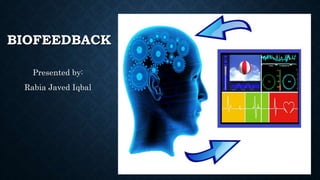
BIOFEEDBACK
Presented by:
Rabia Javed Iqbal
WHAT IS BIOFEEDBACK?
• Biofeedback is a mind-body technique that involves using visual or
auditory feedback to teach people to recognize the physical signs and
symptoms of stress and anxiety, such as increased heart rate, body
temperature, and muscle tension.
• The Association for Applied Psychophysiology and Biofeedback defines
biofeedback as a process that allows people to alter their physiological
activity in order to improve health or performance.
GOAL OF BIOFEEDBACK
The goal of biofeedback is to make subtle changes to the body that
result in a desired effect. This might include relaxing certain muscles
slowing heart rate or reducing feelings of pain. Some of the functions
that people can learn to control include:
• Blood flow
• Blood pressure
• Heart rate
• Muscle tension
• Pain perception
TYPES OF BIOFEEDBACK
There are many different types of biofeedback.
The specific approach you choose to utilize might depend
upon what you hope to accomplish and what your therapist or
physician recommends.
RESPIRATORY BIOFEEDBACK
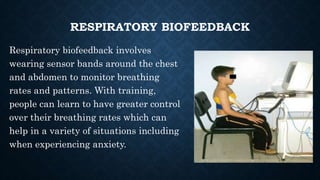
Respiratory biofeedback involves
wearing sensor bands around the chest
and abdomen to monitor breathing
rates and patterns. With training,
people can learn to have greater control
over their breathing rates which can
help in a variety of situations including
when experiencing anxiety.
HEART RATE VARIABILITY BIOFEEDBACK
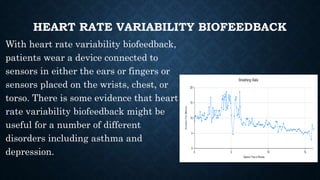
With heart rate variability biofeedback,
patients wear a device connected to
sensors in either the ears or fingers or
sensors placed on the wrists, chest, or
torso. There is some evidence that heart
rate variability biofeedback might be
useful for a number of different
disorders including asthma and
depression.
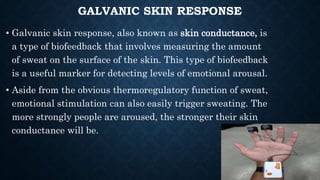
GALVANIC SKIN RESPONSE
• Galvanic skin response, also known as skin conductance, is
a type of biofeedback that involves measuring the amount
of sweat on the surface of the skin. This type of biofeedback
is a useful marker for detecting levels of emotional arousal.
• Aside from the obvious thermoregulatory function of sweat,
emotional stimulation can also easily trigger sweating. The
more strongly people are aroused, the stronger their skin
conductance will be.
BLOOD PRESSURE BIOFEEDBACK
Blood pressure biofeedback
involves wearing a device that
provides information about the
patient's blood pressure. These
devices often guide the user
through relaxation techniques
that may use visual cues,
breathing exercises, or music.
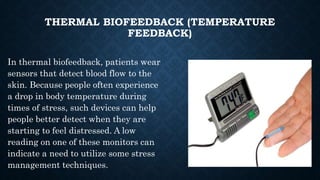
THERMAL BIOFEEDBACK (TEMPERATURE
FEEDBACK)
In thermal biofeedback, patients wear
sensors that detect blood flow to the
skin. Because people often experience
a drop in body temperature during
times of stress, such devices can help
people better detect when they are
starting to feel distressed. A low
reading on one of these monitors can
indicate a need to utilize some stress
management techniques.
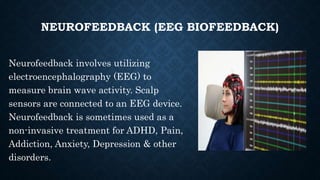
NEUROFEEDBACK (EEG BIOFEEDBACK)
Neurofeedback involves utilizing
electroencephalography (EEG) to
measure brain wave activity. Scalp
sensors are connected to an EEG device.
Neurofeedback is sometimes used as a
non-invasive treatment for ADHD, Pain,
Addiction, Anxiety, Depression & other
disorders.
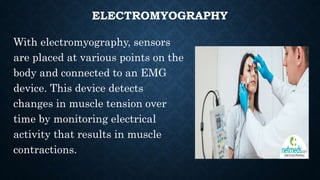
ELECTROMYOGRAPHY
With electromyography, sensors
are placed at various points on the
body and connected to an EMG
device. This device detects
changes in muscle tension over
time by monitoring electrical
activity that results in muscle
contractions.
TECHNIQUES
• Biofeedback is often considered a type of training rather than a treatment. With training and
practice, biofeedback can be used to help people develop new skills that may help them to
better cope or perform.
• A biofeedback session will often last between 30 and 60 minutes. A typical course of treatment
often includes 4 to 6 sessions, although 8 to 10 sessions are also not uncommon. The duration
of treatment and the number of sessions required depends on many factors, including:
• How well you respond to the training
• The condition you are focusing on
• Your goals for treatment
During a typical biofeedback session:
• Electrical sensors will be connected to specific areas of your body,
depending upon the type of response being measured.
• These sensors will be connected to a measurement device that
will provide feedback on your physical responses.
• During your session, your therapist will guide you through
different mental exercises that may involve:
“visualization, meditation, breathing, or relaxation techniques”.
• As you perform these activities, you will receive information on
your physical response from the measurement device.
USES
• Attention-deficit/hyperactivity disorder (ADHD)
• Anxiety
• Brain injuries
• Depression
• Digestive disorders such as irritable bowel syndrome (IBS)
• High and low blood pressure
• Mental health conditions
• PTSD
• Migraines
• Pain
• Physical reactions to stress
• Relaxation and stress management
• Tension headaches
BENEFITS OF BIOFEEDBACK
• It's Non-Invasive
• It Can Complement Other Treatments
• It Can Help You To Control Your Emotions

BIOFEEDBACK.pptx

  • 1.
  • 2.
    WHAT IS BIOFEEDBACK? •Biofeedback is a mind-body technique that involves using visual or auditory feedback to teach people to recognize the physical signs and symptoms of stress and anxiety, such as increased heart rate, body temperature, and muscle tension. • The Association for Applied Psychophysiology and Biofeedback defines biofeedback as a process that allows people to alter their physiological activity in order to improve health or performance.
  • 3.
    GOAL OF BIOFEEDBACK Thegoal of biofeedback is to make subtle changes to the body that result in a desired effect. This might include relaxing certain muscles slowing heart rate or reducing feelings of pain. Some of the functions that people can learn to control include: • Blood flow • Blood pressure • Heart rate • Muscle tension • Pain perception
  • 4.
    TYPES OF BIOFEEDBACK Thereare many different types of biofeedback. The specific approach you choose to utilize might depend upon what you hope to accomplish and what your therapist or physician recommends.
  • 5.
    RESPIRATORY BIOFEEDBACK Respiratory biofeedbackinvolves wearing sensor bands around the chest and abdomen to monitor breathing rates and patterns. With training, people can learn to have greater control over their breathing rates which can help in a variety of situations including when experiencing anxiety.
  • 6.
    HEART RATE VARIABILITYBIOFEEDBACK With heart rate variability biofeedback, patients wear a device connected to sensors in either the ears or fingers or sensors placed on the wrists, chest, or torso. There is some evidence that heart rate variability biofeedback might be useful for a number of different disorders including asthma and depression.
  • 7.
    GALVANIC SKIN RESPONSE •Galvanic skin response, also known as skin conductance, is a type of biofeedback that involves measuring the amount of sweat on the surface of the skin. This type of biofeedback is a useful marker for detecting levels of emotional arousal. • Aside from the obvious thermoregulatory function of sweat, emotional stimulation can also easily trigger sweating. The more strongly people are aroused, the stronger their skin conductance will be.
  • 8.
    BLOOD PRESSURE BIOFEEDBACK Bloodpressure biofeedback involves wearing a device that provides information about the patient's blood pressure. These devices often guide the user through relaxation techniques that may use visual cues, breathing exercises, or music.
  • 9.
    THERMAL BIOFEEDBACK (TEMPERATURE FEEDBACK) Inthermal biofeedback, patients wear sensors that detect blood flow to the skin. Because people often experience a drop in body temperature during times of stress, such devices can help people better detect when they are starting to feel distressed. A low reading on one of these monitors can indicate a need to utilize some stress management techniques.
  • 10.
    NEUROFEEDBACK (EEG BIOFEEDBACK) Neurofeedbackinvolves utilizing electroencephalography (EEG) to measure brain wave activity. Scalp sensors are connected to an EEG device. Neurofeedback is sometimes used as a non-invasive treatment for ADHD, Pain, Addiction, Anxiety, Depression & other disorders.
  • 11.
    ELECTROMYOGRAPHY With electromyography, sensors areplaced at various points on the body and connected to an EMG device. This device detects changes in muscle tension over time by monitoring electrical activity that results in muscle contractions.
  • 12.
    TECHNIQUES • Biofeedback isoften considered a type of training rather than a treatment. With training and practice, biofeedback can be used to help people develop new skills that may help them to better cope or perform. • A biofeedback session will often last between 30 and 60 minutes. A typical course of treatment often includes 4 to 6 sessions, although 8 to 10 sessions are also not uncommon. The duration of treatment and the number of sessions required depends on many factors, including: • How well you respond to the training • The condition you are focusing on • Your goals for treatment
  • 13.
    During a typicalbiofeedback session: • Electrical sensors will be connected to specific areas of your body, depending upon the type of response being measured. • These sensors will be connected to a measurement device that will provide feedback on your physical responses. • During your session, your therapist will guide you through different mental exercises that may involve: “visualization, meditation, breathing, or relaxation techniques”. • As you perform these activities, you will receive information on your physical response from the measurement device.
  • 14.
    USES • Attention-deficit/hyperactivity disorder(ADHD) • Anxiety • Brain injuries • Depression • Digestive disorders such as irritable bowel syndrome (IBS) • High and low blood pressure • Mental health conditions • PTSD • Migraines • Pain • Physical reactions to stress • Relaxation and stress management • Tension headaches
  • 15.
    BENEFITS OF BIOFEEDBACK •It's Non-Invasive • It Can Complement Other Treatments • It Can Help You To Control Your Emotions