Definition
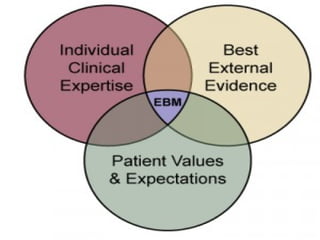
“Evidence-based practice (EBP)aims to maximize
the effectiveness of psychological interventions
through adherence to principles informed by
empirical findings, clinical expertise, and client
characteristics”
For psychotherapists, it encourages using the best
research-led evidence to make informed decisions
about the care of clients in treatment. More
recently, the approach has been expanded to
include the patient’s preferences, actions, and
environment (Cook et al., 2017).
3.
Introduction to Evidence-
BasedTherapies
• Integration of best available research with clinical
expertise
• Consideration of patient characteristics, culture, and
preferences
• Emphasis on scientifically validated treatment
approaches
• Enhances treatment outcomes and accountability in
practice
4.
The clinical implicationsof using EBP in
psychotherapy
• Relying on collaborative decision-making with the
patient based on the best clinically relevant evidence
• Considering probable costs, benefits, and available
resources
• Using the treating therapist’s professional judgment
• Actively encouraging informed patient participation
• Individualizing treatment beyond existing research
• Ongoingly monitoring patient progress and readjusting
treatment as needed
5.
Key Elements ofEvidence-Based
Practice
• Research evidence
• Clinical expertise
• Patient values and preferences
• Use of standardized assessment and outcomes
monitoring
6.
The Goals andBenefits of Evidence-Based
Therapy
“Ultimately, the goal of EBP is the promotion and
implementation of psychotherapies that are safe,
consistent, and cost-effective” (Cook et al., 2017, p. 539).
This can be accomplished through a focus on:
• Improved care quality for clients
• Increased accountability of the health care
professional
• Enhancement of the health and wellbeing of the
public
7.
There are manyadvantages and benefits for patients, therapists,
and clinical teams, including:
• Therapists’ decisions are research led rather than solely relying
on personal opinion, thereby reducing bias.
• EBP complements rather than replaces clinical expertise when
making judgments.
• Reliance on research data promotes the creation of
appropriate policies, databases, and clinical tools to make
informed decisions.
• EBT combines scientific data and patient factors, such as
situational information, cost, and time.
• The approach ensures that the best evidence becomes the
starting point for complex treatment plans.
• EBT enhances the professional therapists’ skills, knowledge,
and attitudes.
9.
Cognitive Behavioral Therapy
(CBT)
•Most widely researched and applied evidence-
based therapy
• Focuses on modifying dysfunctional emotions,
thoughts, and behaviors
• Effective for depression, anxiety disorders,
PTSD, etc.
• Emphasized in: Oxford Handbook of Clinical
Psychology (David, 2011)
10.
Behavioral Interventions in
Childrenand Adolescents
• Techniques include reinforcement,
modeling, and parent training
• Utilized in treating ADHD, conduct
disorders, autism spectrum
11.
Ethics and Evidence-Based
Practice
•Informed consent and respect for client
autonomy
• Competence in evidence-based
methods
• Confidentiality and transparency
12.
Clinical Health Psychology
Applications
•Behavioral interventions for chronic
illnesses (e.g., diabetes, pain)
• Stress management, adherence, and
lifestyle modification
13.
The challenges ofEvidence-Based Therapy
While EBT has many advantages, it has been challenged
regarding its:
• Generalizability of research data and study findings
• Focus on making issues and problems less harmful rather
than increasing meaning in clients’ lives
• Reliance on (sometimes) insufficient data to make an
evidence-based decision in specific circumstances
• Ignorance of other clinical tools (Cook et al., 2017)